


 Top Rated Course

We may not have the course you’re looking for. If you enquire or give us a call on +44 1344 203999 and speak to our training experts, we may still be able to help with your training requirements.
Trader Salary Guide: Average Pay, Roles and Career Paths
The Knowledge Academy 14 February 2026Explore the Trader Salary, including average earnings, factors that affect income, career growth opportunities, and tips to maximise your Trading profits. Traders work in banks, hedge funds, or independently, with different earning potential. With strong skills and smart strategies, you can grow a successful Trading career.

Training Outcomes Within Your Budget!
We ensure quality, budget-alignment, and timely delivery by our expert instructors.
Table of Contents
Ever scrolled through Social Media and seen someone claim they made money Trading from a laptop, coffee in hand, relaxing at home? It makes you wonder, “Is Trading really like that? How much do Traders earn? Could I do this too?” Many of us feel that curiosity when we hear success stories. In reality, Trading is not about luck; it requires skill, patience, practice, and smart decisions.
In this blog, we will discuss what Traders do, the Trader Salary range, the difference between employed and independent Traders, key skills required, and whether Trading is a good career choice. If you’re curious about how Traders earn and whether this path fits you, this blog will give you a clear and realistic understanding.
Table of Contents
1) What Does a Trader do?
2) Average Salary of Traders
3) Independent Forex Trading Salaries
4) Employed Traders vs Independent Traders
5) What are the Career Paths for a Trader?
6) What Factors Determine a Trader's Salary?
7) Is Trading a Good Career?
8) Conclusion
What Does a Trader do?
A Trader buys and trades financial assets like stocks, bonds, and commodities to profit from short-term price changes. They focus on quick market movements and use strategies such as scalping, Day Trading, and swing Trading. Traders rely on research, charts, and market news to make decisions, and need strong risk control, analytical skills, and emotional discipline to handle fast-moving markets.
Key Takeaways:
a) Traders buy and sell assets over short periods to profit from price changes.
b) Popular Trading styles include scalping, day Trading, and swing Trading, each with different risks and rewards.
c) Tools like stop-loss orders and hedging help manage risk and protect capital.
d) Traders need strong analytical skills, clear thinking, and emotional control.
e) They support financial markets by providing liquidity, helping set prices, and keeping capital moving smoothly.
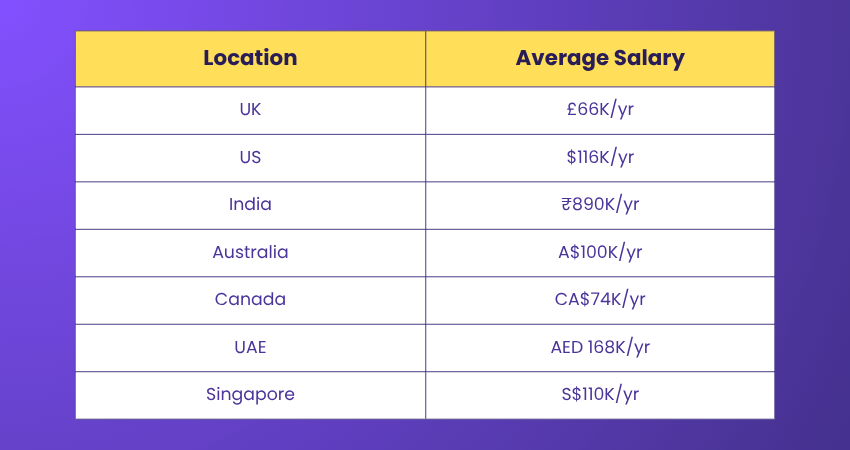
Average Salary of Traders
Trading is a vast profession and it's hard to put a limit on a good Trader's salary. The following are the Trader Salary based on the various locations, experience and job roles in tabular format:
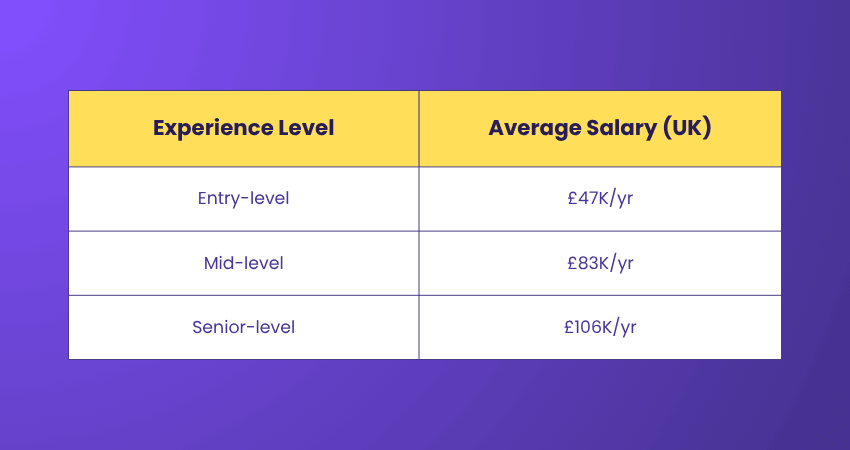
1) Trader Salary Based on Experience
Let’s look at the average compensation figures for individuals at different stages of their careers. Here’s a breakdown of what each level typically means in the UK in tabular format:
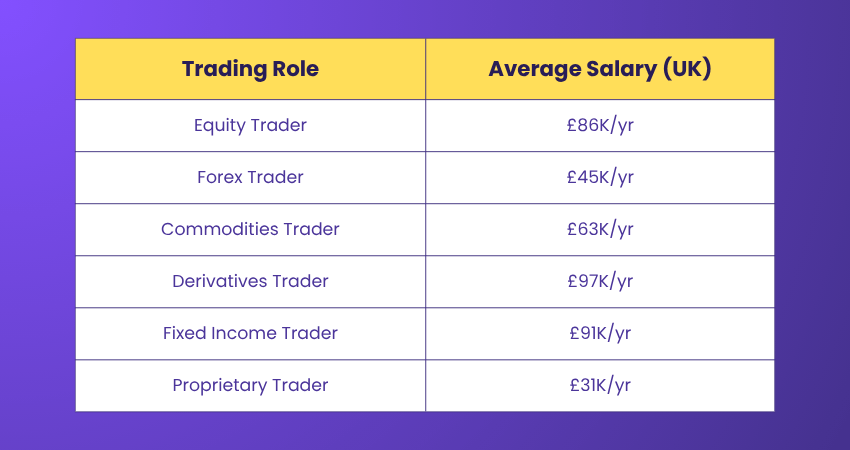
2) Trader Salary Based on Job Roles
Trader Salary can also vary according to their job roles. Let’s look at the average Trader Salary in the UK based on job roles in tabular format:
Learn to navigate the Forex market with confidence and precision. Join our Forex Trading Course now!
Independent Forex Trading Salaries
Independent Forex Traders use their own money to trade currency pairs instead of working for a bank or firm. They don’t earn a fixed salary; their income depends on the profits they make from Trading.
Earnings can be very different for each Trader. Experienced Traders with good strategies may earn steady returns, while beginners may earn little or even lose money. To succeed, Traders need patience, discipline, strong market knowledge, and a reliable Trading plan.
Employed Traders vs Independent Traders
Employed Traders work for banks, Trading firms, or investment companies. They earn a fixed salary and sometimes bonuses when they perform well. The company gives them Trading tools, capital, and support, so they do not need to use their own money. This makes the job more stable and less risky.
Independent Traders trade using their own money and work for themselves. They don’t get a regular salary; their income depends only on their Trading profits. They have more freedom, but also more risk, because they handle everything on their own, including learning, tools, and losses.
Learn fundamental and advanced Trading strategies for successful investing. Join our Stock Trading Course today!
What are the Career Paths for a Trader?
Traders have diverse career paths, including roles in investment banks, hedge funds, and Asset Management firms. They can specialise in equities, Forex, commodities, or derivatives Trading. Career progression often leads to Senior Trader, Portfolio Manager, or Risk Manager positions.
Some Traders move into roles in Financial Analysis, Market Research, or Sales and Trading. Preparing for Sales and Trading Interview Questions can be beneficial for such transitions. Others may start their own Trading firms or become independent Traders. Advanced education and certifications, such as CFA or FRM, can enhance career prospects. Networking and keepingup-to-date with market trends are crucial for long-term success in Trading.
What Factors Determine a Trader's Salary?
It’s difficult to fix a limit on how much a good Trader can earn, because many factors influence their income. To understand Trader Salaries, it's important to look at what affects them:
a) Experience: Traders with more experience usually earn higher salaries. They understand the markets better, make smarter decisions, and therefore get paid more.
b) Specialisation: Some Traders focus on a specific market or product, like Forex or commodities. This expertise makes them valuable and allows them to negotiate better pay.
c) Location: Trader Salaries differ by country. Traders in the UK and the US often earn more due to larger markets and different bonus rules. Most Traders work in major financial hubs like London, New York, Paris, and Tokyo.
d) Type of Products Traded: Traders who handle larger or complex portfolios often earn more because the profit and risk are higher. Independent Traders can also earn more by using more of their own capital, but this increases their risk.
Is Trading a Good Career?
Trading can be a great career for people who enjoy analysing markets and making quick decisions. It can offer high earnings and flexibility, but it also requires discipline, strong skills, and the ability to handle risk and losses. Success comes through learning, practice, and patience.
Conclusion
Trading can be an interesting and rewarding career for those who enjoy analysing markets, managing risk, and making fast decisions. While income can vary, the potential for growth and performance-based rewards makes this field attractive. By learning key skills, staying disciplined, and understanding market trends, you can build a strong career and achieve a competitive Trader Salary in today’s financial world.
Understand effective Risk Management strategies to protect your capital with our Day Trading Course – Register now!
Frequently Asked Questions
How Many Hours do Traders Work?

Traders typically work 50-70 hours per week, often starting early to align with market openings and staying late to monitor global market developments and manage positions.
Is Trader a Stressful Job?
Yes, Trading is a stressful job due to the high stakes, fast-paced environment, and constant pressure to make profitable decisions. Market volatility and the need for quick, accurate analyses add to the intensity of the profession.
What are the Other Resources and Offers Provided by The Knowledge Academy?
The Knowledge Academy takes global learning to new heights, offering over 3,000+ online courses across 490+ locations in 190+ countries. This expansive reach ensures accessibility and convenience for learners worldwide.
Alongside our diverse Online Course Catalogue, encompassing 19 major categories, we go the extra mile by providing a plethora of free educational Online Resources like Blogs, eBooks, Interview Questions and Videos. Tailoring learning experiences further, professionals can unlock greater value through a wide range of special discounts, seasonal deals, and Exclusive Offers.
What is The Knowledge Pass, and How Does it Work?
The Knowledge Academy’s Knowledge Pass, a prepaid voucher, adds another layer of flexibility, allowing course bookings over a 12-month period. Join us on a journey where education knows no bounds.
What are the Related Courses and Blogs Provided by The Knowledge Academy?
The Knowledge Academy offers various Investment and Trading Training, including the Forex Trading Course, Stock Trading Course, and the Day Trading Course. These courses cater to different skill levels, providing comprehensive insights into How to Buy Bitcoin.
Our Business Skills Blogs cover a range of topics related to Trading, offering valuable resources, best practices, and industry insights. Whether you are a beginner or looking to advance your Trading skills, The Knowledge Academy's diverse courses and informative blogs have got you covered.

The Knowledge Academy


Global Training Provider
The Knowledge Academy is a world-leading provider of professional training courses, offering globally recognised qualifications across a wide range of subjects. With expert trainers, up-to-date course material, and flexible learning options, we aim to empower professionals and organisations to achieve their goals through continuous learning.

Upcoming Business Skills Resources Batches & Dates
Date
 Investment Management Course
Investment Management Course
Fri 21st Aug 2026
Investment Management Course
Fri 13th Nov 2026

 If you wish to make any changes to your course, please


