


 Top Rated Course

We may not have the course you’re looking for. If you enquire or give us a call on +44 1344 203999 and speak to our training experts, we may still be able to help with your training requirements.
Office Manager vs Executive Assistant: Which One is Better?
Charlotte Wilson 24 February 2026Take a look at this blog to understand the distinction between an Office Manager and an Executive Assistant, two indispensable roles within an organization that support operational functions. This article will provide a detailed insight into the topic of 'Office Manager Vs Executive Assistant' and enlighten you about the advantages of selecting either of these roles as a career path.

Training Outcomes Within Your Budget!
We ensure quality, budget-alignment, and timely delivery by our expert instructors.
Table of Contents
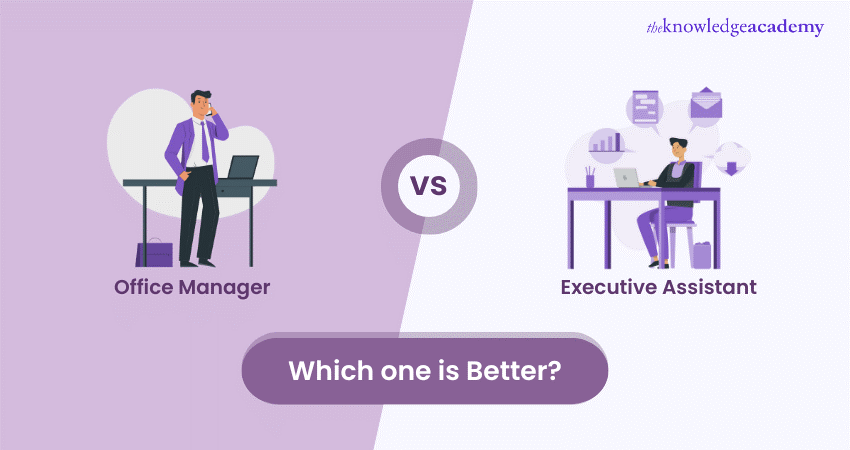
In many workplaces, the positions of Office Manager and Executive Assistant may appear similar, but they require unique and distinct sets of skills. The Office Manager is like the captain of a ship, responsible for ensuring that everything runs smoothly. The Executive Assistant, on the other hand, is like the navigator who assists the captain in managing schedules and tasks.
Although both Office Manager and Executive Assistant are essential roles within a company, they have different responsibilities and levels of authority. In this regard, read this blog further to understand the differences between Office Manager vs Executive Assistant and the benefits of pursuing these career paths in detail.
Table of Contents
1) Who is an Office Manager?
2) Who is an Executive Assistant?
3) Difference between Executive Assistant and Office Manager
4) Determining the right path for your career
5) Conclusion
Who is Office Manager?
Office Managers are usually individuals who look after the everyday operations in an office. This includes staff management, finances, ordering supplies, taking care of events and maintaining office supplies. They can also be responsible for Human Resources (HR) work, like onboarding of employees, payroll processing and employee records management.
Office Managers play a crucial role in organisations, overseeing administrative tasks and ensuring the smooth functioning of the office. In larger organisations, they may manage a team of administration staff, while in smaller organisations, they may handle all administrative duties themselves. These managers must have excellent multitasking and prioritisation skills to manage their workload effectively.
Who is Executive Assistant?
Executive Assistants are crucial in providing administrative support to company leaders to ensure efficient completion of priority tasks and goals. They manage the executive's communications, allowing them to access important information while filtering out low-priority items easily. These Executive Assistants are also responsible for screening visitors and providing professional customer service. Additionally, they manage the senior's daily calendar, which includes scheduling meetings, confirming appointments, and arranging itineraries and transportation. Lastly, Executive Assistants train other administrative staff on company policies and goals. The responsibilities of an Executive Assistant and Administrative Assistant can vary, with the former often taking on leadership roles in guiding and mentoring staff.
Choose the best career with our Perfect Executive Personal Assistant Training- Sign up today!
Difference between Executive Assistant and Office Manager
Given below is the comprehensive list of differences between an Executive Assistant and an Office Manager:
Responsibilities
Both job roles are responsible for a group of tasks, but their duties depend on the employer and the company's size. The Executive Assistant handles priority work like scheduling meetings, attending phone calls, and typing work for the CEO or CFO. An Office Manager takes care of the everyday operations of the department and ensures the employees have the resources and supplies to complete their work. They can also hire, train, and delegate responsibilities. These positions may be particularly helpful for individuals considering Becoming a CEO, as they gain insight into high-level operations.
Qualifications
required for two job roles may differ depending on the company. However, most commonly, a high school diploma is the minimum requirement for both positions. Additionally, employers often prefer relevant experience working in an office and basic computer skills. Some companies also offer training programs that typically run for a few weeks to several months and cover various essential topics like communication, customer service, and other office procedures.
Keen on cracking the interview for Office manager, refer to our blog on Office Manager Interview Questions.
Working environment
Office Managers and Executive Assistants typically work in similar environments. However, Executive Assistants often work for high-ranking employees and may need to travel to meetings and events with them, which can be more demanding than an Office Manager's regular duties. Meanwhile, Office Managers oversee the day-to-day operations and ensure employees complete their tasks on time.
Essential skills
Executive Assistants contribute significantly to their organisation's success by writing accurate reports and communicating effectively with team members and clients. In contrast, to become an Office Manager, one must possess strong communication skills for delivering presentations and training new candidates. Understanding office manager skills is essential here, as while Executive Assistants typically support a single individual and require excellent time management, Office Managers oversee an entire office and thus need strong leadership abilities. Both roles, however, greatly benefit from a solid grasp of Personal Assistant Skills for enhanced productivity and efficiency.
Stay at the forefront of office management skills with >Shorthand Training– Join today!
Determining the right path for your career
Reflecting deeply on your long-term goals before choosing a career path is important. The roles of an Office Manager and Executive Assistant offer opportunities for career growth, such as promotions to higher managerial positions or becoming a chief of staff or chief administrative officer, which can also influence the Chief Operating Officer Salary.
If you have good communication skills, can supervise numerous teams, and work well in an organisational setting, the role of an Office Manager may suit you best. On the other hand, if you excel in one-on-one situations, have adaptability skills, and can maintain confidentiality, then being an Executive Assistant may be the perfect fit for you.
Unlock the future of office management with the Administrative Assistant Masterclass Course– Sign up today!
Conclusion
In conclusion, the Office Manager vs Executive Assistant fiasco boils down to your career preferences and apt strengths. If you thrive in coordinating tasks and leading teams, you could choose to be an Office Manager. However, if you enjoy supporting an executive and managing daily tasks for them, being an Executive Assistant will be perfect for you. Think about it in detail and make a well-contemplated decision about your career!
Become well-versed in office management skills with our Office Skills Masterclass Course – Join today!
Frequently Asked Questions
Are the job roles of an Office Manager and an Executive Assistant well-paid?

Yes, both job roles are reasonably paid. According to Glassdoor, the starting national average salary for an Executive Assistant and Office Manager is £30,907 in the United Kingdom.
What are the responsibilities of an Executive Assistant?
The daily duties and responsibilities of an Executive Assistant may vary between industries but are most likely to include the ones listed below:
1) Act as gatekeepers to information the executive receives
2) Act as a point of contact for employees, visitors or clients who wish to get in touch with the executive
3) Manage the executive's calendar, organise meetings and manage calls
4) Prepare statistical, financial or even administrative reports that the executive may require
5) Assist the executive with meetings and prepare minutes for the meeting
6) Prepare and format emails and memos for internal or external communication as per the executive's direction
7) Thoroughly understand the company policies and suggest changes that may be beneficial
8) Lead small teams of assistants, take care of their training and overlook their work
What are the other resources and offers provided by The Knowledge Academy?
The Knowledge Academy takes global learning to new heights, offering over 3,000+ online courses across 490+ locations in 190+ countries. This expansive reach ensures accessibility and convenience for learners worldwide.
Alongside our diverse Online Course Catalogue, encompassing 17 major categories, we go the extra mile by providing a plethora of free educational Online Resources like Blogs, eBooks, Interview Questions and Videos. Tailoring learning experiences further, professionals can unlock greater value through a wide range of special discounts, seasonal deals, and Exclusive Offers.
What is Knowledge Pass, and how does it work?
The Knowledge Academy’s Knowledge Pass, a prepaid voucher, adds another layer of flexibility, allowing course bookings over a 12-month period. Join us on a journey where education knows no bounds.
What are the related PA and secretarial training courses and blogs provided by The Knowledge Academy?
The Knowledge Academy offers various Perfect Executive Personal Assistant Training courses, including office manager training, Practitioner, and Agile. These courses cater to different skill levels, providing comprehensive insights into PA and Secretarial Training methodologies.
Our Business Skills Blogs cover a range of topics related to online businesses, offering valuable resources, best practices, and industry insights. Whether you are a beginner or looking to advance your business skills, The Knowledge Academy's diverse courses and informative blogs have you covered.

Charlotte Wilson


Soft Skills and Business Training Manager
Charlotte Wilson is an expert in soft skills development, with over 14 years of experience helping individuals and teams improve communication, productivity and emotional intelligence in the workplace. Her training content is focused on enhancing interpersonal effectiveness and fostering positive, collaborative environments across all levels of an organisation.
View Detail
Upcoming Business Skills Resources Batches & Dates
Date
 Company Secretary Training Course
Company Secretary Training Course
Fri 24th Jul 2026
Company Secretary Training Course
Fri 16th Oct 2026

 If you wish to make any changes to your course, please


