


 Top Rated Course

We may not have the course you’re looking for. If you enquire or give us a call on +353 12338944 and speak to our training experts, we may still be able to help with your training requirements.
What is Credit Control: Meaning, Types, and Benefits
Olivia Taylor 27 April 2026Credit Control is a system for managing customer credit, ensuring timely invoice payments, reducing bad debt risk, and maintaining healthy business cash flow. It supports financial stability by monitoring customer credit, reducing risks, and ensuring steady cash flow, helping businesses plan effectively and grow sustainably.

Training Outcomes Within Your Budget!
We ensure quality, budget-alignment, and timely delivery by our expert instructors.
Table of Contents
Related Courses

Have you ever delivered a product or service on time, only to wait endlessly for the payment? It is a situation many businesses face, disrupting cash flow and daily operations. That is where understanding What is Credit Control becomes crucial. It helps you manage customer credit effectively, while ensuring payments are received on time.
It helps businesses move from chasing payments to managing them with confidence. It gives you a clear system to set limits, track invoices, and reduce financial risks. As a result, businesses can maintain steady cash flow, build trust with customers, and support long-term growth. In this blog, you will learn What is Credit Control, its importance, types, and more. Let's begin!
Table of Contents
1) What is Credit Control?
2) Why is Credit Control Important?
3) Types of Credit Control
4) Factors Influencing Credit Control
5) Benefits and Drawbacks of Credit Control
6) The Essential Steps of a Credit Control Process
7) How and When to Write a Credit Control Letter?
8) Primary Responsibilities of a Credit Controller
9) What is the Difference Between Credit Control and Credit Management?
10) Conclusion
What is Credit Control?
Credit Control is the practice of managing how businesses provide credit to customers, while ensuring payments are received on time. It helps organisations increase sales by allowing customers to buy on credit, while reducing the risk of bad debts and financial loss.
This approach involves assessing customer creditworthiness, setting clear credit terms, and deciding who qualifies for credit. Balancing sales growth with financial stability enables businesses to maintain steady cash flow, reduce risk, and build a sustainable financial foundation.

Why is Credit Control Important?
Credit Control is important for maintaining a steady and predictable cash flow. When managed well, it ensures customers pay invoices on time, allowing businesses to operate smoothly. Also, it provides better visibility into finances, helping organisations plan effectively and identify opportunities for growth.
Without properly understanding What is Credit Control, businesses may face serious financial risks. Poor payment practices can lead to cash flow shortages, making it difficult to pay suppliers, cover overheads, or manage employee wages. Over time, this can damage the company’s credit profile, limit access to funding, and increase the risk of financial instability or business failure.
Types of Credit Control
Businesses typically adopt one of three Credit Control strategies, depending on their risk appetite and overall business goals. Each type offers distinct advantages and drawbacks:
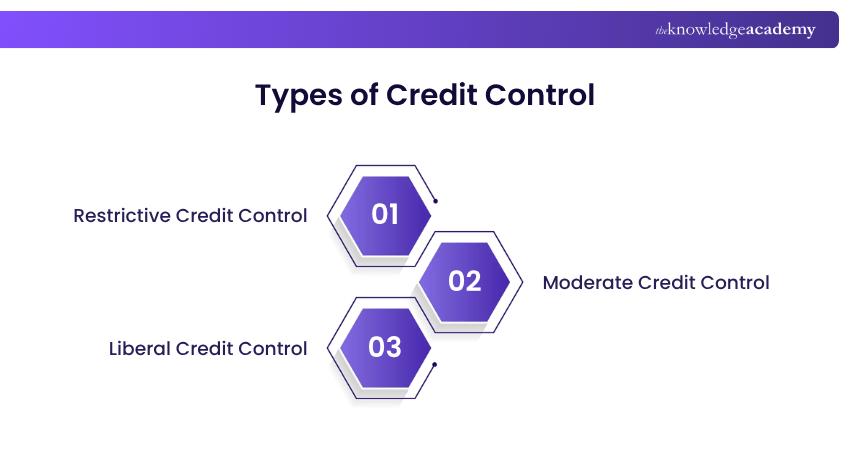
1) Restrictive Credit Control
This conservative approach limits credit extension to customers with strong creditworthiness and reliable payment histories. It’s a low-risk strategy designed to reduce the chances of bad debt by enforcing strict credit terms and conditions.
2) Moderate Credit Control
Moderate Credit Control aims to strike a balance between risk management and revenue growth. Businesses following this approach may extend credit to customers with acceptable but not necessarily excellent credit records, enabling growth while managing potential risk.
3) Liberal Credit Control
Under a liberal policy, the primary focus is on increasing sales and enhancing customer satisfaction. Credit is offered to a broad customer base, including those with weaker credit backgrounds. While this can boost sales volume, it also exposes the company to a higher risk of defaults.
Learn to simplify finances and track every transaction with the Bookkeeping Course now!
Factors Influencing Credit Control
There are several factors that influence the Credit Control policy and strategy of a business, such as:
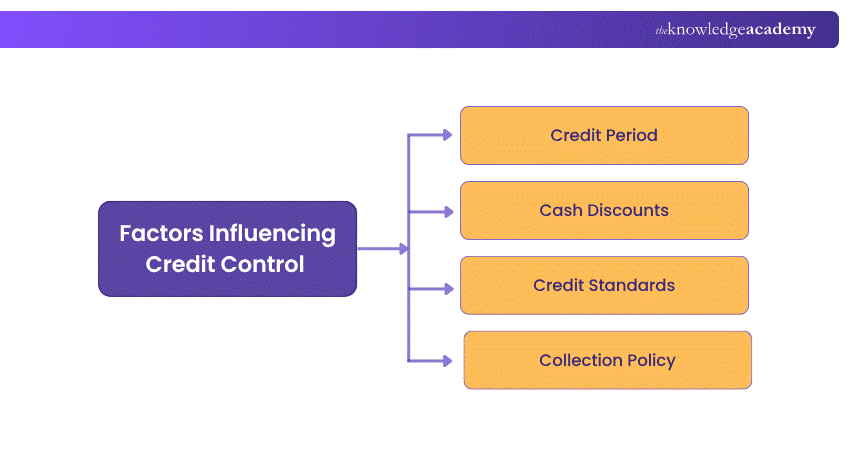
1) Credit Period
The credit period is the length of time that a customer or supplier is allowed to pay for the goods or services purchased on credit. The credit period can vary depending on the industry, the market conditions, the nature of the product or service, the competition, and the customer or supplier profile. Generally, a longer credit period can attract more customers or suppliers, but it can also increase the risk of delayed or defaulted payments and reduce the cash flow of the business.
2) Cash Discounts
Cash discounts are the reductions in the invoice amount that a customer or supplier can receive if they pay within a specified period of time, usually shorter than the credit period. Cash discounts can encourage early payments, improve cash flow, and reduce the cost of financing. However, cash discounts can also reduce the profit margin of the business and may not be effective if the customer or supplier has a low sensitivity to price or a high opportunity cost of capital.
3) Credit Standards
Credit standards are the criteria that a business uses to determine the creditworthiness and risk of a customer or supplier. Credit standards can include financial statements, credit reports, credit scores, references, guarantees, collateral, and other relevant information.
Credit standards can help the business select the customers or suppliers that are most likely to pay on time and in full and avoid those that are likely to default or delay payments. However, credit standards can also limit the sales potential of the business and may require additional resources and costs to obtain and analyse the data.
4) Collection Policy
A collection policy is a set of rules a business follows to collect payments from customers or suppliers who buy on credit. It includes sending invoices and reminders, making follow-up calls, and sometimes arranging payment plans or applying late fees. In some cases, businesses may stop services or take legal action if payments are not made.
This policy helps recover overdue payments and reduce bad debts. However, it can also affect customer satisfaction and may require extra time and cost to manage.
Take control of your business cash flow and secure financial stability with the Cash Management Course today!
Benefits and Drawbacks of Credit Control
Credit Control plays an important role in managing overall business finances. It has both advantages and disadvantages that businesses must be informed about. Let’s look at the key ones below for a better understanding of What is Credit Control:
1) Benefits
The benefits of Credit Control include:
a) Improved Cash Flow: It ensures timely payments, helping businesses maintain financial stability.
b) Reduced Bad Debts: It limits the risk of unpaid invoices, eliminating any chance of financial losses.
c) Better Customer Relationships: It has clear payment terms that encourage trust and responsible payment behaviour.
d) Efficient Debt Collection: Structured processes in Credit Control make it easier to track and recover payments.
2) Drawbacks
The drawbacks of Credit Control include:
a) Reduced Sales Potential: Due to strict credit policies, it may discourage some customers from purchasing on credit
b) Higher Administrative Costs: Managing credit checks and collections can be a time-consuming process, and extra resources may be required.
c) Customer Dissatisfaction: Tight policies or frequent follow-ups may affect relationships with customers.
d) Balancing Challenge: It can be a challenging task to manage credit risk while still supporting business growth.
The Essential Steps of a Credit Control Process
A strong Credit Control process ensures that payment terms are clear and followed consistently. It helps businesses reduce delays, manage risk, and maintain steady cash flow. Let’s look at the essential steps below to foster an insightful understanding of What is Credit Control:
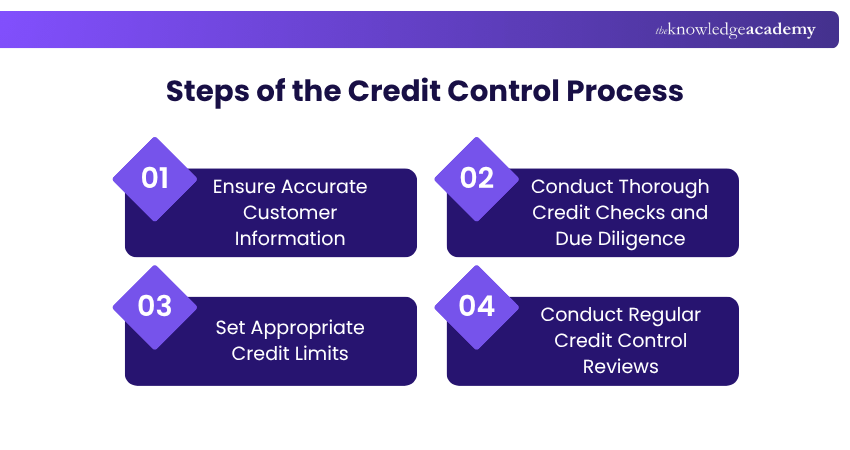
1) Ensure Accurate Customer Information
Collect the correct legal name, company entity, registered address, and billing contact details before issuing credit. Also, confirm invoice delivery details such as email IDs or departments. Even small errors can cause invoices to go to the wrong place, leading to delays and disrupting the entire credit control process.
2) Conduct Thorough Credit Checks and Due Diligence
Evaluate new customers before offering credit by reviewing their financial health, credit score, business reputation, and past payment behaviour. Using credit reporting tools or references helps identify potential risks early. This step ensures you only extend credit to reliable customers and avoid future payment issues.
3) Set Appropriate Credit Limits
Define a maximum credit amount for each customer to control risk exposure. Consider factors such as their payment history, order frequency, seasonal demand, and overall financial stability. Regularly review and adjust limits based on customer performance to maintain a balance between sales and risk.
4) Conduct Regular Credit Control Reviews
Continuously monitor outstanding and overdue invoices to stay on top of payments. Identify which accounts require follow-up and analyse reasons for delays, such as missed invoices or cash flow issues on the customer’s side. Regular reviews ensure timely action is taken and prevent debts from escalating.
Transform your financial skills with our Accounting Courses – empower your career journey now!
How and When to Write a Credit Control Letter?
Even with a strong Credit Control process, some customers may delay or miss payments. In such cases, a Credit Control letter becomes an important tool to remind customers of their obligations. Let’s look at how and when to write one below:
a) One Week After the Due Date: Send a polite reminder letter. Keep it short and friendly, requesting payment within the next week. The aim is to prompt action without damaging the relationship.
b) One Week After the First Letter: If payment is still pending, send a second letter with a firmer tone. Clearly state the outstanding amount, include the invoice, and set a specific deadline for payment.
c) Two Weeks After the Second Letter: If the payment remains unpaid, consider escalating the matter. Inform the customer that you may involve a debt collection agency or insurer. Communicate this clearly through both email and post and be ready to follow through.
Primary Responsibilities of a Credit Controller
A Credit Controller is a person who implements and manages the Credit Control policy and strategy of a business. The primary responsibilities of a Credit Controller are:
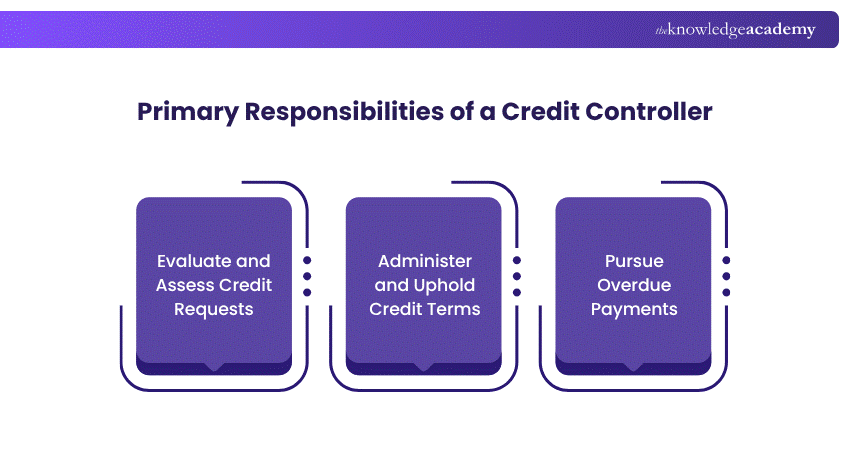
1) Evaluate and Assess Credit Requests
A Credit Controller evaluates and assesses credit requests from customers or suppliers based on the business's credit standards and criteria, utilising their strong Credit Controller Skills to ensure accurate assessments and informed decisions. They review financial statements, credit reports, credit scores, and other relevant information.
They determine creditworthiness and risk using references, guarantees, collateral, and additional data. Based on their assessment, they grant or deny credit requests and set credit limits, periods, and terms for customers or suppliers.
2) Administer and Uphold Credit Terms
A Credit Controller administers and upholds the agreed credit terms and conditions with customers or suppliers. They send invoices and reminders and make phone calls or visits to ensure timely payments.
They also negotiate payment plans, impose late fees, withhold deliveries or services, and take legal action as per the business's collection policy. Their goal is to ensure timely and full payments, preventing any delays or disputes.
3) Pursue Overdue Payments
A Credit Controller is responsible for pursuing overdue payments from customers or suppliers who have failed to pay within the credit period or the agreed payment plan. They must contact these parties to determine the reasons for non-payment or late payment.
They also need to resolve issues causing delays, such as product or service quality, delivery problems, invoice or payment errors, or financial difficulties. Ultimately, their goal is to recover overdue payments and reduce bad debts and write-offs for the business, which can also be a key focus in Credit Controller Interview Questions.
What is the Difference Between Credit Control and Credit Management?
Credit Control refers to the specific process of setting credit limits, approving customer credit, and collecting outstanding payments to reduce the risk of bad debt. It is more operational and focused on short-term credit enforcement.
Credit Management, on the other hand, is a broader function that includes formulating credit policies, analysing customer creditworthiness, monitoring credit exposure, and aligning credit strategy with business objectives. It covers both strategic planning and operational execution.
Conclusion
Effective understanding What is Credit Control gives businesses the confidence to manage credit wisely while keeping cash flow steady and risks under control. By applying the right processes, setting clear terms, and following up effectively, organisations can improve financial stability. This leads to stronger relationships and fosters long-term business growth.
Want to evaluate financial health and make informed decisions? Join our Accounting and Financial Statement Analysis Training today!
Frequently Asked Questions
Who Does Credit Control Collect For?

Credit Control collects outstanding payments for businesses that offer credit to customers. It mainly supports (Business-to-business) B2B companies, manufacturers, wholesalers, service providers, and retailers that sell goods or services on deferred payment terms.
How Credit Control Works?
Credit Control is all about checking credit requests, setting limits, and keeping an eye on outstanding debts. It involves sending invoices and reminders, negotiating payment plans, and taking actions like charging late fees or going legal if needed. This process helps manage credit risk and keeps the business financially healthy.
What are the Other Resources and Offers Provided by The Knowledge Academy?
The Knowledge Academy takes global learning to new heights, offering over 3,000+ online courses across 490+ locations in 190+ countries. This expansive reach ensures accessibility and convenience for learners worldwide.
Alongside our diverse Online Course Catalogue, encompassing 17 major categories, we go the extra mile by providing a plethora of free educational Online Resources like Blogs, eBooks, Interview Questions and Videos. Tailoring learning experiences further, professionals can unlock greater value through a wide range of special discounts, seasonal deals, and Exclusive Offers.
What is The Knowledge Pass, and How Does it Work?
The Knowledge Academy’s Knowledge Pass, a prepaid voucher, adds another layer of flexibility, allowing course bookings over a 12-month period. Join us on a journey where education knows no bounds.
What are the Related Courses and Blogs Provided by The Knowledge Academy?
The Knowledge Academy offers various Accounting Courses, including Introduction to Credit Control Course, Certified Artificial Intelligence (AI) for Accountants Training and Accounting and Financial Statement Analysis Training. These courses cater to different skill levels, providing comprehensive insights into Credit Management.
Our Accounting and Finance Blogs cover a range of topics related to Credit Control, offering valuable resources, best practices, and industry insights. Whether you are a beginner or looking to advance your Accounting skills, The Knowledge Academy's diverse courses and informative blogs have you covered.

Olivia Taylor


Chartered Accountant and Financial Training Specialist
Olivia Taylor is a qualified chartered accountant with over a decade of experience in financial management, auditing and corporate reporting. Having worked with leading firms in both the public and private sectors, Olivia brings clarity to complex financial topics. Her writing focuses on helping professionals build confidence in key areas of accounting, compliance and financial planning.
View Detail
Upcoming Accounting and Finance Resources Batches & Dates
Date
 Finance for Non Financial Managers
Finance for Non Financial Managers
Fri 10th Jul 2026
Finance for Non Financial Managers
Fri 9th Oct 2026

 If you wish to make any changes to your course, please


