


 Top Rated Course

We may not have the course you’re looking for. If you enquire or give us a call on +44 1344 203999 and speak to our training experts, we may still be able to help with your training requirements.
Mobile Marketing | Trends & Strategies
James Smith 08 May 2026Mobile marketing is a digital strategy that targets users on smartphones and tablets through channels like SMS, mobile apps, websites, emails, and social media. It delivers personalised, real-time content based on user location, behaviour, and preferences. The goal is to engage customers, boosting brand visibility and customer loyalty.

Training Outcomes Within Your Budget!
We ensure quality, budget-alignment, and timely delivery by our expert instructors.
Table of Contents

In a world where people check their phones more than 90 times a day, learning What is Mobile Marketing is your ticket to visibility. Mobile marketing makes it possible to reach them with the right message, at the right moment. From in-game ads to geo-fenced deals and viral Reels these tools help brands not just reach but own the mobile moment. Because being seen isn’t enough. It’s time to be tapped.
The most powerful ad space in 2025 fits in a pocket. Understanding What is Mobile marketing puts your brand on the front line, right next to texts from friends from their feed. But to win, you need more than space, a full-fledged strategy. In this blog, you can unpack how smart brands are mastering mobile with social media tricks, app magic, location-based genius, and snackable content that sticks.
Table of Contents
1) Understanding “What is Mobile Marketing?”
2) Importance of Mobile Marketing
3) Types of Mobile Marketing Strategies
4) Mobile Marketing vs. Traditional Marketing
5) SEO and Mobile Marketing Optimisation
6) Benefits of Mobile Marketing
7) Limitations of Mobile Marketing and How to Overcome Them
8) Best Practices for Mobile Marketing
9) Future of Mobile Marketing
10) How Do I Ensure My Mobile Marketing Is Effective?
11) What Is Mobile Commerce (M-commerce) And How Does It Relate to Mobile Marketing?
12) Conclusion
Understanding “What is Mobile Marketing?”
Mobile marketing is a strategic, user-focused approach to reaching people on their most personal device. It involves delivering targeted, timely, and relevant content via mobile channel to understand mobile marketing. It’s about delivering smart, personalised messages via apps, texts, mobile sites, and more, right into the palm of their hand.
Mobile-centric Approach
A mobile-first mindset is essential in today’s digital landscape. Mobile marketing starts by designing content, campaigns, and platforms with smartphones and tablets in mind.
1) Responsive designs ensure websites and emails look great on all screen sizes
2) Mobile apps are optimised for user experience and engagement
3) Campaigns are tailored for swipe, tap, and scroll behaviour
Why it Matters: With over half of web traffic now coming from mobile, putting mobile at the centre of your strategy is expected.

User Behaviour Insights
Mobile marketing thrives on understanding how users interact with their devices.
1) Marketers track app usage, screen time, location, and browsing patterns
2) Data helps brands learn when and how people engage
3) whether during a morning commute or a late-night scroll
Why it Matters: These insights fuel smarter decisions and help you reach users at the perfect time with the perfect message.
Multi-channel Integration
Mobile marketing isn’t limited to one platform. It’s a network of touchpoints working together.
1) SMS campaigns, push notifications, in-app messages, mobile websites
2) It also uses social ads, and email all contribute
3) Integration ensures consistent brand messaging and user experience
Why it Matters: A seamless experience across platforms keeps users engaged and encourages conversions, no matter where they interact with your brand.
Personalisation and Relevance
Today’s users expect messages tailored to their interests, location, and behaviour. Mobile marketing allows hyper-personalised communication at scale.
1) Dynamic content adapts based on user actions or preferences
2) Geo-targeting delivers localised offers and updates
3) Behavioural data guides product recommendations and messaging
Why it Matters: Personalised experiences increase user trust, engagement, and loyalty, making each interaction feel like it was made just for them.
Importance of Mobile Marketing
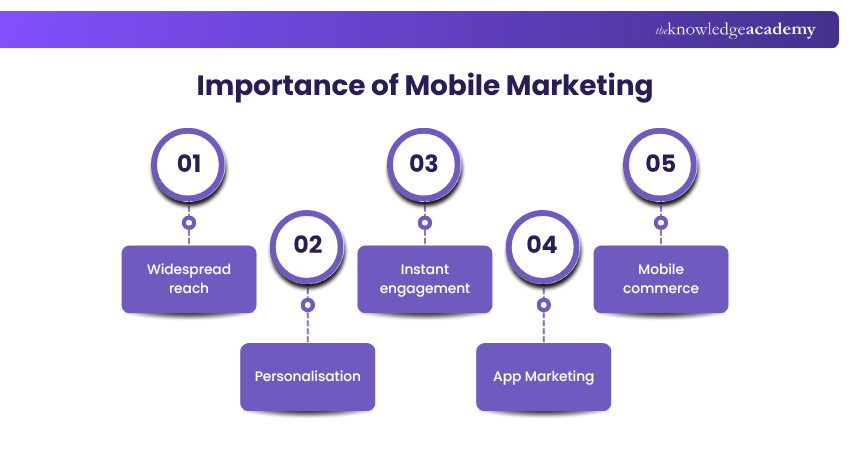
Mobile devices have become an important part of our daily existence, fundamentally transforming how we communicate, shop, and engage with content. The importance of Mobile Marketing stems from its capacity to harness this extensive user base, delivering messages that are personalised, well-timed, and pertinent. Here are the reasons that underscore the significance of Mobile Marketing.
Unlock the potential of Mobile Marketing with our transformative Mobile Marketing Course. Join now!
Widespread reach
Mobile Marketing's power lies in its ability to transcend geographical boundaries. Through mobile devices, businesses can connect with people around the world, regardless of their location. It's like having a virtual bridge that spans continents, enabling companies to deliver messages, offers, and information to a diverse and widespread audience. This expansive reach breaks down barriers and opens doors to new markets and opportunities.
Personalisation
By understanding user preferences, behaviours, and interests, businesses can craft messages and content that feel uniquely relevant to everyone. It is like having a conversation tailored just for you, which grabs your attention and resonates deeply. This personal touch strengthens the bond between businesses and consumers, fostering loyalty and building lasting relationships.
Instant engagement
Mobile devices offer instant access to information and communication. With Mobile Marketing, businesses can engage users in real-time, creating a sense of urgency and immediate response. Whether it is a flash sale, breaking news, or a time-sensitive offer, Mobile Marketing capitalises on the "here and now" mindset, prompting users to take immediate action. It's like a tap on the shoulder that demands attention and encourages swift decisions.
App Marketing
The rise of mobile apps has revolutionised how businesses interact with their audience. Apps provide a dedicated space for brands to offer value, services, and entertainment directly to users' devices. It is like having a virtual storefront that's always open, where users can explore products, access resources, and engage with the brand on their own terms. App Marketing nurtures loyalty, turning users into dedicated fans who keep coming back for more.
Elevate your outreach with effective Email Marketing Course today!
Mobile commerce
Mobile commerce, often referred to as “M-commerce,” has transformed the shopping landscape. It propels traffic to mobile-friendly websites and apps, streamlining the path to purchase directly from handheld devices.
It’s like having a personal shopping assistant at your fingertips—simply tap to explore products, check prices, read reviews, and compare. A few taps later, your purchase is complete. M-commerce blurs the traditional boundaries between in-store and online shopping, offering consumers the freedom and ease to shop whenever and wherever they choose.
Ready to master the world of Mobile Marketing? Join our Marketing Training today!
Types of Mobile Marketing Strategies

In a world full of phones and tablets, businesses are using Mobile Marketing to talk to people. Mobile Marketing, a dynamic and multifaceted strategy, lies at the heart of this digital revolution. This section explores the mechanics of how Mobile Marketing works, unravelling the intricacies behind its effectiveness and impact.
SMS Marketing
Short Message Service (SMS) Marketing is one of the foundational pillars of Mobile Marketing. Key areas:
1) Allows businesses to send short, impactful messages to users’ phones
2) Common uses include promotions, alerts, updates, and calls to action
3) Known for high open rates and quick user engagement
4) Effective for reaching users without internet or app access
5) Success relies on concise, compelling messaging that drives action
6) Ideal for time-sensitive campaigns like flash sales or reminders
7) Works well when combined with personalisation and user preferences
Mobile apps
Lots of companies now have their own apps that you can use on your phone. Key areas to focus:
1) These apps provide exclusive content, features, or experiences
2) They can be tools, games, shopping platforms, or service finders
3) Apps often become part of a user’s daily mobile routine
4) Companies design apps to be helpful and reflect their brand identity
5) In-app messages and notifications keep users engaged and informed
6) Apps help build brand loyalty by encouraging regular use
7) They create a direct connection between the company and the user
Mobile friendly websites
A seamless User Experience on mobile devices is crucial for successful Mobile Marketing. Keys areas to note:
1) A smooth mobile user experience is essential for mobile marketing success
2) Mobile-friendly websites are designed to work well on smaller screens
3) They load quickly and offer intuitive navigation for easy browsing
4) Responsive design adapts the layout to fit any mobile device
5) Users can easily access info, browse, and make purchases on-the-go
6) Suitable for all types of sites, e-commerce, blogs, or service platforms
7) Creates a frictionless experience that keeps users engaged
8) Helps build trust and satisfaction with the brand
Location-based Marketing
Location-based Marketing leverages the geographic location of users to deliver targeted messages and offers. Keys areas:
1) Uses a user's geographic location to send targeted messages or offers
2) Geofencing triggers alerts when users enter defined areas like stores or venues
3) Beacon technology enables hyper-local notifications within close rang
4) Delivers contextually relevant content based on real-world movement
5) Increases chances of engagement by reaching users at the right place and time
6) Common use cases: special discounts, welcome messages, event updates.
7) Enhances user experience with personalised, location-aware communication
8) Ideal for retail, hospitality, and event-based marketing strategies
Push notifications
Push notifications are concise messages sent to a user’s mobile device, regardless of their current activity within the app. Key areas:
1) Short messages sent directly to a user’s mobile device or app
2) Trigger engagement even when the user isn’t active in the app
3) Useful for sharing updates, promotions, reminders, and new product launches
4) Highly effective for driving instant user action or re-engagement
5) Must be used strategically to avoid overwhelming the user
6) Personalisation based on user behaviour boosts relevance and response rates
7) Enhance user experience by delivering timely and valuable information
8) Ideal for e-commerce, media apps, service reminders, and more
Master the art of converting clicks to conversions with our Pay Per Click Training, Join today!
In-Game advertising
Mobile Gaming has emerged as a massive industry, providing a unique opportunity for advertisers. Key focus areas:
1) In-game ads include brand messages, videos, or interactive elements
2) Ads are shown during gameplay, leveraging users' focused attention
3) Creates positive brand associations in a fun, engaging environment
4) Enhances brand recall by integrating with users' leisure time
5) Must be seamlessly placed to avoid disrupting the gaming experience
6) Ads should match the tone, theme, and context of the game
7) Ideal for targeting diverse demographics across entertainment and lifestyle sectors
Social Media Marketing
Mobile devices are the primary gateway for accessing Social Media platforms. Key areas:
1) Brands use this behaviour to share engaging content and run targeted ads
2) Enables real-time interactions with users through comments, DMs, and live sessions
3) Content is optimised for mobile, short videos, reels, and eye-catching graphics
4) Designed to grab attention during brief scroll sessions
5) Encourages likes, shares, clicks, and conversions through interactive posts
6) Platforms like Instagram, TikTok, and Facebook thrive on mobile-first strategies
7) Effective for brand visibility, customer engagement, and driving sales
8) QR codes
Quick Response (QR) codes bridge the gap between the physical and digital worlds. Areas to focus:
1) QR codes connect physical experiences with digital content
2) Users scan codes using their mobile camera, no app required
3) Can lead to landing pages, product info, discounts, or promotions
4) Offer a seamless transition from offline to online engagement
5) Great for use on product packaging, posters, receipts, and store displays
6) Enhance user experience by delivering instant access to relevant content
7) Useful for event check-ins, menu access, loyalty rewards, and more
8) Help track user behaviour and campaign effectiveness in physical spaces
Measurement & analytics
Mobile marketing analytics is the process of evaluating details gathered from marketing campaigns. Areas to focus:
1) Involves analysing data from mobile campaigns and applications
2) Helps evaluate campaign performance and user interaction patterns
3) Aims to improve marketing strategies and optimise results
4) Tracks metrics like click-through rates, app installs, session time, and more
5) Offers insights into user behaviour, preferences, and engagement trends
6) Supports personalised marketing by understanding what users want
7) Enhances user experience through data-driven improvements
8) Drives business growth by aligning efforts with actual user needs
Mobile Marketing vs. Traditional Marketing
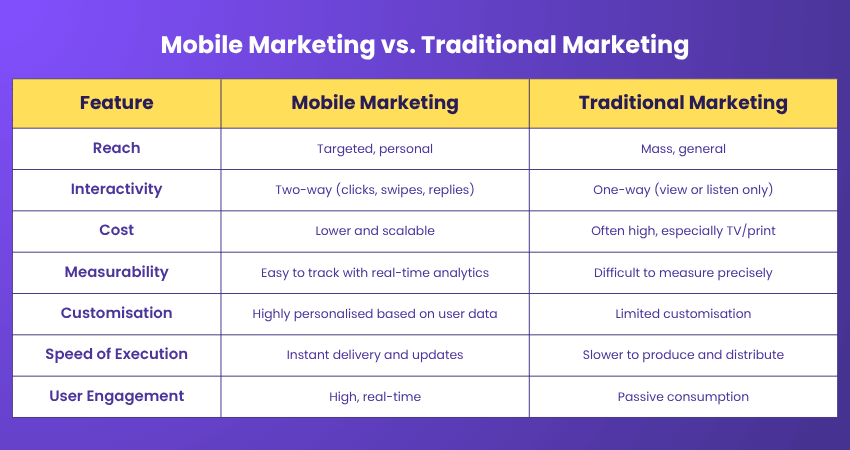
Marketing has evolved dramatically from billboards and print ads to personalised push notifications and geo-targeted campaigns. Understanding the differences between mobile marketing and traditional marketing is key to choosing the right strategy or blending both effectively.
Mobile marketing thrives in today’s digital-first world, fast, measurable, and made for the multitasking mobile user. On a contrast, traditional marketing still holds value for its wide reach and emotional impact, especially for branding.
SEO and Mobile Marketing Optimisation
In the digital age, your mobile marketing strategy is only as strong as your visibility and that’s where Search Engine Optimisation (SEO) comes in. When paired with mobile marketing, SEO ensures your content is not just delivered to mobile users. But it also discovered easily, loads quickly, and engages effectively.
Mobile SEO
Mobile SEO is the practice of optimising your website and content to rank higher in search engine results on mobile devices. Google uses mobile-first indexing, meaning it prioritises how your site performs on mobile when determining rankings. Core elements of mobile SEO include:
1) Mobile-friendly website structure
2) Fast page speed on mobile connections
3) Readable fonts and tappable elements
4) Avoidance of intrusive pop-ups
5) Structured data for rich snippets
Mobile Marketing Optimisation
Mobile marketing optimisation is the process of tailoring content, campaigns, and experiences specifically for mobile users. This includes:
1) Responsive design that adapts to all screen sizes
2) Fast-loading mobile pages to reduce bounce rates
3) Clear call-to-actions placed where thumbs naturally tap
4) Mobile-friendly content such as short texts and vertical videos
5) Optimised apps, SMS campaigns, and push notifications
Benefits of Mobile Marketing
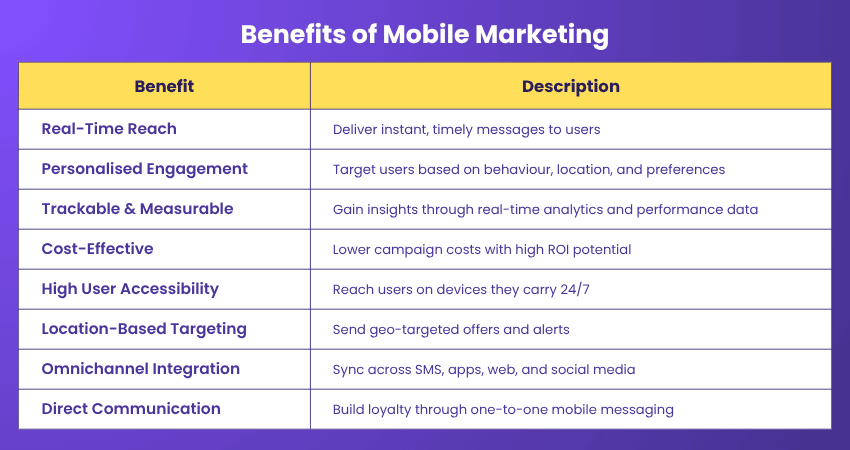
Mobile marketing is a necessity in a world where smartphones is our constant companions. From checking emails and browsing social media to shopping and streaming, people are connected to their phones. Mobile marketing taps into this behaviour, offering powerful ways to engage with audiences in real-time, right in the palm of their hands.
Here are the top benefits that make mobile marketing a must-have strategy for businesses today:
1) Instant and Real-Time Reach
Mobile marketing allows you to deliver messages, offers, or alerts instantly to your audience when they’re most likely to engage.
a) Send time-sensitive push notifications or SMS offers
b) Target users during peak activity hours
c) React quickly to events or trending topics
Why it Matters: Timing is everything in marketing, and mobile lets you act in the moment
2) Highly Personalised Engagement
Mobile devices are personal, so your marketing should be too. Mobile platforms allow for tailored content based on user behaviour, location, preferences, and device type.
a) Personalised product recommendations
b) Location-based deals and alerts
c) Behaviour-driven messages like cart reminders
Why it Matters: Personalisation boosts engagement, customer loyalty, and conversion rates
3) Easy to Track and Optimise
Mobile marketing provides rich analytics that help marketers measure everything from click-through rates and conversions to time spent on page.
a) Monitor user actions in real-time
b) Adjust campaigns instantly based on performance
c) A/B test notifications, designs, or offers
Why it Matters: Data-driven decisions lead to better ROI and smarter marketing strategies
4) Cost-Effective and Scalable
Compared to traditional marketing, mobile campaigns are more affordable and easier to scale.
a) SMS and push campaigns cost far less than TV or print ads
b) Social media ads offer flexible budgets and massive reach
c) Mobile-first email campaigns save time and design resources
Why it Matters: You can reach a large, targeted audience without breaking the bank
5) Ubiquitous Access and High Engagement
Smartphones are always on and always within reach, making mobile the most accessible and consistent way to reach your audience.
a) Over 90% of smartphone users keep their phones within arm’s reach 24/7
b) Users check phones multiple times a day
c) Mobile apps and notifications drive constant engagement
Why it Matters: You’re meeting customers where they already spend their time
6) Location-Based Targeting
Mobile marketing lets you use GPS data to deliver geo-specific content or promotions to users.
a) Promote local deals or in-store offers
b) Trigger alerts when users are near your business
c) Offer region-specific experiences
Why it Matters: Location-aware marketing drives foot traffic and improves relevance
7) Omnichannel Integration
Mobile marketing integrates seamlessly with other digital channels, creating a consistent user experience.
a) Link SMS campaigns to landing pages
b) Use QR codes to drive app installs or site visits
c) Connect social media ads to in-app purchases
Why it Matters: A connected experience increases user trust and satisfaction
8) Direct and Personal Communication
Mobile allows brands to build direct, intimate communication with users via channels like WhatsApp, SMS, and push notifications.
a) Reach users without needing email or social media algorithms
b) Foster a loyal, engaged mobile audience
c) Build trust through consistent, value-driven messaging
Why it Matters: You own the channel and the connection
Limitations of Mobile Marketing and How to Overcome Them
Mobile marketing is powerful, but it’s not without its hurdles. From small screens to privacy concerns, businesses must be aware of the challenges to user-friendly campaigns. Most limitations can be addressed with smart strategies and user-first thinking.
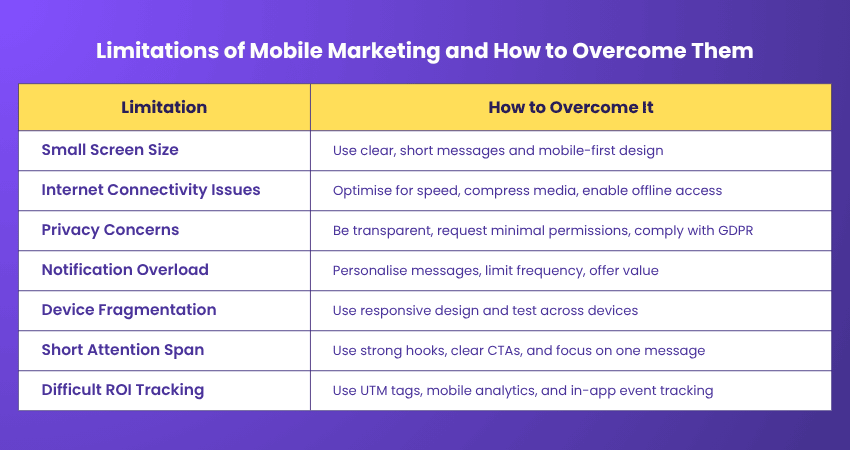
1) Limited Screen Size
The challenge is mobile screens are small, which limits the amount of content you can display. Overcrowded visuals, hard-to-read fonts, or complex designs can frustrate users and reduce engagement.
How to Overcome:
a) Keep messages short, clear, and actionable
b) Use mobile-first, responsive design
c) Prioritise strong headlines, bold CTAs, and simple layouts
d) Optimise visual hierarchy to guide attention
Tip: Design with thumbs in mind and make buttons big enough to tap comfortably
2) Internet Connectivity Issues
Mobile users may experience slow or unstable internet, especially in rural areas or while travelling. This can hinder content loading and disrupt user experience.
How to Overcome:
a) Compress images and use lightweight formats
b) Implement Accelerated Mobile Pages (AMP) for faster loading
c) Allow content caching for offline access where possible
d) Test content performance on 3G and 4G networks
Tip: Always optimise for speed and slow sites with lost users
3) Privacy Concerns and Permissions
Users are increasingly cautious about sharing location data or allowing app permissions. Mishandling data can erode trust and lead to legal issues.
How to Overcome:
a) Be transparent about data collection and usage
b) Request only necessary permissions
c) Offer value in exchange for access like location-based discounts
d) Comply with data regulations like GDPR and CCPA
Tip: Build trust by putting the user in control of their data
4) Ad Fatigue and Notification Overload
Too many messages, especially if irrelevant or too frequent, can cause users to ignore or disable notifications altogether.
How to Overcome:
a) Segment your audience and send relevant, personalised messages
b) Limit frequency, quality over quantity
c) Use analytics to find optimal send times
d) Allow users to customise notification settings
Tip: Make every message count, don’t be the brand that annoys
5) Device and Platform Fragmentation
There are countless mobile devices with different screen sizes, operating systems (iOS, Android), and browsers. Ensuring consistent user experience can be tough.
How to Overcome:
a) Use responsive and adaptive design frameworks
b) Test campaigns across multiple devices and platforms
c) Use cross-platform tools and SDKs for app development
Tip: Regularly test on real devices, not just emulators
6) Limited Attention Span
Mobile users are often multitasking or in a hurry. You have only a few seconds to grab and hold their attention.
How to Overcome:
a) Start with attention-grabbing headlines or visuals
b) Use clear, compelling CTAs
c) Focus on one key message per campaign
d) Optimise for quick actions, scroll, tap, swipe
Tip: Hook them fast. Deliver value instantly
6) Difficulties in Measuring ROI Accurately
Mobile marketing spans multiple channels—SMS, apps, social media, web—making it difficult to track conversions and attribution across touchpoints.
How to Overcome:
a) Use UTM parameters and mobile analytics platforms
b) Implement event tracking within apps
c) Align goals with KPIs specific to mobile like install rates
Tip: Combine data sources for a clearer picture of performance
Best Practices for Mobile Marketing
To succeed in mobile marketing, start with a mobile-first design that fits small screens and encourages easy interactions. Keep content short, clear, and focused on a single message with strong, tappable CTAs. Personalise communication based on user behaviour, location, and preferences to boost engagement.
Most importantly, make every interaction valuable. It offers something useful, entertaining, or exclusive rather than just pushing promotions.

Future of Mobile Marketing
As technology advances and consumer behaviours evolve, mobile marketing is entering an exciting new phase. Here are few future aspects of the same:
1) AI-Driven Personalisation: Smart content for individual behaviour, context, and preferences.
2) Predictive Analytics: Forecasting user needs to deliver proactive, relevant messages.
3) Voice Search & Assistants: Optimising content for Siri, Alexa, and Google Assistant.
4) 5G Expansion: Faster, richer mobile experiences with high-quality video and AR.
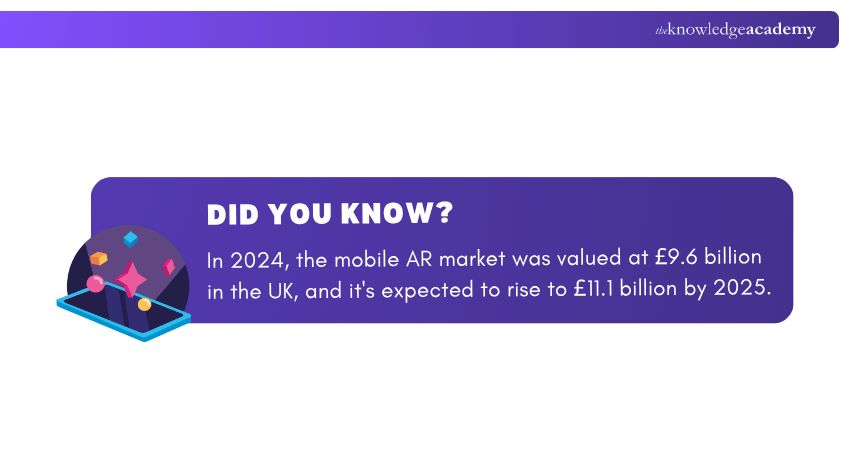
5) Augmented Reality (AR): Interactive AR ads and in-app features for engagement.
6) Conversational Marketing: Chatbots driving real-time, personalised conversations.
7) Privacy-First Strategies: More transparency and compliance with global regulations.
8) Mobile Commerce Growth: Seamless, one-tap shopping integrated into social media and apps.
9) Hyperlocal Targeting: Real-time offers and content based on precise location data.
10) Cross-Platform Integration: Unified experiences across mobile apps and smart devices.
How Do I Ensure My Mobile Marketing Is Effective?
To ensure effective mobile marketing, use a mobile-first design, personalise content, optimise speed, and track user behaviour. Test regularly, respect user privacy, and engage with relevant, timely messages across multiple channels like SMS, push notifications, and social media.
What Is Mobile Commerce (M-commerce) And How Does It Relate to Mobile Marketing?
Mobile commerce (m-commerce) refers to buying and selling through mobile devices. It connects with mobile marketing by using personalised promotions, push notifications, and ads. It is to drive users to mobile shopping experiences and boosts conversions and customer engagement on-the-go.
Conclusion
Success in mobile marketing demands strategy. Understanding What is Mobile Marketing enhances user behaviour, respecting privacy, and offering genuine value to build trust and driving results. As trends like mobile gaming, social media, QR codes, and analytics continue to evolve, marketers must stay agile, and data driven. The brands that do this well will stand out, stay relevant, and grow stronger in a mobile-first world.
Unlock the power of Content Marketing – Join our Content Marketing Course today!
Frequently Asked Questions
What are important guidelines for Mobile Marketing?

Important guidelines for Mobile Marketing include ensuring user privacy, optimising content for mobile devices, using location-based services wisely, maintaining clarity and brevity in messages, and engaging users with timely and relevant content to enhance user interaction and satisfaction.
How effective is Mobile Marketing?
Mobile Marketing is highly effective due to its broad reach and the personal nature of mobile devices. It allows Marketers to deliver personalised content directly to users' devices, leading to higher engagement rates, increased conversions, and effective targeting, especially with the use of data analytics and location-based services.
What are the Other Resources and Offers Provided by The Knowledge Academy?
The Knowledge Academy takes global learning to new heights, offering over 3,000+ online courses across 490+ locations in 190+ countries. This expansive reach ensures accessibility and convenience for learners worldwide.
Alongside our diverse Online Course Catalogue, encompassing 17 major categories, we go the extra mile by providing a plethora of free educational Online Resources like Blogs, eBooks, Interview Questions and Videos. Tailoring learning experiences further, professionals can unlock greater value through a wide range of special discounts, seasonal deals, and Exclusive Offers.
What is Knowledge Pass, and how does it work?
The Knowledge Academy’s Knowledge Pass, a prepaid voucher, adds another layer of flexibility, allowing course bookings over a 12-month period. Join us on a journey where education knows no bounds.
What are the Related Courses and Blogs Provided by The Knowledge Academy?
The Knowledge Academy offers various Marketing Courses, including Digital Marketing masterclass, Social Media Marketing Course, and Mobile Marketing Course. These courses cater to different skill levels, providing comprehensive insights into Brand Equity.
Our Digital Marketing Blogs cover a range of topics related to Mobile Marketing, offering valuable resources, best practices, and industry insights. Whether you are a beginner or looking to advance your Email Marketing skills, The Knowledge Academy's diverse courses and informative blogs have you covered.

James Smith


Digital Marketing Manager and Trainer
James Smith is a digital marketing professional with over a decade of experience in SEO, content strategy, paid media and analytics. He has supported both SMEs and global brands in transforming their digital presence. James’s writing and training are rooted in results-driven tactics and the latest marketing trends.
View Detail
Upcoming Digital Marketing Resources Batches & Dates
Date
 Digital Marketing Course
Digital Marketing Course
Fri 11th Sep 2026
Digital Marketing Course
Fri 30th Oct 2026

 If you wish to make any changes to your course, please


