




We may not have the course you’re looking for. If you enquire or give us a call on +33 805638382 and speak to our training experts, we may still be able to help with your training requirements.
What is a Business Analyst: Roles, Responsibilities, and Skills
ByNaveena VenkatesanLast updated on: 03 October 2026
A Business Analyst identifies business needs, analyses data, and recommends solutions to improve processes, boost performance, and deliver measurable value. They bridge stakeholders and technical teams to ensure requirements are clearly defined. Their insights support better decisions and successful project outcomes.

At a Glance
1. Business Analysts can work across projects, processes, systems and organisational change.2. Their responsibilities vary depending on the industry, organisation and type of initiative.3. Analytical thinking, problem-solving and communication are important skills for the role.4. Business Analysts can contribute to both technology-focused and non-technical business initiatives.
Have you ever been part of a project where everyone was busy, yet nothing seemed clear? Deadlines moved, requirements changed, and teams worked hard but still felt misaligned. That confusion often happens when no one connects bigger business goals with day-to-day work. This is where a Business Analyst makes a real difference by bringing clarity, structure, and direction to complex situations.
So, what is a Business Analyst and why do organisations need one? This blog looks at the role of a Business Analyst, including their key responsibilities, essential skills, qualifications, and career path. Let's get started!
What is a Business Analyst?
A Business Analyst (BA) identifies business needs and works with stakeholders to define requirements and recommend solutions that deliver value. They help connect organisational objectives with practical changes to processes, systems, products or services.
Business Analysts use techniques such as stakeholder analysis, requirements elicitation, process modelling and data analysis where appropriate. They help stakeholders develop a shared understanding of business needs and contribute to evaluating and defining suitable solutions.

What Does a Business Analyst do?
Business Analysts improve processes, analyse data, and support strategic decisions to help organisations achieve their goals. Key responsibilities include:
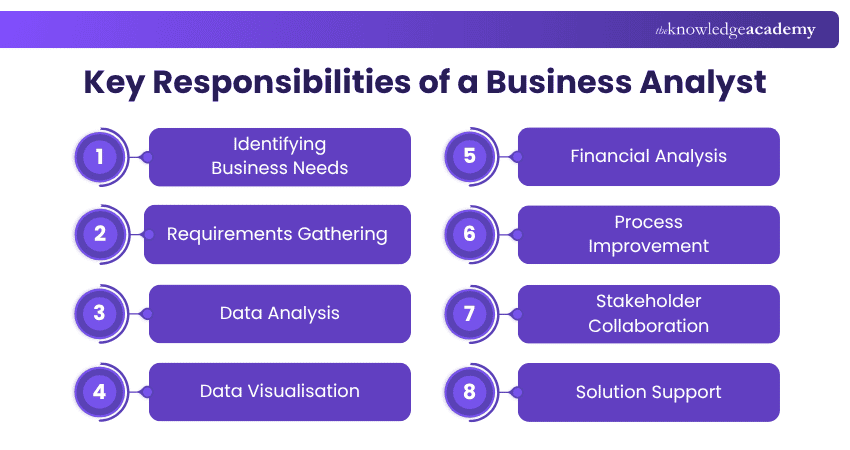
1) Identifying Business Needs: Understand organisational goals, problems and opportunities to identify business needs and define relevant requirements.
2) Requirements Gathering: Collect, prioritise, and document business and system requirements.
3) Data Analysis: Analyse relevant business data where required to identify patterns, support decisions and validate business needs.
4) Data Visualisation: Present findings, requirements and analysis clearly using appropriate visualisations, models, reports or documentation.
5) Financial Analysis: Support financial analysis, budgeting, forecasting, or cost-benefit analysis where relevant to the role and project.
6) Process Improvement: Identify inefficiencies and redesign processes to enhance performance and productivity.
7) Stakeholder Collaboration: Work across departments to communicate insights and manage expectations.
8) Solution Support: Assist in implementing solutions and support user acceptance testing to ensure business needs are met.
9) Enterprise Planning: Contribute to enterprise-level planning or architecture initiatives where relevant to the role.
10) Continuous Improvement: Promote ongoing enhancements in business analysis practices and organisational processes.
Trainer’s Insight
A Business Analyst does more than collect and document requirements. Effective business analysis involves understanding the underlying business need, asking the right questions, and ensuring that stakeholders have a shared understanding of the problem.
Unlock the full potential of your career with the Certified Business Analyst Professional (CBA-PRO) Course - Join to learn more today!
Skills and Qualifications of a Business Analyst
Being a successful Business Analyst requires a unique combination of technical expertise, analytical thinking, and effective communication skills. The following are some essential skills and qualifications that contribute to the success of a Business Analyst:
1) Skills of a Business Analyst
The following are the essential skills of a Business Analyst:
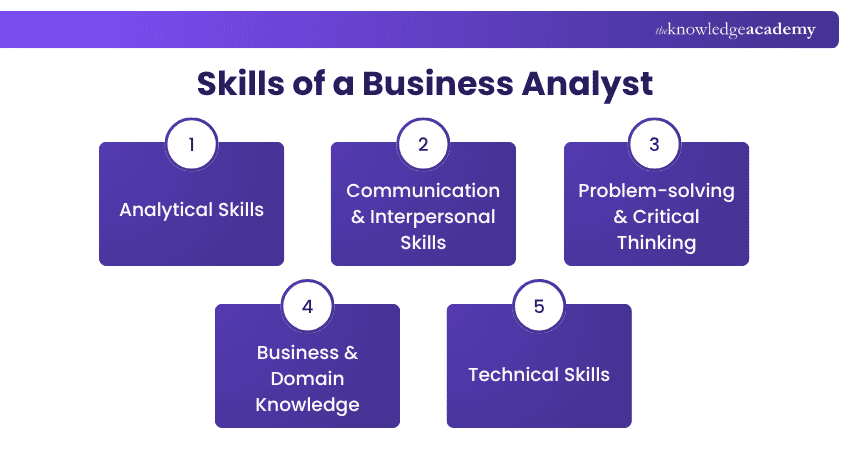
a) Analytical Skills: Business Analysts need to analyse business information, requirements and processes, identify relationships and use evidence to support decisions.
b) Communication & Interpersonal Skills: There is a need to communicate effectively while dealing with stakeholders. To build relationships and resolve conflicts, BAs are required to listen, encourage others to speak, and explain the information found.
c) Problem-solving & Critical Thinking: Through critical evaluation, BAs analyse issues and define key problem areas before evaluating potential solutions against business needs and objectives.
Pro Tip
Before recommending a solution, clearly define the business problem it needs to solve. Understanding the problem, its impact, and stakeholder expectations can help prevent teams from investing time and resources in a solution that does not address the actual need.
d) Business & Domain Knowledge: Business and domain knowledge helps BAs understand context, identify relevant needs and evaluate suitable solution options.
e) Technical Skills: Technical knowledge requirements vary by role. BAs working on technology initiatives may benefit from understanding software development methods, systems and relevant tools so they can collaborate effectively with technical teams.
2) Qualifications of a Business Analyst
Becoming a Business Analyst does not require a specific degree, but many professionals hold a bachelor’s degree in business, finance, IT, computer science, or a related field. A strong analytical background is valuable. Experienced professionals who meet the eligibility requirements may pursue certifications such as CBAP or PMI-PBA to demonstrate their business analysis knowledge and experience.
In addition to education and certifications, practical experience in Data Analysis, systems, or operations is often expected. Continuous learning is equally important for Business Analysts. They must stay updated with evolving tools, industry trends, and best practices through regular training programmes. Engaging in professional communities also helps them remain competitive and continue growing in their careers.
How to Become a Business Analyst?
Becoming a Business Analyst typically involves a combination of education, skills development, and gaining relevant work experience. Here are some pointers to keep in mind:
a) Education: A bachelor’s degree in business, IT, or another related field can provide a useful foundation, although a specific degree is not universally required to become a Business Analyst. One can gain additional skills and knowledge in business analysis to specialise in one of the fields.
b) Developing Skills: Useful capabilities include stakeholder communication, requirements analysis, process modelling, problem-solving and familiarity with relevant business analysis tools. Technical or data skills such as Excel and SQL may also be useful depending on the role.
c) Gain Experience: Relevant experience can be gained through roles in areas such as project coordination, operations, process improvement, systems or data analysis, depending on the intended BA career path.
d) Certifications: Business analysis certifications like PMI Professional in Business Analysis (PMI-PBA) ® can help professionals demonstrate their business analysis knowledge and experience. Also, CBAP is intended for experienced business analysis professionals and has specific work experience and professional development requirements.
e) Continuous Learning: Continue developing your knowledge by participating in professional organisations, attending industry events and exploring relevant learning opportunities.
Common Tools Used by Business Analysts
Business Analysts use different tools depending on their role, industry and project. Common categories include requirements management tools, process modelling software, collaboration platforms, spreadsheets and documentation tools. Data-focused Business Analysts may also use SQL, Power BI or Tableau for analysis and reporting.
Unlock your potential in the field of business analysis and propel your career forward with the comprehensive Business Analyst Black Belt Course – Join now!

Naveena Venkatesan is a Content Editor with 2+ years of experience in content writing, editing and linguistic quality assurance. Her research, fact-checking and editorial experience enable her to develop accurate, accessible resources across Business Skills, Human Resources, and Accounting and Finance.
View Detail

 If you wish to make any changes to your course, please


