


 Top Rated Course

We may not have the course you’re looking for. If you enquire or give us a call on +44 1344 203999 and speak to our training experts, we may still be able to help with your training requirements.
How to Play Piano for Beginners: Easy Steps to Get Started
The Knowledge Academy 28 April 2026Learn piano through correct posture, key recognition, basic notes, simple chords, and focused 10–20 minute practice sessions that build skill and confidence. Short sessions will help make the learning process simple and enjoyable. By practice, anyone can become a strong player and mature into a confident and capable player.

Training Outcomes Within Your Budget!
We ensure quality, budget-alignment, and timely delivery by our expert instructors.
Table of Contents
Learning How To Play Piano often feels out of reach, as if music belongs only to those born with talent. As a matter of fact, all great players began by tapping a single key the first time. When properly guided anyone can create music out of curiosity and experience the serenity, concentration, and happiness that the piano offers.
In this beginner guide, you will learn How To Play Piano through clear, simple steps. From sitting correctly to playing your first notes and chords, each section is designed to build confidence and make learning feel natural from day one.
Table of Contents
1) How to Play Piano Step by Step
2) Types of Pianos
3) How Long Does it Realistically Take to Learn Piano?
4) What's the Best Piano to Buy for a Beginner?
5) Conclusion
How to Play Piano Step by Step
The Piano is a versatile and expressive musical instrument known for its rich sound and wide range of notes. It uses a combination of keys, hammers, and strings to produce tones that suit everything from classical music to modern pop.
Whether you’re a complete beginner or someone returning to the keys after a break, understanding how the piano works makes learning more enjoyable. As you get familiar with the keys, hand positions, and basic techniques, you’ll start to unlock the instrument’s full potential.
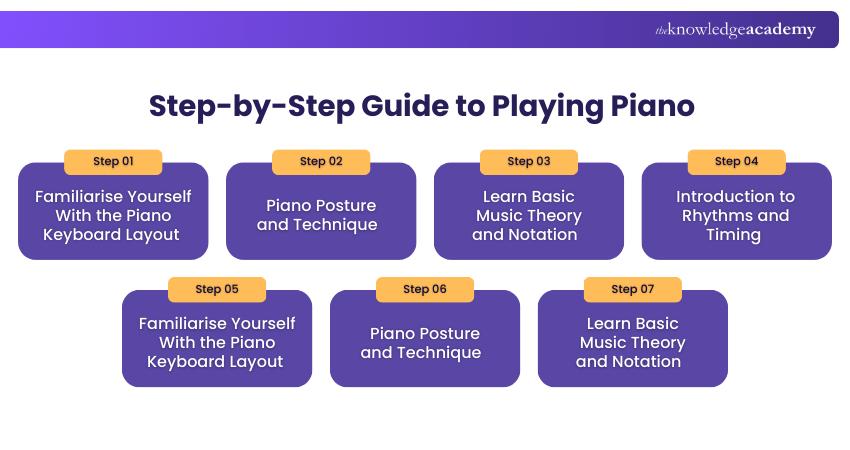
Step 1: Familiarise Yourself With the Piano Keyboard Layout
Music notes might sound strange, but they are not more different than the alphabet you learnt when you was a child. Like letters become natural when one reads them and repeats, so do music notes become clear after regular practice. They are nothing but the ABC of music and with time you will start identifying them as easily as words on this page.
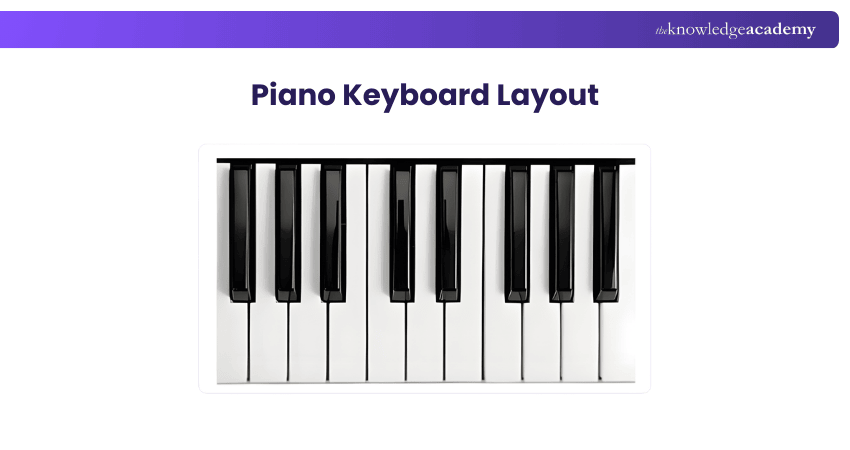
Notes are named A, B, C, D, E, F, and G. You might remember them from the Do-Re-Mi tune. That melody helps you feel their pitch and order. On the music staff, the note in the centre is called Middle C. Sit at the centre of your piano and find this key. The notes in the treble clef are higher, and are in the right of the Middle C, they are usually played with the right hand. Notes on the bass clef are lower and move left, often played with the left hand. This connection between notes and keys helps you navigate the keyboard with confidence.
Step 2: Piano Posture and Technique
Proper posture is essential for comfort, accuracy, and long-term playing of Piano. For that, you can sit at the centre of the keyboard with your back straight, shoulders relaxed, and feet flat on the ground. Keep your wrists slightly elevated and your fingers gently curved over the keys. Good technique promotes better control, prevents tension, and allows you to move smoothly across the keyboard.
As you practise, pay attention to how your hands and arms feel. If you notice stiffness or discomfort, pause and adjust your position before continuing.
Step 3: Learn Basic Music Theory and Notation
Understanding Piano’s music theory lays the foundation in the process of How to Play Piano. Start with note names, the musical staff, clefs, and basic symbols. Learn how rhythms, scales, and chords work together to form melodies and harmonies. Being able to read notation helps you interpret sheet music accurately and progress more quickly as a pianist.
As you learn theory, try applying each concept directly to the piano. For example, play a scale while visualising its notes on the staff, or clap rhythms before performing them. With time, reading notation becomes a smooth and enjoyable part of playing.
Step 4: Introduction to Music Notes and Timing
All the notes on a music sheet instruct you not only how to play, but on how long to play it. It is this that makes music rhythmic and flowing. Initially, these signs might appear to be confusing but they are merely signals to the timing. Start by recognising each note shape and linking it with its count before you play.
1) There are four even beats of a whole note, which are counted as (1 and 2 and 3 and 4 and.).
2) A half note lasts for two beats, counted as (1 and 2 and.)
3) A quarter note is played for one beat, counted as (1 and.)
Striking these numbers, by turns, with the hammer. This exercises your timing sense and will assist you to maintain a constant rhythm when passing through one note to the other.
Step 5: Learn Piano Chords
The elements of music are chords. Majority of the songs are built using a series of chords referred to as progression. Three notes create a basic chord, a triad, and the basic chord consists of a root, a third as well as a fifth.
The root names the chord. The fifth stands behind its framework. The third determines its mood and it is either major or minor. A C major chord uses C, E, and G. Play C with your thumb, E with your third finger, and G with your little finger.
In order to come up with C minor, retain C the same, G the same, and reduce E a step to E. Major chords are brighter, whereas minor chords are softer. In chord charts, C is used to indicate major, Cm means minor and other symbols such as C7 to indicate the addition of extra notes.
Unleash your musical creativity with our Music Production Course – Sign up today!
Step 6: Perform the Melody
Now, it’s time to perform simple melodies. Start with familiar tunes like “Twinkle, Twinkle, Little Star” or “Happy Birthday.” Focus on playing with your right hand first while your left hand plays supporting chords. Take it slow and concentrate on accuracy before speeding up. Gradually move on to slightly more challenging melodies to keep improving your skills.
As you gain confidence, experiment with dynamics by playing some notes softly and others more loudly. This helps you add emotion and expression to your melodies. Over time, you’ll learn to play the Piano with better control on How to Play Piano and start shaping each piece with your own musical style.
Step 7: Review and Practice
Practice makes perfect, so review everything you’ve learned regularly. Break your practice into short, focused sessions, working on hand positions, rhythm, chords, and melodies. Revisit challenging sections until they become smooth. Consistency is key, so aim to practice daily, even if it’s just for a few minutes. Celebrating small milestones will keep you motivated as you progress in your Piano journey.
Try recording yourself occasionally to track your progress and identify areas for improvement. This simple habit not only boosts motivation but also helps you refine your playing with greater awareness.
Types of Pianos
Understanding the different types of pianos can help you choose the right instrument for your learning style and musical goals. Here are the two most common types:
Digital Pianos
Digital Pianos are modern instruments designed to replicate the sound and feel of an acoustic Piano. They use high-quality sampled sounds and weighted keys to mimic the experience of playing a real Piano.
These are popular among beginners and home learners because they are compact, require no tuning, and often include helpful features such as volume control, headphone support, built-in rhythms, and recording options. Their versatility makes them a practical and budget-friendly choice for many learners.
Electric Piano
Electric Pianos, unlike Digital Pianos, create sound through electronic circuits rather than sampled acoustic tones. They often have a distinctive, warm tone commonly heard in jazz, soul, and classic pop music. They usually offer a range of unique sound effects and tonal variations.
They are lighter, more portable, and frequently used in live performances or music production. While they may not fully replicate the feel of an acoustic Piano, their stylistic sound makes them appealing to musicians exploring creative or modern genres.
How Long Does it Realistically Take to Learn Piano?
Learning Piano depends on your goals, practice routine, and natural pace. Most beginners can learn basic skills like simple melodies, chords, and reading easy sheet music within two to three months of regular practice.
Reaching an intermediate level, where you can play more complex pieces smoothly, often takes around one to two years. Consistency, quality guidance, and practising even a little each day make the biggest difference in how quickly you progress.
What's the Best Piano to Buy for a Beginner?
A digital Piano with weighted keys is great for beginners. It is affordable, compact, and feels like an acoustic Piano. Look for features like touch sensitivity, built-in metronomes, and headphone support to enhance your learning. Choosing a reliable brand ensures better sound quality and a more enjoyable playing experience.
Conclusion
Learning How to Play Piano is a journey that blends patience, curiosity, and steady practice. By following each step from understanding the keyboard and posture to mastering chords, melodies, and music reading, you build the foundation needed to grow as a confident player. With time and dedication, the Piano becomes not just an instrument, but a rewarding creative outlet you can enjoy for years to come.
Explore your passions: Register for our Hobbies and Interests Courses today!
Frequently Asked Questions
What is the 80/20 Rule for Piano Practice?

The 80/20 rule for Piano practice means spending 80% of your time working on the most important skills like scales, chords, technique, or difficult sections of a piece and only 20% on easier or already-mastered parts. This helps you improve faster by focusing on what truly boosts your progress.
How Easy is it to Learn Piano?
Learning Piano is simple in certain ways. A person with no musical experience can also learn a simple melody in less time. In some ways, playing the Piano is just like pressing buttons.
What are the Other Resources and Offers Provided by The Knowledge Academy?
The Knowledge Academy takes global learning to new heights, offering over 3,000+ online courses across 490+ locations in 190+ countries. This expansive reach ensures accessibility and convenience for learners worldwide.
Alongside our diverse Online Course Catalogue, encompassing 19 major categories, we go the extra mile by providing a plethora of free educational Online Resources like Blogs, eBooks, Interview Questions and Videos. Tailoring learning experiences further, professionals can unlock greater value through a wide range of special discounts, seasonal deals, and Exclusive Offers.
What is The Knowledge Pass, and How Does it Work?
The Knowledge Academy’s Knowledge Pass, a prepaid voucher, adds another layer of flexibility, allowing course bookings over a 12-month period. Join us on a journey where education knows no bounds.
What are the Related Courses and Blogs Provided by The Knowledge Academy?
The Knowledge Academy offers various Hobbies and Interests Courses including, Piano Course, Photography Course, and Fashion Design Training. These courses cater to different skill levels, providing comprehensive insights into Keyboard vs Piano.
Our Business Skills Blogs cover a range of topics related to How to Play Piano, offering valuable resources, best practices, and industry insights. Whether you are a beginner or looking to advance your Piano skills, The Knowledge Academy's diverse courses and informative blogs have you covered.

The Knowledge Academy


Global Training Provider
The Knowledge Academy is a world-leading provider of professional training courses, offering globally recognised qualifications across a wide range of subjects. With expert trainers, up-to-date course material, and flexible learning options, we aim to empower professionals and organisations to achieve their goals through continuous learning.

Upcoming Business Skills Resources Batches & Dates
Date
 Leadership Skills Training
Leadership Skills Training
Fri 3rd Jul 2026
Leadership Skills Training
Fri 4th Sep 2026

 If you wish to make any changes to your course, please


