


 Top Rated Course

We may not have the course you’re looking for. If you enquire or give us a call on +44 1344 203999 and speak to our training experts, we may still be able to help with your training requirements.
What is Ethereum: A Complete Guide
Richard Harris 13 July 2026Ethereum is a decentralised blockchain platform that enables Developers to build and run smart contracts and Decentralised Applications (dApps). It supports Decentralised Finance (DeFi) and Non-fungible Tokens (NFTs), expanding its use beyond digital payments. It ensures transparency and security without relying on central authorities.

Training Outcomes Within Your Budget!
We ensure quality, budget-alignment, and timely delivery by our expert instructors.
Table of Contents
Ever wondered how a single technology could revolutionise finance, gaming, art, and social media simultaneously? Well, Ethereum did exactly that. It is not just a Cryptocurrency but a decentralised global software platform fuelled by Blockchain Technology. Its incredible versatility lets users make transactions, earn interest, store NFTs, trade Cryptocurrencies, and immerse themselves in virtual worlds.
In this blog, we will explore What is Ethereum, how it works, its exclusive features, ways to buy, use cases, and what its future holds. It's time to set our eyes towards the Blockchain horizon and uncover the wonders of this game-changing technology. So, read on!
Table of Contents
1) What is Ethereum?
2) How Does Ethereum Work?
3) What is Ethereum 2.0 (Eth2)?
4) How to Buy Ethereum?
5) What is Staking and How Does it Work?
6) Why Should You Use Ethereum?
7) Ethereum Features
8) Future of Ethereum
9) What Will Ethereum Be Worth in 2030?
10) Is Ethereum Secure?
11) Conclusion
What is Ethereum?
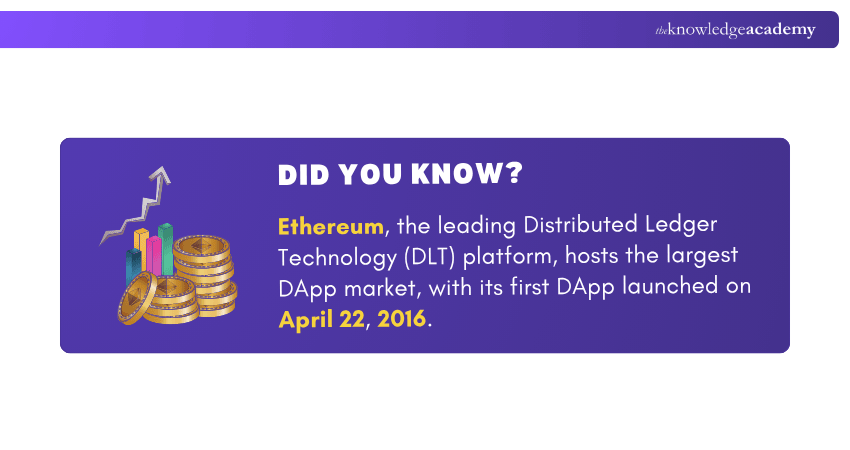
Ethereum is a decentralised, open source blockchain platform that allows Developers to build and deploy smart contracts and Decentralised Applications (dApps) over the internet. Instead of relying on banks or central servers, it operates on a distributed network of computers, making transactions transparent and difficult to tamper with.
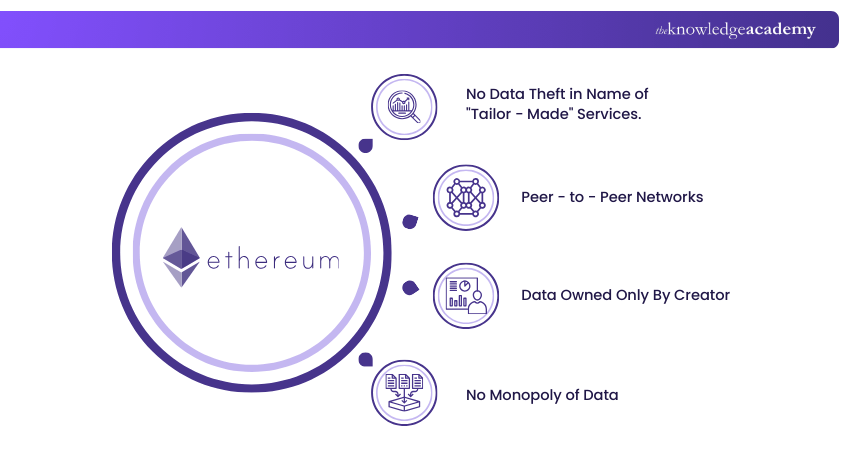
Ethereum uses its native cryptocurrency, Ether (ETH), as the fuel that powers the network and pays transaction fees, known as gas fees. Beyond simple payments, it supports Decentralised Finance (DeFi) and Non-fungible Tokens (NFTs), allowing users to lend, borrow, trade digital assets, and prove ownership of unique digital items.

How Does Ethereum Work?
Now, let’s check how Ethereum works:
1) Distributed Blockchain Network
Ethereum operates on a global network of computers called nodes. Each node stores a copy of the blockchain ledger, which records all transactions. When a user sends Ether (ETH) or interacts with an application, the request is shared across the network and verified before being permanently added to the blockchain.
2) Transaction Verification
Every transaction is checked by validators to confirm authenticity. They ensure the sender has enough funds and that the transaction follows network rules. Once verified, transactions are collected as blocks and attached to the existing chain, making them secure and tamper resistant.
3) Proof of Stake Consensus
Ethereum uses a Proof of Stake (PoS) system to maintain security. Participants known as validators lock up some amount of ETH as collateral to validate transactions. Honest validators receive rewards, while dishonest actions can result in losing their staked ETH.
4) Smart Contracts Execution
Smart contracts are self-executing programmes stored on the blockchain. They automatically do the actions when some conditions are met, such as releasing payments or granting access to digital assets. These contracts remove the need for intermediaries and enable dApps.
5) Gas Fees
Each action on Ethereum requires a transaction fee called gas. Gas calculates the computing power needed to process a transaction or run a smart contract. Users pay gas fees in ETH, which compensates validators for maintaining and securing the network.
6) Support for dApps and Digital Services
Because Ethereum is programmable, Developers can build services such as DeFi platforms, NFT marketplaces, and blockchain games. This makes Ethereum function like a global computer where applications run securely without central control.
What is Ethereum 2.0 (Eth2)?
Ethereum 2.0 is an upgraded version of the Ethereum network, transitioning from the Proof-of-Work (PoW) model to the Proof-of-Stake (PoS) model. This upgrade addresses many of the technical challenges faced by the original Ethereum system. The Ethereum Foundation refers to the original Ethereum as ‘ETH 1.0’ and Ethereum 2.0 as ‘ETH2’, representing the execution and consensus layers, respectively.
Key points about Ethereum 2.0:
1) Need for Ethereum 2.0:
a) Growing blockchain awareness has led to increased network activity.
b) Higher transaction fees and slower validation times have become common issues.
c) Ethereum 2.0 aims to resolve these challenges with new features like the Beacon Chain and PoS consensus algorithm.
2) Gradual Implementation:
a) Ethereum 2.0 is being implemented over time, not as a one-time event.
b) It introduces two essential features: the Beacon Chain and the PoS consensus algorithm.
3) Beacon Chain:
a) The Beacon Chain is one of the first features of Ethereum 2.0.
b) It facilitates necessary changes for future upgrades.
c) Shard Chains, a part of this upgrade, distribute transactions across smaller blockchain networks to clear network congestion.
4) Proof-of-Stake (PoS) Consensus Algorithm:
a) PoS offers a faster and more accessible form of blockchain consensus.
b) Validators, instead of miners, perform tasks like storing the Ethereum blockchain and validating transactions.
c) PoS (Proof of Stake) does not require the unique and heavy hardware typically associated with Cryptocurrency mining.
d) Any user with sufficient funds and a device can participate, increasing accessibility and appeal.
e) As the number of validators grows, more blocks get validated, ensuring network growth and further decentralisation of Ethereum.
Sign up for our Blockchain Courses and build the backbone of tomorrow’s tech!
How to Buy Ethereum?
Buying Ethereum is an easy process and you do not need special technical knowledge for that. Today, you can purchase Ether (ETH) through regulated cryptocurrency platforms using normal payment methods like bank transfer, UPI, or debit card. Here is how you can buy Ethereum:
1) Choose a Crypto Exchange:
First, select a trusted cryptocurrency exchange platform. A crypto exchange is basically a website or mobile app where you can purchase digital currencies using normal money (like INR, debit card, or bank transfer).
2) Create an Account:
Sign up on the exchange by entering your email and creating a password. You will also need to complete identity verification by uploading the required documents. This is required for security and legal compliance.
3) Add Money to Your Account:
After verification, deposit funds into your account. Most exchanges allow bank transfer, UPI, net banking, or debit card payments. The deposited balance will appear in your exchange wallet.
4) Buy Ethereum (ETH):
Search for Ethereum (ETH) on the platform and choose the amount you want to purchase. Confirm the order, and the ETH will be credited to your exchange wallet within seconds or minutes.
5) Store Your Ethereum Safely:
You can keep ETH in the exchange wallet, but for better security many users transfer it to a personal crypto wallet (mobile wallet, hardware wallet, or desktop wallet). Personal wallets give you full control over your funds.
6) Monitor or Use it:
Once purchased, you can hold Ethereum as an investment, send it to others, trade it for other cryptocurrencies, or use it in decentralised apps such as NFTs or DeFi platforms. Always keep your wallet password and recovery phrase private.
What is Staking and How Does it Work?
Staking involves locking a portion of your Ether (ETH) to support and secure the Ethereum network, for which you earn rewards in return. It’s a fundamental feature of Ethereum 2.0 that allows users to participate directly in validating transactions and creating new blocks.
By staking ETH, you help maintain the blockchain’s integrity while earning rewards that function much like interest. However, the amount depends on network activity and validator performance. In essence, staking is like earning interest on savings, but instead of supporting a bank, you are helping operate a decentralised global network.
Why Should You Use Ethereum?
With an increasing use cases, Ethereum is becoming an integral part of everyday modern life. Here are a few reasons behind using Ethereum:
1) Quicker and Cheaper Cross-Border Payment
With stablecoins such as Tether and US Coin (USDC), based on Ethereum, cross-border payments have become quicker and cheaper. In addition, global payment systems can be made stable and affordable with Ethereum Blockchain.
2) Quicker Help in a Time of Need
During the time of emergencies, such as the current Russia-Ukraine war, Cryptocurrencies like Ethereum have emerged as a means for the Ukrainians to stay connected with the outside world and gain access to quick and reliable money.
Ethereum Features
Before getting deeper into the world of Ethereum, it’s important to ascertain a few of its basic features. Here is a list of those Ethereum features:
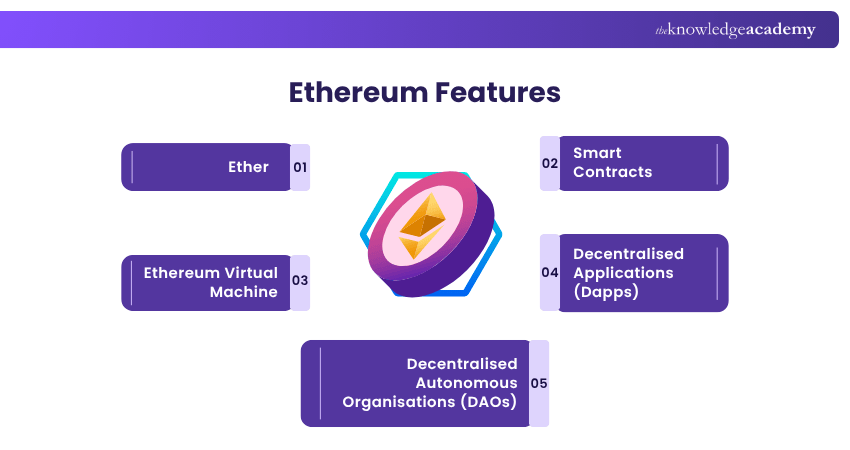
1) Ether
Ether (ETH) is the digital currency of Ethereum. The computational resources and transaction fees that occur on the network are paid using Ether. It can be described as the peer-to-peer currency, which is also used to buy gas. Any transaction on the Ethereum network is made using gas. So, to run transactions on the network, you need gas, which can be acquired by paying in Ether currency.
2) Smart Contracts
Smart Contracts, like regular contracts, contain mutually decided rules and regulations to assist the exchange of assets between two or more parties. The assets could be money, property, or even digital assets. This can be created through any Ethereum user.
Smart Contract executions are decentralised. This means that anonymous parties in the network handle processes like verification instead of a central authority.
3) Ethereum Virtual Machine (EVM)
Ethereum Virtual Machines (EVMs) provide the foundational software that helps understand Smart Contracts concisely and allows users to interact with them. Moreover, solidity-based Smart Contracts can be interpreted with EVMs. EVM works in a sandbox environment; isolated virtual machines where potentially unsafe codes can be executed without impacting the entire network.
4) Decentralised Applications (DApps)
Logging into a typical Blockchain Application requires an Application Programming Interface (API) to access the centrally hosted data. On the other hand, decentralised applications use Smart Contract-based API to collect the data you desire from the blockchain network. This Blockchain network is decentralised, where all transactions that occur in the network are verified by miners using the Smart Contract.
5) Decentralised Autonomous Organisations (DAOs)
The DAO is a decentralised organisation that collectively votes to introduce or remove necessary changes to the network. It consists of a designated group of people who function democratically. The regulations in a Smart Contract command DAOs, who use the contracts for decision-making. The DAO has an efficient and concise voting process. This starts with funding the Dapp so that it can execute. A token is provided to each member that represents the share percentage of that person in the DAO.
Embrace the power of digital money with our Bitcoin and Cryptocurrency Course. Sign up now and boost the future of finance!
Future of Ethereum
The Ethereum Developers have catalysed the rising popularity of the Ethereum Blockchain by creating decentralised finance projects and NFTs. These new applications have raised network traffic tremendously, attracting more Developers to Ethereum.
Unfortunately, these factors are insufficient to provide Ethereum with a hassle-free future. One significant drawback is the lag in technological upgradation. This puts Ethereum at a disadvantage amongst its competitors and the ever-growing crypto world. In addition, the recent uprise of Bitcoin might also affect Ethereum's significance.
What Will Ethereum Be Worth in 2030?
While many forecasts attempt to predict Ethereum’s future price, they remain purely speculative. The cryptocurrency market is influenced by numerous unpredictable factors such as technology trends, regulations and investor sentiment. That makes it nearly impossible to forecast Ethereum’s value accurately, even weeks ahead, let alone years into the future.
However, Ethereum’s strong developer community and widespread adoption continue to drive innovation. Its evolving ecosystem, including DeFi and smart contracts, suggests long-term potential beyond short-term price fluctuations. Rising interest in Ethereum-based crypto ETFs and growing staking demand could push ETH toward the £8,000 mark by 2030.
Is Ethereum Secure?
Ethereum is considered secure because it runs on a decentralised blockchain network maintained by thousands of computers worldwide. Since no single authority controls it, the system is resistant to censorship, fraud, and single point failures. All transactions are recorded permanently, making it difficult to alter past records.
The network is protected by a Proof of Stake (PoS) consensus mechanism, where validators lock up Ether (ETH) to help verify transactions. If they attempt dishonest actions, they risk losing their staked funds. This financial incentive encourages honest behaviour and strengthens overall network security.
Conclusion
Understanding What is Ethereum is beneficial in this day and age as it stands as a revolutionary force in the blockchain world, transforming how we create, share and secure digital value. Beyond cryptocurrency, it powers decentralised applications, smart contracts and innovation across industries. As its adoption grows, Ethereum continues to shape the future of finance, technology, and connectivity. It continues to empower a truly decentralised digital economy for everyone.
Learn how modern decentralised technology works with Blockchain Training – Join now!
Frequently Asked Questions
How Ethereum Makes Money?

Ethereum makes money through transaction fees for processing operations, token creation, DeFi services, and NFTs. For Ethereum 2.0, users also earn rewards by staking ETH to secure the network.
Is Ethereum Better Than Bitcoin?
Whether Ethereum is better than Bitcoin depends on certain aspects. Ethereum offers versatility and supports Smart Contracts and DApps. In contrast, Bitcoin is more focused on being a stable digital currency. Secondly, Ethereum's transactions are generally faster and cheaper, while Bitcoin relies more on security and stability.

Richard Harris


Senior Full Stack Developer and Technology Educator
Richard Harris is a highly experienced full-stack developer with deep expertise in both frontend and backend technologies. Over his 12-year career, he has built scalable web applications for startups, enterprises and government organisations. Richard’s writing combines technical depth with clear explanations, ideal for developers looking to grow in modern frameworks and tools.


 If you wish to make any changes to your course, please


