


 Top Rated Course

We may not have the course you’re looking for. If you enquire or give us a call on +44 1344 203999 and speak to our training experts, we may still be able to help with your training requirements.
Top Data Science Skills for Career Growth
Lily Turner 14 July 2026Data Science Skills cover Programming, Data Visualisation, Statistics, Machine Learning, and analysis to interpret data, predict trends, and solve problems. By combining Statistics, Computer Science, and domain expertise, Data Science supports problem-solving in areas like business, healthcare, and technology.

Training Outcomes Within Your Budget!
We ensure quality, budget-alignment, and timely delivery by our expert instructors.
Table of Contents
Data Science is the backbone of modern innovation. You may be exploring their first datasets or refining advanced models as a seasoned pro; mastering the right Data Science Skills is the key to your success in this data-first world. It's all about drawing powerful insights from raw data that eventually drives knowledge and businesses forward.
In this blog, we’ll uncover the most essential Data Science Skills that will amplify your expertise and keep you ahead in this dynamic field. From coding basics to advanced analytics, get ready to unlock the secrets that make data the new gold. So read on!
Table of Contents
1) Who is a Data Science Professional?
2) Top 15 Data Science Skills
3) What is the Difference Between Data Science and Data Analytics Skills?
4) What Tools Should Every Data Scientist Learn?
5) Conclusion
Who is a Data Science Professional?
A Data Science professional is a versatile and highly skilled individual who specialises in extracting actionable insights from vast and complex datasets. They play a pivotal role in Data Science, the multidisciplinary domain that combines various technical and analytical disciplines, including Data Science Technologies, to make data-driven decisions.
Data Science professionals possess a unique blend of technical and non-technical skills, including proficiency in Programming Languages, Machine Learning (ML) Algorithms, Cloud Computing, analytical mindsets and strong communication skills. Furthermore, Data Science professionals are well-versed in ethical considerations surrounding data collection, storage, and analysis, ensuring that their work adheres to legal and ethical guidelines.

Top 15 Data Science Skills
The top Data Science Skills demand a powerful mix of technical expertise, analytical thinking and business insight. These help Data Scientists turn complex data into meaningful, actionable intelligence. Let's explore these skills in detail:
Core Technical Data Science Skills
Below is a detailed list of the top technical Data Scientist Skills:
1) Programming
Programming Languages play a key role in helping Data Scientists analyse and handle large datasets, often referred to as Big Data. Those new to Data Science should focus on core concepts and start building proficiency in Python. Commonly used languages include Python, R, SAS and SQL.
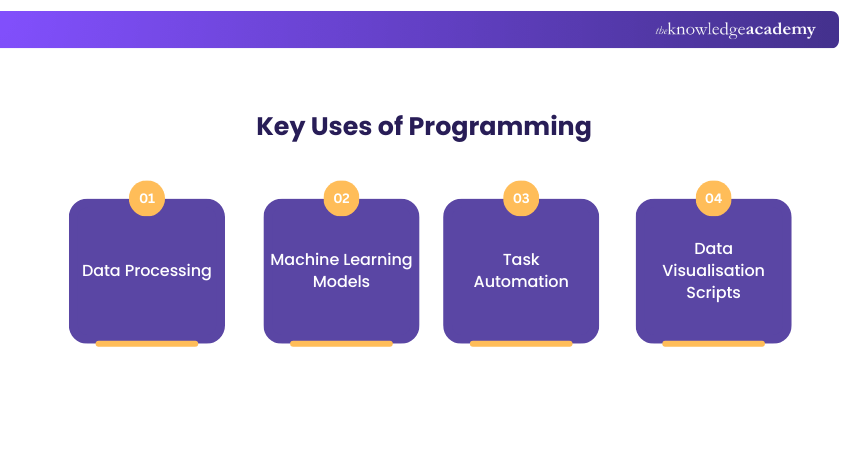
Key Uses:
a) Write code to process and analyse data
b) Build and test Machine Learning models
c) Automate repetitive tasks to save time
d) Create scripts for data visualisation and reporting
2) Statistics and Probability
Statistics and probability help understand patterns and trends in data. These skills allow Data Scientists to make predictions and test ideas. They also ensure results are based on evidence, not guesses.
Key Uses:
a) Measure relationships between variables
b) Perform Hypothesis Testing in Data Science to check accuracy.
c) Use probability for risk assessment and forecasting
d) Apply statistical techniques to optimise decisions
3) Machine Learning and Deep Learning
Machine Learning helps computers learn from data without being explicitly programmed. Deep Learning, a part of Machine Learning, uses advanced techniques for complex tasks. These skills are used in things like predictions and automation.
Key Uses:
a) Train models to predict future outcomes
b) Build intelligent systems like recommendation engines
c) Solve complex problems with deep learning models
d) Automate data-driven tasks using Machine Learning
4) Data Visualisation
Data Visualisation turns raw data into charts, graphs, and visuals. It helps people understand insights quickly. It’s a great way to communicate findings to non-technical audiences.
Key Uses:
a) Create visuals to explain complex data simply
b) Use charts to show trends, patterns, and outliers
c) Build dashboards for real-time data monitoring
d) Help decision-makers understand data findings better
5) Cloud Computing
Cloud Computing gives access to online tools for storing and analysing data. It helps work with large datasets and run models faster. It’s also great for sharing work with team members remotely.
Key Uses:
a) Store large amounts of data securely online
b) Run data models on powerful cloud servers
c) Collaborate with teams using shared cloud platforms
d) Deploy Machine Learning models on live systems
Advance R and unlock endless data insights with our Data Science With R Training – Join today!
Key Non- Technical Data Science Skills
Non-technical skills are vital for a successful Data Scientist. Communication, Critical Thinking and business acumen enable effective collaboration and align data projects with organisational goals. Ethical considerations ensure responsible data handling, especially when applying Data Science Techniques.Here is a list of the non-technical Data Science Skills described in detail:
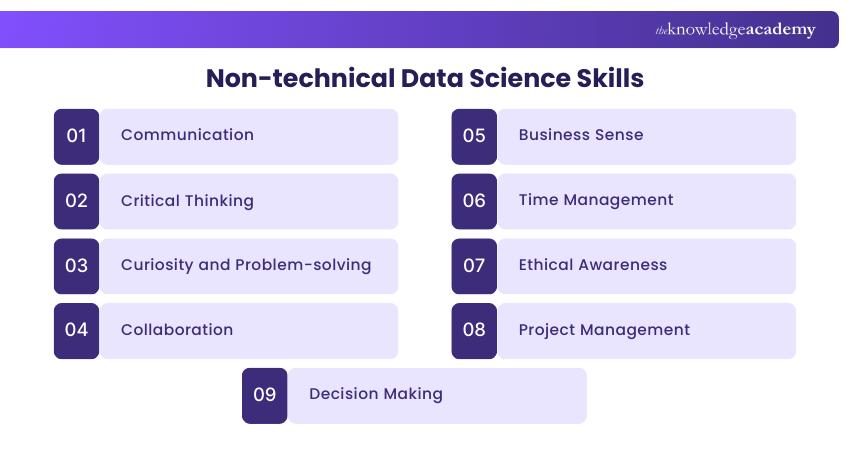
1) Communication
Data Scientists with good communication skills facilitate the clear and effective transmission of complex findings to both technical and non-technical stakeholders. They must convey insights, methodologies, and implications in a way that is easily understood. Having the right tools, such as one of the Best Laptops for Data Science, can further enhance their ability to analyse and present data efficiently.
2) Critical Thinking
Critical thinking is an essential skill across all professions, but it is particularly important for Data Scientists. They must frame the right questions, interpret results in context and connect their findings to business decisions. It also involves evaluating data objectively before drawing conclusions. Strong critical thinking means examining problems from multiple perspectives and questioning data sources.
3) Curiosity and Problem-solving
Curiosity and problem-solving are core traits for Data Scientists. A curious mindset drives the right questions, leading to innovative ideas and efficient solutions. When paired with structured thinking, curiosity helps Data Scientists to tackle challenges effectively and solve problems with agility and insight.
4) Collaboration
Collaboration is about working well with others to achieve a common goal. Data Scientists often team up with engineers, analysts, and business leaders to solve problems. Clear communication and teamwork make it easier to share ideas and complete tasks efficiently.
Good collaboration involves listening to others and respecting different viewpoints. It also requires being open to feedback and adapting to changes. Strong relationships within a team lead to better results and a smoother workflow.
5) Business Sense
Data Scientists not only need to understand their technical field and how to work with data, but they must also understand the business in which they operate. It’s one thing to know your way around data, but Data Science Business Ideas require Data Scientists to understand it enough enough to consider how data can uphold future growth and success. This is where Business sense comes in. It’s an essential element of understanding the business and its special needs.
6) Time Management
Time Management helps Data Scientists stay productive and meet deadlines. Managing tasks effectively ensures projects are completed on time. Prioritising work and breaking it into smaller steps can make big projects easier to handle.
It’s also important to balance urgent tasks with long-term goals. Using tools like calendars or task lists can help keep everything organised. Good time management reduces stress and improves overall performance.
7) Ethical Awareness
Ethical awareness means using data responsibly and considering its impact. Data Scientists must handle sensitive information with care to protect privacy. They should also think about how their work affects people and society. This skill includes recognising biases in data and avoiding unfair outcomes. It ensures decisions made with data are fair and transparent. Being ethical builds trust and credibility in the field.
8) Project Management
Project Management helps Data Scientists organise their work and achieve goals. Planning tasks, setting timelines, and managing resources are key parts of this skill. It ensures projects move forward smoothly and stay on track. Good Project Management includes clear communication with stakeholders and team members. It also involves identifying risks and solving problems early. This skill helps complete projects successfully and efficiently.
9) Decision Making
Decision-making is pivotal for Data Scientists. They must use data insights to guide critical choices. Effective decision-makers consider the reliability of data sources, assess uncertainties, and weigh pros and cons. Decisions based on data drive informed actions and outcomes, ensuring Data Scientists make a meaningful impact.
10) Attention to Detail
Attention to detail means carefully checking data and working to avoid mistakes. Small errors in Data Analysis can lead to wrong conclusions, so accuracy is very important. This skill helps ensure the insights and results are reliable. It also involves staying organised and double-checking reports, models, and code. Focusing on the small details saves time and prevents issues later. Data Scientists with this skill build trust in their work.
Learn advanced data visualisation and become a certified Data Science pro with our Advanced Data Science Certification – Join today!
How to Improve Your Skills?
Here are the proven ways to enhance your Data Scientist Skills:
1) Practise Regularly
Improving your skills requires consistent practice. Spend time working on real-world problems or projects to apply what you’ve learned. Repetition helps strengthen your knowledge and boosts your confidence.
a) Solve practice problems or datasets regularly
b) Work on small projects to test your skills
c) Experiment with new tools and techniques
d) Review your mistakes to learn from them
2) Leverage Learning Resources
Using the right resources can speed up your learning process. Books, online courses, and tutorials provide valuable knowledge. Choose resources that suit your skill level and learning style.
a) Take online courses to build structured knowledge
b) Read blogs and books to deepen your understanding
c) Watch tutorials for step-by-step guidance
d) Explore free datasets to practise and experiment
3) Engage with a Data Science Community
Joining a community helps you connect with other learners and professionals. You can exchange ideas, seek advice, and learn from others’ experiences. Being part of a network also keeps you motivated and updated.
a) Participate in online forums like Reddit or Kaggle
b) Attend webinars, workshops, or meetups
c) Join Social Media groups to discuss trends and tools
d) Collaborate on projects or challenges with peers
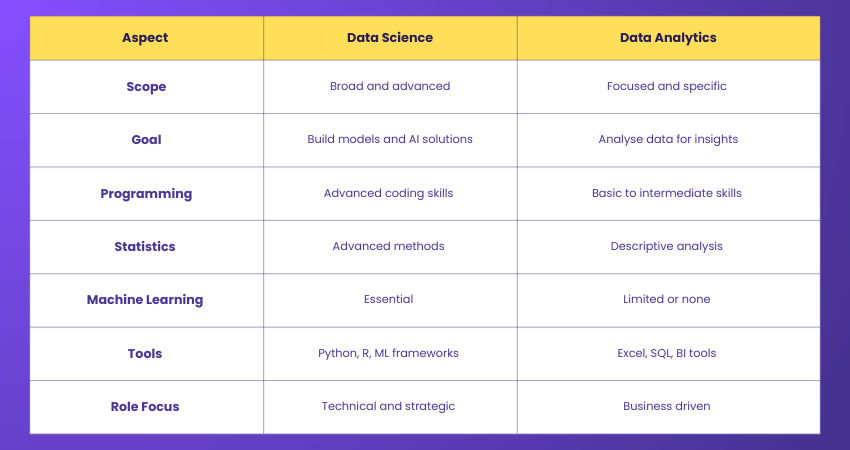
What is the Difference Between Data Science and Data Analytics Skills?
Data Science and Data Analytics are related but distinct fields. Data Science is broader in scope and combines disciplines like Mathematics, Computer Science and Statistics. It uncovers patterns in large datasets, build Machine Learning Models and develop AI tools. Data Scientists typically need deeper technical skills, including Advanced Programming.
In contrast, Data Analytics focuses on examining datasets to extract value, answer specific questions and support decision-making. While analytics skills are part of Data Science work, Data Scientists require a wider and more advanced technical skill set overall.
What Tools Should Every Data Scientist Learn?
The essential tools that Data Scientists should know are:
a) Programming Languages such as Python, R, SQL
b) Data Analysis and visualisation platforms like Excel, Tableau, Power BI and Kibana
c) Cloud Computing services like AWS and GCP
d) Big Data processing frameworks such as Spark, Hadoop and Kafka
e) Machine Learning libraries like TensorFlow, PyTorch and Scikit-learn
f) Development/collaboration tools like Jupyter Notebook and Git
Conclusion
As data continues to shape decisions, innovation and strategy, investing in the right Data Science Skills is of utmost importance. It transforms raw information into insight and long-term career growth for organisations and individuals worldwide today and tomorrow. Mastering these abilities as outlined in this blog empowers beginners to build confidence and professionals to stay relevant in a fast-evolving field.
Harness the power of Python for Data insights and learn to create structured arrays with our Python Data Science Course – Join today!
Frequently Asked Questions
Can I Become a Data Scientist Without Prior Experience?

You can become a Data Scientist even without prior experience. The required skills can be acquired by developing a portfolio of individual projects and learning from online resources.
What are Some Common Mistakes Encountered While Learning Data Science?
Here are some common mistakes beginners make while learning Data Science:
a) Skipping the fundamentals
b) Rushing into projects without clear goals:
c) Focusing only on theory and ignoring real practice:
d) Overlooking the importance of data preparation
e) Neglecting communication with non-technical audience

Lily Turner


Senior AI/ML Engineer and Data Science Author
Lily Turner is a data science professional with over 10 years of experience in artificial intelligence, machine learning, and big data analytics. Her work bridges academic research and industry innovation, with a focus on solving real-world problems using data-driven approaches. Lily’s content empowers aspiring data scientists to build practical, scalable models using the latest tools and techniques.
View Detail

 If you wish to make any changes to your course, please


