


 Top Rated Course

We may not have the course you’re looking for. If you enquire or give us a call on +36 18508731 and speak to our training experts, we may still be able to help with your training requirements.
What is Shadow Work? A Guide to Healing and Self-Discovery
The Knowledge Academy 23 April 2026Shadow Work is the practice of exploring your unconscious mind, embracing hidden emotions, and healing inner wounds for personal growth and self-awareness. It can involve practices like journaling, meditation, therapy, or creative expression to bring these unconscious elements into conscious awareness and cultivate self-acceptance.

Training Outcomes Within Your Budget!
We ensure quality, budget-alignment, and timely delivery by our expert instructors.
Table of Contents

Human emotions and circumstances are intricately linked. This is why certain situations trigger such strong emotions within us. This is because beneath the surface of our everyday selves lies a hidden realm known as the shadow. It holds our fears, wounds and untold truths as it quietly shapes how we think, feel and act.
So, the Shadow Work invites you to explore those hidden corners of your mind where unresolved feelings and forgotten parts of yourself reside. This blog explores this idea in detail, helping you navigate this inner landscape by meeting our shadow with curiosity, compassion and courage. So read on and unleash the hidden potential within!
Table of Contents
1) What is the Shadow?
2) Why Your Inner Shadow Matters?
3) The Effects of Ignoring your Shadow?
4) What is Shadow Work?
5) Goals of Shadow Work
6) How to Start Shadow Work?
7) Key Benefits of Shadow Work
8) Common Challenges in Shadow Work
9) Best Practices for Effective Shadow Work
10) Conclusion
What is the Shadow?
The shadow refers to the parts of ourselves that we hide, deny or reject. Psychiatrist Carl Jung described the shadow as the hidden aspect of the human psyche. In his model, it stands opposite the persona, which is the mask we present to the outside world to conceal our flaws and imperfections.
It is called the shadow because it lies outside the light of our awareness, repressed from our conscious life. Although hidden, the shadow still influences our personality, shaping how we behave and interact with others. Importantly, it is not only made up of traits we view as “negative,” but also positive qualities we fail to express.

Why Your Inner Shadow Matters?
The shadow self quietly shapes our behaviour. It often shows up through emotional triggers or the way we project feelings onto others. By acknowledging and integrating it through a process known as Shadow Work, we can develop deeper self-awareness and personal growth. Embracing the shadow can bring out hidden strengths and creativity. It allows us to live more fully through the balance between both the light and hidden sides.
The Effects of Ignoring your Shadow?
When the shadow is ignored, it doesn’t disappear. It finds subtle ways to surface and demand attention. This neglect can manifest as:
1) Hostile or offensive behaviour
2) Difficulty maintaining healthy relationships
3) Self-sabotaging patterns
4) Excessive self-absorption
5) Low self-esteem or self-loathing
6) Dishonesty with yourself or others
7) Anxiety and depression
8) An inflated sense of ego
Rejecting your shadow can also lead to projection, which is seeing in others what you unconsciously recognise within yourself. These traits may feel uncomfortable, causing you to judge or criticise others for qualities that mirror your own hidden aspects.
What is Shadow Work?
Shadow Work refers to the practice of bringing suppressed aspects of our personality into conscious awareness and learning to understand and even love them. Through Shadow Work, we can reintegrate parts of ourselves that were split off earlier in life. This allows us to feel more complete and authentic.
It encourages us to face those traits we would rather deny like anger, jealousy, greed, or bitterness. It compels us to take responsibility for them instead of judging or projecting. Many avoid Shadow Work because it is uncomfortable and challenges their self-image. It's important to remember that true growth lies not in avoidance, but in the courageous acceptance of these hidden aspects.
Goals of Shadow Work
The key goals of Shadow Work include the following:
1) Expanding self-awareness by acknowledging those aspects that have been ignored, repressed or denied.
2) Integrating the shadow into conscious awareness to achieve a more balanced self.
3) Healing psychological wounds and resolving internal conflicts.
4) Cultivating personal growth while boosting creativity, authenticity and emotional resilience.
Step into a journey of self-discovery and lifelong growth with our Personal Development Courses - Sign up now!
How to Start Shadow Work?
If the idea of Shadow Work resonates with you, know that it is possible to begin the practice wherever you are. It takes commitment to inner work, but it can be deeply transformative. Here are some ways to get started:
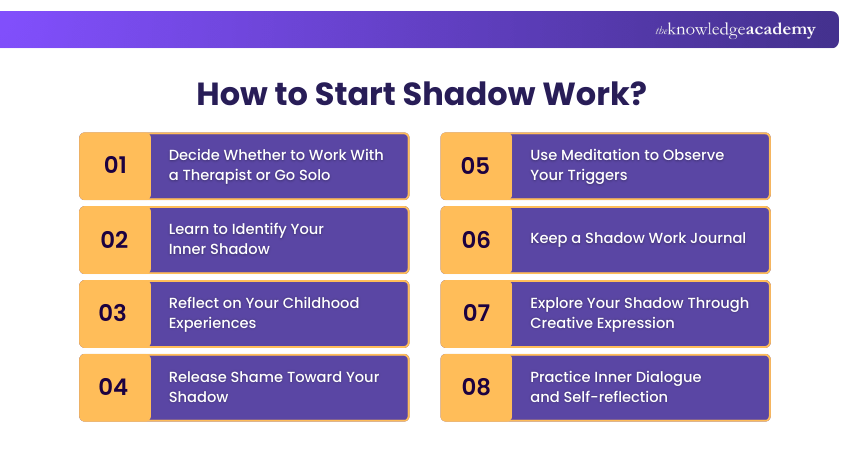
1) Decide Whether to Work With a Therapist or Go Solo
While it's possible to explore shadow work independently, consulting a trained therapist is highly recommended, especially when dealing with deep-rooted emotional triggers. A professional can help you identify hidden patterns, guide you through intense emotions, and provide structured prompts to deepen your practice safely.
2) Learn to Identify Your Inner Shadow
Start by noticing recurring patterns or behaviours that might be holding you back. Pay close attention to emotional triggers, as these often signal unacknowledged aspects of the shadow. Also, observe projections; for instance, if you frequently judge a friend for dominating conversations, it may reflect your own discomfort with speaking up or asserting yourself.
3) Reflect on Your Childhood Experiences
Think about all the emotions you couldn’t or discouraged from expressing when you were young. Foa a lot of people, feelings like anger or sadness are shamed which causes them to be repressed and stored in the shadow.
4) Release Shame Toward Your Shadow
Remember, your shadow is a part of you. Integration comes from acceptance, not rejection. Use affirmations such as 'I trust in you', 'You are worthy of love' and 'You have a lot to offer' to show kindness to yourself.
5) Use Meditation to Observe Your Triggers
When strong emotions arise, practice mindful observation through meditation. Instead of reacting or suppressing the feeling, step back and witness it without judgment. Let the emotion surface fully. This teaches you to be present with discomfort and explore what the emotion may be revealing.
6) Keep a Shadow Work Journal
Journaling is a powerful tool for expression. Write freely and honestly each day, without censoring your thoughts. Let both light and dark reflections emerge so your shadow feels acknowledged.
7) Explore Your Shadow Through Creative Expression
If writing isn’t your preference, explore art, music, or movement to give your shadow a voice. Creativity allows unconscious emotions to surface in powerful, healing ways. Choose any medium like painting, sculpture, music, or digital art, and let your inner self create without restraint.
8) Practice Inner Dialogue and Self-reflection
Treat your shadow as a part of yourself you can converse with. In meditation or reflection, ask it questions and listen openly to the responses that arise. Keep an open mind and avoid judgment as you explore this dialogue.
Reach your goals with unstoppable motivation through our Motivation and Goal Setting Training - Register now!
Key Benefits of Shadow Work
From emotional healing to healthier relationship building, here are the major benefits of Shadow Work:
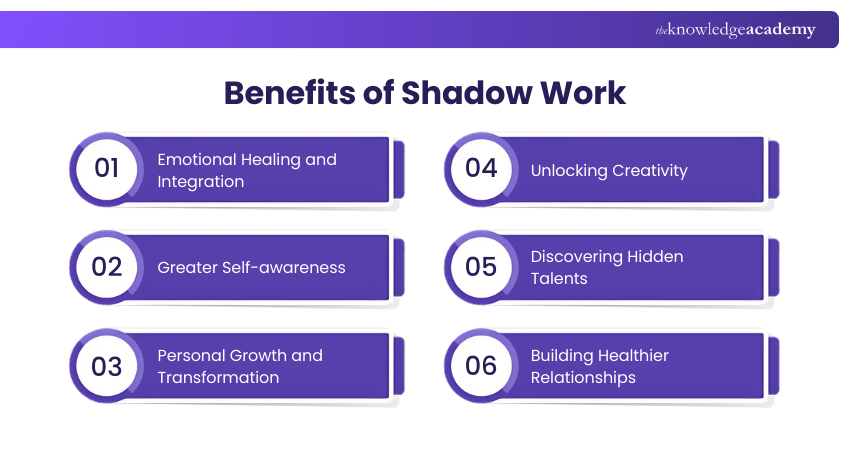
1) Emotional Healing and Integration
1) Shadows are often formed from past traumas, unmet needs, or unexpressed emotions.
2) Shadow Work enables emotional healing by reducing fear, shame, and anxiety linked to painful experiences.
3) These parts of ourselves become integrated, creating a more complete and balanced sense of self.
4) This process creates a compassionate relationship with who we are.
5) Exploring the shadow self without judgment allows us to accept these aspects consciously.
6) Doing so helps us develop healthier reactions when triggering events arise.
2) Greater Self-awareness
1) Shadow Work reveals hidden aspects of our psyche.
2) It enhances self-awareness by uncovering motivations, desires, fears, and behaviours.
3) Greater awareness helps us understand ourselves more deeply.
4) This understanding supports living a more authentic life.
5) It enables making decisions aligned with personal insight.
3) Personal Growth and Transformation
1) Facing and integrating shadows uncovers hidden talents and abilities.
2) It helps overcome fears and insecurities that hold us back.
3) This process shifts how we see ourselves and the world.
4) We become more open to new opportunities and possibilities.
5) It builds courage and confidence to make transformative decisions.
4) Unlocking Creativity
1) The shadow hides not only undesirable traits but also positive qualities.
2) Hidden strengths can include creativity and unique abilities.
3) Accepting the shadow allows you to embrace your creative side.
4) Instead of suppression, you gain access to hidden expressions.
5) This integration unlocks fuller, more authentic self-expression.
5) Discovering Hidden Talents
1) Shadow Work helps uncover the "gold in your shadow bags"; hidden strengths and resources.
2) Many fear their shadow holds too much darkness to face.
3) In reality, the golden shadow often takes up most of the space.
4) These strengths lacked the opportunity to thrive before.
5) Shadow Work brings them out of hiding.
6) It empowers you to step into your full potential.
6) Building Healthier Relationships
1) Fully loving and accepting yourself enables you to love and accept others.
2) Taming projections allows you to see people as they truly are.
3) You stop viewing others as reflections of traits you dislike in yourself.
4) This clarity helps nurture deeper and stronger relationships.
Common Challenges in Shadow Work
These points illustrate the challenges of Shadow Work:
1) The first step in Shadow Work is to acknowledge the parts of ourselves we feel detached from or tend to reject.
2) This process often stirs discomfort, fear, or resistance, as these aspects usually surface when we feel hurt or triggered.
3) One of the main difficulties is dealing with uncomfortable emotions, which many find overwhelming.
4) People often judge or reject their shadow aspects, making it hard to face traits they dislike or disagree with.
5) It can also be challenging to identify unconscious patterns objectively, especially when working alone.
Despite these challenges, staying consistent and committed to the practice allows individuals to uncover and integrate hidden parts of themselves. This leads to a greater sense of wholeness and authenticity in life.
Boost your cognitive power and unlock new levels of mental agility with our Mental Capacity Training - Register now!
Best Practices for Effective Shadow Work
Here are some best practices you should consider:
1) Observe Your Reactions and Practice Awareness: Notice what triggers you such as people, situations, events. Use self-observation in your daily life and with social media consumption, etc., to identify shadow responses. When triggered, pause and reflect on the pattern rather than reacting immediately.
2) Practice Emotional Inquiry & Complete the Emotional Cycle: Ask questions like: What am I feeling? Why am I feeling this? Identify beliefs or stories tied to the emotion like "I’m not enough", "My feelings don’t matter", etc. See whether this feeling connects to something in your past, especially childhood.
3) Journaling / Expressive Writing: Do stream-of-consciousness writing to let your unconscious thoughts surface. Use prompts like: What triggers me? What do I judge in others? What do I dislike in myself? What do I envy? Etc.
4) Meditation: Spend time in silence, being present with your thoughts, feelings, and reactions. Use meditation to observe your inner landscape without judging. It’s like sitting with your shadow.
5) Dream Analysis: Pay attention to recurring dreams; they often point to unresolved shadow material. When you wake, write down not just what happened but how you felt, the symbols, images, etc.
6) Analyse Stories, Myths, Movies: Look at symbols, archetypes, characters in stories that resonate with you. Reflect on how those narratives mirror parts of your own shadow or unexpressed potential.
7) Inner Child Work: Recognise that many shadow parts were formed in childhood. Use reparenting practices, guided meditations, journaling focused on inner child themes to heal those parts.
8) Therapy or Coaching Support: Working with a professional like a therapist or coach can help you bring blind spots into awareness. External support can help when self-work alone feels too hard or limited.
Conclusion
Shadow Work is a gateway into the hidden parts of yourself. By embracing what lies beneath the surface, you uncover healing, creativity and your authentic self. The journey may feel challenging, but it can lead to profound self-discovery, deeper connections and a more balanced, empowered way of living.
Discover how to rewire your mindset for optimism and lasting success. Sign up for our Positive Psychology Course now!
Frequently Asked Questions
What Is the Difference Between Shadow Work and Light Work?

Shadow Work is about exploring and integrating the hidden, suppressed or darker aspects of ourselves. This includes fears, insecurities and unresolved emotions. On the other hand, light work nurtures positive qualities like compassion, love and healing. So, both complement each other and create a balance.
What is Shadow Work Journaling?
Shadow Work journaling is a reflective writing practice. It is used to uncover unconscious patterns, hidden emotions and triggers. Through prompts and free writing, it helps bring suppressed thoughts to light. This in turn offer insights for self-acceptance and personal growth.
What are the Other Resources and Offers Provided by The Knowledge Academy?
The Knowledge Academy takes global learning to new heights, offering over 3,000+ online courses across 490+ locations in 190+ countries. This expansive reach ensures accessibility and convenience for learners worldwide.
Alongside our diverse Online Course Catalogue, encompassing 17 major categories, we go the extra mile by providing a plethora of free educational Online Resources like Blogs, eBooks, Interview Questions and Videos. Tailoring learning experiences further, professionals can unlock greater value through a wide range of special discounts, seasonal deals, and Exclusive Offers.
What is The Knowledge Pass, and How Does it Work?
The Knowledge Academy’s Knowledge Pass, a prepaid voucher, adds another layer of flexibility, allowing course bookings over a 12-month period. Join us on a journey where education knows no bounds.
What are the Related Courses and Blogs Provided by The Knowledge Academy?
The Knowledge Academy offers various Personal Development Courses, including the Self-management Training, Emotional Intelligence Course and the Motivation and Goal Setting Training. These courses cater to different skill levels, providing comprehensive insights into How to Control Your Emotions.
Our Project Management Blogs cover a range of topics related to Earned Value Management, offering valuable resources, best practices, and industry insights. Whether you are a beginner or looking to advance your Project Management skills, The Knowledge Academy's diverse courses and informative blogs have got you covered.

The Knowledge Academy


Global Training Provider
The Knowledge Academy is a world-leading provider of professional training courses, offering globally recognised qualifications across a wide range of subjects. With expert trainers, up-to-date course material, and flexible learning options, we aim to empower professionals and organisations to achieve their goals through continuous learning.

Upcoming Business Skills Resources Batches & Dates
Date
 Self-Management Training
Self-Management Training
Fri 31st Jul 2026
Self-Management Training
Fri 23rd Oct 2026

 If you wish to make any changes to your course, please


