


 Top Rated Course

We may not have the course you’re looking for. If you enquire or give us a call on +36 18508731 and speak to our training experts, we may still be able to help with your training requirements.
Real-Time Gross Settlement (RTGS): Definition, Work, and Examples
Olivia Taylor 16 July 2026Real-time Gross Settlement (RTGS) is a system where high-value funds are transferred instantly and individually, ensuring fast, secure, and real-time payments. RTGS is ideal for urgent and large payments where delays are not acceptable. It helps banks and businesses move money quickly without waiting for batch processing.
Home
 Resources
Accounting and Finance
Real-Time Gross Settlement (RTGS): Definition, Work, and Examples
Resources
Accounting and Finance
Real-Time Gross Settlement (RTGS): Definition, Work, and Examples
Resources
Accounting and Finance
Real-Time Gross Settlement (RTGS): Definition, Work, and Examples

Training Outcomes Within Your Budget!
We ensure quality, budget-alignment, and timely delivery by our expert instructors.
Table of Contents
Imagine you need to make a big payment urgently, maybe your business has to pay a supplier today, or you’re closing a property deal and can’t afford delays. Waiting for hours or days can be stressful, right? This is when Real-time Gross Settlement becomes extremely helpful. RTGS lets you send large amounts of money instantly and safely, so the receiver gets it without waiting.
In this blog, we will explain Real-time Gross Settlement in simple terms. You’ll learn what it is, how it works, its key features, benefits, challenges, payment activity in RITS, and a real-life example. Let's see how RTGS makes large payments fast and secure.
Table of Contents
1) What is Real-Time Gross Settlement (RTGS)?
2) How Does Real-Time Gross Settlement Work?
3) Key Features of Real-Time Gross Settlement (RTGS)
4) What are the Benefits of RTGS?
5) Challenges of Real-Time Gross Settlement (RTGS)
6) Example of a Real-Time Gross Settlement
7) Conclusion
What is Real-Time Gross Settlement (RTGS)?
Real-time Gross Settlement (RTGS) is a banking system used to send large amounts of money quickly between banks. It processes each payment one by one, without waiting or grouping them. This means the money is transferred and confirmed right away, and once sent, it cannot be reversed. RTGS is a safe and fast way to move large funds when time is important.
RTGS is typically used for high-value transfers where immediate clearing is essential, such as corporate payments, interbank settlements, or government transactions. It operates during specific banking hours and follows strict security standards set by central banks.

How Does Real-Time Gross Settlement Work?
Real-time Gross Settlement works through a secure system managed by the country’s central bank.
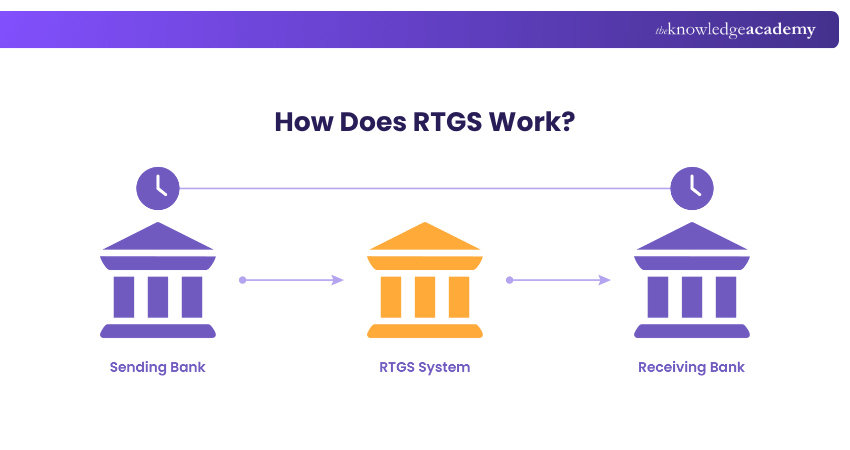
Here is how it works in simple steps:
a) The sender tells their bank to transfer money using RTGS
b) The bank checks if the sender has enough money
c) The bank sends the request to the central bank’s RTGS system
d) The central bank checks and approves the transfer
e) The money is moved from the sender’s bank to the receiver’s bank instantly
f) The receiver’s bank credits the money to the receiver’s account
Everything happens online and in real time. There is no waiting for clearing.
Key Features of Real-Time Gross Settlement (RTGS)
Real-Time Gross Settlement is a fast, secure system designed for handling large-value payments. It processes each transaction instantly and individually through the central bank, ensuring quick and reliable settlement. Below are the key features of RTGS.
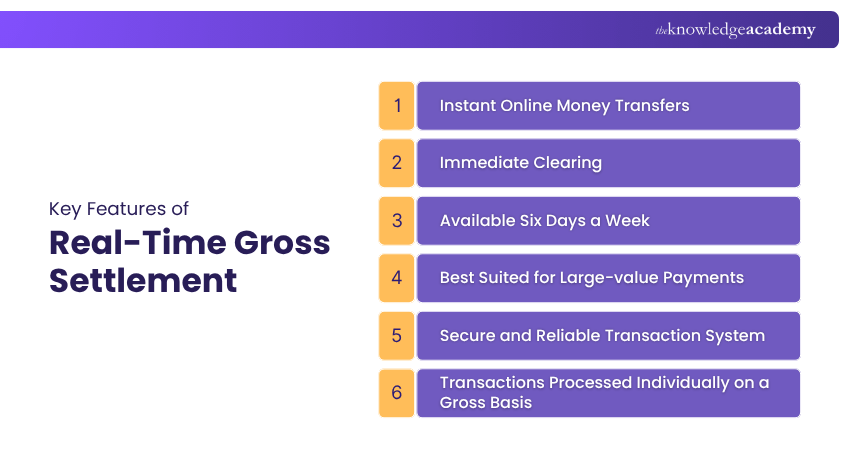
1) Instant Online Money Transfers
RTGS sends money right away, without waiting for hours or days. This helps when someone needs to transfer funds urgently, such as business payments or important personal transactions.
2) Immediate Clearing
Once a transfer is made via RTGS, it is cleared and settled simultaneously. There are no reversals or delays, offering both the sender and receiver peace of mind that the payment is final and secure.
3) Available Six Days a Week
In many countries, RTGS operates on weekdays and Saturdays, with some systems now available 24/7, including weekends and public holidays. This flexibility allows users to send large payments whenever necessary, far beyond traditional banking hours.
4) Best Suited for Large-value Payments
RTGS is used mainly for big transactions and high-value payments. Companies, banks, and government bodies often use it for urgent and large transfers. It ensures that important payments are completed quickly and safely.
5) Secure and Reliable Transaction System
RTGS is controlled by the central bank, which makes it highly secure and trustworthy. Strong systems and checks help protect against fraud and mistakes. Users can feel confident knowing their money is handled through a trusted network.
6) Transactions Processed Individually on a Gross Basis
Each RTGS transaction is processed one at a time rather than in batches. This approach enhances accuracy, speeds up settlement, and reduces the risks of delays commonly found in batch-processing systems.
Gain in-depth knowledge about picking the right number of tags effectively with our Introduction to FinOps Training – Register today!
What are the Benefits of RTGS?
Real-time Gross Settlement has many advantages for businesses, banks, and individuals. These are the benefits of RTGS:
1) Enhanced Security
RTGS is very safe because it is run by the central bank. It helps prevent fraud and fake payments. People can trust it when sending large amounts of money. This gives both sender and receiver peace of mind.
2) Extensive Availability
In many countries, RTGS works all day, every day. In others, it is available for long hours. This makes it easy to send big payments without waiting for the next day. It offers more freedom and convenience than normal bank transfers.
3) Transparent Fees
The fees for RTGS are fixed and clear. Banks follow the rules set by the central bank. The cost may be a bit higher, but it is fair for fast and large transfers. Users always know what they are paying for.
4) Improved Cash Flow
With RTGS, money reaches the receiver right away. Businesses do not have to wait to get paid. This helps them manage their money and run their work smoothly. Quick payments help businesses plan better and avoid delays.
5) Reduced Friction
RTGS removes delays and long processes. Payments happen fast, and records stay clean and easy to check. This makes sending and receiving money simple and smooth. It saves time and reduces confusion for everyone.
Understand the ins and outs of International Financial Reporting Standards. Join our International Financial Reporting Standards Training now!
Challenges of Real-Time Gross Settlement (RTGS)
While RTGS offers speed and security for large-value payments, it also comes with a few challenges that users and banks should be aware of:
a) Minimum Amount: RTGS is designed for transferring large sums of money, which means it is not suitable for small or everyday payments.
b) Higher Fee: Sometimes the charges for RTGS can be more than those for other payment options, especially for large transfers.
c) Bank Issues: If the bank’s system or internet is not working, the payment may be delayed.
d) Internet Needed: RTGS works best with a good and safe internet connection, especially during peak hours.
e) No Cancellation: Once you send money through RTGS, you cannot take it back, so the bank details must be correct.
f) Not Available Everywhere: Some bank branches may not offer RTGS services, especially in smaller areas.
g) Staff Training: Bank staff must know how to use the system properly to avoid mistakes and delays.
Example of a Real-Time Gross Settlement
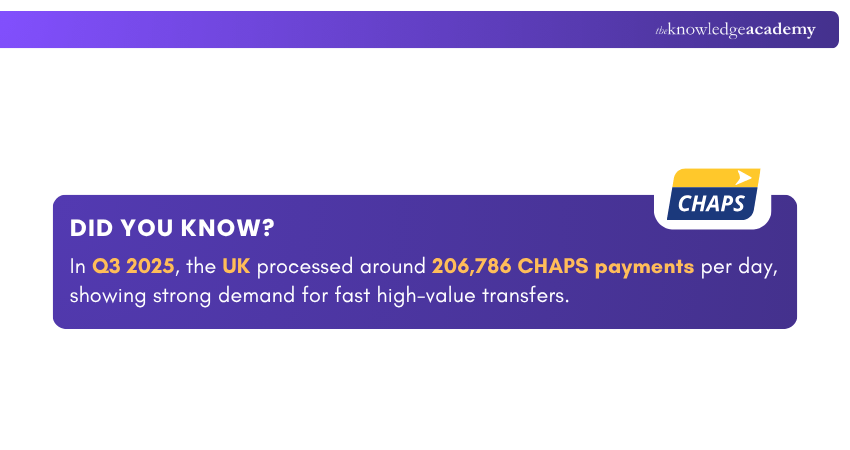
A business owner needs to send £50,000 quickly to a supplier in another bank. They use the Clearing House Automated Payment System (CHAPS), enter the supplier’s details, and confirm the payment. The bank checks the amount and sends it through the Bank of England’s RTGS system.
The supplier gets the money within minutes. If they used BACS instead, it would take up to three working days, but CHAPS sends the money in real time for urgent, high-value payments.
Conclusion
RTGS plays a key role in keeping high-value payments fast, safe, and reliable. It helps businesses, banks, and individuals move money without delays, making financial transactions smoother and more secure. With growing digital banking needs, Real-time Gross Settlement continues to support instant and trusted fund transfers, proving its importance in today’s modern payment system.
Learn to manage investments and maximise returns effectively with our Finance Courses – Join now!
Frequently Asked Questions
What is the Meaning of Gross Settlement?

Gross settlement means each payment is processed one by one, not in groups. The money moves instantly and independently for every transfer.
What are the Differences Between RTGS, BACS and NEFT?
RTGS sends money instantly and is used for large, urgent payments. BACS, used in the UK, takes 2–3 days for regular payments like salaries. NEFT, used in India, processes everyday transfers in a few hours. RTGS is fast for big payments, while BACS and NEFT are slower for routine transfers.

Olivia Taylor


Chartered Accountant and Financial Training Specialist
Olivia Taylor is a qualified chartered accountant with over a decade of experience in financial management, auditing and corporate reporting. Having worked with leading firms in both the public and private sectors, Olivia brings clarity to complex financial topics. Her writing focuses on helping professionals build confidence in key areas of accounting, compliance and financial planning.
View Detail

 If you wish to make any changes to your course, please


