


 Top Rated Course

We may not have the course you’re looking for. If you enquire or give us a call on +36 18508731 and speak to our training experts, we may still be able to help with your training requirements.
What is Mental Health? Definition, Disorders and Tips
The Knowledge Academy 20 December 2025Mental health is a positive state of well-being where individuals handle stress, grow their potential, and make meaningful contributions to their community. It supports clear thinking and balanced emotions. Strong mental health helps people stay resilient and adapt to everyday challenges with confidence, helping them lead a stable life.

Training Outcomes Within Your Budget!
We ensure quality, budget-alignment, and timely delivery by our expert instructors.
Table of Contents
Considering the three aspects of Mental Health that are basic to our daily living: thinking, feeling, and coping with our daily pressures, our well-being lies in these three areas. Moreover, knowing What is Mental Health, provides a base for making healthy decisions and achieving emotional stability. The more we delve into this issue, the more we realise its impact on all aspects of contemporary life.
Table of Contents
1) Mental Health Definition
2) Prevalence of Mental Health Disorders
3) Common Types of Mental Health Disorders
4) Information and Support
5) How Can You Treat Mental Health Issues?
6) Tips for Mental Health Maintenance
7) Conclusion
Mental Health Definition
Mental health is the most powerful factor that affects our emotions, thoughts, and also our actions, and at the same time, it is connected with our mental, emotional, and social health. It is an ever-changing trait and can vary from day to day or even throughout one's life depending on the obstacles encountered.
It is as important as physical health as it governs one's ability to cope with stress, interact socially, and make decisions in daily life. Mental health promotes the growth of healthy interpersonal relationships within family, school, work, and society.
Prevalence of Mental Health Disorders
Mental disorders are widespread, affecting millions globally across all demographics. The World Health Organisation (WHO) states that one in four people will experience a Mental Health disorder in their lifetime, highlighting the significant impact of these conditions, as emphasised in the Mental Health and Hygiene Guide. These disorders, including anxiety, mood, personality, eating, and substance use disorders, can severely affect daily functioning and quality of life.
Factors affecting Mental Health, such as genetic predisposition, environmental stressors, trauma, and societal influences, can contribute to the development of these disorders.
Learn essential strategies for managing stress and enhancing your emotional resilience – Join our Mental Health and Wellbeing Training now!
Common Types of Mental Health Disorders
Mental disorders exist in various types, each with unique characteristics and roots and encompass various conditions affecting individuals' thoughts, emotions, and behaviours. Comprehending the various types of Mental Health disorders is crucial for recognising their signs and symptoms and promoting effective treatment and recovery.
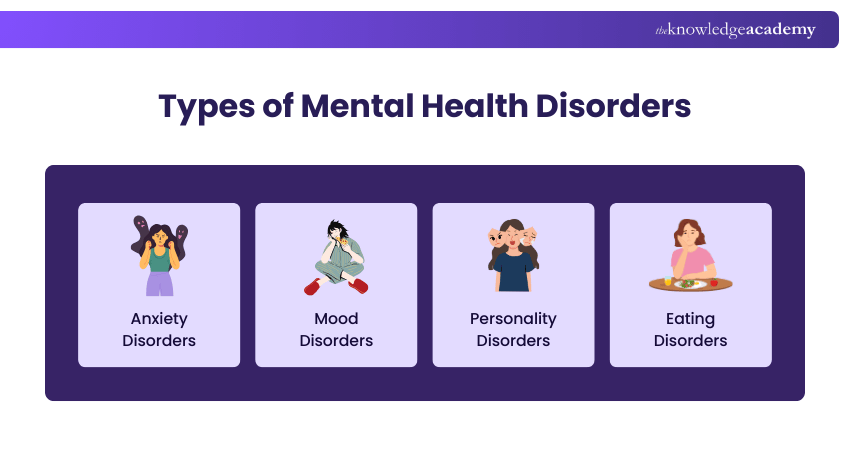
a) Anxiety Disorders: These conditions are marked by excessive worry and fear that can disrupt daily life. Mental Health disorders of this nature include generalised social anxiety disorder (SAD), panic disorder, anxiety disorder, phobias, and Obsessive-compulsive Disorder (OCD). b) Mood Disorders: These encompass Mental Health conditions such as bipolar disorder and depression (major depressive disorder). Depression includes loss of interest and persistent sadness, while bipolar disorder involves alternating periods of elevated mood (mania) and depression.
c) Personality Disorders: These are characterised by enduring behaviour patterns, cognition, and inner experiences that deviate from cultural norms. Examples of these Mental Health disorders include borderline personality disorder (BPD), narcissistic personality disorder (NPD), and others.
d) Eating Disorders: These are serious Mental Health conditions related to unhealthy eating patterns and distorted body image. Common types include Anorexia Nervosa (restricting food intake), Bulimia Nervosa (binge eating followed by purging), and Binge-eating Disorder (excessive food consumption without purging).
Learn effective anxiety management strategies with our Anxiety Course – Start your journey towards a calmer life!
Information and Support
Our minds are capable of growth, resilience, and even serving as our best ally in utilising our skills and taking advantage of our chances. The moment mental health starts to interfere with your daily life or relationships, know that there is support available for you, and you are always encouraged to reach out.
1) Anxiety
The sensation of anxiety is actually a normal reaction to stress or tough circumstances. Nevertheless, if anxiety turns out to be a regular event that hampers your enjoyment of life, then it might be time to call for help and share your thoughts with someone you trust.
2) Self-harm
A lot of people go through emotional turmoil when they consider their lives intolerable. If you ever come up with the idea of inflicting pain on yourself, it would be wise to consult a confidant or a psychologist with the right background as they can offer you the needed assistance.
3) Body Image
The anxiety of being unattractive or dissatisfaction with one's physique can drastically decrease self-worth and thus, have a bad influence on one's mental and emotional state. Body image problems are quite common, and if the concern about the body image takes over your day-to-day life, you can always seek assistance.
4) Bipolar Disorder
The symptoms of bipolar disorder can fluctuate considerably between moods, energy and sometimes, activity. If the mood swings become unbearable or if they affect your life in a bad way, then consulting a mental health professional can provide you with empathy and support.
5) OCD
Obsessive Compulsive Disorder is defined by the presence of obsessive and compulsive thoughts or behaviours that are nearly impossible to control. When these thoughts or behaviours encroach upon life, guidance and support can make a huge difference in learning to handle them more effectively.
6) Panic Attacks
Panic attacks are typically associated with extreme anxiety, and the affected person goes through the sudden appearance of fear or discomfort. Consulting a trusted friend or getting professional help would be a good way to deal with the issue if panic attacks begin to affect daily life.
How Can You Treat Mental Health Issues?
When it comes to mental well-being, seeking help and support is crucial for overall health. Sometimes, overthinking can hinder progress, making it difficult to take action. By learning how to Stop Overthinking, individuals can better access professional mental health services, build supportive networks, and practice self-care, individuals can nurture their mental and emotional health and find the necessary resources for support and healing. Those pursuing a Mental Health Career play a vital role in providing these essential services and guiding individuals on their path to mental wellness.
1) Professional Mental Health Services
Seeking professional Mental Health services is crucial for addressing concerns regarding mental well-being. Mental and emotional care professionals, such as therapists, counsellors, and psychiatrists, can provide assessment, diagnosis, and appropriate treatment options. These professionals, including those in Rehab settings, incorporate a safe and supportive environment to explore and manage such issues, promoting overall well-being and recovery.
2) Supportive Networks and Communities
Having a network of supportive communities is crucial for Mental Health. Being surrounded by understanding and empathetic individuals can offer a sense of belonging, validation, and emotional support. Participating in support groups, engaging with online communities, or seeking advice from trusted individuals can assist in navigating challenges and building resilience.
3) Self-care Practices
Engaging in self-care practices is essential for maintaining and improving Mental Health. Prioritising activities that promote relaxation, stress reduction, and self-reflection can have significant benefits. This includes practices such as exercise, mindfulness, healthy sleep patterns, hobbies, and setting boundaries. Self-care contributes to overall well-being and enhances resilience against these challenges.
Ready to Ace Your Interview? Check out our Mental Health Support Worker Interview Questions to prepare effectively and land your dream job!
Tips for Mental Health Maintenance
Maintaining good Mental Health is essential for overall well-being and quality of life. Here are some practical tips to help you maintain the same:
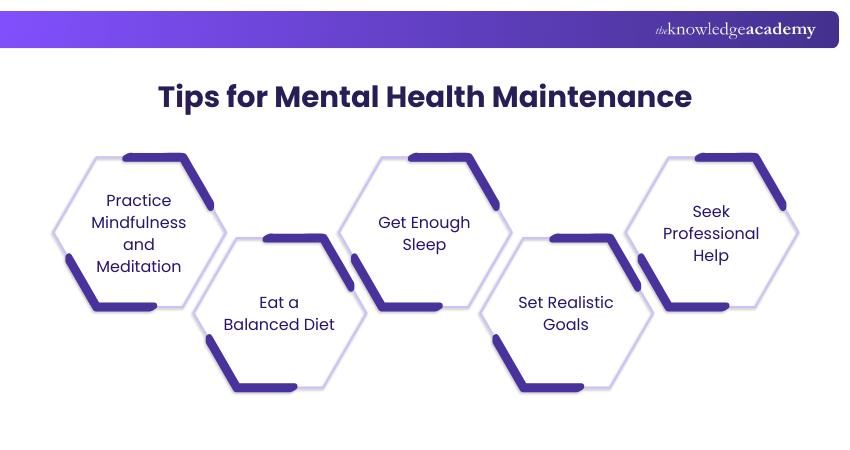
a) Physical activity can reduce stress and enhance your mood. Aim for at least 30 minutes of exercise most days of the week.
b) Incorporate multiple fruits, vegetables, whole grains, and lean proteins into your diet.
c) Quality sleep is essential for mental well-being. Aim for 7-9 hours of sleep per night and maintain a consistent sleep schedule.
d) Techniques, including mindfulness and meditation can help manage stress and improve emotional regulation. Set aside a few minutes each day for these practices.
e) Maintain strong relationships with friends and family. Social support is vital for Mental Health, so make time for meaningful interactions.
f) Divide tasks into manageable steps and set achievable goals. This can aid in reducing feelings of overwhelm and increase a sense of accomplishment.
g) If you’re struggling, don’t hesitate to seek help from a Mental Health professional. Therapy and counselling can come up with valuable support and strategies.
h) Substance use can negatively impact Mental Health. Limit alcohol consumption and avoid recreational drugs.
i) Make time for activities you enjoy. Hobbies can provide a sense of purpose and relaxation.
j) Regularly focusing on things you’re grateful for can boost your mood and entire outlook on life. Consider keeping a gratitude journal.
Conclusion
Understanding 'What is Mental Health' makes us understand that our well-being is a product of our small and steady choices. Treating our mind as we do our body makes us more even-tempered, strong and in touch with the world around us. Therefore, let every insight in this blog be your coach in developing the new, healthier you.
Sign up for our Prevention Psychology Training and discover how to foster long-term Mental Health!
Frequently Asked Questions
How Does Mental Health Affect People's Lives?

Mental Health significantly influences every aspect of a person's life, including emotional well-being, relationships, productivity, and overall quality of life. Poor mental condition can result in difficulties to manage stress, decision-making, and interact with others.
What is Mental Health vs Mental Illness?
Mental health is the overall state of emotional and psychological well-being, encompassing the ability to manage life’s challenges. Mental illness, on the other hand, involves diagnosable conditions that affect a person's thinking, behaviour, and emotional state, often requiring professional intervention and treatment.
What are the Other Resources and Offers Provided by The Knowledge Academy?
The Knowledge Academy takes global learning to new heights, offering over 3,000+ online courses across 490+ locations in 190+ countries. This expansive reach ensures accessibility and convenience for learners worldwide.;
Alongside our diverse Online Course Catalogue, encompassing 19 major categories, we go the extra mile by providing a plethora of free educational Online Resources like Blogs, eBooks, Interview Questions and Videos. Tailoring learning experiences further, professionals can unlock greater value through a wide range of special discounts, seasonal deals, and;Exclusive Offers.
What is The Knowledge Pass, and How Does it Work?
The Knowledge Academy’s Knowledge Pass, a prepaid voucher, adds another layer of flexibility, allowing course bookings over a 12-month period. Join us on a journey where education knows no bounds.
What are the Related Courses and Blogs Provided by The Knowledge Academy?
The Knowledge Academy offers various Mental Health Courses, including the Mental Capacity Training, Counselling Course, and Anxiety Course. These courses cater to different skill levels, providing comprehensive insights into Emotional Awareness.
Our Business Skills Blogs cover a range of topics related to Mental Health, offering valuable resources, best practices, and industry insights. Whether you are a beginner or looking to advance your Business skills, The Knowledge Academy's diverse courses and informative blogs have got you covered.

The Knowledge Academy


Global Training Provider
The Knowledge Academy is a world-leading provider of professional training courses, offering globally recognised qualifications across a wide range of subjects. With expert trainers, up-to-date course material, and flexible learning options, we aim to empower professionals and organisations to achieve their goals through continuous learning.

Upcoming Health & Safety Resources Batches & Dates
Date
 Mental Health and Wellbeing Training
Mental Health and Wellbeing Training
Fri 10th Apr 2026
Mental Health and Wellbeing Training
Fri 17th Jul 2026
Mental Health and Wellbeing Training
Fri 30th Oct 2026

 If you wish to make any changes to your course, please


