


 Top Rated Course

We may not have the course you’re looking for. If you enquire or give us a call on +44 1344 203 999 and speak to our training experts, we may still be able to help with your training requirements.
16 Marketing Strategies for Small Business Success
James Smith 24 February 2026Marketing performance monitoring strategies are essential for any business. Staying updated with these strategies allows you to quickly adjust to meet your business goals as needed. Discover essential Marketing Strategies For Small Businesses in this blog, offering actionable insights on how to enhance visibility and engage customers.

Training Outcomes Within Your Budget!
We ensure quality, budget-alignment, and timely delivery by our expert instructors.
Table of Contents
In the competitive world of small businesses, standing out requires more than just effort—it demands smart strategies. Picture a local bakery struggling to attract customers despite having the best pastries in town.
By defining their target audience, using digital tools, and through local collaborations, they can improve their visibility and customer engagement. This blog explores the essential Marketing Strategies for Small Businesses to help your business thrive in a competitive market. Let's dive into these actionable insights right away!
Table of Contents
1) Marketing for Small Businesses
2) Marketing Strategies for Small Businesses
a) Know your customers
b) Highlight your value proposition
c) Maintain concentration on specific goals and objectives
d) Understand the impact of your current customer base
e) Utilise cold email marketing
f) Promote your business online
g) Establish connections with local businesses
h) Create a brand
i) Develop a website
j) Use the power of SEO
3) Conclusion
Marketing for Small Businesses
Marketing Marketing for Small Businesses is a dynamic and essential concept that revolves around product or service promotion to a targeted audience with limited resources. Here are some key aspects you need to consider:
1) Understanding Target Audience: Small businesses must identify their potential customers’ demographics, preferences, and behaviours to effectively tailor efforts related to marketing.
2) Strategic and Cost-effective Approaches: Due to budget constraints, small businesses need robust strategic and cost-effective marketing approaches to maximise their impact.
3) Increasing Brand Visibility: The primary goal is to increase the visibility of the brand, attract new customers, and foster existing customers’ loyalty.
4) Online Presence: Websites, social media, and email marketing utilisation are crucial for audience connection and online presence maintenance.
5) Content Marketing: This plays a pivotal role in showcasing expertise, credibility building, and meaningfully engaging customers.
6) Strategic Promotions and Community Engagement: Strategic promotion implementation, referral programs, and engaging with the community are vital small business marketing ideas and components.
7) Positive Customer Experience: Creating a positive customer experience and building relationships are often as critical as the product or service itself.
8) Adaptability: Staying relevant to industry trends and adjusting strategies in a swift way to meet evolving consumer needs can make the difference between success and stagnation.
Marketing Strategies for Small Businesses
To effectively navigate the competitive landscape, it's crucial to implement well-planned marketing tactics. Here is a list of the various Marketing Strategies for Small Business:
1) Know your customers
Knowing your customers is paramount for small businesses as it forms successful marketing and sustainable growth. Through demographics, preferences, and behaviours, as well as understanding your target audience, you can develop tailored marketing strategies that resonate with them effectively.
Additionally, by knowing your customers intimately, small businesses can allocate resources more efficiently. This allows them to offer products or services that genuinely meet customer needs and adapt swiftly to changing market demands. Customer knowledge is the key to forging lasting relationships and thriving in a competitive business landscape.
2) Highlight your value proposition
Highlighting your value proposition is essential for standing out in a competitive market, especially within a Red Ocean Strategy where many businesses vie for the same customers. It communicates the unique benefits succinctly and the solutions your business offers to customers, showcasing why they should choose you over competitors.
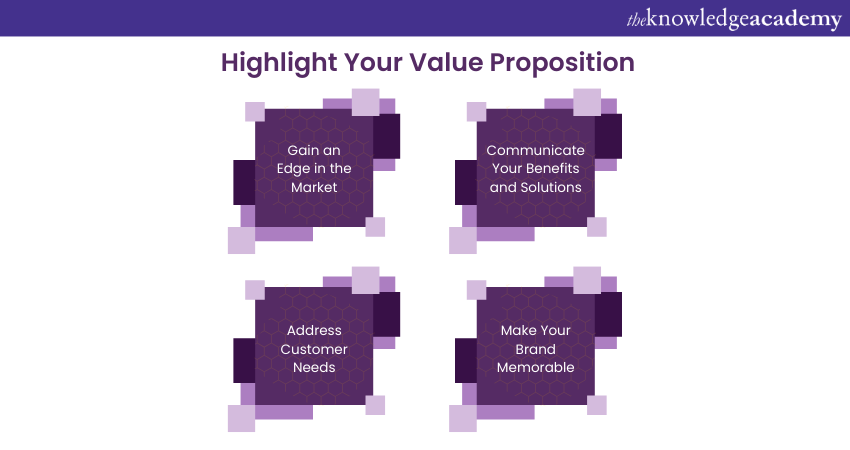
Moreover, a compelling value proposition highlights your unique advantages and addresses customer needs, ensuring your brand stands out. This clear messaging not only attracts new customers but also fosters trust and loyalty among existing ones.
By effectively highlighting your value proposition, you differentiate your business, create a compelling narrative, and establish a solid foundation for customer acquisition and retention.
3) Maintain concentration on specific goals and objectives
Maintaining concentration on specific goals and objectives is pivotal for small businesses that are navigating through limited resources. Clear, focused goals offer a roadmap for businesses, enabling efficient resource allocation and minimising distractions.
Additionally, concentration ensures that every effort aligns with overarching objectives to foster a cohesive and purposeful strategy. This targeted approach not only enhances productivity but also facilitates informed decision-making and accelerates milestone progress
Unlock advanced budgeting techniques for marketing professionals- Sign up for our Marketing Budget Course now!
4) Understand the Impact of your current customer base
Understanding the impact of your current customer base is a cornerstone for small businesses. By analysing customer demographics, behaviours, and feedback, they can provide valuable insights into preferences and satisfaction levels.
Identifying the most profitable segments enables targeted marketing and personalised engagement, which maximises customer retention. Happy customers then become brand advocates, driving positive word-of-mouth and organic growth. Additionally, understanding customer needs enables Agile adaptation, ensuring products or services align with market demands.
By comprehending the impact of their current customer base, small businesses can refine strategies, enhance customer experience, and lay a robust foundation for sustained success in a competitive landscape.
5) Utilise Cold Email Marketing
Utilising cold email marketing effectively can be a powerful tool for small businesses. Crafted thoughtfully, these emails can initiate valuable connections with potential clients or partners. Personalisation and relevance are essential for meeting the specific needs of your audience.
Follow-ups are essential for building rapport. When targeted and respectful, cold email campaigns can generate leads, drive engagement, and expand a business's network.
Regularly analysing metrics and adapting strategies ensures the continued success of this direct outreach approach, helping to expand the reach and foster meaningful business relationships.
Reach out to existing and prospective customers by signing up for our Email Marketing Course now!
6) Promote Your Business Online
Promoting your small business online is crucial for visibility and growth. Begin with a professional website optimised for search engines, ensuring a seamless user experience. Utilise social media platforms, customising content to engage your audience effectively.

Promoting your small business online is paramount for visibility and growth. Start with a professional website optimised for search engines, offering a seamless user experience. Leverage social media platforms, tailoring content to your audience. Engage in content marketing through blogs, videos, or infographics, showcasing expertise. Utilise email marketing for targeted communication and invest in online advertising, such as PPC campaigns. Foster positive customer reviews and ratings, enhancing credibility. Actively participate in online communities related to your industry. Consistency across platforms and adaptability to emerging trends are key in establishing and expanding your online presence, driving customer acquisition and brand recognition.
7) Establish Connections with Local Businesses
Establishing local business connections is highly important for small enterprises, as well as fostering a community that is both supportive and expanding. You must begin by attending local networking events and joining business associations. This approach allows for face-to-face interactions.
Additionally, they can collaborate on joint promotions or events, leveraging each other's customer bases. Engage with local businesses on social media, sharing and promoting each other's content. Don’t forget to offer reciprocal discounts or cross-promotional opportunities to incentivise collaboration.
Furthermore, you must actively participate in community initiatives and demonstrate a commitment to the local area. By building these connections, small businesses can create a network that not only enhances visibility but also opens doors to valuable resources, partnerships, and a sense of community support.
8) Create a brand
Creating a strong brand is essential for small businesses to stand out in a competitive market. Begin by defining your unique value proposition and core values. Design a memorable and cohesive brand identity, including a distinctive logo and consistent visual elements.
Craft a compelling brand story that resonates with your target audience. Establish an online presence through a professional website and active social media engagement. Also, consistently deliver quality products or services to build a positive reputation.
Encouraging customer reviews and testimonials boosts credibility. By consistently reinforcing your brand message and values, small businesses can build a recognisable and trustworthy brand that attracts and retains loyal customers.
Develop an impactful brand strategy by signing up for our Business Branding Course now!
9) Develop a website
Developing a website for small businesses serves as a virtual storefront and a powerful marketing tool. It provides a platform that is both professional and easily accessible for potential customers to learn about products or services.
Furthermore, a well-designed website boosts brand credibility and trust. It extends your market reach beyond local boundaries, allowing you to tap into audiences at a global scale. Incorporating e-commerce functionality enables businesses to facilitate transactions online, thereby helping increase revenue streams.
Moreover, a website serves as a central digital marketing efforts hub. It supports content marketing, SEO, and social media engagement, among other activities. This approach is important as a website serves as a fundamental asset for small businesses for their online presence establishment and growth.
10) Use the Power of SEO
Leveraging the SEO (Search Engine Optimisation) power is critical for small businesses to enhance online visibility and competitiveness. SEO optimises a website's structure and content to rank higher in the results of SERP, making it more discoverable by potential customers.
By targeting relevant keywords, small businesses can perform organic traffic attraction and reach a defined audience in a defined manner. This cost-effective strategy levels the playing field, allowing small enterprises to compete with larger counterparts.
Furthermore, effective SEO not only enhances the visibility of the website but also builds credibility and drives long-term success. This can be achieved by consistently attracting and retaining a steady flow of qualified leads and customers.
11) Research in-depth on keyword opportunities
Research on keyword opportunities in detail is invaluable for businesses that are looking for visibility and audience engagement through online media. By understanding the phrases and terms potential customers use for product or service searches, businesses can perform their content optimisation to align with these queries.
This research reveals valuable insights into consumer behaviour, competition, and emerging trends, which helps in relevant and targeted content creation. Incorporating the right keywords enhances a website's search engine ranking, helps to drive organic traffic and attracts a qualified audience.
12) Optimise your website for use on mobile devices
Website optimisation for mobile devices is paramount in ensuring a seamless user experience and expanding reach. With the increasing smartphone’s prevalence, a mobile-friendly site caters to users on the go, thus enhancing accessibility and engagement.
Google prioritises mobile-friendly websites in search results,which impacts search engine rankings on a positive scale. A responsive design not only improves user satisfaction but also reduces bounce rates, further translating to higher conversion rates.
In addition, with the continued surge in smartphone media, ensuring your website is optimised for various devices becomes a strategic necessity. This allows businesses to stay competitive and connect with a diverse and mobile-centric audience effectively and much more efficiently.
13) Write SEO-optimised blog posts
Creating SEO-optimised blogs is key to driving organic traffic. Start with thorough keyword research to find terms your audience is searching for. Incorporate these keywords seamlessly into your title, headings, and content to improve search engine rankings.
Focus on high-quality, valuable content that meets your audience's needs. Engaging blogs keep readers on your site longer, reducing bounce rates and increasing conversions. Mix text, images, and videos to make your content more appealing.
Ensure your blog is technically optimised for SEO. This includes a mobile-friendly design, fast loading times, and proper meta tags. Regularly update your content and promote it through social media to increase visibility and attract more visitors.
14) Do trial and error with your graphic and video content
Engaging in trial and error with graphic and video content is essential for your visual marketing strategy. Experiment with various visual elements, styles, and formats to identify what resonates best with your audience. Try to test different tones and messaging and perform efficient element design to discover what elicits the desired response.
You must also embrace feedback and adapt accordingly, homing in on the visual content, which is effective for your brand. This iterative process improves content quality while fostering a dynamic, evolving strategy that captures your audience and aligns with your brand goals.
15) Launch your business pages on Facebook and Google
Creating business pages on Facebook and Google is a strategic move for small businesses, significantly boosting online presence and customer reach. Facebook offers a platform to connect with your community, share updates, and interact with customers through comments and messages.
Google My Business enhances local visibility by showcasing essential information like location, hours, and reviews. Both platforms provide cost-effective advertising solutions, allowing businesses to target specific demographics and maximise marketing efforts.
By establishing a strong presence on these widely used platforms, small businesses can increase discoverability, leverage powerful tools for customer interaction and feedback, and enhance brand recognition and customer trust.
16) Monitor and Analyse Your Result
Monitoring your marketing performance through site analytics and social media insights is crucial. Regularly updating your records helps you make necessary adjustments to meet your marketing goals.
Each marketing channel offers unique insights. While website builders often have built-in analytics, connecting your site to Google Analytics (GA) provides deeper insights into visitor behaviour. GA is free and offers data on device usage, time spent on site, bounce rates, customer demographics, traffic sources, top-performing content, and e-commerce conversions. It's an essential tool for making data-driven decisions.
Social media metrics namely impressions, engagements, engagement rates, profile visits, and revenue from social media, are also vital. Your social media goals will vary depending on your brand's strategy, whether it's driving traffic to your website or building an online community.
Create stunning HTML websites by signing up for our Website Design Course now!
Conclusion
In conclusion, implementing effective marketing strategies is crucial for the sustained success of small businesses. By adopting targeted approaches, building a robust online presence, and fostering local connections, businesses can navigate the competitive landscape more efficiently. The key to success here lies in adaptability and a commitment to optimising every aspect of the marketing strategy for growth.
Develop new products with excellent Marketing Strategies by signing up for our Introduction to Marketing Training now!
Frequently Asked Questions
What are the Five Keys to a Strong Marketing Strategy?

The five keys to a strong marketing strategy are the 5 Ps, which stands for Product, Place, Price, Promotion, and People. These components serve as the cornerstone of any marketing strategy. Since the beginning of 1940, marketers have relied on these components to craft effective business strategies that convert.
What is the Main Goal of Marketing?
The main goal of marketing is to clearly define objectives that communicate what you want to achieve. It includes setting measurable impact, success metrics, a time frame, and supporting initiatives. This approach helps prioritise efforts, track progress, and ensure the team is aligned to meet marketing goals within the set timeframe.
What are the Other Resources and Offers Provided by The Knowledge Academy?
The Knowledge Academy takes global learning to new heights, offering over 3,000 online courses across 490+ locations in 190+ countries. This expansive reach ensures accessibility and convenience for learners worldwide.
Alongside our diverse Online Course Catalogue, encompassing 17 major categories, we go the extra mile by providing a plethora of free educational Online Resources like Blogs, eBooks, Interview Questions and Videos. Tailoring learning experiences further, professionals can unlock greater value through a wide range of special discounts, seasonal deals, and Exclusive Offers.
What is The Knowledge Pass, and How Does it Work?
The Knowledge Academy’s Knowledge Pass, a prepaid voucher, adds another layer of flexibility, allowing course bookings over a 12-month period. Join us on a journey where education knows no bounds.
What are the Related Courses and Blogs Provided by The Knowledge Academy?
The Knowledge Academy offers various Marketing Courses, including Introduction To Marketing Training, Email Marketing Course, and Marketing Budget Course. These courses cater to different skill levels, providing comprehensive insights into Guerrilla Marketing.
Our Digital Marketing Blogs cover a range of topics related to Campaign Management, offering valuable resources, best practices, and industry insights. Whether you are a beginner or looking to advance your digital marketing skills, The Knowledge Academy's diverse courses and informative blogs have got you covered.

James Smith


Digital Marketing Manager and Trainer
James Smith is a digital marketing professional with over a decade of experience in SEO, content strategy, paid media and analytics. He has supported both SMEs and global brands in transforming their digital presence. James’s writing and training are rooted in results-driven tactics and the latest marketing trends.
View Detail
Upcoming Digital Marketing Resources Batches & Dates
Date
 Introduction to Marketing Training
Introduction to Marketing Training
Fri 10th Jul 2026
Introduction to Marketing Training
Fri 11th Sep 2026

 If you wish to make any changes to your course, please


