


 Top Rated Course

We may not have the course you’re looking for. If you enquire or give us a call on +44 1344 203 999 and speak to our training experts, we may still be able to help with your training requirements.
What is Digital Marketing Plan? Importance, Components and Examples
James Smith 03 February 2026Curious to know What is Digital Marketing Plan? It’s a strategic roadmap outlining online marketing efforts to achieve business goals. This marketing plan features key elements like SEO, content marketing, social media, and paid ads, helping you create an effective strategy for online success. Keep reading to learn more.
Home
 Resources
Digital Marketing
What is Digital Marketing Plan? Importance, Components and Examples
Resources
Digital Marketing
What is Digital Marketing Plan? Importance, Components and Examples
Resources
Digital Marketing
What is Digital Marketing Plan? Importance, Components and Examples

Training Outcomes Within Your Budget!
We ensure quality, budget-alignment, and timely delivery by our expert instructors.
Table of Contents
Picture this: you’re tossing a message into the digital abyss, hoping it sticks—no plan, just vibes. Chaos, right? That’s where a Digital Marketing Plan comes in. It’s not just a checklist—it’s a battle-ready strategy designed to grab attention, fuel growth, and dominate the online space.
With social media, SEO, and ads working in sync, it turns guesswork into precision and engagement into results. So, What is a Digital Marketing Plan really about? It’s the difference between shouting into the void and making an impact. Buckle up—let’s crack its code.
Table of Contents
1) What is a Digital Marketing Plan?
2) Importance of a Digital Marketing Plan
3) Components of a Digital Marketing Plan
4) Steps to Create a Digital Marketing Plan
5) Examples of Digital Marketing Plans
6) Benefits of a Plan for Digital Marketing
7) Conclusion
What is a Digital Marketing Plan?
At its core, a Digital Marketing Plan blends creativity with data-driven decisions. It’s about knowing who you’re talking to, what you want to achieve, and how you’ll measure success—all while leveraging the vast toolbox of online channels. Whether you’re a small business owner or a marketing manager at a sprawling corporation, this plan is your ticket to turning clicks into customers.

Imagine you’re setting off on a road trip without a map, a satnav, or even a vague idea of where you’re headed. You might stumble across a charming village or two, but chances are you’ll end up lost, low on fuel, and mildly irritated. That’s what running a business without a Digital Marketing Plan feels like.
A Digital Marketing Plan is a strategic blueprint that outlines how your brand will navigate the online landscape to connect with customers, boost visibility, and drive growth. If you're wondering How to Get into Digital Marketing, creating such a plan is essential. It’s not just a wish list of ideas; it’s a structured approach to making your digital presence work harder and smarter.
Importance of a Digital Marketing Plan
Why bother plotting your course when you could just sail and see? Here’s why a plan is worth its weight in gold:
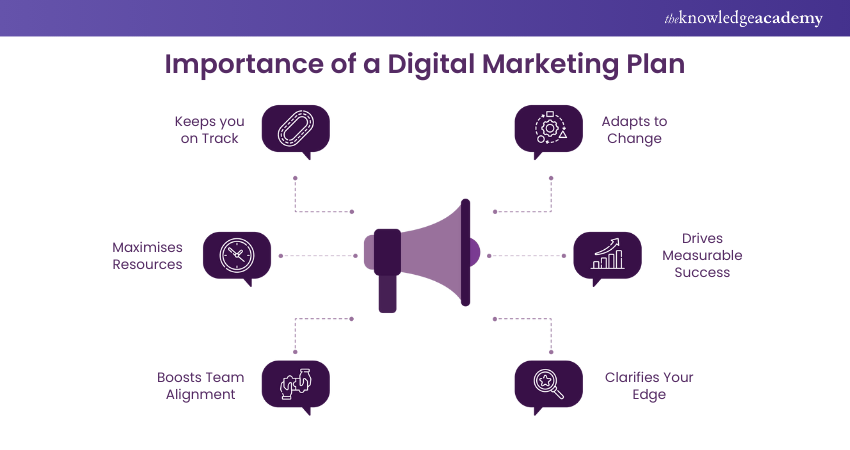
a) Keeps you on Track: The digital landscape is a whirlwind new platforms, shifting trends, and sneaky algorithm tweaks constantly shape the future trends in digital marketing. A plan anchors you, ensuring every move ladders up to your goals.
b) Maximises Resources: Time and money are finite. A plan stops you from splurging on mismatched tactics, focusing your efforts where they’ll count.
c) Boosts Team Alignment: From the content creator to the ad buyer, everyone’s singing from the same hymn sheet. No mixed messages, just unified momentum.
d) Adapts to Change: A good plan isn’t rigid—it’s a living document. When TikTok fades or Google rewrites the rules, you’ve got a framework to pivot fast.
e) Drives Measurable Success: According to Smart Insights (2025), businesses with a documented strategy are 313% more likely to succeed. That’s not luck; it’s planning in action.
f) Clarifies Your Edge: It forces you to study your market and competitors, helping you carve out a niche that’s distinctly yours.
Master the principles of Customer Experience (CX) with our Digital Marketing Course – register now!
Components of a Digital Marketing Plan
A Digital Marketing Plan isn’t a one-size-fits-all affair. It’s more like a bespoke suit, tailored to your brand’s needs. Here are the key threads that stitch it together:
Content Marketing
This is your brand’s voice. Blogs, eBooks, infographics, or even quirky memes—content educates, entertains, and builds trust. A travel agency might share destination instructions; a bakery could post recipes. It’s about value, not just sales pitches.
Mobile Marketing
Phones are our lifelines—84% of UK adults used a smartphone in 2025 according to Statista. Mobile marketing means SMS blasts, push notifications, or apps that make buying a breeze. It’s personal, immediate, and oh-so-convenient.
Reputation Marketing
Your online street cred matters. Monitor reviews on Google or Trustpilot, respond with grace, and flaunt glowing testimonials. A café could highlight a 5-star rating to lure new sippers—it’s subtle bragging done right.
Social Media Marketing
Platforms like Instagram, Twitter, or LinkedIn are your megaphone. Share behind-the-scenes snaps, spark debates, or drop witty one-liners. A fashion brand might tease a collection drop; a consultant could post industry tips.
Email Marketing
Far from obsolete, email’s the quiet achiever. Send tailored newsletters, re-engagement offers, or birthday discounts. A retailer might remind you of that abandoned cart with a cheeky “Come back, we miss you!”
Advertising
Digital ads—banner, native, or carousel—are your fast track to eyeballs. Target by age, location, or interests, and track every penny spent. A gym could push a January membership deal to resolution-makers. A Search Engine Marketing Guide can further help in refining ad strategies to maximise reach and ROI.
Video Marketing
A 60-second explainer video or a live Q&A helps cut through the scroll. It’s dynamic and shareable—think a skincare brand demoing a serum or a charity showing real impact. Video’s where engagement lives.
Web Analytics
Data is your crystal ball. Tools like Google Analytics or Hotjar reveal who’s visiting, what they love, and where they bounce. A retailer might spot a high drop-off on checkout and fix it pronto.
Paid Search
Pay-per-click (PPC) puts you atop search results. Bid on keywords like “best running shoes” and watch qualified leads roll in. It’s instant, but you’ll need a budget to play.
Search Engine Optimisation (SEO)
The long game with big rewards. Optimise your site with keywords, speedy load times, and quality backlinks to climb Google’s ranks. A florist might target “same-day delivery roses” to bloom locally.
Begin your Social Media journey with our Social Media Marketing Course – register now to enhance your Digital Marketing skills!
Steps to Create a Digital Marketing Plan
Planning to create a Digital Marketing Plan of your own? Here are a few key and definitive steps to follow when creating one:
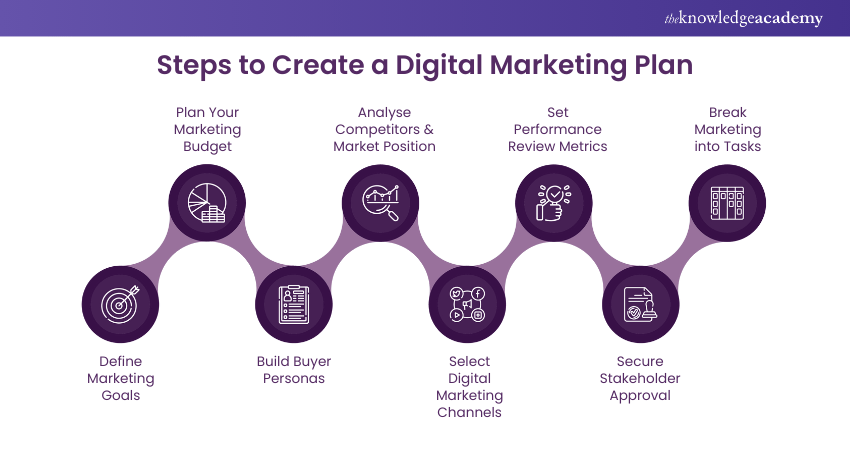
Define Marketing Goals
What’s your North Star? More sales, brand buzz, or loyal followers? Be specific—e.g., “Increase online orders by 20% in six months”—so you’ve got a target to chase.
Plan Your Marketing Budget
Crunch the numbers. Will you splash £5,000 on ads or £500 on content? Factor in tools, staff, and a buffer for testing—say, a small TikTok campaign to see if it sticks.
Build Buyer Personas
Meet your audience up close. Create profiles like “Sophie, 32, loves yoga and podcasts” or “Mark, 45, scans LinkedIn daily.” Add quirks—do they binge Netflix or brew artisanal coffee? —to make your outreach personal.
Analyse Competitors & Market Position
Play detective. Scour rivals’ websites, ads, and socials. Are they killing it with video? Missing the mobile boat? Map where you stand and spot gaps—like an underserved local niche—to exploit.
Select Digital Marketing Channels
Choose your battlegrounds wisely. A B2C brand might thrive on Instagram and email; a B2B player could lean on LinkedIn and SEO. Test small, then double down on winners.
Set Performance Review Metrics
How do you measure victory? Track clicks, conversions, or follower growth—e.g., “Aim for a 5% email open rate increase.” Tie metrics to goals for a clear scorecard.
Secure Stakeholder Approval
Pitch to the decision-makers. Arm yourself with a sleek deck—goals, costs, projected wins—and sell the vision. A nod from the boss unlocks the resources you need.
Break Marketing into Tasks
Turn strategy into action. List jobs like “Write three blogs by Friday” or “Launch ad campaign next month.” Assign owners, deadlines, and checkpoints to keep the engine humming.
Examples of Digital Marketing Plans
Need a spark to kickstart your Digital Marketing Plan? Let’s explore some practical examples inspired by real-world applications.
Imagine a small eco-friendly skincare brand aiming to boost online sales. Their plan might weave together blog posts on sustainable beauty (content marketing), Instagram Stories showcasing product creation (social media marketing), and targeted Google Ads for “organic skincare” (paid search). They’d track success through website traffic and conversion rates, adjusting based on what resonates.
Alternatively, picture a B2B software firm targeting decision-makers. Their approach could blend LinkedIn whitepapers (content marketing), a webinar series on industry trends (video marketing), and SEO-optimised case studies to rank for “business solutions.”
Key metrics? Lead generation and engagement levels. In both cases, activities are grouped by type—content, campaigns, analytics—offering a clear view of how each piece fits into the bigger picture, ensuring a cohesive, impactful strategy.
Benefits of a Plan for Digital Marketing
A plan isn’t just paperwork—it’s a powerhouse. Here’s what it delivers:
a) Laser Focus: No more chasing every shiny trend—you’re locked on what matters.
b) Efficiency Boost: Streamlined efforts mean less waste, more impact.
c) Flexibility: Pivot with confidence when the digital winds shift.
d) Team Harmony: Everyone’s rowing in sync, not against each other.
e) Result Amplifier: HubSpot (2025) says 67% of planned marketers hit revenue goals vs. 34% without.
f) Stress Slayer: A clear path cuts the chaos, letting you breathe easier
Conclusion
A Digital Marketing Plan isn’t a dusty document—it’s a living, breathing strategy that propels your brand forward. It’s about blending creativity with structure, intuition with insight, to make your mark online. From defining goals to picking channels, ensuring Marketing Compliance, and tracking wins, it’s your secret weapon in a crowded digital jungle. So, grab a coffee, sketch out your vision, and watch your business bloom. The online world’s waiting—how will you show up?
Learn about the latest tools and trends in Digital Marketing with our Digital Marketing Courses – Sign up today!
Frequently Asked Questions
What is the ultimate goal of a digital marketing plan?

The ultimate goal of a digital marketing plan is to drive brand visibility, attract the right audience, and convert engagement into measurable growth. It ensures a structured, data-driven approach to achieving business objectives through targeted online strategies.
Which strategy is best for digital marketing?
The best digital marketing strategy depends on the business goals and audience, but a combination of SEO, content marketing, social media, PPC, and email marketing ensures maximum reach, engagement, and conversions while maintaining long-term brand growth and authority.
What are the Other Resources and Offers Provided by The Knowledge Academy?
The Knowledge Academy takes global learning to new heights, offering over 3,000 online courses across 490+ locations in 190+ countries. This expansive reach ensures accessibility and convenience for learners worldwide.
Alongside our diverse Online Course Catalogue, encompassing 19 major categories, we go the extra mile by providing a plethora of free educational Online Resources like News updates, Blogs, videos, webinars, and interview questions. Tailoring learning experiences further, professionals can maximise value with customisable Course Bundles of TKA.
What is The Knowledge Pass, and How Does it Work?
The Knowledge Academy’s Knowledge Pass, a prepaid voucher, adds another layer of flexibility, allowing course bookings over a 12-month period. Join us on a journey where education knows no bounds.
What are the Related Courses and Blogs Provided by The Knowledge Academy?
The Knowledge Academy offers various Digital Marketing Courses including the Search Engine Optimisation (SEO) Course and Google Ads Certification Course and Accounting and Finance Policies Course for Experienced Trainers Course. These courses cater to different skill levels, providing comprehensive insights into What is Copyright.
Our Digital Marketing Blogs cover a range of topics related to Search Engine Optimisation (SEO), offering valuable resources, best practices, and industry insights. Whether you are a beginner or looking to advance your Digital Marketing skills, The Knowledge Academy's diverse courses and informative blogs have got you covered.

James Smith


Digital Marketing Manager and Trainer
James Smith is a digital marketing professional with over a decade of experience in SEO, content strategy, paid media and analytics. He has supported both SMEs and global brands in transforming their digital presence. James’s writing and training are rooted in results-driven tactics and the latest marketing trends.
View Detail
Upcoming Digital Marketing Resources Batches & Dates
Date
 Digital Marketing Course
Digital Marketing Course
Fri 24th Apr 2026
Digital Marketing Course
Fri 17th Jul 2026
Digital Marketing Course
Fri 13th Nov 2026

 If you wish to make any changes to your course, please


