


 Top Rated Course

We may not have the course you’re looking for. If you enquire or give us a call on +852 2592 5349 and speak to our training experts, we may still be able to help with your training requirements.
What is Compliance Management, and Why it is Important?
Scarlett Adams 12 February 2026Compliance Management is a systematic approach that helps organisations follow laws, regulations, and internal policies in a structured way. It reduces legal and security risks, protects reputation, and promotes ethical behaviour. It helps organisations respond quickly to regulatory changes while supporting sustainable business growth.

Training Outcomes Within Your Budget!
We ensure quality, budget-alignment, and timely delivery by our expert instructors.
Table of Contents
Are you confident that your organisation is meeting all its legal and regulatory obligations? Many businesses believe they are compliant, yet changing laws, standards, and growing digital risks make compliance more complex than it first appears. This is why Compliance Management is no longer just a legal necessity but a core business function.
With the right approach, you can stay aligned with regulations, protect sensitive information, and build trust with customers and stakeholders. In this blog, we explore what is Compliance Management, why it matters, and how businesses can handle it effectively. Let's dive in!
Table of Contents
1) What is Compliance Management?
2) Importance of Compliance Management
3) Elements of Compliance Management
4) How to Implement Compliance Management System?
5) Top Compliance Management Approaches
6) Compliance Management Challenges
7) Best Practices for Compliance Management
8) Conclusion
What is Compliance Management?
Compliance Management is the structured approach organisations use to ensure they follow applicable laws, regulations, industry standards, and internal policies. It involves identifying compliance requirements, implementing controls, monitoring adherence, and addressing any gaps or violations in a timely manner.
At its core, Compliance Management is about risk prevention. It can be classified into two categories:
1) Corporate Compliance: Ensures the organisation follows its internal policies, ethical standards, and governance rules to promote responsible and consistent business practices.
2) Regulatory Compliance: Focuses on meeting external laws, regulations, and industry standards to avoid legal penalties and maintain lawful operations.

Importance of Compliance Management
Compliance Management plays an important role in protecting organisations and helping them operate responsibly. Here are the reasons why it is important for every business:
1) Legal Compliance
Legal compliance means following the laws and rules that apply to a business. Compliance Management helps organisations understand these laws and make sure they are followed correctly to avoid penalties or legal action.
1) Ensures laws and regulations are followed
2) Helps avoid fines and legal penalties
3) Makes audits and inspections easier
4) Supports lawful and smooth business operations
2) Data Security
Data security is a critical part of Compliance Management, especially as organisations handle large volumes of sensitive information. Compliance practices help protect personal, financial, and business data from breaches and misuse.
1) Keeps sensitive data safe and secure
2) Reduces the risk of data breaches
3) Builds trust with customers
4) Controls who can access information
3) Brand Integrity
Brand integrity means maintaining a good reputation. Strong Compliance Management shows that a business acts responsibly and ethically, which builds trust and confidence among customers, partners, and stakeholders.
1) Shows ethical business behaviour
2) Builds trust with customers and partners
3) Prevents damage caused by non-compliance
4) Supports long-term business success
Elements of Compliance Management
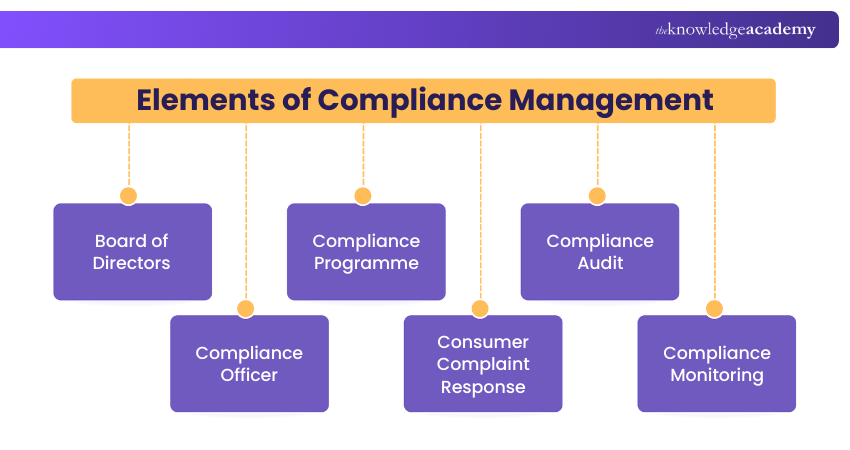
Compliance Management is not a stand-alone process. It works together with several elements that make it effective. Such elements include the following:
1) Board of Directors
The Board of Directors is responsible for setting up compliance across the organisation. They take charge of providing oversight, approving compliance strategies, and ensuring that adequate resources are allocated to compliance activities. When the board supports compliance, it sets a positive example for the rest of the organisation to follow.
2) Compliance Officer
The Compliance Officer manages day-to-day compliance activities. Those activities involve designing, implementing, and maintaining the Compliance Management System (CMS). They also keep track of regulatory changes, advising management, and supporting teams across the organisation.
Gain the skills to manage enterprise-wide compliance with our Chief Compliance Officer Training – Register today!
3) Compliance Programme
A compliance programme provides a formal structure for managing compliance activities. It typically includes policies, procedures, codes of conduct, risk assessments, training programmes, and reporting mechanisms. This helps employees understand their compliance responsibilities and reduces confusion.
4) Consumer Complaint Response
Handling consumer complaints is an important part of Compliance Management. This is because such complaints can reveal weaknesses in processes, customer communication, or regulatory adherence. It also offers useful insights that can be used to improve products, services, and compliance controls.
5) Compliance Audit
Compliance audits involve proper reviews of policies, procedures, and operational practices to assess whether compliance requirements are met. Audits may be conducted either by internal people or by external auditors to identify gaps, weaknesses, or areas of non-compliance before they escalate into serious issues.
6) Compliance Monitoring
Monitoring involves ongoing checks to make sure compliance is maintained over time. This may include reviews, reports, and automated alerts. It is a key component of a proactive Compliance Management approach since it detects issues early, responds quickly, and adapts controls as risks evolve.
How to Implement Compliance Management System?
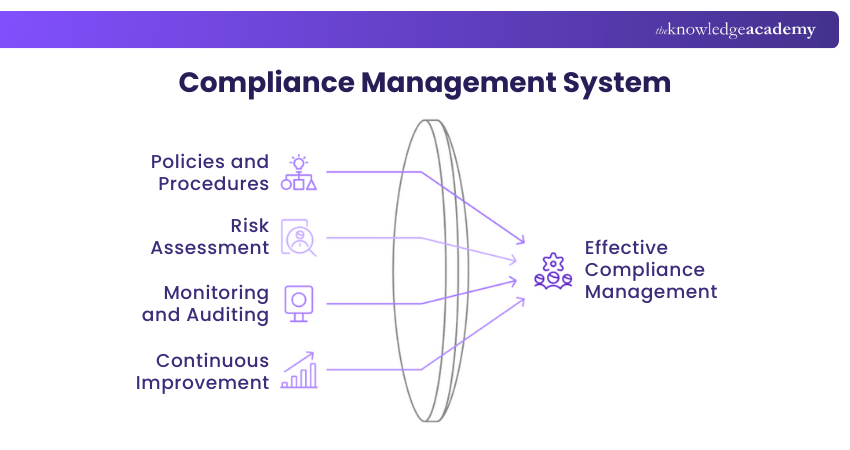
So far, we have explored what is Compliance Management and its elements. Now, it is time to know how to implement a Compliance Management System for your business or organisation:
1) Assessing Your Requirements
The first step is to understand your organisation’s compliance and Risk Management needs. This includes identifying the laws, regulations, and standards that apply to your industry and operations.
For example, financial institutions may need to comply with frameworks such as ISO standards or SOX regulations. Like that, get to know which is suitable for your business.
2) Tailoring the CMS to Fit Your Needs
There is no one-size-fits-all approach to Compliance Management. Thus, when your requirements are clear, the CMS should be customised to suit the organisation’s structure and processes.
This may involve configuring workflows, defining user roles, and aligning the system with existing compliance and business tools.
3) Involving Key Stakeholders
Engaging leadership, managers, stakeholders, and employees early helps build ownership and alignment. Stakeholders can provide valuable insights into operational realities and potential risks.
When everyone understands their role and how they influence adherence to regulations, it becomes easier to build a strong compliance culture.
4) Providing Training for Employees
To make CMS effective, all employees should work towards it. They need to receive proper training on how to use the CMS and understand their role in maintaining compliance. This helps them validate their role and work with responsibility.
Training has to explain not only how the compliance system works but also why compliance matters. This helps employees feel confident and reduces the risk of accidental non-compliance.
Stay aligned with security standards and regulations with our Security Governance and Compliance Training – Join now!
5) Defining Clear Responsibilities
Clear roles and responsibilities prevent confusion and ensure accountability among employees. Therefore, the roles and duties should be clearly defined at every stage of the compliance lifecycle.
It provides an extra layer of clarity and structure to what is expected of them. This highlights the importance of compliance and helps maintain discipline across teams.
6) Embracing Ongoing Improvement
Compliance Management is not a static process. Instead, it is dynamic and evolving as the trends and business needs grow. Continuous monitoring, regular reviews, and system updates are necessary to keep the CMS effective.
By committing to ongoing improvement, organisations can ensure a relevant and reliable CMS for long-term compliance needs.
Top Compliance Management Approaches
Different organisations adopt different approaches to Compliance Management depending on their culture, size, and risk tolerance. Here are the top approaches:
1) Authoritative Leadership
This approach relies on strong top-down control, with clear rules, strict enforcement, and limited flexibility. Decisions are made by senior management, and compliance is enforced firmly.
While this model can be effective in highly regulated industries, it may sometimes discourage open communication.
2) Hands-off and Flexible
It is a flexible approach that gives teams more freedom to manage compliance within their own areas. It relies on trust and professional judgement rather than rigid controls like an authoritative approach.
This hands-off approach can encourage innovation and engagement but may increase the risk of inconsistency if teams lack proper guidance.
3) Collaborative Management
Collaborative compliance encourages teamwork, shared responsibility, and open communication. Compliance teams work closely with other departments to find practical solutions.
This approach often leads to higher engagement, better understanding of compliance goals, and stronger integration of compliance into daily operations.
Meet compliance and governance expectations with our Environmental, Social, and Governance (ESG) Training – Sign up soon!
Compliance Management Challenges
Despite its importance, Compliance Management comes with some challenges such as:
1) Security Shifts
New cyber threats and regulations appear frequently. Keeping up with these changes requires constant attention. To sustain security, organisations have to stay informed and adapt their controls accordingly.
2) Platform Diversity
Many organisations use a wide range of platforms, systems, and technologies. Managing compliance across these diverse environments can be complex and challenging.
3) Large Teams
In large organisations, ensuring consistent compliance across multiple teams and locations can be difficult. Differences in culture, processes, and understanding can lead to uneven compliance.
Best Practices for Compliance Management
There are some practices that can help you implement a safe and strong CMS. Let’s check those best practices of Compliance Management:
1) Utilise Automation Tools
Automation tools help manage compliance tasks faster and with fewer mistakes. They reduce manual effort and help organisations stay organised and up to date with rules.
1) Use software to track compliance requirements
2) Set automatic reminders for deadlines
3) Reduce manual checks and paperwork
4) Review system reports regularly and on time
2) Integrate With Compliance Tools
Connecting compliance tools with other systems makes compliance easier to manage. It helps teams share information and avoid duplicate work.
1) Link compliance tools with existing systems
2) Share compliance data across teams
3) Avoid using separate tools for the same tasks
4) Use simple dashboards to track compliance
3) Perform Routine System Scans
Regular system scans help identify weaknesses that could lead to compliance issues. These scans support early detection of risks and help maintain system security.
1) Run regular system and security scans
2) Identify weak points in systems and fix those issues
3) Keep records of scan results
4) Review findings with the IT team
4) Maintain Regular Patching and Testing
Keeping systems updated is important for both compliance and security. Regular patching and testing ensure systems remain protected, and controls are working properly.
1) Install updates and patches regularly
2) Test systems after updates
3) Fix known system issues quickly
4) Review update processes often
Conclusion
Compliance Management is a key aspect for running a responsible and sustainable organisation. It helps businesses follow laws, protect data, reduce risks, and maintain a strong reputation. When compliance is built into everyday operations, it becomes easier to manage and more effective over time. A well-managed approach not only prevents legal and regulatory issues but also supports long-term growth and business stability.
Strengthen your compliance knowledge and reduce business risk with our Compliance Training – Explore now!
Frequently Asked Questions
What is the ISO for Compliance Management Systems?

ISO 37301 is the global standard for Compliance Management Systems. It provides guidance to establish, develop, implement, evaluate, maintain, and continually improve organisational compliance.
What is a Compliance Framework?
A compliance framework refers to a set of rules, processes, and responsibilities that help an organisation meet its legal and ethical obligations. It helps manage risks, ensure regulatory adherence, and show high accountability.
What are the Other Resources and Offers Provided by The Knowledge Academy?
The Knowledge Academy takes global learning to new heights, offering over 3,000+ online courses across 490+ locations in 190+ countries. This expansive reach ensures accessibility and convenience for learners worldwide.
Alongside our diverse Online Course Catalogue, encompassing 19 major categories, we go the extra mile by providing a plethora of free educational Online Resources like Blogs, eBooks, Interview Questions and Videos. Tailoring learning experiences further, professionals can unlock greater value through a wide range of special discounts, seasonal deals, and Exclusive Offers.
What is The Knowledge Pass, and How Does it Work?
The Knowledge Academy’s Knowledge Pass, a prepaid voucher, adds another layer of flexibility, allowing course bookings over a 12-month period. Join us on a journey where education knows no bounds.
What are the Related Courses and Blogs Provided by The Knowledge Academy?
The Knowledge Academy offers various Compliance Training, including Effective Compliance Training, Security Governance and Compliance Training and Consumer Protection Training. These courses cater to different skill levels, providing comprehensive insights into Internal Audit.
Our ISO & Compliance Blogs cover a range of topics related to Compliance Management, offering valuable resources, best practices, and industry insights. Whether you are a beginner or looking to advance your ISO & Compliance skills, The Knowledge Academy's diverse courses and informative blogs have got you covered.
Upcoming ISO & Compliance Resources Batches & Dates
Date
 Effective Compliance Training
Effective Compliance Training
Fri 24th Apr 2026
Effective Compliance Training
Fri 19th Jun 2026
Effective Compliance Training
Fri 7th Aug 2026
Effective Compliance Training
Fri 16th Oct 2026

 If you wish to make any changes to your course, please


