


 Top Rated Course

We may not have the course you’re looking for. If you enquire or give us a call on + 1-866 272 8822 and speak to our training experts, we may still be able to help with your training requirements.
How to Improve Your Credit Score: Proven Steps That Work
The Knowledge Academy 16 July 2026To improve your credit score, pay bills on time, lower credit card debt, avoid new credit inquiries, check for errors, and keep credit usage low.

Training Outcomes Within Your Budget!
We ensure quality, budget-alignment, and timely delivery by our expert instructors.
Table of Contents
Why Does a Good Credit Score Matter?
Everyone’s financial needs keep changing throughout their lives. It is subject to external conditions such as their new financial undertaking or commitments. The common misconception is the need for a loan is only when a good credit score becomes relevant. This is where knowing How to Improve Credit Score will play a phenomenal part.

Maintaining a good credit score will influence several aspects of your life. Parties such as Landlords, insurers and employers often use the credit information of an individual as a measure of reliability. A poor credit score will point out financial risk affecting borrowing opportunities and how you tackle your debts. A strong credit score can signal financial stability, influencing opportunities beyond just the frontier of borrowing.
How to Build Good Credit Quickly?
To establish good credit score, you can adopt the following strategies:
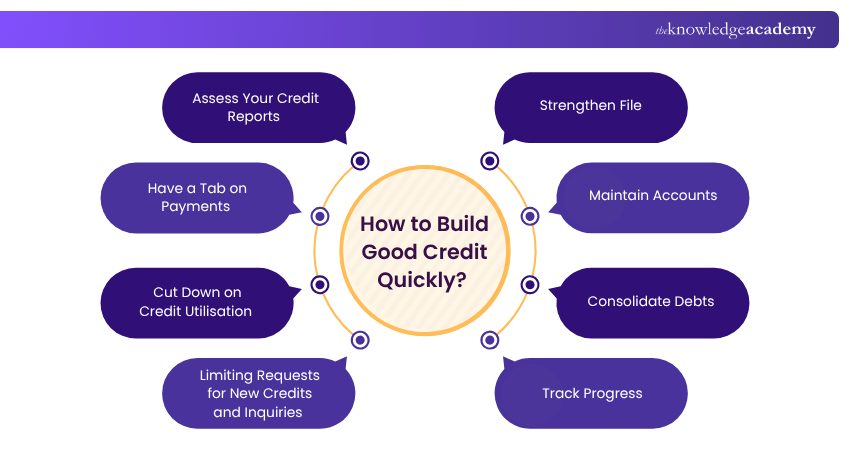
1) Assess Your Credit Reports
Before building credit, it’s essential to understand your current financial status. You can us three major national bureaus, namely Equifax, Experian, and TransUnion, to download a credit report. These will equip you with your insights on what is influencing your score. Key factors that influence your credit score include payment history, credit utilisation, length of credit history, credit mix, and new credit inquiries.
2) Have a Tab on Payments
We all have had moments where we gasp at the bill and wonder, ‘How did that happen?’ and probably reevaluate our entire lives. Making on-time payments is crucial, as payment history accounts for 35% of your credit score. Use tools like GoCardless, PayPal, Stripe, or Shopify Payments to set up automatic payments and avoid missed due dates.
Probably not a good idea to postpone your bills payment. Setting up automatic payments is one of the strategies to go about this! Some of the automatic payment apps include GoCardless, Worldpay, Paypal, Stripe and Shopify Payments.

3) Cut Down on Credit Utilisation
As it goes without saying, reducing your overall credit utilisation is highly recommended for your credit score. To reduce your credit utilisation ratio, try making multiple payments a month, keeping balances low, requesting higher credit limits, and using more than one card responsibly.
4) Limiting Requests for New Credits and Inquiries
Limiting requests for new credit and associated hard inquiries is imperative for maintaining a good credit score. Every time one applies for credit, hard enquiry is made which can negatively impact your score.
There are two types of credit inquiries namely hard and soft. Soft inquiry is checking one’s own credit, giving potential employer permission to check credit and checks done by financial institutions. Avoiding frequent applications is the key to improving your credit.
5) Strengthen File
A thin credit file typically occurs when there is lack of proper credit history on your report. Fortunately, there are many ways to strengthen one’s thin credit file and solidify credit score.
For example, Experian Boost allows you to include information that wouldn’t normally appear on your credit report, such as utility bills and monthly subscriptions. This data can help generate a better credit score, particularly for those who consistently pay bills on time.
6) Maintain Accounts
One of the ways to maintain old credit accounts is to have them in use instead of closing them. The age-of-credit history influences your credit score. The older one’s credit age is, the more favourable it appears to lenders.
7) Consolidate Debts
If one has outstanding debts, it is highly recommended to consider a debt consolidation loan from a bank or credit union to combine multiple debts into one manageable payment. This way, there is only one payment an individual has to deal with, thus lowering the interest rate on loans. This also facilitates faster debt repayment, subsequently improving your credit utilisation ratio.
8) Track Progress
Regularly monitoring credit score is the key to making progress. Credit monitoring services help track changes in your credit score over time. These services typically provide changes in your credit score and also help detect identity theft or fraud early. Some of the free credit monitoring services include Credit Karma, Experian, Credit Sesame etc.
Manage investments, retirement plans, and tax strategies with our Credit Analyst Training - Join today!
Tips to Improve Credit Score
Tt is crucial to boost your credit score as this will help to secure loans and access better interest rates. Here are some effective ways to do so:

Set Debits
Missed or late credit payments has a chance to lower your credit score. They remain on your report for up to six years. To avoid this, ensure your bills are paid on time. Setting up direct debits can help prevent accidental missed payments. Ignoring an unpaid debt could lead to a County Court Judgment (CCJ), which can have a lasting negative impact on your credit.
Gain expertise in budgeting, forecasting, and financial analysis techniques with our Finance Manager Course - Join today!
Limit Applications
Frequent credit applications can impact your credit score negatively, as multiple hard inquiries suggest a higher risk to lenders. Only apply for credit when necessary and space out applications to minimise the impact on your score.
Use Minimal Credit
Maintaining a low credit utilisation ratio; ideally below 30%, demonstrates responsible credit management. Using only a small portion of your available credit can improve your score and make you more attractive to lenders.
Conclusion
Now that you are aware of How to Improve Credit Score, maintaining a healthy score is no longer a distant dream. Managing your credit wisely is essential for maintaining a strong financial profile. By making timely payments, limiting credit applications, and keeping your credit utilisation low, you can build and sustain a healthy credit score. A good score can improve your borrowing options and help secure favourable interest rates.
Learn about financial statement analysis and credit risk assessment with our Finance Planner Training - Register today!
Frequently Asked Questions
What are Five Factors That Affect a Credit Score?

The main factors influencing your credit score include:
Payment history affects your score; late or missed payments lower it. High credit utilisation can be detrimental. A longer credit history boosts your score. A diverse credit mix (loans, credit cards) is beneficial. Too many new credit inquiries in a short time can reduce your score.
How Does Credit Score Affect Interest Rates?
A higher credit score mostly results in lower interest rates, as lenders view you as a lower-risk borrower. Conversely, a lower score may lead to higher interest rates or difficulty securing credit.

The Knowledge Academy


Global Training Provider
The Knowledge Academy is a world-leading provider of professional training courses, offering globally recognised qualifications across a wide range of subjects. With expert trainers, up-to-date course material, and flexible learning options, we aim to empower professionals and organisations to achieve their goals through continuous learning.


 If you wish to make any changes to your course, please


