


 Top Rated Course

We may not have the course you’re looking for. If you enquire or give us a call on +30 2111995372 and speak to our training experts, we may still be able to help with your training requirements.
What is Blockchain Wallet: A Complete Guide
Richard Harris 13 July 2026A Blockchain Wallet stores public and private keys, enabling secure sending, receiving, and trading of digital assets like Bitcoin and Ethereum. It doesn't store the actual coins but rather gives you the "keys" to send, receive and store digital assets. It's like a digital key to your funds, or a username and password for your Crypto.

Training Outcomes Within Your Budget!
We ensure quality, budget-alignment, and timely delivery by our expert instructors.
Table of Contents
Imagine a world where your money isn't tied to a bank or a specific country, where you can send and receive funds instantly, securely, and without exorbitant fees. This isn't a futuristic dream; it's the reality of Cryptocurrencies fueled by Blockchain Wallets.
With over 85 million users globally as of September 2025, Blockchain Wallets are becoming the new standard for digital transactions. They offer a secure and efficient way to manage Cryptocurrencies just like Bitcoin and Ether, making them user-friendly as Traditional Wallets for your cash.
This blog will take you through everything you need to know about What is Blockchain Wallet, from their types and benefits to how you can set one up and start using it.
Table of Contents
1) What is a Blockchain Wallet?
2) Creating a Blockchain DeFi Wallet
3) How Does a Blockchain Wallet Works?
4) Types of Blockchain Wallets
5) Benefits of Blockchain Wallet
6) How to Use a Blockchain Wallet?
7) What are the Blockchain Wallet Fees?
8) Blockchain Wallets Comparison
9) How to Withdraw Money From Blockchain Wallet?
10) What Can Be Done With a Blockchain Address?
11) How to Keep Your Wallet Safe
12) What is the limit of a blockchain wallet?
13) Conclusion
What is a Blockchain Wallet?
A Blockchain Wallet is a digital Wallet used to store, manage, and exchange Cryptocurrencies like Bitcoin and Ether. It is linked to both public and private keys and it creates a secure Crypto identity. The private key acts as a password, providing access to funds.
Users can easily create a free Wallet online by registering with an email and a password. Once verified, the Wallet displays balances and transaction history. It enables fast, affordable transfers across the Blockchain network with high security and transparency.

Creating a Blockchain DeFi Wallet
To create a Decentralised Finance (DeFi) wallet, you'll first have to open an account on Blockchain.com. Here are the steps you need to follow:
1) After creating your account, download the wallet app from your device’s store or access it via a web browser using the same login credentials.
2) New wallets are limited to decentralised exchange use unless you complete the KYC verification to unlock full custodial account and exchange features.
3) The wallet interface displays your Crypto balance, recent transactions, and live price charts with values shown in your local currency.
4) A Support Centre with FAQs and help topics is available for guidance directly within the wallet.
5) If you opted for Blockchain.com's custodial service, an additional Account tab will appear beside the DeFi Wallet tab. This gives you access to custodial features.
How Does a Blockchain Wallet Work?
A Blockchain Wallet operates similarly to a physical wallet, allowing users to manage their digital currencies securely. It primarily works by holding private and public keys, which are vital for conducting transactions on the Blockchain.
1) Storage of Keys: A Blockchain wallet securely stores both private and public keys, which are necessary for sending and receiving Cryptocurrencies. This secure storage enables users to manage their digital assets effectively.
2) Public Key Sharing: The public key can be shared with others, allowing them to send Cryptocurrencies to the wallet. It serves as an address for transactions, facilitating the transfer of funds without compromising security.
3) Private Key Confidentiality: The private key must remain confidential and should never be shared. It acts like a password, granting access to the wallet and the ability to authorise transactions.
4) Key Matching Importance: For a transaction to be valid, the corresponding public key must match the private key. This matching process is crucial as it verifies ownership and allows users to view their asset values securely.
5) Transaction Authorisation: When a user initiates a transaction, the wallet uses the private key to sign it, ensuring that only the owner can authorise the transfer of funds. This process, along with the Timestamp in Blockchain, elevates the overall security of the Blockchain network by verifying the transaction's chronological order and preventing tampering.
Types of Blockchain Wallets
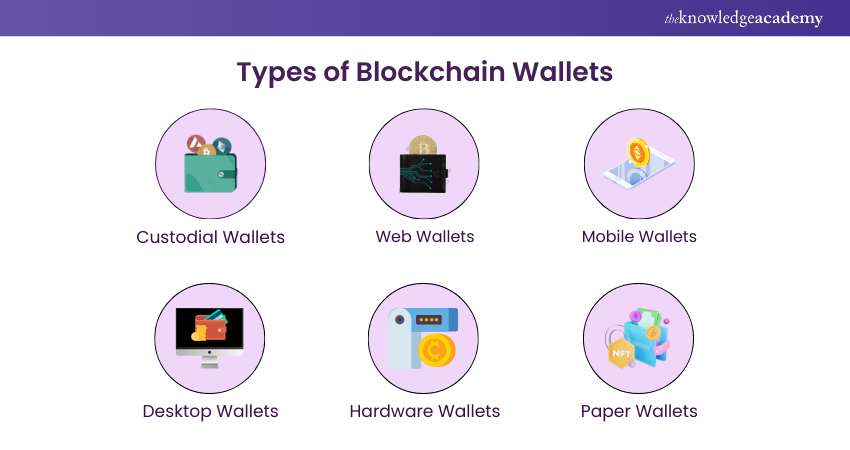
The most common Types of Blockchain Wallets are Custodial, Web, Desktop, Hardware, and Paper Wallets. Each type has a own usability and security. Here is a brief detail on each of the Blockchain Wallet types:
1) Custodial Wallets
A Custodial Wallet service (like Coinbase or Kraken) is part of the private key that protects a user's funds. They are user-friendly and are generally preferred by beginners, as they don't have to manage the private key themselves.
It allows users to initiate a transaction through their preferred platform to send funds using a Wallet address. Below are some advantages of using a Custodial Wallet:
a) They are comparatively less responsible held by users
b) They are simple and user-friendly, especially for beginners
c) They can easily reset passwords to regain Digital Assets access
2) Web Wallets
A Web Wallet is a Blockchain Wallet that allows users to store, manage, and transact Cryptocurrencies online through a web browser. Here are some important points to remember when using Web Wallets:
a) Unlike Hardware or Desktop Wallets, Web Wallets are internet-hosted, making them accessible from any device with a stable internet connection.
b) They offer convenience and accessibility but may be more vulnerable to cyber threats than offline storage methods.
c) Web Wallets often provide key features like real-time transaction tracking, multi-currency support, and integration with various Cryptocurrency exchanges.
3) Mobile Wallets
Mobile Wallets are Digital Wallets that are designed to be used on smartphones and tablets. Key features of Mobile Wallets include:
a) Mobile Wallets allow users to store and transact Cryptocurrencies directly from dedicated mobile apps with features like QR code payments and real-time transaction notifications.
b) They offer improved security through biometric authentication like fingerprint or facial recognition. They provide easy backup and recovery options to protect wallet data.
c) These wallets support multiple Cryptocurrencies and can seamlessly integrate with various exchanges and services.
Discover the tech, trends and tools to thrive in the Crypto world. Sign up for our Bitcoin and Cryptocurrency Course now!
4) Desktop Wallets
Desktop Wallets are software programs that allow users to access Crypto Wallets directly without using a browser. Below, we have described the exciting features of Desktop Wallets:
a) Desktop wallets store private keys locally on the user’s computer, offering strong control and reduced online hacking risks.
b) They can function as a backup solution, protecting wallet access if the main device or server fails.
c) These wallets are economical for managing Cryptocurrencies, with popular examples like Electrum providing reliable performance for everyday Crypto handling.
5) Hardware Wallets
You can keep your private keys on different devices with Hardware Wallets. When conducting transactions, you typically insert these little devices into the USB port on your PC.
Hardware Wallets provide good security. But there are a few disadvantages of using hardware Wallets as opposed to some other forms of Blockchain wallets, as listed below:
a) Wallets, ranging from £40 to several hundred dollars, depending on the brand and features.
b) Physical devices, such as hardware wallets, are vulnerable to damage. For this reason, losing or damaging your device can result in access loss to your Digital Assets. This risk is heightened if you don’t have your recovery phrase or a backup device installed.
c) Hardware Wallets need to be carried with you, which can be inconvenient, especially for frequent travellers.
d) Not everyone has access to the internet or a computer, making hardware Wallets less accessible. Additionally, they can be challenging for those who are not proficient with technology.
6) Paper Wallets
A Paper Wallet refers to a storage method for digital coins, particularly Cryptocurrencies like Bitcoin. While various types of Cryptocurrency Wallets exist, paper Wallets stand out for their simplicity and security, although they also come with certain risks. Consider these points about Paper Wallets:
a) Data is displayed in hexadecimal or QR (Quick Response) codes.
b) This Wallet is effective at securing extensive Cryptocurrency holdings.
c) It is Immune to online attacks; however, safer alternatives like Hardware Wallets have become more popular.
d) Experts generally do not recommend storing large amounts of Cryptocurrency in paper Wallets anymore.
Benefits of Blockchain Wallet
Now that you have been acquainted with the basic idea of Blockchain Wallets alongside their different types, let's explore its benefits now:
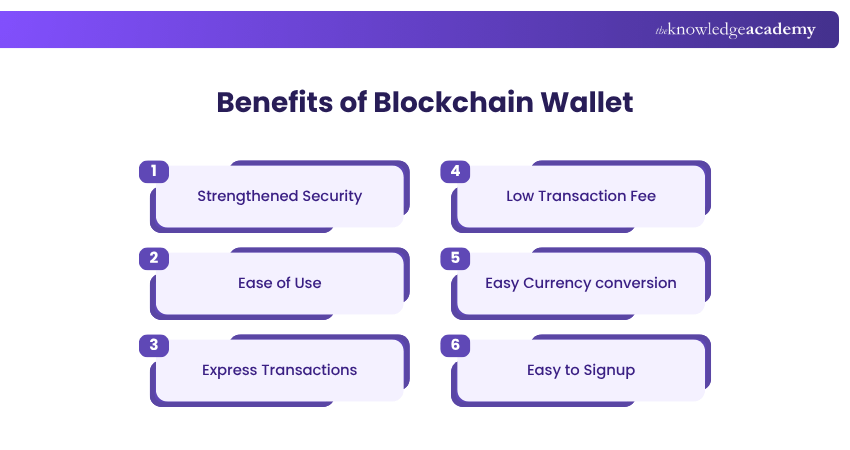
1) Security: Blockchain Wallets allow users to access their asset value only during the match between private key matches and the public key. This helps strengthen security. In addition, the use of Cryptography helps ensure safe and private transactions.
2) Ease of Use: Similar to the Physical Wallet functions, Blockchain Wallets are easy to use.
3) Express Transactions: They allow instant transactions to take place regardless of location. The pro benefit here is the transactions occur without intermediaries, as the margin for error decreases considerably. As a result, huge amounts of money can be transferred easily.
4) Low Transaction Fee: Blockchain Wallets typically charge low transaction fees, making them attractive choices for frequent payment users.
5) Easy Currency Conversion: A wide range of Cryptocurrencies are allowed to undergo transactions, making it easier to perform efficient currency conversion.
6) Easy to Sign Up: Unlike creating a bank account, Blockchain Wallets have a simplified signup process. Moreover, they are not governed by strict regulations and verification demands.
Expand your Blockchain knowledge with our Ethereum Developer Course – Sign up now!
How to Use a Blockchain Wallet?
It’s important to remember that Cryptocurrency is not stored in a Blockchain Wallet. Cryptocurrencies are kept on the Blockchain (the digital ledger system used to manage Cryptos and other assets using a specific Crypto network). Simply put, this process protects the digital key that determines your Cryptocurrency ownership. Here’s how to use a Blockchain Wallet:
1) Choose a Wallet Type
You can choose Non-Custodial Wallets that give you full control over your funds. The key examples include MetaMask, Trust Wallet, and Rainbow Wallet. Another choice is the Custodial Wallet, which is provided by exchanges like Coinbase or Binance. They manage your private keys, although you don’t get complete control over the wallet.
2) Create Your Wallet
Download the Wallet app from the Play or App Store app, or use a web-based Wallet and follow the setup instructions to make your Wallet. Following this, you’ll receive a public key (like an email address) and a private key.
3) Receive Cryptocurrency
Download the Wallet app for Android or iOS, or use a web-based Wallet and follow the setup instructions to create your Wallet. Following this, you’ll receive a public key (like an email address) and a private key.
4) Send Cryptocurrency
Click on “Send” or a similar option. Then, enter the recipient’s Wallet address and confirm the transaction. Keep in mind to keep your private key safe and never share it with anyone.
What are the Blockchain Wallet Fees?
Blockchain Wallet fees are influenced by several factors and can vary based on the type and urgency of the transaction. Understanding how these fees are structured is essential for optimising your transaction experience. Below are the key points regarding Blockchain Wallet fees:
1) Dynamic Fees: Blockchain Wallets use a dynamic fee system where the fee charged per transaction varies depending on factors such as transaction size and network availability at the time of the transaction.
2) Miner Involvement: Transactions are processed within a block by miners, powerful computers that validate and add transactions to the Blockchain. This process impacts the fees charged.
3) Primary Fee: Crypto Wallets offer a primary fee option that processes transactions within an hour. While faster, this fee is generally higher compared to regular fees.
4) Regular Fee: A regular fee option is available at a lower cost, but transactions may take over an hour to process, depending on network conditions.
5) Customisable Fees: Customers have the option to customise their fees based on their preferences. However, setting a fee too low might result in delays or even declined transactions.
Master Amazon Managed Blockchain and power up your decentralised solutions. Sign up for our Amazon Managed Blockchain Training now!
Blockchain Wallets Comparison
To better understand the nuances and features of Blockchain Wallets, it’s helpful to compare their functionalities and benefits. The following comparison among various Blockchain Wallets will help you gain some additional insights into this technology:
1) Ledger Nano S: This is a Hardware Wallet that guarantees premium security and allows users to access numerous accounts. It supports Bitcoin, Ethereum, and Litecoin.
2) Jaxx: Bitcoin and Ethereum are a few of the various Cryptocurrencies supported by this Wallet. One of its prime features is the possibility of currency conversion within the Wallet. Jaxx users can view their balance right after processing is completed.
3) Bitcoin Paper Wallet: This Wallet prioritises security as it dampens the threat of Hacking. You can print your own Bitcoin Wallet as well it.
4) Blockchain.info: Blockchain.info is well known for its low transaction fee. It is a Cryptocurrency Wallet that is available for Bitcoin and Ethereum. It offers a hassle-free procedure for creating custom Wallets.
How to Withdraw Money From a Blockchain Wallet?
Withdrawing Cryptocurrency from your Blockchain.com account is a straightforward process, whether you use the web platform or the mobile app. Here are some of the instructions to help you through the withdrawal steps.
1) Log in to your Blockchain.com account and navigate to the Send option. This is where you will start the withdrawal process.
2) Navigate through the Cryptocurrency you wish to withdraw and specify the source as your Trading Account. This ensures you are withdrawing from the correct account.
3) Provide the destination address for your withdrawal, which can be another wallet or an exchange account. Double-check this address to avoid any mistakes.
4) Put the withdrawal amount and review the transaction details carefully. Also, ensure accuracy at this stage is crucial to prevent any kinds of errors.
5) Confirm the transaction to finalise your withdrawal. This step will initiate the transfer of your funds.
Step into the decentralised world with our comprehensive Web3 Professional Certification Training - Sign up now and shape the future of digital ownership!
What Can be Done With a Blockchain Address?
A Blockchain address is a unique identifier within a Blockchain network, allowing users to send and receive digital assets securely. Here is a concise overview of its key features and importance:
1) Unique Identifier: A Blockchain address functions similarly to an email address, facilitating the transfer of Cryptocurrencies and digital tokens between users.
2) Cryptographic Keys: Each address is connected with a pair of cryptographic keys: a public key that can be shared openly, and a private key that is kept confidential. This makes sure that only the rightful owner can authorise transactions.
3) Transaction Security: The cryptographic framework associated with Blockchain addresses maintains the integrity and security of digital assets, preventing unauthorised access.
4) Identity Verification: Beyond transactions, Blockchain addresses help verify identity in decentralised systems, allowing users to prove ownership of assets without revealing personal information.
5) Enhanced Privacy: This feature is particularly beneficial in areas like Digital Asset Management and Decentralised Finance (DeFi), where privacy and security are crucial.
6) Transparent Interactions: By using Blockchain addresses, individuals and organisations can engage in secure and transparent interactions across the Blockchain network, fostering trust in digital transactions.
How to Keep Your Wallet Safe?
Having a Wallet gives you full control, but it also means you’re responsible for protecting it. Follow these safety tips:
1) Secure your 12-word Recovery Phrase by writing it down and storing it in a safe, offline location.
2) Never share your Recovery Phrase. No official service, including Blockchain.com, will ever ask for it.
3) Create strong, unique passwords and avoid reusing them across different platforms.
4) Beware of phishing attempts and always confirm you’re on the legitimate Blockchain.com website before logging in.
If you lose both your password and Recovery Phrase, your wallet cannot be restored, and your funds will be permanently inaccessible.
What is the Limit of a Blockchain Wallet?
The non-custodial Wallet itself has no limits on sending, receiving, or holding Cryptocurrency, since the platform cannot access or control your funds. However, for depositing and withdrawing via the platform’s custodial or exchange services, there are limits.
Conclusion
Understanding What is Blockchain Wallet is vital because Blockchain Wallet serves as a cutting-edge gateway to Cryptocurrency and Blockchain Technology. It enables users to store public and Private Keys, making sending, receiving, and Crypto assets conversion easy and straightforward. So, start your journey today and unlock the potential of Blockchain Technology.
Learn Blockchain and build the next digital revolution. Sign up for our Blockchain Courses now!
Frequently Asked Questions
Are Blockchain Wallets Trustworthy?

Yes, Blockchain Wallets are generally considered trustworthy. They have multiple levels of security to protect user funds. However, like all technology, they are not completely risk-free. It’s important to use them correctly and understand their limitations.
Can I Transfer Money From Blockchain to my Bank Account?
There are two options for this. If you have a Crypto-friendly linked bank account, then you can withdraw money from Blockchain to bank account directly. If not, then you have to use a trustworthy Cryptocurrency exchange.

Richard Harris


Senior Full Stack Developer and Technology Educator
Richard Harris is a highly experienced full-stack developer with deep expertise in both frontend and backend technologies. Over his 12-year career, he has built scalable web applications for startups, enterprises and government organisations. Richard’s writing combines technical depth with clear explanations, ideal for developers looking to grow in modern frameworks and tools.


 If you wish to make any changes to your course, please


