


 Top Rated Course

We may not have the course you’re looking for. If you enquire or give us a call on +44 1344 203 999 and speak to our training experts, we may still be able to help with your training requirements.
Mental Health Issues: Types, Causes and Symptoms
Michael Jones 02 March 2026Mental Health Issues affect emotions, thoughts, and behaviour, impacting daily life. Common types include anxiety, depression, and bipolar disorder. They may also involve OCD, personality disorders, eating problems, paranoia, or phobias, requiring early recognition, supportive care, and treatment to improve wellbeing.

Training Outcomes Within Your Budget!
We ensure quality, budget-alignment, and timely delivery by our expert instructors.
Table of Contents
What happens when life becomes overwhelming and emotions feel impossible to manage? This is when Mental Health Issues crop up. These issues can affect thoughts, feelings and behaviours, disrupting daily routines and relationships. From anxiety that whispers doubts to depression that casts long shadows, Mental Health affects millions silently.
But what truly causes these struggles? How do they manifest, and what signs should we never ignore? This blog explores the types, root causes and symptoms of Mental Health Issues to help you understand the mind’s complex maze. Read on and take the right steps toward clarity, awareness and care!
Table of Contents
1) Significance of Mental Health
2) Types of Mental Health Issues
3) Factors contributing to Mental Health Issues
4) What is the First Stage of a Mental Breakdown?
5) Is Crying Normal During a Mental Breakdown?
6) Conclusion
Significance of Mental Health
Good Mental Health helps us feel balanced and stable. It brings a sense of calm, hope, self-acceptance and connection with the people who matter to us. When our Mental Health is strong, everyday life becomes easier to manage. It allows us to soothe ourselves during difficult moments, cope with change, loss, fear and uncertainty and build healthy relationships.
Having good Mental Health doesn’t mean feeling positive all the time. Everyone experiences highs and lows. Life naturally brings challenges, worries, and setbacks that affect us all. Sometimes we recover quickly; at other times, it takes longer and that is normal. The encouraging part is that Mental Health can be supported and strengthened through consistent care and awareness.

Types of Mental Health Issues
Mental Health Issues are common conditions that affect how we think, feel, and behave. They are identified through patterns of symptoms and their impact on daily life, relationships, and overall wellbeing. Some are diagnosable conditions, while others describe emotional or psychological experiences that may require support. Common types of Mental Health Issues include:
1) Anxiety
Anxiety involves constant feelings of worry, nervousness, or fear that feel overwhelming. It can influence physical and mental wellbeing in many ways. Physically, it may cause a faster or irregular heartbeat, dizziness, breathlessness, sweating, shaking, or chest discomfort. Mentally, it can lead to persistent nervousness, difficulty relaxing, excessive worrying, sleep disturbances, poor concentration, tearfulness, intrusive or obsessive thoughts.
2) Anger
Anger is a natural human emotion, but when frequent or uncontrolled, it damages wellbeing and relationships. The three R’s, namely, Recognise, Respond and Reflect, provide a simple framework to manage anger proactively:
1) Recognise means becoming aware of early signs of anger (like clenched fists or a racing heart).
2) Respond involves choosing a healthy reaction, for example, taking a deep breath or stepping away from the situation.
3) Reflect encourages thinking about what triggered the anger and how you handled it.
With awareness and practice, individuals can handle anger more constructively.
3) Personality Disorders
Personality disorders describe ongoing patterns of thinking and behaving that disrupt daily life and relationships. They can be challenging, yet with therapy and guidance, people can develop healthier ways of coping.
4) Eating Problems
Eating problems include struggles with food, body image, and weight. They impact health, emotions, and confidence. Recovery becomes possible through professional treatment, compassionate support, and learning positive relationships with food.
5) Bipolar Disorder
Bipolar Disorder is a Mental Health condition marked by noticeable changes in mood, energy, activity levels and focus. Someone with Bipolar Disorder can experience:
1) Episodes of extreme highs (feeling unusually happy, irritable, or energetic) are called manic episodes.
2) Periods of deep lows, where they may feel sad, indifferent or hopeless, are known as depressive episodes.
6) Body Dysmorphic Disorder (BDD)
Body Dysmorphic Disorder causes intense concern about perceived physical flaws that are minor or unnoticeable to others. These worries can lead to distress and avoidance, but therapy can help challenge negative thought patterns and improve self-confidence.
7) Borderline Personality Disorder (BPD)
BPD involves difficulties with emotions, self-image, and relationships, often linked to impulsive actions. It creates instability and distress, though structured therapy and long-term support greatly improve daily functioning.
8) Depression
Depression is a serious type of Mental Health Issues involving deep sadness, hopelessness, and loss of motivation. It interferes with daily life, but effective treatments help people recover and regain emotional wellbeing.
9) Dissociation and Dissociative Disorders
Dissociation occurs when someone feels disconnected from themselves, memories, or reality. It may follow trauma and affect identity, but supportive therapy allows healing, grounding, and a sense of reconnection.
10) Hearing Voices
Hearing voices refers to experiencing sounds or speech that others cannot hear. Sometimes distressing, it’s linked with psychosis or trauma, yet coping strategies and treatment allow people to manage experiences positively.
11) Hoarding
Hoarding disorder involves persistent difficulty discarding possessions, regardless of their value, due to emotional attachment or fear of loss. Over time, clutter can interfere with living spaces and safety. Treatment focuses on behaviour change and emotional support.
Build lasting resilience with our Prevention Psychology Training – Start Learning Today!
12) Hypomania and Mania
Hypomania is an energised mood with increased productivity, while mania is more intense, causing impulsive behaviour and poor judgment. Both are part of bipolar disorder and need professional attention.
13) Loneliness
Loneliness is an emotional experience rather than a disorder and reflects dissatisfaction with social connections. It is linked to increased sensitivity to negative social cues and emotional distress, particularly when social needs are unmet.
14) Obsessive-compulsive Disorder (OCD)
OCD involves intrusive, repetitive thoughts that cause anxiety and rituals performed to feel relief. These behaviours disrupt life, though therapy and coping strategies help reduce their grip and restore balance.
15) Panic Attacks
Panic attacks are sudden bursts of overwhelming fear, often with physical signs like shaking, sweating, or breathlessness. Though frightening, they are treatable with therapy and calm breathing practices.
16) Paranoia
Paranoia creates ongoing feelings of mistrust or the belief that others intend harm. It varies in severity, from mild doubts to intense delusions, and requires understanding treatment to improve daily life.
17) Phobias
Phobias are irrational, strong fears of specific situations or objects. They cause avoidance and anxiety, limiting normal routines. With gradual exposure and supportive therapy, people can overcome these disabling fears.
18) Postnatal Depression & Perinatal Mental Health
Perinatal Mental Health Issues occur during or after pregnancy, often including sadness, anxiety, or emotional detachment. Early recognition, family support, and professional help are vital for recovery and wellbeing.
Transform and elevate your mental wellbeing with our Positive Psychology Course – Join today!
Factors Contributing to Mental Health Issues
There are various Factors Affecting Mental Health Issues that drive Mental Health disorders in people. Being aware of these factors can help determine the root cause of a certain disorder and provide an opportunity for early detection and treatment. Here are the three major factors affecting Mental Health:
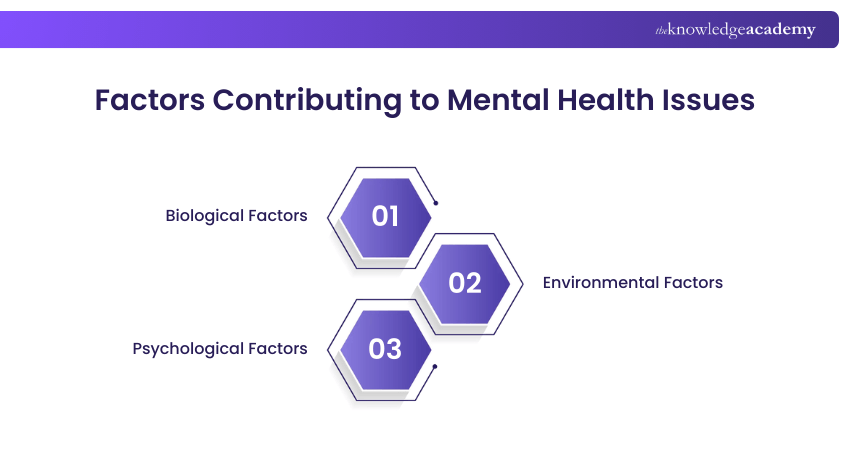
1) Biological Factors
Biological factors play a big role in determining the mental well-being of a person. For instance, genetic predisposition and hereditary factors can make specific individuals more prone to developing Mental Health disorders. Neurochemical imbalances in the brain like irregularities in levels of serotonin and dopamine, can also contribute to the onset of these issues.
2) Environmental Factors
The environment in which individuals live and grow up can greatly influence their mental well-being. Adverse childhood experiences like trauma, neglect or abuse can have long-lasting effects on mental well-being. Socioeconomic factors, including poverty, unemployment, and inadequate access to education and healthcare, can increase the risk of Mental Health Issues.
3) Psychological Factors
Psychological factors encompass an individual's thoughts, emotions, and behaviour patterns. Certain personality traits or coping styles can make individuals more vulnerable to Mental Health disorders. Low self-esteem, perfectionism, negative thinking patterns, and poor coping mechanisms can deteriorate mental well-being.
Discover your inner strengths with our Introduction to Psychology of Personality Course– Start today!
What is the First Stage of a Mental Breakdown?
The first stage of a mental breakdown usually begins with overwhelming stress and emotional exhaustion. People may notice constant worry, irritability, sleep problems, or difficulty concentrating. These early warning signs of Mental Health Issues indicate the mind and body are under pressure and in urgent need of rest and support.
Is Crying Normal During a Mental Breakdown?
Yes, crying is often a completely normal response during a mental breakdown. A mental breakdown may include periods of intense crying or other signs of emotional crisis. During such crises, the emotional pressure, overwhelming stress or acute anxiety can trigger tearfulness.
This reaction does not mean there is something wrong with the person. Instead, it reflects how the mind and body respond when coping resources are stretched beyond capacity. Importantly, crying during these times can serve as a healthy emotional release and coping response, and does not automatically mean the situation is hopeless or permanent.
Conclusion
Mental Health Issues are prevalent and impactful, affecting individuals of all ages and backgrounds. It is imperative that we prioritise Mental Health, both as individuals and as a society. By understanding the importance of focusing on Mental Health, the factors that contribute to its downfall, and how to improve it through various means, you can nurture unprecedented inner resilience.
Equip yourself with the tools to handle stress and build resilience. Sign up for our Handle Stress and Develop Your Resilience Training now!
Frequently Asked Questions
What is Mental Exhaustion?

Mental exhaustion is extreme tiredness caused by prolonged stress, overwork, or emotional strain. It leads to reduced focus, irritability, and feeling drained mentally and physically. Rest, balance, and supportive coping strategies are essential for recovery and restoring overall wellbeing.
What is the Final Stage of Stress?
The final stage of stress is exhaustion, where prolonged pressure overwhelms the body and mind. Energy levels drop, motivation declines, and physical or emotional symptoms worsen. At this stage, recovery requires rest, support, and stress reduction to prevent serious health or Mental Health problems.
What are the Other Resources and Offers Provided by The Knowledge Academy?
The Knowledge Academy takes global learning to new heights, offering over 3,000 online courses across 490+ locations in 190+ countries. This expansive reach ensures accessibility and convenience for learners worldwide.
Alongside our diverse Online Course Catalogue, encompassing 17 major categories, we go the extra mile by providing a plethora of free educational Online Resources like Blogs, eBooks, Interview Questions and Videos. Tailoring learning experiences further, professionals can unlock greater value through a wide range of special discounts, seasonal deals, and Exclusive Offers.
What is The Knowledge Pass, and How Does it Work?
The Knowledge Academy’s Knowledge Pass, a prepaid voucher, adds another layer of flexibility, allowing course bookings over a 12-month period. Join us on a journey where education knows no bounds.
What are the Related Courses and Blogs Provided by The Knowledge Academy?
The Knowledge Academy offers various Mental Health Courses, including the Mental Health and Wellbeing Training, Mindfulness Training and Positive Psychology Course. These courses cater to different skill levels, providing comprehensive insights into Personality Traits.
Our Health & Safety Blogs cover a range of topics related to Mental Health Issues, offering valuable resources, best practices, and industry insights. Whether you are a beginner or looking to advance your Health and Safety skills, The Knowledge Academy's diverse courses and informative blogs have got you covered.

Michael Jones


Health and Safety Consultant and Compliance Trainer
Michael Jones is a seasoned health and safety expert with more than 15 years of experience in workplace safety, risk management, and compliance training. He has worked across construction, manufacturing, and corporate sectors, helping organisations meet legal requirements and create safer working environments. Michael’s training and writing are known for being practical, clear, and aligned with UK regulations.

Upcoming Health & Safety Resources Batches & Dates
Date
 Mental Health and Wellbeing Training
Mental Health and Wellbeing Training
Fri 24th Apr 2026
Mental Health and Wellbeing Training
Fri 26th Jun 2026
Mental Health and Wellbeing Training
Fri 21st Aug 2026
Mental Health and Wellbeing Training
Fri 6th Nov 2026

 If you wish to make any changes to your course, please


