


 Top Rated Course

We may not have the course you’re looking for. If you enquire or give us a call on +44 1344 203 999 and speak to our training experts, we may still be able to help with your training requirements.
How to Write a Novel: A Step-by-Step Guide to Finishing Your Book
The Knowledge Academy 24 April 2026Writing a Novel begins with a clear idea, strong characters, and a compelling plot, followed by outlining the story, defining themes and seeking feedback. Creativity plays a vital role in shaping original ideas and bringing new perspectives to the story. Strong practice and dedication are required to write an effective and engaging novel.

Training Outcomes Within Your Budget!
We ensure quality, budget-alignment, and timely delivery by our expert instructors.
Table of Contents
Imagine sitting in your favourite cosy spot, daydreaming about the characters and worlds you could create. Have you ever wondered how to turn those daydreams into a novel that captivates readers? You’re not alone! Every great storyteller began with a spark of inspiration. All you need to know is How to Write a Novel.
Starting a novel might seem overwhelming but breaking it down into smaller tasks makes it manageable and fun. In this blog, we will break down How to Write a Novel in 12 easy steps along with the tools you can use for effective story building. Let’s dive in!
Table of Contents
1) What is a Novel?
2) How to Write a Novel in 12 Simple Steps?
3) How to Write a Novel in 10 Simple Steps?
4) Common Mistakes New Novel Writers Make
5) Tools and Software for Novel Writing
6) Conclusion
What is a Novel?
A novel is a captivating work of fiction that dives deep into intricate topics, characters, and storylines, usually presented in prose. In the discussion of Fiction vs Nonfiction, novels stand as a prime example of fiction’s ability to transport readers into imaginative worlds. Novels come in all shapes and sizes, from literary fiction to genres like romance, mystery, or science fiction.
Each novel opens the door to a world crafted by the author, inviting readers to experience various emotions, face conflicts, and discover resolutions. Typically, novels range from 40,000 to 100,000 words, though this can vary. Their length and depth allow writers to fully develop characters and create meaningful, lasting impressions on readers.

How to Write a Novel in 12 Simple Steps?
Writing a novel can seem difficult at first, but it becomes much easier when you break it into small, clear steps. Let's check the simple steps on How to Write a Novel:
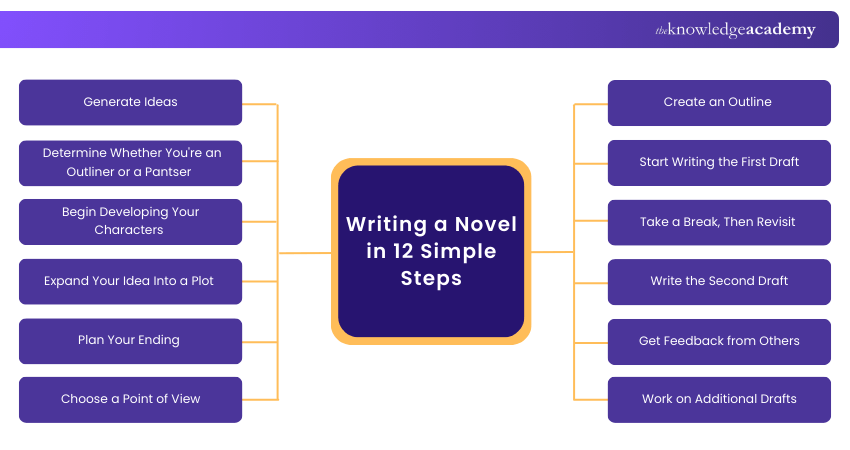
Step 1: Generate Ideas
Novels are more than just a series of locations and eras; they need a compelling narrative that keeps readers engaged from start to finish. Identify the story you want to tell and ensure it can sustain an entire novel. If your story feels too short, consider either expanding the story writing with more events or Writing a Short Story instead. Here's what you can do to generate your ideas:
a) Brainstorm: Jot down any ideas that come to mind, no matter how wild.
b) Research: Look into topics that interest you to spark new ideas.
c) Inspiration: Draw from personal experiences, news stories, or even dreams.
Step 2: Determine Whether You're an Outliner or a Pantser
Some writers prefer planning everything before they begin, while others like to discover the story as they write. If you enjoy structure and clarity, you may be an outliner. If you prefer creative freedom and surprises, you might be a pantser. Understanding your style helps you write more comfortably.
a) Test Both Methods: Try planning a short outline and writing without one to see what suits you.
b) Consider a Hybrid Approach: Combine planning and spontaneity if it works better for you.
c) Evaluate Productivity: Choose the method that helps you stay consistent.
Step 3: Begin Developing Your Characters
A great idea alone won’t make your novel succeed; you need characters that readers can connect with. Once you’ve established your world and narrative, identify the key characters. The protagonist is crucial because they are the main character of your story. So, know their background, traits, and significant life events. The better you understand your characters, the more vividly you can portray them.
a) Character Profiles: Create detailed profiles for each main character.
b) Backstories: Develop rich backstories to give depth to your characters.
c) Motivations: Understand what drives each character and how it influences their actions.
Step 4: Expand Your Idea Into a Plot
Turn your basic idea into a sequence of events. Decide what challenges or troubles your main character will face and how the story will move from beginning to middle to end. A clear plot keeps readers engaged and ensures your story has direction. Make sure each event connects logically so the story can have a smooth flow.
a) Identify the Main Conflict: Decide what central problem drives the story.
d) Build Tension: Gradually increase stakes as the story progresses.
e) Create a Climax: Plan a powerful turning point near the end where the main conflict reaches its peak.
Turn your story ideas into powerful narratives with our Fiction Writing Course – Register today!
Step 5: Plan Your Ending
If you haven’t already thought of how your story is going to end, then it is time for you to decide on an interesting and captivating conclusion. The ending is often the most memorable part for readers. So, make it impactful and unforgettable for your readers. You can give happy, tragic, surprising, or open-ended conclusions.
a) Reader’s Perspective: Consider how you want readers to feel at the end.
b) Resolution: Ensure all major plot points are resolved.
c) Foreshadowing: Use foreshadowing techniques such as giving clues or hints to build up to your ending.
Step 6: Choose a Point of View
Understanding your characters helps you determine the narrative voice and point of view for your story. The chosen perspective shapes how readers experience events and connect emotionally with the characters. Will you write from a personal viewpoint or an external one? Below are some common narrative perspectives you can consider for your story:
a) First Person: A character narrates using “I,” offering a personal view that can heighten emotional tension.
b) Second Person: Uses “you,” which is rare but can be impactful for certain moments.
c) Third Person: A more detached perspective, either omniscient or limited, focusing on objective information or following the protagonist’s thoughts.
d) Experiment: Try writing a few scenes from different perspectives to see which feels right.
Speed up your writing skills with our Speed Writing Course - Register now!
Step 7: Create an Outline
Creating an outline gives structure to your novel before you dive deeper into writing. It does not have to be complicated or overly detailed. You can start with a basic list of chapters or key story moments. Seeing how the story develops helps you understand how events connect and whether the pacing feels balanced. Here are the things that you can outline:
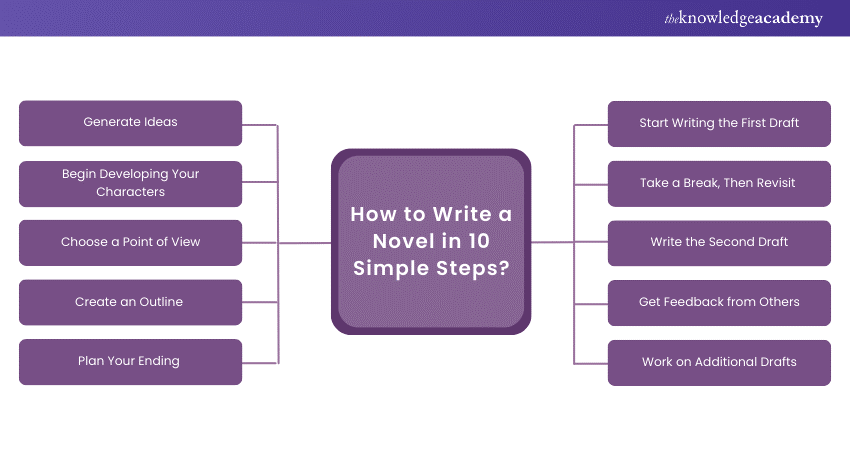
How to Write a Novel in 10 Simple Steps?
Writing a novel can seem daunting but breaking it down into manageable steps makes the process both exciting and achievable. Whether you’re a seasoned writer or a beginner, these 10 simple steps will guide you from your initial idea to a polished manuscript, helping you bring your unique story to life.
Step 1: Generate Ideas
Novels are more than just a series of locations and eras; they need a compelling narrative that keeps readers engaged from start to finish. Identify the story you want to tell and ensure it can sustain an entire novel. If your story feels too short, consider either expanding the story writing with more events or Writing a Short Story instead. Here's what you can do to generate your ideas:
a) Brainstorm: Jot down any ideas that come to mind, no matter how wild.
b) Research: Look into topics that interest you to spark new ideas.
c) Inspiration: Draw from personal experiences, news stories, or even dreams.
Step 2: Determine Whether You're an Outliner or a Pantser
Some writers prefer planning everything before they begin, while others like to discover the story as they write. If you enjoy structure and clarity, you may be an outliner. If you prefer creative freedom and surprises, you might be a pantser. Understanding your style helps you write more comfortably.
a) Test Both Methods: Try planning a short outline and writing without one to see what suits you.
b) Consider a Hybrid Approach: Combine planning and spontaneity if it works better for you.
c) Evaluate Productivity: Choose the method that helps you stay consistent.
Step 3: Begin Developing Your Characters
A great idea alone won’t make your novel succeed; you need characters that readers can connect with. Once you’ve established your world and narrative, identify the key characters. The protagonist is crucial because they are the main character of your story. So, know their background, traits, and significant life events. The better you understand your characters, the more vividly you can portray them.
a) Character Profiles: Create detailed profiles for each main character.
b) Backstories: Develop rich backstories to give depth to your characters.
c) Motivations: Understand what drives each character and how it influences their actions.
Step 4: Expand Your Idea Into a Plot
Turn your basic idea into a sequence of events. Decide what challenges or troubles your main character will face and how the story will move from beginning to middle to end. A clear plot keeps readers engaged and ensures your story has direction. Make sure each event connects logically so the story can have a smooth flow.
a) Identify the Main Conflict: Decide what central problem drives the story.
d) Build Tension: Gradually increase stakes as the story progresses.
e) Create a Climax: Plan a powerful turning point near the end where the main conflict reaches its peak.
Turn your story ideas into powerful narratives with our Fiction Writing Course – Register today!
Step 5: Plan Your Ending
If you haven’t already thought of how your story is going to end, then it is time for you to decide on an interesting and captivating conclusion. The ending is often the most memorable part for readers. So, make it impactful and unforgettable for your readers. You can give happy, tragic, surprising, or open-ended conclusions.
a) Reader’s Perspective: Consider how you want readers to feel at the end.
b) Resolution: Ensure all major plot points are resolved.
c) Foreshadowing: Use foreshadowing techniques such as giving clues or hints to build up to your ending.
Step 6: Choose a Point of View
Understanding your characters helps you determine the narrative voice and point of view for your story. The chosen perspective shapes how readers experience events and connect emotionally with the characters. Will you write from a personal viewpoint or an external one? Below are some common narrative perspectives you can consider for your story:
a) First Person: A character narrates using “I,” offering a personal view that can heighten emotional tension.
b) Second Person: Uses “you,” which is rare but can be impactful for certain moments.
c) Third Person: A more detached perspective, either omniscient or limited, focusing on objective information or following the protagonist’s thoughts.
d) Experiment: Try writing a few scenes from different perspectives to see which feels right.
Speed up your writing skills with our Speed Writing Course - Register now!
Step 7: Create an Outline
Creating an outline gives structure to your novel before you dive deeper into writing. It does not have to be complicated or overly detailed. You can start with a basic list of chapters or key story moments. Seeing how the story develops helps you understand how events connect and whether the pacing feels balanced. Here are the things that you can outline:
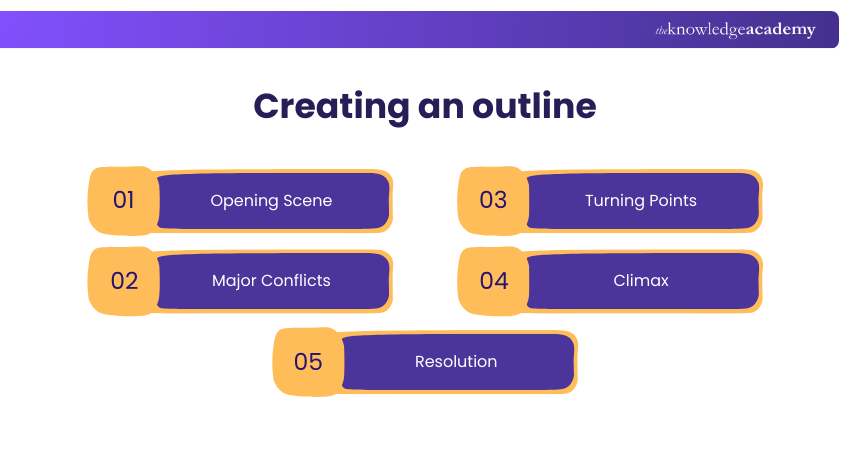
a) Opening Scene: Plan how your story begins and how you will introduce the main character and setting.
b) Major Conflicts: Identify the key problems or challenges that drive the story forward.
c) Turning Points: Mark the crucial moments that change the direction of the plot.
d) Climax: Outline the most intense and decisive moment of the story.
e) Resolution: Decide how the conflict is resolved and how the story concludes.
Step 8: Start Writing the First Draft
Planning is important, but don’t let it stop you from writing. Now it’s time to write. Your first draft might be rough, but it’s crucial to start. Focus on getting your ideas onto the page without worrying too much about perfection. The first draft is about progress, not polish.
a) Set Goals: Set daily or weekly writing goals to keep yourself on track.
b) Stay Flexible: Allow your story to evolve as you write.
c) Ignore Perfection: Focus on getting words on the page rather than making them perfect.
Step 9: Take a Break, Then Revisit
After finishing your first draft, take a break. Returning with fresh eyes will help you see your work differently. You will notice areas that need improvement more clearly. Therefore, you will focus on clarity, character development, world-building, and timing when revising.
a) Rest: Take a few days or weeks off from your manuscript.
b) Fresh Perspective: Read your draft as if you were a new reader.
c) Notes: Make notes on areas that need improvement.
Stay motivated and reach your goal faster with our Motivation and Goal Setting Training - sign up now!
Step 10: Write the Second Draft
Based on your evaluation, make precise changes or major revisions. If necessary, consider a “page one rewrite” to reshape the novel from scratch. This step in How to Write a Novel is where your story begins to truly take shape. Pay close attention to pacing and consistency to ensure the story flows smoothly from beginning to end.
a) Targeted Revisions: Focus on specific scenes or chapters that need work.
b) Big Picture: Ensure the overall story arc is strong.
c) Consistency: Check for consistency in character behaviour and plot details.
Step 11: Get Feedback from Others
Share your second draft with trusted readers, writing groups, or editors for feedback. Pay attention to recurring issues pointed out by multiple readers. Honest feedback helps you see blind spots and refine your work further. You can use this feedback thoughtfully, keeping suggestions that strengthen your story while staying true to your original vision.
a) Beta Readers: Choose a few people whose opinions you trust.
b) Constructive Criticism: Be open to feedback but stay true to your vision.
c) Multiple Opinions: Compare feedback from different readers to identify common issues.
Step 12: Work on Additional Drafts
There’s no set number of drafts for a successful novel. Some may need only a few drafts with light editing, while others require multiple revisions. Patience and persistence are essential to creating a strong final manuscript. Expect unique challenges and victories with each novel you write.
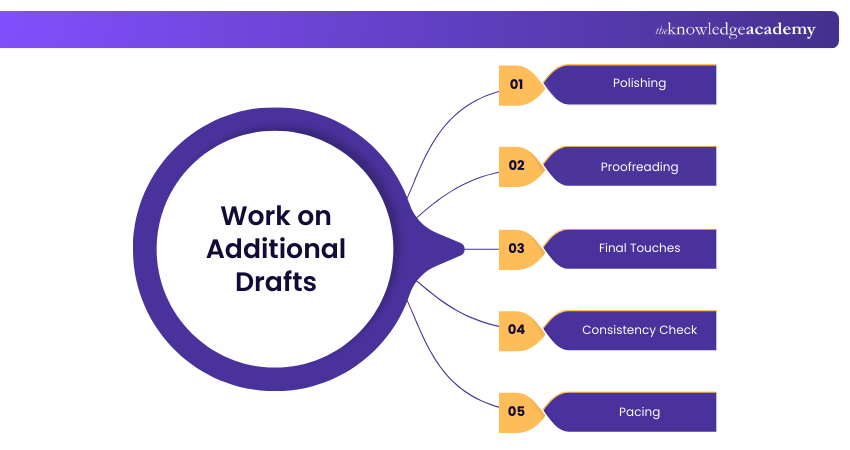
a) Polishing: Focus on refining your prose and tightening your narrative.
b) Proofreading: Check for grammar, spelling, and punctuation errors.
c) Final Touches: Add any final touches to make your story shine.
d) Consistency Check: Ensure consistency in character development, plot progression, and world-building details throughout your novel.
e) Pacing: Review the pacing of your story to ensure it maintains reader interest and flows smoothly from beginning to end.
Common Mistakes New Novel Writers Make
Many new novel writers begin with excitement in their journey on How to Write a Novel but often struggle with common mistakes that slow their progress. Below are lists of the mistakes that you can make:
1) Starting without a clear plot or direction
2) Trying to perfect the first draft instead of finishing it
3) Weak or underdeveloped characters
4) Lack of clear conflict or stakes in the story
5) Overloading the novel with unnecessary details or backstory
6) Poor pacing that feels too slow or too rushed
7) Inconsistent point of view
8) Ignoring proper editing and revision
9) Avoiding feedback from readers or editors
10) Giving up too early due to self-doubt or impatience
Tools and Software for Novel Writing
Writing a novel becomes much easier when you use the right tools. From organising chapters to tracking characters and editing drafts, modern writing software can save time and reduce stress. Here are some of the most useful tools and software for Novel Writing:
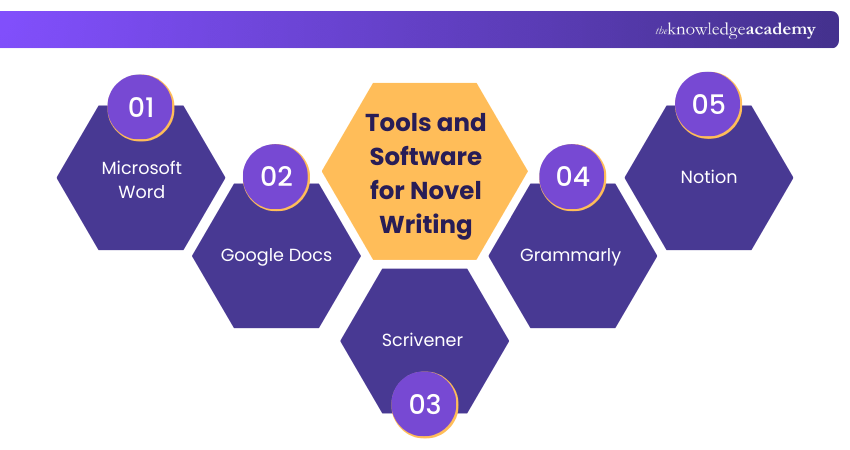
1) Microsoft Word
A widely used word processor that offers formatting, editing, and reviewing tools. It is simple, reliable, and suitable for drafting and revising your manuscripts.
2) Google Docs
A cloud-based writing tool that allows real-time collaboration and automatic saving. It is perfect for writers who want easy access from different devices.
3) Scrivener
Designed specifically for long-form writing, Scrivener helps organise chapters, scenes, and research in one place. It is ideal for novelists who prefer structured planning.
4) Grammarly
An editing tool that checks grammar, spelling, tone, and clarity. It helps polish your manuscript and catch common mistakes.
5) Notion
A flexible workspace tool that allows writers to plan plots, manage chapters, and track progress using boards, lists, and documents.
Conclusion
As you reach the end of this blog on How to Write a Novel, remember that every great novel starts with a single idea and the courage to bring it to life. Writing a novel is a journey filled with creativity, challenges, and immense satisfaction. By breaking down the process into manageable steps, you can transform your daydreams into captivating stories that resonate with readers.
Craft new stories and inspire minds with our Creative Writing Course - Sign up now!
Frequently Asked Questions
What Should I Focus on in the First Draft of a Novel?

You can focus on getting your ideas onto the page without worrying about perfection. Develop the main plot, establish characters, and decide the conflicts of your story. Prioritise progress, clarity, and storytelling flow over grammar, editing, or polishing.
What Structure Does Novel's Use?
Novels typically follow a structure that includes an introduction, rising action, climax, falling action, and resolution. This structure helps to build tension, develop characters, and advance the plot, ensuring a coherent and engaging narrative.
What are the Other Resources and Offers Provided by The Knowledge Academy?
The Knowledge Academy takes global learning to new heights, offering over 3,000 online courses across 490+ locations in 190+ countries. This expansive reach ensures accessibility and convenience for learners worldwide.
Alongside our diverse Online Course Catalogue, encompassing 19 major categories, we go the extra mile by providing a plethora of free educational Online Resources like Blogs, eBooks, Interview Questions and Videos. Tailoring learning experiences further, professionals can unlock greater value through a wide range of special discounts, seasonal deals, and Exclusive Offers.
What is The Knowledge Pass, and How Does it Work?
The Knowledge Academy’s Knowledge Pass, a prepaid voucher, adds another layer of flexibility, allowing course bookings over a 12-month period. Join us on a journey where education knows no bounds.
What are the Related Courses and Blogs Provided by The Knowledge Academy?
The Knowledge Academy offers various Personal Development Courses, including the Creative Writing Course, Report Writing Course and the Speed Writing Course. These courses cater to different skill levels, providing comprehensive insights into How to Improve Focus and Concentration.
Our Business Skills Blogs cover a range of topics related to Novel Writing, offering valuable resources, best practices, and industry insights. Whether you are a beginner or looking to advance your Creative Writing skills, The Knowledge Academy's diverse courses and informative blogs have got you covered.

The Knowledge Academy


Global Training Provider
The Knowledge Academy is a world-leading provider of professional training courses, offering globally recognised qualifications across a wide range of subjects. With expert trainers, up-to-date course material, and flexible learning options, we aim to empower professionals and organisations to achieve their goals through continuous learning.

Upcoming Business Skills Resources Batches & Dates
Date
 Creative Writing Course
Creative Writing Course
Fri 4th Sep 2026
Creative Writing Course
Fri 9th Oct 2026

 If you wish to make any changes to your course, please


