


 Top Rated Course

We may not have the course you’re looking for. If you enquire or give us a call on +44 1344 203 999 and speak to our training experts, we may still be able to help with your training requirements.
How to Improve Cash Flow and Manage Finances Effectively
Olivia Taylor 28 April 2026Improving Cash Flow means speeding up payments, delaying expenses, and managing working capital through invoicing, supplier terms, and forecasting. It helps maintain strong liquidity and meet financial obligations on time. Regular and consistent monitoring supports better planning and steadier long-term business growth.

Training Outcomes Within Your Budget!
We ensure quality, budget-alignment, and timely delivery by our expert instructors.
Table of Contents

Healthy Cash Flow keeps a business stable and ready for opportunities. Many owners often ask How to Improve Cash Flow without increasing risk or debt. Understanding the basics helps prevent shortages and unexpected financial stress.
Small changes in payments, expenses, and planning can make a noticeable difference. With the right strategies, businesses can stay flexible and confident in daily operations. In this blog, we’ll explore practical ways to strengthen and manage it effectively.
Table of Contents
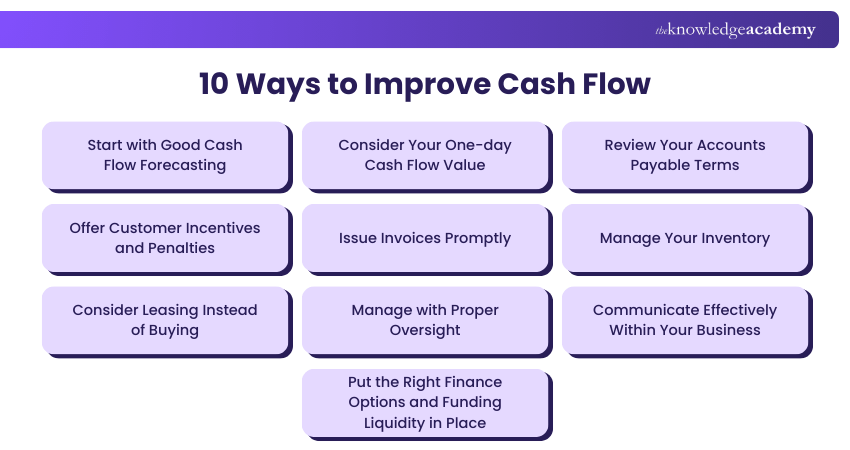
1) 10 Ways to Improve Cash Flow
a) Start with Good Cash Flow Forecasting
b) Consider Your One-day Cash Flow Value
c) Review Your Accounts Payable Terms
d) Offer Customer Incentives and Penalties
e) Issue Invoices Promptly
2) What Are the 3 Types of Cash Flow?
3) Why Improving Cash Flow Can Be Challenging?
4) Conclusion
10 Ways to Improve Cash Flow
Effectively managing Cash Flow is important for strengthening your business's long-term financial foundation. By implementing strategic practices, you can ensure steady liquidity, reduce expenses, and foster sustainable growth. Here are eight insider tips on How to Improve Cash Flow and provide your business with essential financial flexibility.
1) Start with Good Cash Flow Forecasting
Good Cash Flow forecasting means predicting when money will come in and go out of your business. It helps you plan, spot shortages early, and ensure you always have enough to cover expenses and support growth. Create a simple weekly or monthly forecast for at least three months to track your financial position.
List all expected income and planned expenses to calculate your net cash balance. If it shows a negative figure, you can take action early to manage payments. Keeping your bookkeeping updated makes forecasts more accurate, helping you stay organised, confident, and ready for future opportunities.

2) Consider Your One-day Cash Flow Value
Consider the impact of just one day of cash movement in your business. Think about what would happen if you collected customer payments a day earlier, as even a small timing change can significantly affect available cash.
You should also review delays, such as selling stock later or paying suppliers later, to understand the balance between profit and liquidity. This awareness can support negotiations for better payment terms and improve short-term cash availability.
3) Review Your Accounts Payable Terms
One of the first steps in enhancing Cash Flow is to review the terms of your accounts payable. This includes understanding the payment schedules you’ve agreed upon with your suppliers. If possible, negotiate extended payment terms to keep cash in your business longer. By aligning your payment schedules with your cash inflows, you can avoid cash shortages and better manage your outflows.
4) Offer Customer Incentives and Penalties
One effective tactic to encourage early payments is offering clients a discount, such as a 2% reduction on the invoice amount if payment is made within seven days. Additional incentives could include discounts on future orders, gift certificates, or merchandise. Clearly mention these offers on the invoice to motivate prompt action.
To minimise the risk of unpaid invoices, consider implementing late payment fees. Ensure the penalty is clearly outlined in the initial customer contract and reiterated when invoicing, specifying the fee and when it will be applied.
5) Issue Invoices Promptly
Timely invoicing is critical to holding a healthy Cash Flow. Ensure that invoices are issued immediately after a sale or service is completed. Delayed invoicing can lead to delayed payments, which in turn affects your Cash Flow.
By adopting a prompt invoicing system, you can ensure that cash is coming in as quickly as possible. This helps to maintain steady Cash Flow and reduces the likelihood of cash shortages.
6) Manage Your Inventory
Managing Inventory wisely helps keep more cash in your business. Too much unsold stock ties up money that could be used elsewhere. By predicting customer needs and buying stock at the right time and price, you save both cash and space.
Keep stock levels balanced, use inventory tools to automate orders, and clear out slow-moving or outdated items. Negotiate better supplier deals and consider buying stock only after customers place orders to maintain healthy Cash Flow.
7) Consider Leasing Instead of Buying
Leasing can be a cost-effective option to purchasing, especially for equipment or vehicles that depreciate quickly. It reduces upfront costs, offers predictable monthly expenses, and allows access to newer models or technology without large capital investments. Additionally, leasing agreements often include maintenance, helping businesses preserve Cash Flow and adapt to changing needs.
This is specifically valuable in industries where technology evolves rapidly or where operational demands change over time. By avoiding long-term ownership commitments, companies can scale resources up or down as needed, making leasing a smart option for agile growth.
Understand the cash conversion cycle to convert its inventory into sales then to cash with our Cash Management Course – Join today!
8) Manage with Proper Oversight
Cash Flow management should form part of your regular financial routine. Keeping up-to-date reports on cash position, creditors, inventory, and assets helps you clearly understand where money is coming from and where it is going.
Review overdue invoices, payment terms, and stock levels to spot delays or inefficiencies. Monitoring the cash conversion cycle also helps you identify how long money stays tied up in the business and where improvements can be made.
9) Communicate Effectively Within Your Business
Good internal communication ensures everyone understands cash flow challenges. Involving all relevant teams in discussions and regular forecast updates helps the business respond quickly to financial changes.
When staff know the importance of accurate forecasting and timely actions, the company can better manage risks and avoid unexpected shortages. Clear communication supports coordinated decision-making across departments.
10) Put the Right Finance Options and Funding Liquidity in Place
If Cash Flow is seasonal or uneven, businesses should consider suitable financing options. Invoice finance, for example, allows companies to receive most of the invoice value immediately while waiting for customers to pay.
Short-term needs may be managed through overdrafts, while longer-term challenges may require loans or working capital finance. Planning funding in advance helps businesses handle shortages and maintain stability during slow periods.
What Are the 3 Types of Cash Flow?
The Cash Flow is divided into three broad categories, namely the operating, investing, and financing activities. Operating Cash Flow is acquired through the normal operations of the business and indicates whether the business can maintain its basic activities.
Investing Cash Flow, on the other hand, is associated with the purchasing or selling of assets. The funding of cash flow indicates funds raised or paid back as loans, debts, or the issue of shares.
Why Improving Cash Flow Can Be Challenging?
The primary cause of Cash Flow issues is insufficient turnover. While late and overdue payments might boost your sales figures, they don’t translate into immediate cash, often delaying actual income for several months. In some cases, you may even need to write off certain debtors as bad debts.
Rapid expansion combined with low sales margins can further strain your Cash Flow, making improvements challenging. Additionally, poor Inventory Management is another critical factor that can exacerbate Cash Flow problems.
Conclusion
Managing cash effectively is essential for stability, growth, and day-to-day confidence in business operations. By understanding practical strategies and planning ahead, you can clearly see How to Improve Cash Flow and avoid unexpected shortages. Apply these steps consistently, and your business will stay prepared, flexible, and financially resilient.
Acquire hands-on experience in auditing, tax preparation, and Financial Analysis. Join our Accounting Courses now!
Frequently Asked Questions
What is the Role of the Cash Flow?

Cash Flow plays an essential role in maintaining a business's financial health by ensuring sufficient liquidity to cover operational expenses, debts, and investments. It shows the inflow and outflow of cash, helping businesses manage day-to-day operations, plan for future growth, and avoid financial shortfalls.
What Increases or Decreases Cash Flow?
Cash Flow can be increased by speeding up receivables, cutting unnecessary expenses, and optimising Inventory Management. Conversely, it can decrease due to late payments, high operational costs, excessive debt, and poor financial planning, all of which strain a business's liquidity.
What are the Other Resources and Offers Provided by The Knowledge Academy?
The Knowledge Academy takes global learning to new heights, offering over 3,000+ online courses across 490+ locations in 190+ countries. This expansive reach ensures accessibility and convenience for learners worldwide.
Alongside our diverse Online Course Catalogue, encompassing 19 major categories, we go the extra mile by providing a plethora of free educational Online Resources like Blogs, eBooks, Interview Questions and Videos. Tailoring learning experiences further, professionals can unlock greater value through a wide range of special discounts, seasonal deals, and Exclusive Offers.
What is The Knowledge Pass, and How Does it Work?
The Knowledge Academy’s Knowledge Pass, a prepaid voucher, adds another layer of flexibility, allowing course bookings over a 12-month period. Join us on a journey where education knows no bounds.
What are the Related Courses and Blogs Provided by The Knowledge Academy?
The Knowledge Academy offers various Accounting Courses, including the Certified Artificial Intelligence (AI) for Accountants Training, Accounting and Financial Statement Analysis Training, and Project Accounting Course. These courses cater to different skill levels, providing comprehensive insights into Remittance.
Our Accounting and Finance Blogs cover a range of topics related to Improving Cash Flow, offering valuable resources, best practices, and industry insights. Whether you are a beginner or looking to advance your Capital Management skills, The Knowledge Academy's diverse courses and informative blogs have got you covered.

Olivia Taylor


Chartered Accountant and Financial Training Specialist
Olivia Taylor is a qualified chartered accountant with over a decade of experience in financial management, auditing and corporate reporting. Having worked with leading firms in both the public and private sectors, Olivia brings clarity to complex financial topics. Her writing focuses on helping professionals build confidence in key areas of accounting, compliance and financial planning.
View Detail
Upcoming Accounting and Finance Resources Batches & Dates
Date
 Cash Flow Management Course
Cash Flow Management Course
Fri 24th Jul 2026
Cash Flow Management Course
Fri 27th Nov 2026

 If you wish to make any changes to your course, please


