


 Top Rated Course

We may not have the course you’re looking for. If you enquire or give us a call on +44 1344 203 999 and speak to our training experts, we may still be able to help with your training requirements.
What is Flexible Working? Types, Benefits, and Challenges
The Knowledge Academy 25 April 2026Flexible Working allows employees to adjust their hours, schedules, or location beyond the traditional 9-5 to achieve a better work-life balance. It is a modern way of organising work that gives employees more choice over when, where, and how they work. This has become an important part of how organisations attract and support talent.

Training Outcomes Within Your Budget!
We ensure quality, budget-alignment, and timely delivery by our expert instructors.
Table of Contents
In today’s workplace landscape, work does not look the same as it did a decade ago. Presently, many people split time between home and office, adjust their hours, and choose schedules that fit their needs. This shift has propelled many professionals to ask the question: What is Flexible Working. From startups to large enterprises, organisations are rethinking how work gets completed and supports both productivity and well-being.
If you have ever wished for later start times, remote days, or a shorter workweek, you must be thinking about What is Flexible Working. It is not just a trend but a practical approach that helps people work smarter. In this blog, you will learn about Flexible Working, its types, benefits, and more. Keep reading to learn more!
Table of Contents
1) What is Flexible Working?
2) Types of Flexible Working
3) What is the Law on Flexible Working?
4) Advantages of Flexible Working
5) Benefits for Employers
6) Challenges of Flexible Working
7) How to Request Flexible Working Arrangements?
8) How to Implement Flexible Work for Your Business?
9) Why Your Recruitment Process Should Focus on Flexible Working?
10) Conclusion
What is Flexible Working?
Flexible Working lets employees choose their own working hours and patterns. This may involve working from home, part-time, or compressed hours instead of the typical 9-to-5 schedule. It's becoming more popular because it benefits both employees and employers.
Flexible Working boosts productivity, reduces absence levels, and improves work-life balance. It also helps attract and keep talented staff since more people want Flexible Work options. It also supports modern workplace expectations where flexibility is key in long-term engagement.

Types of Flexible Working
There are many ways to make work arrangements more flexible. Here are common types of Flexible Working policies:
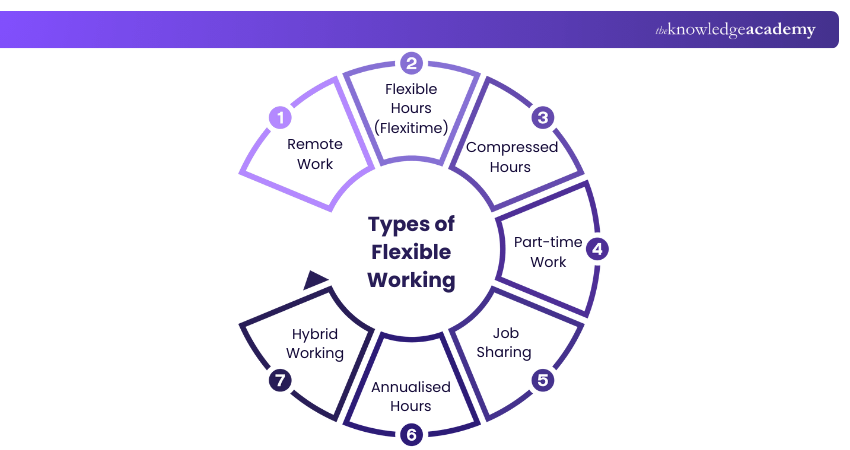
1) Remote Work
Some employees may work fully remotely, never going to the office. This should be clearly stated in their contract, which is different from working from home occasionally. It is best suited for roles that can be performed entirely through digital collaboration.
2) Flexible Hours (Flexitime)
Flexible hours allow employees to choose their start and finish times instead of following a fixed 9–5 schedule. Working hours are not rigid, although companies may set core hours during which all employees must be available.
3) Compressed Hours
Employees maintain full-time hours (e.g., 40 hours a week) but work those hours on fewer days, like four 10-hour days instead of five 8-hour days. This gives longer rest days while keeping total working time unchanged.
4) Part-time Work
Employees work fewer hours than a standard full-time schedule (usually 40 hours per week). Part-time roles can involve any number of hours below full-time. This option is often chosen by students, caregivers, or individuals seeking improved work–life balance.
5) Job Sharing
Two or more employees share the same job, each working part-time. For example, one employee works Mondays and Wednesdays, and the other works Tuesdays, Thursdays, and Fridays. They function as one full-time employee for the company.
6) Annualised Hours
Employees work a set number of hours per year, with flexibility on when they work those hours. Core weekly hours may still be agreed upon. This type is useful for businesses with seasonal or changing workloads.
7) Hybrid Working
It involves employees splitting their time between on-site locations, such as the office, and remote work. It is a mixed model that combines in-person collaboration with the flexibility of working from home.
Take control of your schedule! Register for our Time Management Training to make every minute count.
What is the Law on Flexible Working?
In the UK, working rights were strengthened through updated legislation and statutory guidance. Some of it includes the Employment Relations Act of 2023 and the Flexible Working Regulations of 2023. These rules clarify employee rights and set clear expectations for how employers must respond.
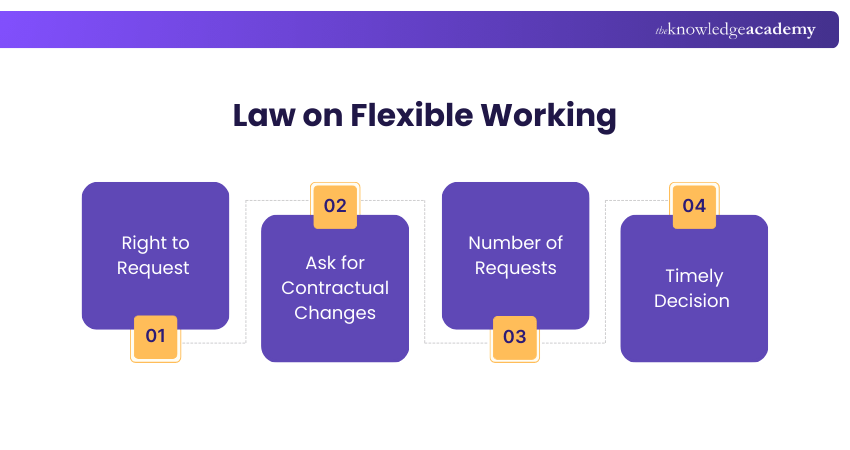
1) Right to Request
Employees are provided with the legal right to request for Flexible Working. This is made through a formal statutory application and is no longer limited to employees with minimum serving periods.
2) Ask for Contractual Changes
Employees can request permanent changes to their contract terms through a statutory request. This includes changes to working hours, start and finish times, and work patterns, such as remote or hybrid working.
3) Number of Requests
Employees can make two flexible working requests within a 12-month period. Previously, rules only allowed a single request and a minimum service length, but these limits have now been eliminated.
4) Timely Decision
Employers must make a decision within two months and handle requests in a reasonable way. If refusing, they must give clear business reasons. Some accepted grounds include:
a) Extra costs are damaging the business.
b) Work cannot be reorganised among the present staff.
c) Inability to recruit people to cover work.
d) There is a negative impact on quality.
e) Inability to meet customer expectations or demand.
f) Lack of work during the proposed working hours.
g) Planned workforce or need for organisational change.
Take charge of your career growth with Career Development Course today!
Advantages of Flexible Working
Flexible Working offers benefits for both employers and employees. Let's explore the benefits for each party.
1) Benefits for Employees
a) Work-life Balance: Flexible Working allows employees to balance their work with their personal life, improving work-life balance.
b) Reduced Commute: Policies like working from home or choosing to start and finish times help employees avoid long or busy commutes.
c) Family Time: Parents and carers have more time and freedom to care for their dependents while remaining employed.
d) Autonomy and Trust: More freedom and autonomy make employees feel trusted and valued by their employers.
e) Flexitime Benefits: Employees don’t need to take annual leave for appointments or errands, saving holiday days for actual vacations.
f) Reduced Stress: Increased flexibility can reduce pressure on employees, helping prevent overworking and burnout.
g) Cost Savings: It can save employees money on childcare costs and commuting expenses.
Benefits for Employers
a) Employer Branding: Offering Flexible Working arrangements boosts employer branding, as flexibility is a sought-after benefit.
b) Attracting Talent: Flexible Working makes your company more appealing and accessible to a broader range of candidates, including single parents.
c) Employee Satisfaction: Flexible Work improves employee happiness, satisfaction, and productivity. This in turn enhances employee retention.
d) Positive Culture: Flexibility leads to a more positive company culture and a more engaged workforce.
Challenges of Flexible Working
While Flexible Working offers several benefits, it is equally important to consider the possible challenges that come with it to avoid risks. Let’s look at the challenges below:
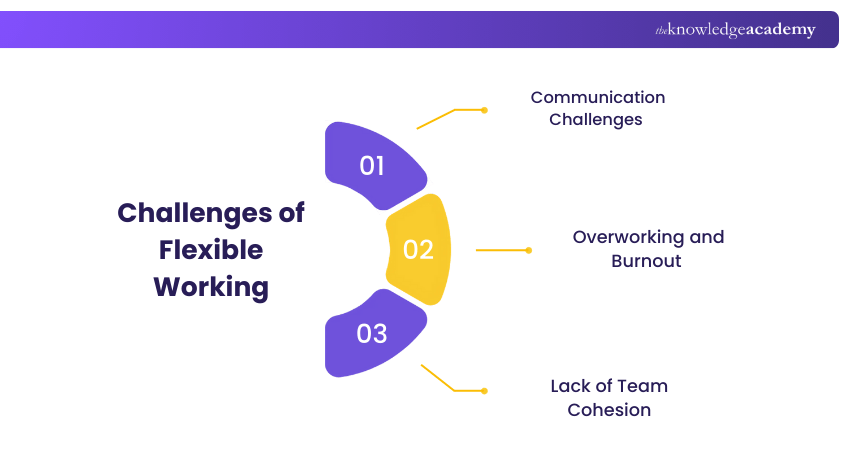
1) Communication Challenges
Flexible Working can lead to communication gaps if not managed properly. When employers work different hours or from different locations, coordination and collaboration may become difficult. Using clear communication rules and channels, shared calendars, and collaboration tools will help to reduce delays and confusion.
2) Overworking and Burnout
Flexibility can potentially blur the boundary between work and personal time. Some employees feel pressure to stay constantly available, which can lead to longer hours. It is important to set clear expectations about availability and response times to prevent burnout and overwork.
3) Lack of Team Cohesion
Reducing face-to-face interaction can weaken team relationships and sense of belonging. Remote teams may feel isolated or less connected to mutual goals. Regular check-ins, team activities, and planning in-person meetings can help to maintain team spirit and trust.
Invest in yourself! Join our Personal Development Courses to grow your skills and reach new heights.
How to Request Flexible Working Arrangements?
Requesting Flexible Working arrangements can help improve your work-life balance and productivity. Here's how you can make a successful request:
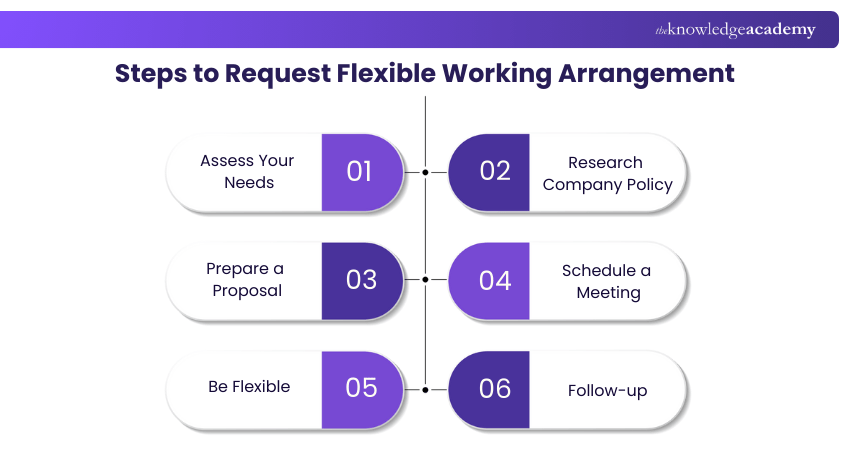
a) Assess Your Needs: Identify why you need Flexible Working arrangements. Understand how it will benefit your productivity and work-life balance.
b) Research Company Policy: Understand your company's policy on Flexible Working. Check if there are any existing guidelines or procedures.
c) Prepare a Proposal: Create a detailed proposal explaining your request, how it will work, and how it benefits both you and the company.
d) Schedule a Meeting: Arrange a meeting with your manager to discuss your request. Prepare to address questions and offer solutions to any concerns.
e) Be Flexible: Show willingness to compromise and adapt your proposal based on feedback from your manager.
f) Follow-up: After the meeting, follow up with a summary of your discussion and any agreed-upon actions. Keep track of the progress and any necessary adjustments.
Learn to land the right job role faster with Job Search Course now!
How to Implement Flexible Work at Your Business?
Implementing Flexible Working requires the right planning and structure. Let’s look at some practical steps businesses can introduce to support Flexible Work below:
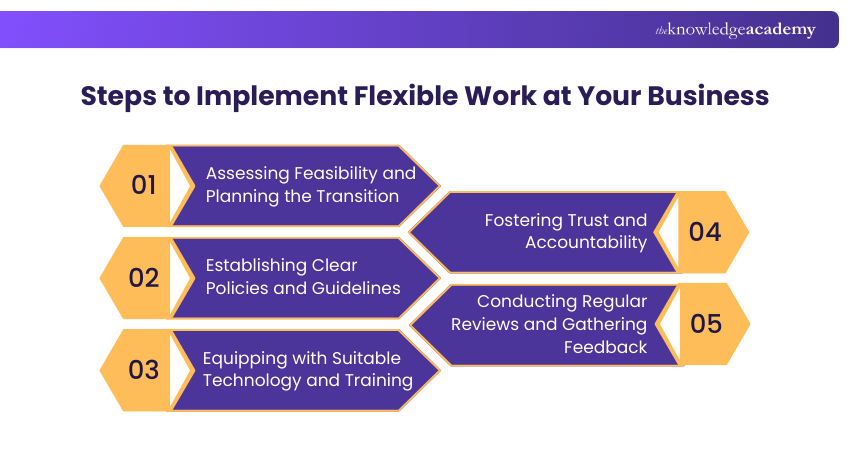
1) Assessing Feasibility and Planning the Transition
Check if flexible work suits your business type, teams, and customer needs. Set clear goals, identify risks, and plan the shift with employee input. A structured rollout reduces disruption and improves adoption.
2) Establishing Clear Policies and Guidelines
Create simple policies covering eligibility, request process, approval criteria, and expectations on availability and communication. Setting clear rules and guidelines ensures consistency is maintained and fairness is fostered across the department.
3) Equipping with Suitable Technology and Training
Provide reliable collaboration and communication tools. Train employees so they can work efficiently in remote or hybrid working setups. Through suitable tools and effective training, delays can be prevented, and productivity gaps can be addressed.
4) Fostering Trust and Accountability
Give employees autonomy, but with clear deadline expectations. Use regular check-ins and recognition to maintain accountability. Result-based management works better than time-based monitoring over here.
5) Conducting Regular Reviews and Gathering Feedback
Monitor how Flexible Work is performing and collect employee feedback. Adjust policies and practices based on what is working well and what is not. Through continuous review, it keeps the Flexible Working model effective and relevant.
Why Your Recruitment Process Should Focus on Flexible Working?
Flexible Working is a strong factor in recruitment. Many candidates actively choose employers who support both personal and professional needs. Job seekers look for visible proof of flexible policies and inclusive values, and they want to feel supported from the moment they join. This helps to reach a diverse talent pool by removing limits of location and fixed schedules, enabling individuals who are unable to relocate but still contribute effectively.
Conclusion
Flexible workplaces are reshaping how organisations attract talent, improve productivity, and support employee well-being. Understanding What is Flexible Working helps both employees and employers make smarter decisions regarding work patterns, schedules, and locations. When organisations adopt flexibility thoughtfully, they are more likely to stay competitive, build engaged teams, and create a work culture that fits modern expectations.
Restart strong and confident with Getting Back Into Work Course – Join now!
Frequently Asked Questions
Can Flexible Working be Temporary?

Flexible Working can be temporary or permanent, depending on employee needs and employer approval. Staff can request short-term changes, such as working from home or compressed hours. These arrangements last for an agreed period, after which the employee returns to their normal work pattern.
Is Flexible Working the Future of Work?
Yes, Flexible Working is becoming the future of work as organisations shift from fixed schedules to adaptable models. Employees expect choice in when and where they work, and businesses utilise flexibility to attract talent, improve productivity, and support long-term workforce satisfaction.
What are the Other Resources and Offers Provided by The Knowledge Academy?
The Knowledge Academy takes global learning to new heights, offering over 3,000+ online courses across 490+ locations in 190+ countries. This expansive reach ensures accessibility and convenience for learners worldwide.
Alongside our diverse Online Course Catalogue, encompassing 19 major categories, we go the extra mile by providing a plethora of free educational Online Resources like Blogs, eBooks, Interview Questions and Videos. Tailoring learning experiences further, professionals can unlock greater value through a wide range of special discounts, seasonal deals, and Exclusive Offers.
What is The Knowledge Pass, and How Does it Work?
The Knowledge Academy’s Knowledge Pass, a prepaid voucher, adds another layer of flexibility, allowing course bookings over a 12-month period. Join us on a journey where education knows no bounds.
What are the Related Courses and Blogs Provided by The Knowledge Academy?
The Knowledge Academy offers various Personal Development Courses, including Self-Employment Training, Time Management Training and Attention Management Training. These courses cater to different skill levels, providing comprehensive insights into the Career Aspiration.
Our Business Skills Blogs cover a range of topics related to Flexible Working, offering valuable resources, best practices, and industry insights. Whether you are a beginner or looking to advance your skills in Personal Development, The Knowledge Academy's diverse courses and informative blogs have you covered.

The Knowledge Academy


Global Training Provider
The Knowledge Academy is a world-leading provider of professional training courses, offering globally recognised qualifications across a wide range of subjects. With expert trainers, up-to-date course material, and flexible learning options, we aim to empower professionals and organisations to achieve their goals through continuous learning.

Upcoming Business Skills Resources Batches & Dates
Date
 Self-Employment Training
Self-Employment Training
Fri 26th Jun 2026
Self-Employment Training
Fri 14th Aug 2026
Self-Employment Training
Fri 18th Sep 2026

 If you wish to make any changes to your course, please


