


 Top Rated Course

We may not have the course you’re looking for. If you enquire or give us a call on +44 1344 203 999 and speak to our training experts, we may still be able to help with your training requirements.
What Are the Effects of Climate Change? Explained
Michael Jones 24 April 2026Effects of Climate Change can be seen worldwide as the Earth warms, rainfall patterns shift, and sea levels rise, bringing storms and other extreme events. It is reshaping our planet, disrupting ecosystems and affecting human life. These impacts are far-reaching, and understanding them is crucial to prepare for the challenges ahead.

Training Outcomes Within Your Budget!
We ensure quality, budget-alignment, and timely delivery by our expert instructors.
Table of Contents
Climate change is no longer a distant warning. It is already shaping our communities, disrupting ecosystems, and straining economies. From rising global temperatures to shrinking biodiversity, its effects are being felt in every corner of the world. What once seemed like a problem for the future is now a crisis unfolding before our eyes.
In this blog, we will explore the wide-ranging Effects of Climate Change, from melting ice caps and rising sea levels to agricultural challenges and extreme weather, helping you understand why urgent action is needed now. Let’s get started!
What are the Effects of Climate Change?
Climate change is reshaping the planet in many interconnected ways. It is altering natural systems, disrupting weather cycles, and putting pressure on ecosystems and communities. These changes are complex and wide-ranging, influencing everything from oceans and forests to Food Safety and human health. Understanding these effects is the first step toward finding solutions and preparing for the future.
Effects of Climate Change on the Environment
Climate change is having a serious impact on ecosystems and natural processes. Rising temperatures, higher sea levels, and changing habitats are putting huge stress on the environment. Below are some of the major effects:
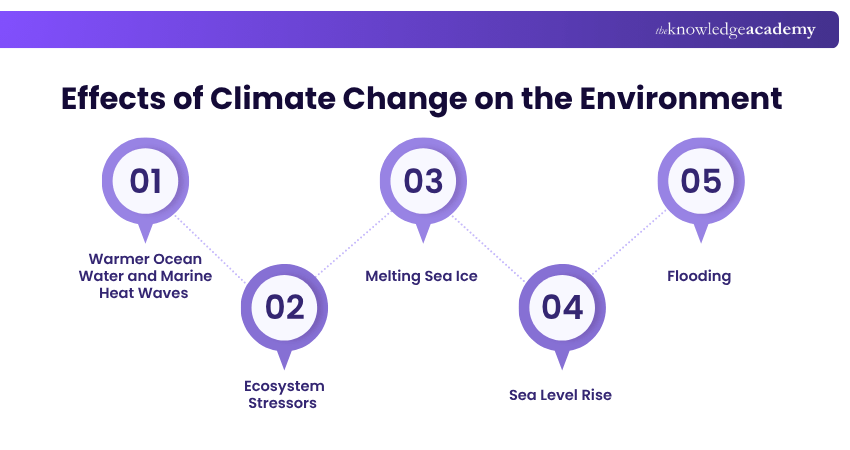
1) Warmer Ocean Water and Marine Heat Waves
Oceans are getting warmer, leading to more frequent and intense marine heatwaves. These damage ecosystems, cause coral reefs to bleach, change where species live, and put fisheries and coastal communities at risk. Ocean acidification is also harming marine life, reducing biodiversity and weakening ecosystem health.
2) Ecosystem Stressors
Climate change is adding extra pressure on ecosystems. Habitat loss, pollution, and invasive species are becoming worse with rising temperatures and frequent droughts. These stressors make it harder for ecosystems to recover naturally. For example, some animals, like grizzly bears, are being forced into urban areas as their habitats shrink.
3) Melting Sea Ice
Sea ice in the Arctic and Antarctic is melting quickly due to warmer temperatures. This contributes to rising sea levels and destroys habitats for animals such as polar bears and walruses. It also disrupts ocean currents and reduces the Earth’s reflectivity, which increases global warming even further
4) Sea Level Rise
As glaciers and ice sheets melt and oceans warm, sea levels continue to rise. This causes more coastal flooding, speeds up shoreline erosion, contaminates freshwater with saltwater, and threatens communities living in low-lying areas.
5) Flooding
Flooding is becoming more frequent and severe as a result of climate change. Heavy rainfall, rising seas, and stronger storms overwhelm drainage systems, soak soils, and put both people and ecosystems at risk.
Develop essential skills to manage climate change risks with our ISO 14097 Training – Join today!
Effects of Climate Change on Weather
Climate change is reshaping weather patterns across the globe. As the atmosphere warms, it holds more moisture, leading to heavier rainfall in some places and severe drought in others. This has made weather more unpredictable and extreme. Below are some of the major weather-related Effects of Climate Change:
1) More Intense Wildfires
Hotter and drier conditions are fuelling longer wildfire seasons across many regions. These fires destroy habitats, threaten communities, and release large amounts of smoke that damage air quality and harm human health.
2) Stronger Storms
Warmer oceans and higher atmospheric moisture create stronger storms. Hurricanes and cyclones are becoming more destructive, bringing heavier rain, stronger winds, and dangerous storm surges that flood coastal areas
3) Higher Average Temperatures
Rising greenhouse gases are pushing global temperatures higher. Heatwaves are more frequent, leading to poor air quality, health risks, and disrupted agricultural cycles. Warmer conditions also place extra stress on ecosystems.
4) Longer-lasting Droughts
Hotter climates increase evaporation and dry out soils, while shifting rainfall patterns leave many regions drier. These long droughts reduce water supplies, harm crops, stress ecosystems, and raise the risk of wildfires.
Master Environmental Management with our ISO 14001 Foundation Certification – Register now!
What are the Effects of Climate Change on Nature?
Nature is one of the hardest-hit victims of climate change. From shrinking habitats to species extinction, the natural world is facing unprecedented challenges. Below are some of the most significant effects:
1) Loss of Biodiversity and Habitats: Rising temperatures, deforestation, and ocean warming are destroying ecosystems, causing coral bleaching, shrinking forests, and threatening countless species’ survival.
2) Shifts in Migration and Breeding Patterns: Animals and birds are changing their migration routes, breeding times, and feeding habits, leading to ecological imbalance.
3) Species Extinction Risks: Many species cannot adapt quickly enough to rapid environmental changes, putting them at greater risk of extinction.
Learn global environmental standards with our ISO 14001 Lead Auditor Course – Join today!
Future Effects of Climate Change
The future impacts of climate change are projected to grow more severe if current trends continue. Rising sea levels, stronger storms, prolonged droughts, and shifting ecosystems are likely to intensify in the coming decades.
These changes will endanger coastal cities, disrupt food and water supplies, and place biodiversity under greater stress. Urgent action is needed to reduce emissions and build resilience to safeguard both humanity and the planet for the future.
Conclusion
We hope this blog on the Effects of Climate Change has helped you understand the wide-ranging challenges our planet faces. From rising temperatures and sea levels to extreme storms and biodiversity loss, the consequences are far-reaching and urgent. Taking immediate steps today can help safeguard the environment and ensure a safer future for generations to come.
Learn about environmental sustainability with our ISEP/IEMA Environmental Sustainability Skills for Managers Course - Sign up now!
Frequently Asked Questions
Will We Survive Climate Change?

Yes, humanity can survive climate change, but only if strong actions are taken now. Reducing greenhouse gas emissions, protecting nature, and adapting to new challenges are key. Without action, extreme weather, food shortages, and health risks will make survival much harder.
What are the 10 Causes of Climate Change?
Climate change mainly comes from human actions that increase greenhouse gases. The 10 key causes are:
1) Burning fossil fuels
2) Deforestation and logging
3) Farming and livestock
4) Industrial activities
5) Transport emissions rise
6) Waste and landfills
7) Fertiliser use impacts
8) High energy use
9) Urbanisation changes land
10) Natural factors (volcanoes/solar)
What are the Other Resources and Offers Provided by The Knowledge Academy?
The Knowledge Academy takes global learning to new heights, offering over 3,000+ online courses across 490+ locations in 190+ countries. This expansive reach ensures accessibility and convenience for learners worldwide.
Alongside our diverse Online Course Catalogue, encompassing 17 major categories, we go the extra mile by providing a plethora of free educational Online Resources like Blogs, eBooks, Interview Questions and Videos. Tailoring learning experiences further, professionals can unlock greater value through a wide range of special discounts, seasonal deals, and Exclusive Offers.
What is The Knowledge Pass, and How Does it Work?
The Knowledge Academy’s Knowledge Pass, a prepaid voucher, adds another layer of flexibility, allowing course bookings over a 12-month period. Join us on a journey where education knows no bounds.
What are the Related Courses and Blogs Provided by The Knowledge Academy?
The Knowledge Academy offers various ISO 14097 Trainings, including ISO 14097 Greenhouse Gas Management Training. This course caters to different skill levels, providing comprehensive insights into Types of Greenhouses.
Our Health & Safety Blogs cover a range of topics related to Environmental Sustainability, offering valuable resources, best practices, and industry insights. Whether you are a beginner or looking to advance your Health & Safety skills, The Knowledge Academy's diverse courses and informative blogs have got you covered.

Michael Jones


Health and Safety Consultant and Compliance Trainer
Michael Jones is a seasoned health and safety expert with more than 15 years of experience in workplace safety, risk management, and compliance training. He has worked across construction, manufacturing, and corporate sectors, helping organisations meet legal requirements and create safer working environments. Michael’s training and writing are known for being practical, clear, and aligned with UK regulations.
View Detail

Upcoming Health & Safety Resources Batches & Dates
Date
 ISO 14097 Greenhouse Gas Management Training
ISO 14097 Greenhouse Gas Management Training
Fri 21st Aug 2026
ISO 14097 Greenhouse Gas Management Training
Fri 4th Dec 2026

 If you wish to make any changes to your course, please


