


 Top Rated Course

We may not have the course you’re looking for. If you enquire or give us a call on 800600725 and speak to our training experts, we may still be able to help with your training requirements.
Fraud Analytics: Strategies to Reduce False Positives
The Knowledge Academy 17 April 2026Fraud Analytics applies data analysis and machine learning to detect patterns, identify risks, and prevent fraudulent activities across organisations. By leveraging predictive modelling and behavioural analysis, organisations can detect anomalies in real time and enhance decision-making across risk management frameworks.

Training Outcomes Within Your Budget!
We ensure quality, budget-alignment, and timely delivery by our expert instructors.
Table of Contents
Fraud no longer announces itself; it hides in data, transactions, and behavioural patterns. In today’s digital economy, organisations face increasingly sophisticated financial crimes that traditional controls struggle to detect. This is where fraud analytics becomes a critical defence mechanism.
By combining data analysis, big data technologies, and machine learning, fraud analytics enables businesses to identify anomalies, predict suspicious activity, and respond proactively to emerging risks. In this blog, we explore the definition of fraud analytics, the key techniques used, and the strategic advantages it offers organisations seeking stronger risk and compliance management.
Table of Contents
1) Understanding Fraud Analytics
2) How Does Fraud Analytics Work?
3) The Stages of Fraud Analytics
4) The Importance of Fraud Analytics for Your Business
5) Fraud Detection Techniques
6) Advantages of Fraud Analytics
7) Best Practices to Implement Fraud Analytics in an Organisation
8) Conclusion
Understanding Fraud Analytics
Fraud Analytics is a field of cyber security that deals with utilising the applications of big data analytics to detect and predict online financial frauds. This includes account takeover, payment fraud, and identity theft. To define it in simple words, it is a set of data analytics methodologies to inhibit online transactional-related frauds.
For example, behavioural analytics typically uses behavioural profiling to assess the probability of fraud based on how users typically interact with their accounts. As an illustration, if a user suddenly starts making frequent transactions that exceed their usual spending limits, this behaviour could trigger alerts for potential fraud.

How Does Fraud Analytics Work?
Fraud analytics combines data science, statistics, and machine learning to detect and prevent fraudulent activity. It analyses transactional and behavioural data in massive numbers, identifying irregularities that could be a sign of possible fraud.
It uses both rule-based and advanced machine learning models. Where rule-based methods raise flags against transactions that exceed set limit values, machine learning adjusts to the changing trends of fraud and gains better accuracy in detection with time.
The Stages of Fraud Analytics
Now you know What is Fraud Analytics, but you need to know that it follows a structured, multi-stage process to detect, assess, and respond to fraudulent activity effectively. Below are the key stages of fraud data analytics
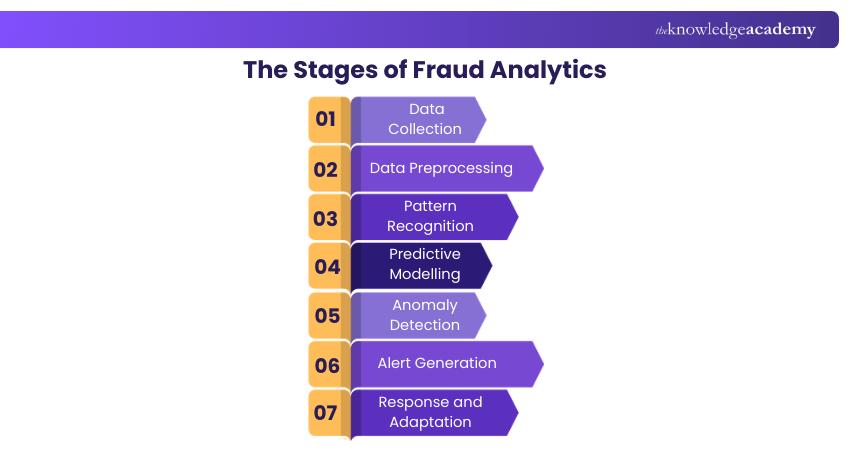
1) Data Collection: Massive data is gathered from different sources of data, such as transactions, user behaviour history, and other databases.
2) Data Preprocessing: The data gathered is purged, verified and converted into some standard format to provide accuracy and reliability during analysis.
3) Pattern Recognition: Normal behavioural patterns are determined through analytical methods, such as machine learning algorithms, and flag the risk indicators.
4) Predictive Modelling: Statistical models and the use of past data can predict the possibility of fraud and help in taking proactive decisions.
5) Anomaly Detection: Intelligent analytics indicate deviations of projected patterns that identify suspicious activities that could result in fraud.
6) Alert Generation: In case of a suspicious activity being realised, automated alerts will be installed to allow the analyst to conduct additional research.
7) Response and Adaptation: According to the results, organisations implement corrective responses, such as blocking transactions, reinforcing controls, or even improving detection models, in response to changing methods of fraudulent activity.
Build advanced risk management skills with our Cyber Security Risk Management Training- Join today!
The Importance of Fraud Analytics for Your Business
The use of digital banking, e-commerce, and online services has produced large amounts of transactional data since the pace of adoption is rapid. Though this digital expansion enhances accessibility and efficiency, it also exposes advanced fraud risks over a range of channels.
With the internet and other new digital platforms opening, technology-driven fraudsters keep adapting to the current times and pose a regulatory and financial burden on organisations. Rule-based systems, which are used traditionally, fail to keep up with this and have a tendency to be reactive in nature and create a cycle of detection lapses.
Fraud Analytics enables businesses to proactively analyse large datasets, identify hidden risk patterns, and assign accurate transaction risk scores before approval. The organisations will save their revenue, retain their customer confidence, and improve their compliance strength by minimising the dependence on manual reviews and enhancing the detection accuracy.
Fraud Detection Techniques
These are the major fraud detecting techniques commonly used to prevent financial losses experienced by organisations and to identify any suspicious activity:
1) Behaviour Analytics
Behaviour analytics is a type of statistical analysis and machine learning that is applied to analyse user data and transaction data trends. It detects abnormal behaviour that can be used to signify fraud, giving more information than the conventional rule-based methodology.
2) Real-time Monitoring
The transactions and activities stream through real-time monitoring, and systems are able to observe and react instantly to suspicious activities or a flag. This real-time feedback will make the fraudulent actions bandwidth shorter.
3) Predictive Analytics
Predictive Analytics uses models created out of historical evidence to predict the possibility of a fraudster occurrence prior to it taking place. It enhances early detection and decision-making by estimating the risk dimension and determining trends.
4) Risk Assessment
Risk Assessment methods judge the probability and overall result of a fraud by marking on initiatives, records or conduct on the premise of an early sign. The whole picture has a way of prioritising investigative work and enhancing resiliency against fraud in general.
Transform Your incident management career with our Incident Response Training- join today!
Advantages of Fraud Analytics
Fraud Analytics delivers measurable operational and financial benefits by enabling faster detection, smarter prioritisation, and improved customer experience. Organisations will be minimising fraud losses through big data and machine learning applications and will remain efficient and compliant with regulations. Here are the key advantages of fraud data analytics:
1) Quick and Accurate Detection: Advanced analytics processes billions of data points per second, revealing hidden trends and relations that standard systems might fail to identify.
2) Risk Assessment Prioritised: Risk-based scoring assists organisations in concentrating on applications and transactions that are at high risk, making investigative resources more effective.
3) Enhanced Customer Experience: By accurately distinguishing between genuine and suspicious activity, fraud analytics reduces unnecessary friction for legitimate customers, improving satisfaction and trust.
4) Data Integration-based Decision Making: Machine learning models will take into consideration several data points, including identity data, behavioural signals, and transaction history, to offer a more detailed assessment of a fraud risk.
5) Improved Predictive Abilities: The predictive models help identify repeat fraud and new threats, allowing for the prevention of them in advance rather than reactive response.
6) Reduced Manual Intervention: Greater accuracy in the scoring of the probability of fraud leads to fewer referrals and manual reviews, which improves operations and allocation of resources.
Overall, Fraud Analytics empowers organisations to stay ahead of evolving fraud tactics, minimise false positives, and strengthen financial and operational resilience.
Gain hands-on skills in evidence collection, analysis, and incident response with our Digital Forensics Training- Join now!
Best Practices to Implement Fraud Analytics in an Organisation
Implementing fraud analytics requires a structured, cross-functional approach aligned with business objectives and risk strategy. The best practises listed below can be used to ensure successful deployment, scalability, and performance in the long term.
1) Establish Clear Objectives: Identify the actual risks of fraud that should be counteracted and integrate them with the overall objectives of the business to ensure that the solution identified is scalable and flexible.
2) Adapt an Omnichannel Data View: Combine transaction, customer system and digital channel data to see the whole view of behaviour and risk exposure.
3) Embrace Data Orchestration: Automate data aggregation, transformation and integration to do away with silos, enhance quality and real-time fraud insights.
4) Develop Internal Networking: Gain support among stakeholders in both IT and fraud and business sectors and invest in the services of talented analysts to achieve the potential of the systems.
5) Stronger Security Controls: Secure the confidential information by encryption and access control, and adherence to applicable data privacy policies.
6) Continuous Monitoring and Improvement: Periodically assess the performance of models, improve detection rules, and strategies to adapt to any emerging fraud.
7) Explainability and Transparency: Build trust with the stakeholders and customers through the use of models that give explicit arguments on alerts.
8) Intensive Testing and validation: Test systems with a wide range of data and practical situations to achieve accuracy, consistency, and long-term functionality.
Conclusion
Understanding what is Fraud Analytics has become essential in an increasingly digital and data-driven business environment. By combining advanced analytics, machine learning, and real-time monitoring, organisations can detect threats earlier and respond with greater precision. When implemented strategically, it reduces financial losses, improves operational efficiency, and strengthens regulatory compliance.
Gain the skills needed to defend against evolving cyber threats with our Cyber Security Courses- Sign in now!
Frequently Asked Questions
How To Collect Data For Fraud Detection?

To collect data for fraud detection, gather transaction records, user behaviour logs, and historical fraud cases. Analysing these data points using machine learning and predictive analytics aids in identifying unusual patterns, allowing for early detection of potentially fraudulent activities.
What are the Application of Fraud Analytics?
Fraud Analytics is applied across banking, insurance, eCommerce, and telecom to detect suspicious transactions, prevent identity theft, monitor account takeovers, and combat payment fraud. It also supports Anti-Money Laundering (AML), claims validation, credit risk assessment, and regulatory compliance by identifying anomalies and high-risk behaviours in real time.
What are the Other Resources and Offers Provided by The Knowledge Academy?
The Knowledge Academy takes global learning to new heights, offering over 3,000+ online courses across 490+ locations in 190+ countries. This expansive reach ensures accessibility and convenience for learners worldwide.
Alongside our diverse Online Course Catalogue, encompassing 19 major categories, we go the extra mile by providing a plethora of free educational Online Resources like Blogs, eBooks, Interview Questions and Videos. Tailoring learning experiences further, professionals can unlock greater value through a wide range of special discounts, seasonal deals, and Exclusive Offers.
What is The Knowledge Pass, and How Does it Work?
The Knowledge Academy’s Knowledge Pass, a prepaid voucher, adds another layer of flexibility, allowing course bookings over a 12-month period. Join us on a journey where education knows no bounds.
What are the Related Courses and Blogs Provided by The Knowledge Academy?
The Knowledge Academy offers various Cyber Security Training, including Fraud Analytics Training, Cyber Security Risk Management, and Malware Analysis Training. These courses cater to different skill levels, providing comprehensive insights into SOC Analyst: Job Description, Pay, and Qualifications.
Our IT Security & Data Protection Blogs cover a range of topics related to cybersecurity threats and solutions, offering valuable resources, best practices, and industry insights. Whether you are a beginner or looking to advance your technical skills, The Knowledge Academy's diverse courses and informative blogs have got you covered.

The Knowledge Academy


Global Training Provider
The Knowledge Academy is a world-leading provider of professional training courses, offering globally recognised qualifications across a wide range of subjects. With expert trainers, up-to-date course material, and flexible learning options, we aim to empower professionals and organisations to achieve their goals through continuous learning.

Upcoming IT Security & Data Protection Resources Batches & Dates
Date
 Fraud Analytics Training Course
Fraud Analytics Training Course
Fri 18th Sep 2026
Fraud Analytics Training Course
Fri 4th Dec 2026

 If you wish to make any changes to your course, please


