


 Top Rated Course


We may not have the course you’re looking for. If you enquire or give us a call on 800600725 and speak to our training experts, we may still be able to help with your training requirements.
Top 15 Advantages of AngularJS for Web Development
Richard Harris 15 April 2026In this blog, we will explore the 15 unique Advantages of AngularJS and what makes it stand out as the premier framework for Web Development. Additionally, we'll delve into practical insights and real-world applications, providing a comprehensive understanding of how AngularJS elevates the development process.

Training Outcomes Within Your Budget!
We ensure quality, budget-alignment, and timely delivery by our expert instructors.
Table of Contents

Creating interactive applications that are easy to test and maintain is a huge challenge when it comes to web application development. This can lead to complex and time-consuming development processes. Using a framework like AngularJS can help overcome these challenges effectively. By understanding the advantages of AngularJS, developers gain the tools to streamline development, making the process more efficient and effective.
If you want to learn about the Advantages of AngularJS, this blog is for you. Let’s dive in to learn more!
Table of Contents
1) What Is AngularJS?
2) Understanding the Advantages of AngularJS
a) Code reusability
b) Plug-and-play functionality
c) Strong community support
d) Data binding capabilities
e) Support for MVC architecture
f) Rapid application prototyping
g) Improved server performance
h) Dependency Injection (DI) support
i) Real-time testing capabilities
j) Emphasis on User Experience (UX)
3) Conclusion
What Is AngularJS?
AngularJS, developed and maintained by Google, is a powerful front-end web application framework that has redefined the way developers approach Web Development. Launched as an open-source project, AngularJS was created to simplify and streamline the process of developing dynamic, single-page web applications.
Moreover, it extends the capabilities of HTML by introducing declarative syntax and two-way data binding. This allows developers to build more interactive and responsive User Interfaces (UIs). As we delve into the intricacies of AngularJS, we'll uncover the features that make it a cornerstone in modern Web Development.

Understanding the Advantages of AngularJS
AngularJS stands tall among Web Development frameworks, offering a myriad of advantages that contribute to its widespread adoption. Let's explore the key benefits that make AngularJS a preferred choice for developers:
1) Code reusability
In the dynamic realm of Web Development, AngularJS stands out for championing code reusability. Code reusability is a critical factor that enhances efficiency and ensures consistency across projects. Emphasising the importance of efficient coding practices, AngularJS, along with Angular Material, offers developers a powerful framework to streamline their workflows and enhance the user interface with ready-to-use design components.
Let's delve into the advantages that make code reusability a cornerstone of AngularJS development:
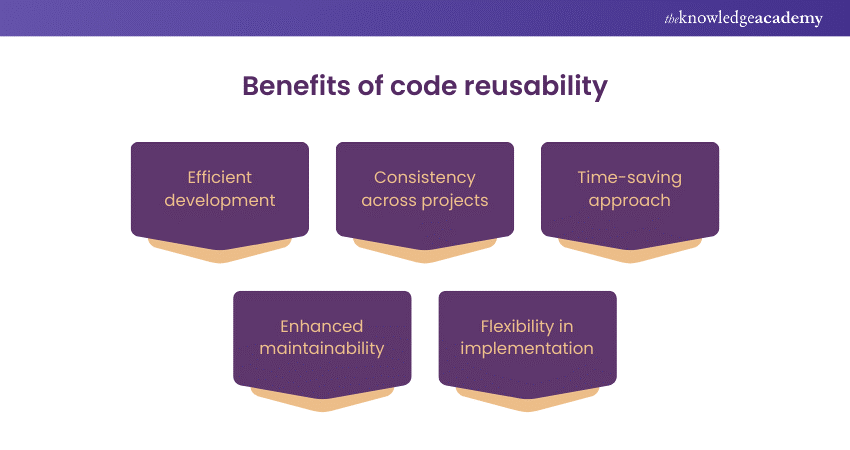
1) Efficient development: AngularJS encourages the reuse of code components, reducing redundancy and expediting the development process.
2) Consistency across projects: Leveraging existing code in new projects ensures consistency, making maintenance and updates more straightforward.
3) Time-saving approach: The modular structure facilitates swift integration, saving developers time and promoting a more efficient workflow.
4) Enhanced maintainability: Reusable code promotes organised development, leading to applications that are easier to maintain and scale.
5) Flexibility in implementation: Developers can easily adapt and modify existing code, providing flexibility for different project requirements and iterations.
2) Plug-and-play functionality
AngularJS distinguishes itself with its seamless plug-and-play functionality, made possible through its modular architecture. This feature empowers developers to integrate third-party components and libraries into their projects effortlessly.
The modular design allows for flexibility and scalability, enabling developers to add or remove components without disrupting the overall application structure. This not only accelerates the development process but also promotes adaptability, making AngularJS a go-to framework for those seeking efficient and extensible solutions.
3) Strong community support
A defining strength of AngularJS lies in its vibrant and robust community of developers. This community support plays a pivotal role in the framework's success, offering a wealth of resources, forums, and documentation. Developers worldwide benefit from shared knowledge, collaborative problem-solving, and a continuous exchange of ideas.
The strong community backing not only accelerates issue resolution but also fosters a collaborative environment where developers can stay updated on best practices. This ensures a smoother and more informed AngularJS development experience.
4) Data binding capabilities
AngularJS excels in providing powerful data binding capabilities, a key characteristic that makes it unique in Web Development. Two-way data binding ensures a seamless synchronisation between the User Interface and application logic. When the data in the User Interface changes, AngularJS automatically updates the corresponding application data and vice versa.
This bidirectional binding significantly simplifies development and enhances real-time user interaction. It also reduces the need for manual intervention in managing data flow.
5) Support for MVC architecture
AngularJS stands out for its adherence to the Model-View-Controller (MVC) architecture, a foundational design pattern in software development. This architectural approach divides the application into three interconnected components, and let’s take a look at them below:
a) Model (data and logic)
b) View (User Interface)
c) Controller (manages user input and updates the model and view)
By adopting MVC, AngularJS provides a structured and organised framework, making it easier for developers to manage code. Besides, it also enhances maintainability and scales applications efficiently.
6) Rapid application prototyping
AngularJS accelerates the application development process with its emphasis on rapid prototyping. The framework provides developers with robust tools and features, allowing them to create and test application prototypes quickly.
This rapid prototyping capability is invaluable during the initial stages of development, enabling swift experimentation and iteration. Developers can efficiently validate concepts, test functionalities, and make necessary adjustments. This ultimately leads to faster development cycles and more efficient project delivery.
7) Improved server performance
AngularJS contributes to enhanced server performance by shifting the responsibility of rendering from the server to the client side. This approach reduces the server load and improves overall application performance.
With decreased server-side processing, AngularJS facilitates smoother User Experiences, faster loading times, and a more responsive web application. The emphasis on optimising server performance aligns with the framework's commitment to delivering efficient and high-performing web applications.
Revolutionize your skills with our App & Web Development Training– Sign up today!
8) Dependency Injection (DI) support
AngularJS boasts robust support for Dependency Injection (DI), a powerful design pattern that simplifies component management within the framework. DI allows developers to define and inject dependencies into components, promoting modularity and easing the testing process.
With DI support, AngularJS facilitates creating and maintaining loosely coupled components. This makes it easier for developers to manage dependencies and build scalable and maintainable applications.
Check out our blog for an in-depth comparison of AngularJS vs ReactJS and find out which framework is right for you!
9) Real-time testing capabilities
In the dynamic field of Web Development, AngularJS shines with its comprehensive support for real-time testing. Real-time testing is a pivotal aspect of ensuring software reliability and performance. Let's explore the advantages that make real-time testing a cornerstone of AngularJS development:

a) Efficient testing: AngularJS empowers developers with tools for immediate and thorough testing, ensuring robust functionality and identifying issues promptly.
b) Real-time validation: Developers can assess the performance and reliability of their applications in real-time, contributing to the creation of high-quality, bug-free software.
c) Quality Assurance: AngularJS's emphasis on real-time testing aligns with modern development practices, providing the necessary tools for creating dependable and resilient applications.
10) Emphasis on User Experience (UX)
AngularJS places a significant emphasis on enhancing User Experience (UX) by offering a suite of tools and features designed to create intuitive and responsive web applications. The framework provides developers with the capabilities to craft User Interfaces that are not only aesthetically pleasing but also user-friendly.
By prioritising UX, AngularJS ensures that the end-users interact positively and engage with the applications developed using the framework.
11) Legal licensing
AngularJS is backed by a permissive open-source license, ensuring that developers have the freedom to use, modify, and distribute the framework without encountering legal constraints. The framework's licensing model aligns with open-source principles, allowing developers to confidently and flexibly leverage AngularJS in their projects.
This commitment to open-source licensing enhances accessibility and fosters a collaborative development ecosystem.
12) Simplified testing process
AngularJS streamlines the testing process by offering built-in features and tools that simplify the creation and execution of tests. Developers can easily conduct unit testing, end-to-end testing, and other types of testing within the framework. This simplification of the testing process contributes to the development of robust and reliable applications, as developers can efficiently verify their code's functionality, performance, and reliability.
AngularJS's commitment to a simplified testing process enhances the overall Quality Assurance aspects of web application development.
13) Single Page Application (SPA) support
AngularJS excels in providing robust support for single-page applications, a modern Web Development approach. SPAs load a single HTML page and update content as users interact with the web application. This results in a smoother and more responsive User Experience. AngularJS's architecture and features are well-suited for developing SPAs.
Further, this allows developers to create highly interactive and dynamic web applications without needing page reloads. This support for SPAs aligns with contemporary Web Development trends, making AngularJS a versatile choice for building engaging User Interface Elements.
14) Accelerated application development
AngularJS significantly accelerates the application development process by providing developers with a rich set of tools and features, including AngularJS Development Tools. These resources empower developers to build feature-rich applications more efficiently. With AngularJS, developers can leverage pre-built components, modular architecture, and extensive libraries.
This significantly reduces the need to write repetitive code. Moreover, this emphasis on accelerating development cycles allows teams to deliver robust applications in less time. This makes AngularJS a go-to choice for those aiming for efficient and speedy development.
Supercharge your UX/UI design journey with our UI UX Design Course– Sign up now!
15) Seamless integration
In the expansive landscape of Web Development, AngularJS excels with its innate ability to integrate with various libraries and third-party tools seamlessly. This quality enhances its compatibility and versatility. Let's explore the advantages that make seamless integration a defining feature of AngularJS:
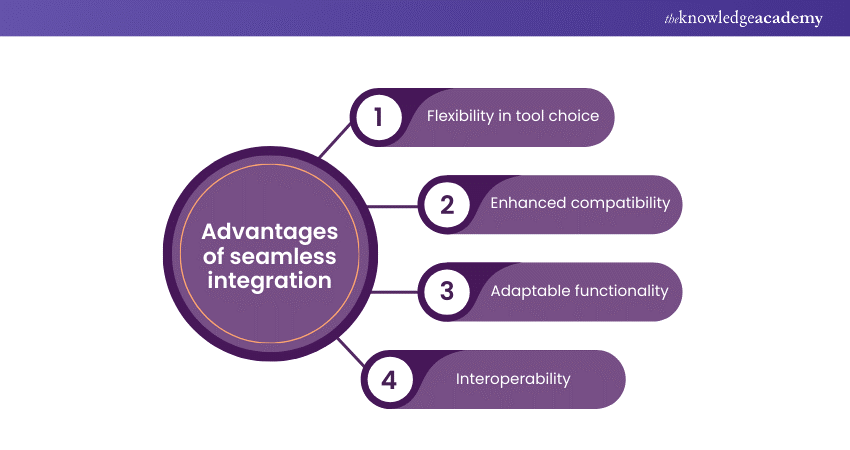
a) Flexibility in tool choice: AngularJS allows developers the flexibility to seamlessly integrate with diverse libraries and third-party tools, adapting to specific project requirements.
b) Enhanced compatibility: The framework's seamless integration capabilities ensure compatibility with different technologies, providing developers with a versatile environment for application development.
c) Adaptable functionality: AngularJS's compatibility extends to diverse functionalities, making it an ideal choice for projects that demand the incorporation of various tools.
d) Interoperability: The ability to seamlessly integrate fosters interoperability, allowing AngularJS to interact effectively with different technologies, libraries, and frameworks.
Conclusion
We hope you read and understand the Top 15 Advantages of AngularJS. AngularJS emerges as the preferred framework for Web Development due to its extensive advantages. Its robust features, coupled with a supportive community, make it a powerhouse in the ever-evolving landscape of web technologies. As you prepare for your next opportunity, exploring AngularJS Interview Questions can help you gain deeper insights and prepare effectively. So, let's embrace it and unlock a world of possibilities in crafting dynamic and efficient web applications.
Unlock the potential of AngularJS with our AngularJS Developer Training– Sign up today!
Frequently Asked Questions
Why is Angular the best framework?

Angular stands out as the best framework due to its powerful features, strong community support, and the ability to streamline development processes. Its comprehensive toolset, continuous updates, and robust ecosystem contribute to creating scalable and high-performing solutions that meet the evolving demands of modern Web Development.
Which language is best for Angular?
While Angular primarily uses TypeScript, a superset of JavaScript, developers can leverage their existing knowledge of HTML and CSS. TypeScript enhances the development experience by providing additional features like static typing and interfaces. This combination promotes a smoother transition for developers and empowers them with advanced features.
What are the other resources and offers provided by The Knowledge Academy?
The Knowledge Academy takes global learning to new heights, offering over 3,000+ online courses across 490+ locations in 190+ countries. This expansive reach ensures accessibility and convenience for learners worldwide.
Alongside our diverse Online Course Catalogue, encompassing 19 major categories, we go the extra mile by providing a plethora of free educational Online Resources like Blogs, eBooks, Interview Questions and Videos. Tailoring learning experiences further, professionals can unlock greater value through a wide range of special discounts, seasonal deals, and Exclusive Offers.
What is the Knowledge Pass, and how does it work?
The Knowledge Academy’s Knowledge Pass, a prepaid voucher, adds another layer of flexibility, allowing course bookings over a 12-month period. Join us on a journey where education knows no bounds.
What are the related courses and blogs provided by The Knowledge Academy?
The Knowledge Academy offers various App & Web Development Training, including AngularJS Developer Course, UI UX Design Course, and Introduction to HTML Training. These courses cater to different skill levels, providing comprehensive insights into Programming & DevOps methodologies.
Our Programming & DevOps Blogs cover a range of topics related to AngularJS, offering valuable resources, best practices, and industry insights. Whether you are a beginner or looking to advance your App & Web Development Skills, The Knowledge Academy's diverse courses and informative blogs have you covered.

Richard Harris


Senior Full Stack Developer and Technology Educator
Richard Harris is a highly experienced full-stack developer with deep expertise in both frontend and backend technologies. Over his 12-year career, he has built scalable web applications for startups, enterprises and government organisations. Richard’s writing combines technical depth with clear explanations, ideal for developers looking to grow in modern frameworks and tools.


 If you wish to make any changes to your course, please


