


 Top Rated Course

We may not have the course you’re looking for. If you enquire or give us a call on +44 1344 203 999 and speak to our training experts, we may still be able to help with your training requirements.
What is Emotional Health and Wellbeing: Ways to Achieve Harmony
The Knowledge Academy 13 February 2026Emotional wellbeing is the ability to understand and express a wide range of thoughts and feelings in a healthy way, even when faced with life's challenges. It supports resilience, self-awareness, and balance, enabling individuals to manage stress, maintain relationships, and make positive choices that enhance overall quality of life.

Training Outcomes Within Your Budget!
We ensure quality, budget-alignment, and timely delivery by our expert instructors.
Table of Contents
What if you could wake up every morning in a delightful mood, not worrying about what the day has in store for you? A genuine ways to be happy and cheerful. Doesn't that sound like a great way to start the day? This can be your reality with Emotional Wellbeing!
Emotional Wellbeing is the state of harmony with the inner workings of your mind. How you feel, perceive, and express. Allowing you to go about your daily life not avoiding negative emotions but dealing with them effectively. Read along to understand Emotional Wellbeing a little better.
Table of Contents
1) What is Emotional Wellbeing?
2) Why is Emotional Wellbeing important?
3) What's the relationship between Emotional Wellbeing and Health?
4) Strategies to Enhance Your Emotional Wellbeing
5) Examples of Emotional Wellbeing
6) Conclusion
What is Emotional Wellbeing?
Emotional wellbeing is the ability to recognise, understand, and accept your emotions while managing them effectively during times of change or challenge. It is not about avoiding uncomfortable feelings but learning how to cope with them in a healthy way.
When overwhelming thoughts or painful emotions arise, they can disrupt daily life and create a sense of losing control. Emotional wellbeing helps you face these difficulties with balance and resilience.
By becoming more aware of your feelings and learning how to process them, you can regain control, reduce stress, and continue to function positively in both personal and professional life.
Why is emotional well-being important?
Emotional wellbeing is essential because it influences how people manage daily tasks, handle stress, adapt to change, and respond to life’s challenges. It also shapes personal relationships, professional performance, and overall mental stability. Maintaining emotional balance allows individuals to function effectively and build resilience.
When emotional wellbeing is neglected, it can harm physical health by raising blood pressure, weakening the immune system, and increasing vulnerability to illness. Protecting emotional wellbeing supports healthier bodies, stronger relationships, and improved quality of life.
What's the relationship between Emotional Wellbeing and Health?
Emotional wellbeing is closely tied to physical health, with each influencing the other. When emotions are balanced, the body functions more effectively, but poor emotional health can increase vulnerability to illness.
1) Positive impact: Good emotional wellbeing promotes healthier habits, stronger immunity, better sleep, and effective stress management.
2) Mind–body link: Balanced emotions support mental clarity and reduce the risk of long-term illness.
3) Negative impact: Poor emotional wellbeing can lead to high blood pressure, weakened immunity, heart disease, and frequent sickness.
4) Overall connection: Caring for emotions is just as important as caring for physical health, as both are deeply linked.
Strategies to Enhance Your Emotional Wellbeing
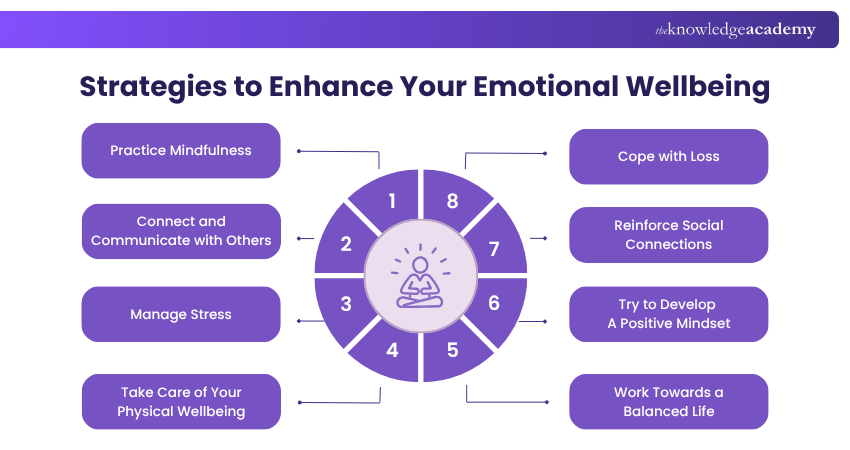
Improving emotional wellbeing takes consistent effort and small lifestyle changes. By focusing on daily habits, healthy relationships, and self-care, you can build resilience and maintain balance in both personal and professional life. Below are some effective strategies to follow:
1) Practice Mindfulness
Mindfulness helps you focus on the present moment rather than worrying about the past or future. Simple techniques like meditation, deep breathing, or mindful walking can calm the mind and improve emotional awareness.
2) Connect and Communicate with Others
Healthy relationships are central to emotional wellbeing. Spend time with family and friends, share your thoughts openly, and seek support when needed. Communication builds trust and reduces feelings of loneliness.
3) Manage Stress
Stress is unavoidable, but how you respond matters. Use relaxation techniques such as yoga, journaling, or breathing exercises. Learning to manage stress early prevents it from overwhelming your emotions and affecting your health.
4) Take Care of Your Physical Wellbeing
Emotional health is strongly connected to physical wellbeing. Regular exercise, a balanced diet, proper hydration, and enough sleep boost energy levels and help you handle emotional challenges better.
5) Work Towards a Balanced Life
Balance is key to reducing burnout. Manage your time between work, relationships, and personal interests. Making space for hobbies and relaxation keeps you refreshed and emotionally stable.
6) Try to Develop A Positive Mindset
Focus on gratitude and look for positives in challenging situations. Shifting your perspective helps reduce negative thinking patterns and strengthens resilience during difficult times.
7) Reinforce Social Connections
Engage in community activities, volunteer work, or group hobbies to create meaningful bonds. Strong social ties enhance a sense of belonging and improve overall happiness.
8) Cope with Loss
Loss is a natural part of life, but it can deeply impact emotions. Allow yourself to grieve, seek support from loved ones, or talk to a professional. Accepting and processing loss is essential for healing and emotional recovery.
Examples of Emotional Wellbeing
Identifying what Emotional Wellbeing looks like may be a little challenging, these few examples will help:
1) You Breathe, Ground Yourself, And Pause
Taking deep breaths, grounding yourself in the present moment, and pausing before reacting helps manage stress and prevent impulsive decisions. This simple practice can enhance your emotional control and create a sense of calm amidst chaos.
2) You Respond Instead of Reacting
When faced with challenges, responding thoughtfully rather than reacting impulsively demonstrates emotional regulation. This approach allows you to address situations more effectively and with greater empathy.
3) You Question Your Thoughts
Questioning and reframing negative thoughts can help you maintain a positive outlook. This cognitive approach fosters a healthier mindset, enabling you to navigate through difficulties with resilience and optimism.
Learn to manage stress mindfully and build resilience with our Handle Stress And Develop Your Resilience Training - register now!
Conclusion
This blog explores the journey towards Emotional Wellbeing, by explaining to you what it is and why it's important. Additionally, it explained the relationship it shares with your Physical Wellbeing as well. It also shared a few effective strategies to elevate you Emotional Wellbeing that you can adapt in your day-to-day life.
Learn how you can prevent psychological distress for a happier, healthier tomorrow- sign up for our Prevention Psychology Training now!
Frequently Asked Questions
How can I start improving my Emotional Wellbeing today?

Begin by practising mindfulness, connecting with others, and managing stress through relaxation techniques. Simple steps like taking deep breaths, engaging in positive self-talk, and setting aside time for hobbies can enhance your Emotional Wellbeing immediately.
What are some signs that I need to focus more on my Emotional Wellbeing?
If you frequently feel overwhelmed, have difficulty managing stress, or experience mood swings, it may be time to prioritise your Emotional Wellbeing. Lack of motivation, trouble sleeping, and withdrawal from social activities can also indicate the need for attention to your emotional health.
What are the other resources and offers provided by The Knowledge Academy?
The Knowledge Academy takes global learning to new heights, offering over 3,000+ online courses across 490+ locations in 190+ countries. This expansive reach ensures accessibility and convenience for learners worldwide.
Alongside our diverse Online Course Catalogue, encompassing 19 major categories, we go the extra mile by providing a plethora of free educational Online Resources like Blogs, eBooks, Interview Questions and Videos. Tailoring learning experiences further, professionals can unlock greater value through a wide range of special discounts, seasonal deals, and Exclusive Offers.
What is Knowledge Pass, and how does it work?
The Knowledge Academy’s Knowledge Pass, a prepaid voucher, adds another layer of flexibility, allowing course bookings over a 12-month period. Join us on a journey where education knows no bounds.
What are related Health & Safety courses and blogs provided by The Knowledge Academy?
The Knowledge Academy offers various Health & Safety Courses, including Advance First-Aid Training, Active and Healthy Lifestyle Training, and Counselling Certifications. These courses cater to different skill levels, providing comprehensive insights into What is Yoga.
Our Health & Safety Blogs cover a range of topics related to Psychology, offering valuable resources, best practices, and industry insights. Whether you are a beginner or looking to advance your Health and Safety knowledge, The Knowledge Academy's diverse courses and informative blogs have you covered.

The Knowledge Academy


Global Training Provider
The Knowledge Academy is a world-leading provider of professional training courses, offering globally recognised qualifications across a wide range of subjects. With expert trainers, up-to-date course material, and flexible learning options, we aim to empower professionals and organisations to achieve their goals through continuous learning.

Upcoming Health & Safety Resources Batches & Dates
Date
 Mental Health and Wellbeing Training
Mental Health and Wellbeing Training
Fri 10th Apr 2026
Mental Health and Wellbeing Training
Fri 17th Jul 2026
Mental Health and Wellbeing Training
Fri 30th Oct 2026

 If you wish to make any changes to your course, please


