


 Top Rated Course

We may not have the course you’re looking for. If you enquire or give us a call on +08000201623 and speak to our training experts, we may still be able to help with your training requirements.
Types of CSR (Corporate Social Responsibility): A Complete Guide
The Knowledge Academy 15 July 2026Corporate Social Responsibility (CSR) is a business model that helps businesses be socially accountable. Types of CSR include environmental, ethical, economic and philanthropic responsibilities, helping organisations build trust, sustainability and long-term value. Strong CSR strategies enhance brand reputation and employee engagement.

Training Outcomes Within Your Budget!
We ensure quality, budget-alignment, and timely delivery by our expert instructors.
Table of Contents
Imagine a business that not only focuses on profits but also cares for the environment, supports communities, and treats employees fairly. This is the idea behind Corporate Social Responsibility (CSR). Companies adopt four types of Corporate Social Responsibility to balance success with social good, creating positive impacts on society and the planet.
CSR builds trust, enhances reputation, and drives meaningful change. This blog explores different Types of CSR and how CSR practices can make a meaningful difference for your business and the world. Let's dive in!
Table of Contents
1) What is Corporate Social Responsibility?
2) Types of CSR
3) Additional Aspects of Corporate Social Responsibility
4) Benefits of Corporate Social Responsibility
5) Key Factors Associated With Corporate Social Responsibility
6) Conclusion
What is Corporate Social Responsibility?
Corporate Social Responsibility (CSR) is when businesses take responsibility for their impact on society. It involves actions that help improve communities, protect the planet, and ensure fair treatment of people.
By aligning with standards like ISO 26000, companies can set goals and create plans to show their commitment to doing good. CSR is about balancing making money with doing the right thing for people and the environment, and this balance is achieved by implementing strong Corporate Social Responsibility Elements.

Types of CSR
CSR can take many types, depending on an organisation’s values, industry, and impact on society. Each type of CSR focuses on a different area of responsibility, helping businesses balance profit with ethical behaviour, social contribution, and environmental care. Here are the four main CSR Types:

1) Environmental Responsibility
Environmental responsibility is about businesses taking care of the world and the planet. Companies aim to reduce pollution, save energy, and use resources wisely to protect the environment. This includes efforts like recycling, using clean energy, and cutting down on waste.
How Businesses Can Implement This:
1) Reduce waste by recycling and reusing materials
2) Use renewable energy sources, like solar or wind power
3) Lower emissions by adopting eco-friendly transportation or production methods
4) Support initiatives like tree planting or protecting natural habitats
2) Economic Responsibility
Economic responsibility is about running a business in a way that benefits society and the economy. It means making profits ethically, creating job opportunities, and supporting local communities. Companies also focus on being fair and transparent in their financial practices.
How Businesses Can Implement This:
1) Invest in local communities through jobs or partnerships
2) Pay employees fairly and provide good working conditions
3) Be transparent with finances and avoid unethical practices
4) Support local businesses by buying products and services from them
3) Philanthropic Responsibility
Philanthropic responsibility involves businesses giving back to society. This can include donating money, supporting charities, or helping with community projects. The goal is to improve the lives of people and make a positive difference.
How Businesses Can Implement This:
1) Donate to charities or support causes like education or healthcare
2) Sponsor community events or initiatives
3) Encourage employees to volunteer and provide paid volunteering time
4) Create scholarship or grant programmes to help those in need
4) Ethical Responsibility
Ethical responsibility means doing the right thing by treating people, customers, and suppliers fairly. It involves respecting human rights, following laws, and avoiding harm to anyone involved with the business. This is about honesty, fairness, and respect.
How Businesses Can Implement This:
1) Ensure equal opportunities for all employees
2) Follow fair trade practices and work with ethical suppliers
3) Avoid exploiting workers or communities in any way
4) Set clear ethical standards and train employees to follow them
Learn the recent trends in social responsibility with our ISO 26000 Foundation Training –Join today!
Additional Aspects of Corporate Social Responsibility
Some of the other types of Corporate Social Responsibility include:
1) Employee Well-being
Well-being is an essential aspect of CSR. Companies can promote well-being by providing a safe and healthy work environment, offering health benefits, and supporting work-life balance. This can include flexible working hours, mental health resources, and wellness programmes. Ensuring employees feel valued and supported can lead to increased job satisfaction and productivity.
2) Employee Engagement
Employee engagement involves creating a workplace culture where employees feel connected to the company’s values. Companies can encourage engagement by involving employees in decision-making processes, recognising their achievements, and providing opportunities for growth. Engaged employees are likely to be motivated and committed to the company’s success.
3) Diversity and Inclusion
Diversity and inclusion are important features of a comprehensive CSR strategy. This means creating a workforce that is diverse in terms of race, gender, age, and other characteristics and ensuring that all employees feel included and valued. It can be achieved through unbiased hiring practices, providing diversity training, and fostering an inclusive workplace culture.
4) Governance
Good governance is about ensuring that a company runs in a responsible and ethical manner. This includes having a clear corporate structure, transparency in decision-making, and accountability at all levels. Good governance practices help build trust with stakeholders and can enhance a company’s reputation.
Benefits of Corporate Social Responsibility
Corporate Social Responsibility offers numerous benefits for companies, employees, and society at large. Here are some of the Benefits of CSR:
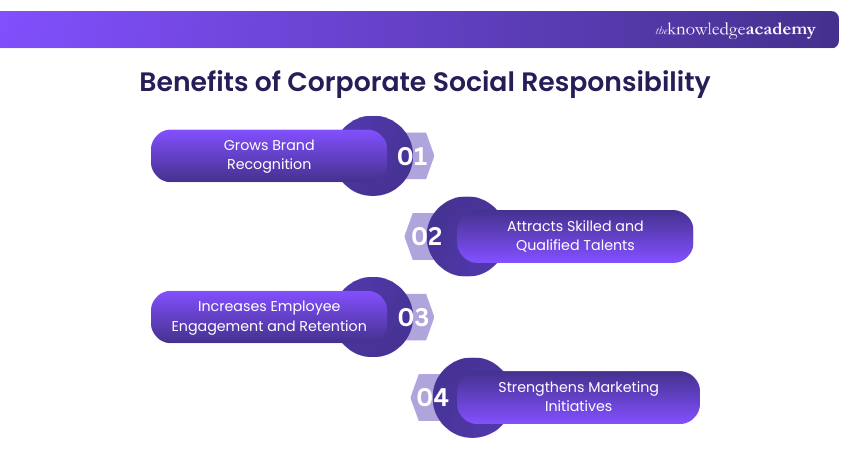
1) Grows Brand Recognition
1) Builds a positive and trustworthy brand image
2) Differentiates the business from competitors
3) Increases customer awareness and involvement
4) Encourages positive word-of-mouth and referrals
5) Strengthens long-term brand credibility
2) Attracts Skilled and Qualified Talents
1) Appeals to purpose-driven and values-focused professionals
2) Enhances employer branding in the job market
3) Attracts skilled candidates seeking meaningful work
4) Positions the organisation as a responsible employer
5) Improves recruitment outcomes and talent quality
3) Increases Employee Engagement and Retention
1) Creates a stronger sense of purpose at work
2) Boosts employee morale and motivation
3) Encourages loyalty and long-term commitment
4) Reduces employee turnover and hiring costs
5) Builds a positive and inclusive workplace culture
4) Strengthens Marketing Initiatives
1) Provides authentic and value-driven marketing stories
2) Increases customer trust in brand messaging
3) Strengthens emotional connection with audiences
4) Enhances reputation through responsible branding
5) Improves campaign effectiveness and brand loyalty
Enhance your understanding of ethical business practices through the Social Responsibility Course – Register soon!
Key Factors Associated With Corporate Social Responsibility
Corporate Social Responsibility focuses on how a business acts responsibly towards people, society, and the environment. These key factors help organisations do the right thing while running a successful business. Such factors include:
1) Ethical Leadership: Leaders promote responsible behaviour, make fair decisions, and set strong ethical values across the organisation.
2) Stakeholder Engagement: Businesses actively listen to and involve employees, customers, suppliers, and communities in decision-making.
3) Sustainability: Organisations operate in a way that supports environmental protection and long-term social and economic well-being.
4) Transparency and Accountability: Companies openly share information about their actions and take responsibility for their outcomes.
5) Integration Into Business Strategy: CSR is embedded into core business goals rather than treated as a separate activity.
6) Risk Management: Businesses identify and reduce social, environmental, and ethical risks that could impact operations or reputation.
Conclusion
Corporate Social Responsibility is an essential part of how modern organisations operate and grow. By understanding the four Types of CSR, businesses can balance profitability with ethical behaviour, social contribution, and environmental care. Ultimately, organisations that commit to responsible practices not only contribute positively to society but also create lasting value for their people, communities, and the wider world.
Take the next step towards sustainable business practices with our ISO 26000 Training – Explore now!
Frequently Asked Questions
How do Businesses Demonstrate Social Responsibility?

Businesses show social responsibility by acting ethically, reducing environmental impact, supporting communities, treating employees fairly, and making responsible decisions that benefit both society and the business.
Which Type of CSR Should You Prioritise When Creating a New Programme?
Businesses should prioritise CSR based on their industry impact, stakeholder expectations, and resources, focusing primarily on areas where they can create meaningful, sustainable, and measurable positive change.

The Knowledge Academy


Global Training Provider
The Knowledge Academy is a world-leading provider of professional training courses, offering globally recognised qualifications across a wide range of subjects. With expert trainers, up-to-date course material, and flexible learning options, we aim to empower professionals and organisations to achieve their goals through continuous learning.


 If you wish to make any changes to your course, please


