


 Top Rated Course

We may not have the course you’re looking for. If you enquire or give us a call on +08000201623 and speak to our training experts, we may still be able to help with your training requirements.
Sustainability in Project Management: A Complete Guide
William Brown 19 December 2025Sustainability in Project Management includes environmental, social, and economic factors at every stage to support long-term success and positive impact. It helps minimise waste, protect resources, and support community well-being. By balancing profit with responsibility, projects deliver value that lasts beyond completion.

Training Outcomes Within Your Budget!
We ensure quality, budget-alignment, and timely delivery by our expert instructors.
Table of Contents
Every project aims to deliver results that are useful and successful. But today, organisations also want their projects to protect the environment, support communities, and create long-term value. This is where Sustainability in Project Management becomes important. It helps project teams make smart decisions that benefit both the present and future.
In this blog, you will learn what Sustainability in Project Management means, why it matters, and how to apply it in real projects. Get ready to explore smart ways to build projects that protect the planet, support people, and create value that lasts.
Table of Contents
1) What is Sustainability in Project Management?
2) Sustainable Project Management Methodologies
3) Project Management Sustainability Frameworks
4) Six Principles for Sustainable Projects
5) The Importance of Sustainability in Project Management
6) Integrating Sustainability into Project Management Phases
7) Steps to Achieve Sustainable Project Management
8) Tools and Techniques for Sustainable Project Management
9) What Does Sustainability Mean in a Project?
10) What are Examples of Sustainable Practices in Project Management?
11) Conclusion
What is Sustainability in Project Management?
Sustainability in Project Management means strategically embedding environmental, social, and economic considerations into every phase of a project to create long-term value for people, the planet, and profit. It extends beyond the usual focus on scope, time, and cost, working to reduce harm and generate meaningful benefits for stakeholders and future generations.
Sustainable project management also encourages responsible resource use, ethical decision making, and transparent governance throughout the project lifecycle. By integrating sustainability principles into planning and execution, organisations can minimise risks, boost resilience, and contribute to broader sustainability goals.
Sustainable Project Management Methodologies
In the present day, there are multiple techniques that incorporate Sustainability elements or provide sustainable outcomes. Let’s look at some of those Sustainability methodologies.
1) PRINCE2®
PRINCE2 is highly applicable for managing projects. It helps to include Sustainability by reducing waste or picking eco-friendly suppliers for your plans, etc.
2) PRINCE2 Agile
This version adds Agile methods to PRINCE2. It helps you make quick changes when needed. It’s useful when working in fast-changing environments where flexibility is on demand.
Blend flexibility with disciplined Project Management techniques with our Agile Leadership Training – Register soon!
3) Lean and PRINCE2
Lean focuses on reducing waste. In combination with PRINCE2, it helps you run efficient, low-waste projects. This in turn helps you save time, money, and resources.
Project Management Sustainability Frameworks
Many organisations now focus on Sustainability in Project Management to ensure projects support people and the environment. Frameworks like PRiSM and the P5 Standard guide teams to reduce harm, use resources wisely, and deliver long-term value.
PRiSM'
PRiSM means Projects Integrating Sustainability Methods. It helps project teams think about the environment, society, and costs together. Instead of only focusing on finishing a project on time and within budget, PRiSM encourages teams to:
a) Use fewer resources
b) Reduce waste and pollution
c) Support the community
d) Create results that last
This makes the project more responsible and valuable for the future.
PRiSM's Project Breakdown
PRiSM works in four simple steps:
1) Definition: Talk to stakeholders and understand the Sustainability goals of the project.
2) Design: Plan the project in a way that protects the environment and supports people. Choose better materials and methods.
3) Delivery: Do the work while checking waste, energy use, and the environmental impact.
4) Handover: Complete the project and show how the Sustainability goals were achieved. Make sure the benefits can continue.
The P5 Standard'
The P5 Standard is a framework that helps project teams make responsible choices while planning and completing a project. It focuses on five important areas:
1) People: Making sure the project is safe and helpful for workers and the community
2) Process: Doing the work in smart and responsible ways
3) Progress: Checking performance often to stay on track with Sustainability goals
4) Performance: Meeting all project targets, including environmental and social benefits
5) Purpose: Ensuring the project supports a better future for everyone
Develop entrepreneurial skills to build and sustain a successful venture. Join our Business Startup Training now!
Six Principles for Sustainable Projects
Sustainable Project Management is guided by six key principles. These principles help project teams make good decisions that protect the environment, support people, and ensure long-term success. They are used throughout the whole project, from planning to delivery and beyond.
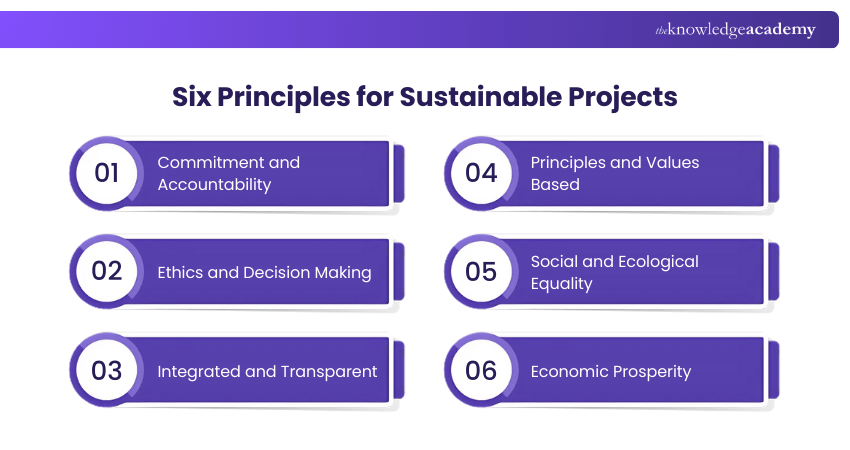
1) Commitment and Accountability: Project teams must take responsibility for protecting people and the environment. Everyone has the right to safe working conditions, fair treatment, and a clean and healthy environment.
2) Ethics and Decision Making: Projects should follow strong moral values. Decisions must be made honestly, while reducing any negative effects on people and communities both now and in the future.
3) Integrated and Transparent: Sustainability should be included in every part of the project. Teams must be open about their actions and clearly share information with stakeholders.
4) Principles and Values Based: Resources such as water, energy, and materials should be used carefully. The goal is to protect nature and find better ways to use technology that support Sustainability.
5) Social and Ecological Equality: Projects must consider the needs of different people and communities, especially those living in sensitive or high-risk areas. Everyone should benefit fairly from the project.
6) Economic Prosperity: Projects should support financial success without harming the future. They must balance the needs of today with the needs of future generations.
The Importance of Sustainability in Project Management
Sustainability in Project Management ensures projects protect the environment, support communities, and remain cost-effective by reducing waste, saving resources, and delivering long-term value. As this approach becomes more important globally, project teams must apply sustainable thinking at every stage to create better results for the present and future.
1) Environmental Sustainability
Environmental Sustainability focuses on protecting natural resources and reducing environmental harm. This includes minimising waste, recycling materials, conserving energy, and reducing pollution. When projects adopt eco-friendly practices, they help preserve the planet for future generations.
2) Social Sustainability
Social Sustainability is about putting people first. It ensures project workers are treated fairly, kept safe, and given equal opportunities. It also ensures the project brings positive changes to the community and supports overall well-being.
3) Economic Sustainability
Economic Sustainability aims to make projects financially smart and beneficial in the long run. It involves using budgets wisely, avoiding wasteful spending, and creating lasting financial value for the organisation and stakeholders.
Understand the working of the Quality Management System (QMS) in an organisation with our Quality Assurance Training – Join now!
Integrating Sustainability into Project Management Phases
While integrating Sustainability into your project, it doesn’t mean it should be included in any one of its parts or at the end. It should be incorporated in every phase and stage of a project. Here is how you can integrate Sustainability in all your phases:
1) Project Initiation
This is where you decide what the project is about. It’s the perfect time to set Sustainability goals and make sure that it is on board with your team from the beginning.
2) Planning
During planning, focus on things like eco-friendly suppliers, low-waste designs, or how your work might affect the local community.
3) Execution
As the work begins, Sustainability needs to be included in the way you planned. You can make choices that align with it and keep everyone informed about progress.
4) Closing
At the end of the project, review what went well and what didn’t with its Sustainability goals. Write down lessons that are learned so the next project can be even better.
Steps to Achieve Sustainable Project Management
Here are the steps to aid you in achieving a sustainable Project Management journey:
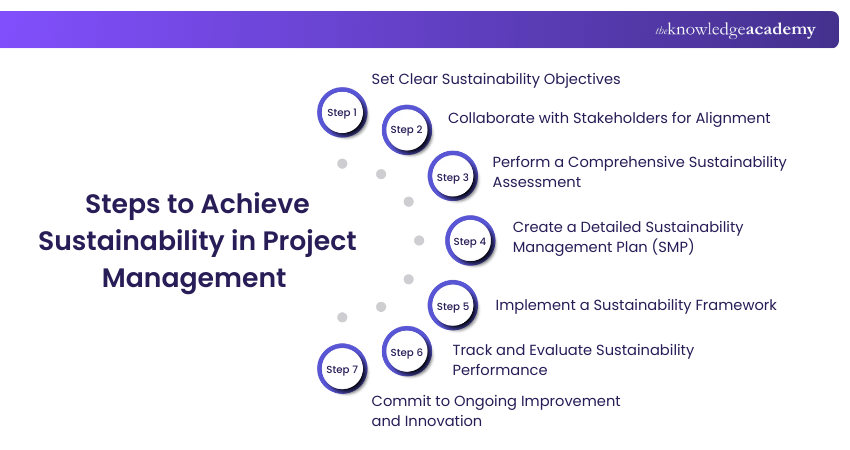
1) Set Clear Sustainability Objectives
The first step is to set a clear objective that is Specific, Measurable, Achievable, Relevant, and Time-bound (SMART) as the project aligns with the organisational values.
2) Collaborate with Stakeholders for Alignment
Discuss and collaborate with everyone involved in the project, like your clients, teams, suppliers and community members, to agree on Sustainability goals early.
3) Perform a Comprehensive Sustainability Assessment
Before starting, check the situation regarding the risks to the environment or people. It can be done with Strengths, Weaknesses, Opportunities, and Threats (SWOT) or lifecycle analysis.
4) Create a Detailed Sustainability Management Plan (SMP)
This SMP demonstrates how you’ll reach your goals. It covers what to do, who will do it, how progress will be tracked, and how problems will be handled.
5) Implement a Sustainability Framework
Use Sustainability frameworks like PRiSM or the P5 Standard to structure your work. These give you the plan and tools to manage Sustainability properly with consistency.
6) Track and Evaluate Sustainability Performance
Generate reports, scorecards, charts, or tools to measure how well your project is meeting its goals. Have them review regularly and adjust your approach if needed.
7) Commit to Ongoing Improvement and Innovation
Implement the lessons instead of quitting. Look for ways to improve and apply what you’ve learned to future work. Try new ideas that could make your projects even more sustainable.
Learn finance, marketing, HR and Project Management with our Business Management Training – Join now!
Tools and Techniques for Sustainable Project Management
There are some tools and techniques used to incorporate Sustainability. These tools help you make smart choices, avoid waste, and keep track of how well you’re doing with your Sustainability goals. Let's check what those are:
1) Lifecycle Evaluation
Lifecycle evaluation looks at the full life of a product or service from the moment it is made. It further checks all the way through to how it is used and thrown away or recycled. It helps you see where your project might be harming the environment the most. For instance, situations like materials that take too much energy to produce are calculated. It helps in:
1) Showing where you can adapt greener materials
2) Designing things that last longer or are easier to recycle
3) Cutting down waste and pollution from the initial process
2) Environmental Impact Matrix
It is a simple chart or table that shows which parts of your project might hurt the environment. It may be like causing pollution or using too much energy. It makes it easy to spot problems early, so you can fix them before reaching the worst situations. For example, you might decide to use less harmful chemicals or change how something is delivered. This helps in:
1) Avoiding or preventing damage to the environment
2) Making more eco-friendly plans and models
3) Keeping your project safer and cleaner
3) Eco-conscious Reporting Frameworks
These are the standard ways to report on how your project is helping or hurting the environment and society. Popular examples are the Global Reporting Initiative (GRI) and Integrated Reporting (IR). These frameworks aid you in explaining your project’s impact clearly to people like your boss, clients, or the public. It helps in:
1) Building your trust among others
2) Focusing on the right goals and objectives
3) Portraying the good part of your project
4) Sustainable Project Management Software
Sustainable Project Management Software is special software that helps you manage both your project tasks and your Sustainability goals in one place. Such software includes EcoSys, Planview, and EcoTracker. They help you stay organised, track your progress, and fix things quickly if something is going wrong. They turn Sustainability theory into practice by:
1) Maintaining all your information in one easy-to-use system
2) Saving time and reducing mistakes
3) Evaluating if you are meeting your Sustainability goals
What Does Sustainability Mean in a Project?
Sustainability in a project means achieving today’s goals while still protecting the future. It focuses on making sure the project does not harm the environment, supports people and communities, and uses resources wisely so future generations can enjoy the same opportunities.
What are Examples of Sustainable Practices in Project Management?
Sustainability in Project Management encourages practices that protect the environment, support people, and stay cost-effective. Examples include:
1) Reducing waste and using fewer materials
2) Recycling and choosing eco-friendly resources
3) Saving energy with efficient tools
4) Ensuring safe and fair working conditions
5) Using digital tools to cut paper use
6) Working with responsible suppliers
7) Planning for long-term value
Conclusion
Sustainable Project Management helps organisations deliver long-lasting results while protecting people and the planet. By reducing waste, saving resources, and making responsible choices, teams create positive outcomes that continue into the future. When Sustainability in Project Management is prioritised, every project supports growth and a better world for upcoming generations.
Develop essential communication, negotiation, and conflict resolution skills. Join our Management Courses now!
Frequently Asked Questions
How to Measure Sustainability in a Project?

You can measure Sustainability in a project by using indicators like energy use, carbon footprint, community feedback, or cost savings. You can also track the progress with some tools, reports, and checklists.
What is the Role of a Project Manager in Sustainability?
A Project Manager leads the way in making the project sustainable. They set goals, plan actions, and keep the team on track. Also, they make sure everything lines up with the bigger picture both for the business and for the world.
What are the Other Resources and Offers Provided by The Knowledge Academy?
The Knowledge Academy takes global learning to new heights, offering over 3,000 online courses across 490+ locations in 190+ countries. This expansive reach ensures accessibility and convenience for learners worldwide.
Alongside our diverse Online Course Catalogue, encompassing 19 major categories, we go the extra mile by providing a plethora of free educational Online Resources like News updates, Blogs, videos, webinars, and interview questions. Tailoring learning experiences further, professionals can maximise value with customisable Course Bundles of TKA.
What is The Knowledge Pass, and How Does it Work?
The Knowledge Academy’s Knowledge Pass, a prepaid voucher, adds another layer of flexibility, allowing course bookings over a 12-month period. Join us on a journey where education knows no bounds.
What are the Related Courses and Blogs Provided by The Knowledge Academy?
The Knowledge Academy offers various Management Courses, including the Business Sustainability Course, Business Management Training, and Quality Assurance Training. These courses cater to different skill levels, providing comprehensive insights into Sustainability in Business Examples.
Our Business Skills Blogs cover a range of topics related to Sustainability in Project Management, offering valuable resources, best practices, and industry insights. Whether you are a beginner or looking to advance your Business skills, The Knowledge Academy's diverse courses and informative blogs have got you covered.

William Brown


Senior Business Analyst and Strategic Advisor
William Brown is a senior business analyst with over 15 years of experience driving process improvement and strategic transformation in complex business environments. He specialises in analysing operations, gathering requirements and delivering insights that support effective decision making. William’s practical approach helps bridge the gap between business goals and technical solutions.
View Detail
Upcoming Business Skills Resources Batches & Dates
Date
 Business Sustainability Course
Business Sustainability Course
Fri 24th Jul 2026
Business Sustainability Course
Fri 2nd Oct 2026

 If you wish to make any changes to your course, please


