


 Top Rated Course

We may not have the course you’re looking for. If you enquire or give us a call on +08000201623 and speak to our training experts, we may still be able to help with your training requirements.
12 Mindfulness Techniques and Exercises to Practise Daily
Michael Jones 27 February 2026Mindfulness techniques involve intentionally focusing on the present moment with awareness and acceptance, using breath, thoughts, and body as anchors. By observing thoughts, emotions, and sensations without judgment, individuals use breathing and body awareness as anchors to reduce stress, enhance concentration, and promote emotional balance and overall wellbeing.

Training Outcomes Within Your Budget!
We ensure quality, budget-alignment, and timely delivery by our expert instructors.
Table of Contents
The modern workplace is often a hub of fast-paced activity, demanding schedules, and high-stress environments. In the pursuit of success, it's easy to lose sight of the present moment and become overwhelmed by the many demands of work. This is where Mindfulness Exercises and Techniques step in, offering a path to increased productivity, stress reduction, and overall well-being right within the professional setting.
According to Statista, in Great Britain alone, about 875,000 people suffer from work-related stress. So, it is a major problem that can have serious consequences if not dealt with properly. By using proper Mindfulness Techniques, you can overcome this problem. If you are interested in learning more about it, then this blog is for you.
In this blog, you will learn about the Top 15 Mindfulness Exercises and Techniques to Practice at Work. Let's delve in deeper to learn more about it!
Table of Contents
1) Introduction to Mindfulness
2) 4 Mindfulness Exercise
3) 12 Mindfulness Techniques to Practice
4) Make Your Work Meaningful
5) Be Consciously Present
6) Meditation Breaks
7) Single-tasking
8) Growth Mindset
9) Embrace Feelings
10) Mindful Eating
11) Stretching
12) Gratitude Practices
13) Mindful Breathing
14) Drive Mindfully
15) What are the Three Pillars of Mindfulness?
16) What are the ABCs of Mindfulness?
17) Conclusion
Introduction to Mindfulness
Mindfulness is the practice of intentionally focusing attention on the present moment while calmly acknowledging and accepting thoughts, feelings, and bodily sensations. It encourages awareness without judgement, helping individuals respond thoughtfully rather than react impulsively.
Regular mindfulness practice enhances emotional regulation, reduces stress, and improves focus. It is widely used in psychology, healthcare, and professional development to support mental clarity, resilience, and overall wellbeing in both personal and work environments.

4 Mindfulness Exercise
Mindfulness can be developed through simple daily practices that train attention and awareness. These exercises help reduce stress, improve focus, and create a stronger connection between mind and body. Practising them regularly cultivates a calm, balanced state of being and strengthens emotional resilience.
1) The Raisin Exercise
Raisin exercise encourages you to slow down and engage your senses completely. Begin by observing a raisin’s appearance, texture, and aroma before tasting it slowly. This process draws your attention to the moment, enhancing sensory awareness and focus.
As you notice the raisin’s details such as its wrinkles, sweetness, and texture, you become fully present. This exercise demonstrates how easily the mind drifts and how awareness can be redirected, helping you practise mindfulness in even the smallest daily activities.
2) The Body Scan
The body scan focuses on identifying sensations within the body without judgement. Lie down or sit comfortably and slowly move your attention from your head to your toes, noticing areas of warmth, tension, or relaxation along the way.
By gently observing each body part, you become more attuned to physical signals and emotional states. Over time, this practice reduces stress, promotes relaxation, and increases your awareness of how emotions manifest physically in the body.
3) Mindful Seeing
Mindful seeing allows you to engage deeply with your surroundings through observation. Choose an object such as a tree, flower, or artwork and observe its colours, shapes, and textures carefully without forming opinions or distractions.
This exercise sharpens concentration and helps quieten the mind by focusing attention on what is directly in front of you. It builds gratitude and appreciation for everyday beauty while grounding you in the present moment.
4) Mindful Listening
Mindful listening involves focusing entirely on the sounds around you without judgement or analysis. Sit quietly, close your eyes, and notice nearby and distant sounds such as your breath, footsteps, wind, or voices.
By paying attention to sound in this way, you develop a sense of calm and focus. It helps reduce mental noise, fosters patience, and improves communication by teaching you to listen with genuine presence rather than reaction.
Discover strategies for happier teams – get the Wellbeing at Work PDF today!
12 Mindfulness Techniques to Practice
This section will discuss the Top 12 Mindfulness Techniques for the workplace. Let’s explore them all in detail:
1) Set an Intention
Beginning your workday with a specific goal in mind can help you concentrate and have a positive attitude towards your tasks. This thoughtful strategy assists in harmonising your objectives with intentional behaviours, providing significance and guidance to your tasks.
How to Practice:
a) Morning Reflection: Start your morning with a reflection on what you hope to achieve and how you plan to tackle your to-do list.
b) Prioritisation: Recognise the crucial tasks that support your objectives and concentrate on finishing them as a top priority.
c) Focus and Commitment: Remind yourself gently of your intentions to stay on track and committed throughout the day.
d) Eliminate Distractions: Reduce distractions by setting up a environment free from interruptions to stay focused and connected to your goals.
e) Mindful Planning: Arrange your day with care, making sure to allocate time for tasks that align with your goals.
Adding this habit to your daily schedule will enhance the clarity and direction of your career.
Make Your Work Meaningful
Infusing purpose into your job can greatly boost Mindfulness at work. Assigning meaning and intent to your everyday chores can transform mundane duties into satisfying moments, ultimately benefiting your mental well-being. Here are some ways to nurture a sense of purpose:
a) Reflect on Your Values: Dedicate some time to pinpointing your fundamental values and examining how they relate to your job. Recognising these links can assist you in uncovering greater meaning in your responsibilities.
b) Align Your Goals: Make sure your career goals align with your personal ambitions. This alignment assists in connecting your work life and personal life.
c) Emphasise Positive Impact: Concentrate on the constructive impact your work has on others, be it your coworkers, customers, or the broader society. Acknowledging this influence can boost your feeling of purpose.
d) Embrace Continuous Learning: Embrace the mindset of continuous learning by seeing challenges as chances to gain knowledge and grow. This point of view adds depth and value to your career experience.
e) Practice Gratitude: Consistently recognise and show appreciation for the experiences and opportunities provided by your job. This habit encourages an optimistic perspective and enhanced gratitude for your position.
By putting these tactics into practice, you can turn your job into a fulfilling endeavor, fostering awareness and enhancing job contentment.
Be Consciously Present
Fully engage in your professional activities to promote Mindfulness at work. This method assists in staying concentrated and clear-minded without being bothered by distractions or unnecessary mental chatter. Here are some tips for practising it:
a) Breathe Mindfully: Pause and ground yourself by concentrating on your breathing before starting a new project.
b) Eliminate Multitasking: Refrain from multitasking; commit your focus to one task at a time to completely engage in the work.
c) Mindful Awareness: Periodically check in with yourself to ensure you are present and focused throughout the day, staying connected to the moment.
d) Set Mindful Reminders: Develop Mindful reminders such as visual cues or alarms to prompt brief moments of Mindfulness throughout your workday.
e) Mindful Listening: When interacting with coworkers or clients, be fully present and attentively listen to what they have to say.
By implementing these methods, you can develop a stronger feeling of being in the moment at work, improving your concentration and general Mindfulness.
Meditation Breaks
Adding brief meditation sessions to your daily work routine is a great way to refresh your mind, reduce stress, and improve your overall health. These brief periods of Mindfulness provide a rejuvenating break from the usual routine, aiding in the preservation of your concentration and vitality. Here are some tips for practising it:
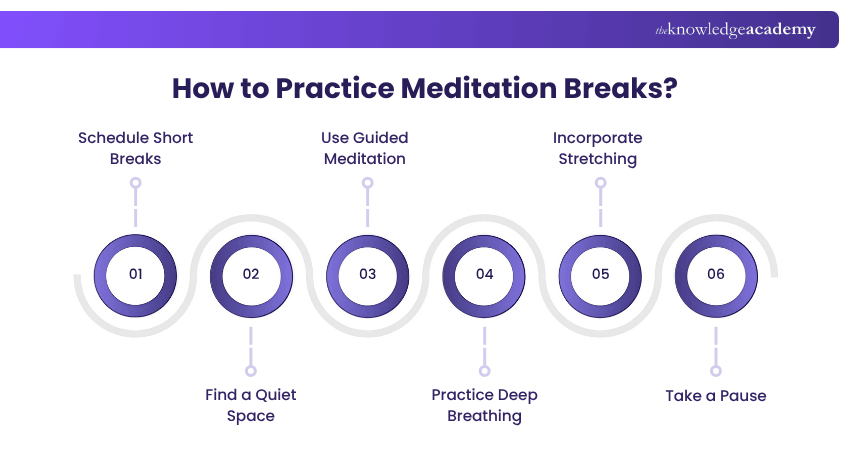
a) Schedule Short Breaks: Plan brief pauses in your daily schedule for meditation, giving yourself these important breaks.
b) Find a Quiet Space: Search for a peaceful area to meditate in solitude, establishing a serene environment free from disturbances.
c) Use Guided Meditation: Utilise meditation apps or online tools to assist in guiding your meditation practice, aiding in maintaining focus.
d) Practice Deep Breathing: Practice deep, Mindful breathing exercises during your breaks to calm your mind and body.
e) Incorporate Stretching: Include stretching exercises to relieve physical tension, improving your overall comfort.
f) Take a Pause: Take a few minutes to focus, declutter your mind, and recharge before resuming your activities. A Mindfulness Activities Guide can help you adopt simple techniques to boost focus, reduce stress, and stay productive.
Taking breaks for meditation during work can help you relax and recharge, ultimately enhancing focus and productivity.
Single-tasking
Single-tasking stresses the significance of giving all your focus to one task rather than dividing your attention between various activities. Focusing intensely on one task can improve both your efficiency and the overall excellence of your output. Follow the steps to implement single-tasking:
a) Identify Priorities: Recognise what tasks are the most important and focus all of your attention on completing them.
b) Use Time Blocks: Reserve designated time periods for individual tasks, focusing exclusively on one task within each interval.
c) Eliminate Distractions: Remove potential distractions by setting up a workspace that helps you concentrate on one task at a time.
d) Complete Tasks Before Moving On: Ensure tasks are completed before starting new ones to boost feelings of accomplishment and focus.
e) Practice Mindful Transitions: Be aware of transitions between tasks, and make sure to stay fully present in every moment.
Focusing on one task at a time can result in improved work quality and productivity, as well as reducing the stress associated with juggling multiple tasks.
Unlock a brighter tomorrow with our Mental Health Training – Sign up today!
Growth Mindset
Having a growth mindset is crucial for promoting Mindfulness in the workplace, enabling individuals to tackle challenges with excitement and see failures as opportunities for growth. By adopting this mentality, you can explore fresh opportunities and uphold an optimistic outlook in your career path. It is seen as a highly effective Mindfulness method that allows you to push your boundaries and transform setbacks into opportunities for achievement.
Tips for Developing a Growth Mindset
a) Embrace Challenges: Embrace challenges by seeing them as chances for personal and professional development, welcoming new experiences into your professional journey.
b) Learn from Mistakes: View mistakes as valuable lessons that lead to growth and progress.
c) Stay Resilient: Develop resilience to confront challenges with perseverance and adaptability, enabling you to recover more effectively.
d) Commit to Ongoing Learning: Make a commitment to continuously learning and improving yourself, both professionally and personally.
e) Practice Positive Self-talk: Substituting negative self-beliefs with empowering affirmations that promote growth and self-assurance.
f) Set Stretch Goals: Establish ambitious objectives that push you beyond your comfort zone, encouraging growth in both your personal and professional life.
By adopting a growth mindset, you enable yourself to excel in challenges, create new ideas successfully, and advance consistently in your profession.
Lead with compassion with our Work Place Stress And Mental Health Identification For Manager – Sign up now!
Embrace Feelings
Engaging in Mindfulness at work involves acknowledging and embracing your emotions rather than ignoring them. This method aids in cultivating a more profound comprehension of your emotions, promoting Emotional Intelligence and improving your overall work environment.
Tips for Cultivating Mindfulness with Feelings
a) Self-reflection: Take some time for self-reflection to recognise and understand your emotions, forming a stronger bond with yourself.
b) Non-judgmental Awareness: Practice non-judgmental awareness by adopting a mindset that accepts your feelings, allowing yourself to feel them without criticism.
c) Effective Expression: Efficiently communicate by expressing your feelings to coworkers and managers as needed, fostering open dialogue and enhancing professional connections.
d) Emotional Regulation: Learn methods to control intense feelings so they do not disrupt your effectiveness.
e) Seek Support: When necessary, ask a mentor, counsellor, or friend for advice on managing difficult emotions.
By accepting your feelings in the workplace, you can boost your Emotional Intelligence, enhance relationships with colleagues, and promote a more harmonious work setting.
Mindful Eating
Mindful eating goes beyond just eating at the table; it can greatly improve your time at work. Enjoying your meals Mindfully with breaks can enhance your overall well-being, increase focus, and promote a healthier connection with food.
Tips for incorporating Mindfulness into your workday while eating:
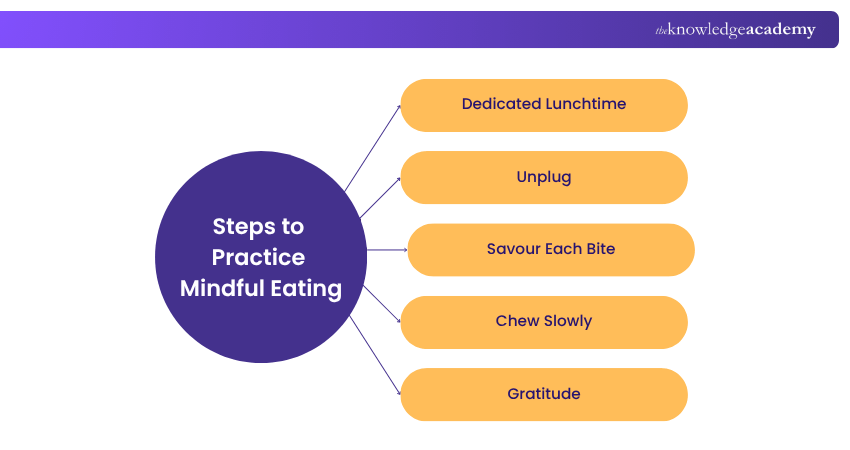
Set a Lunchtime Schedule: Designate a certain timeframe for lunch, making sure it is uninterrupted by work responsibilities or interruptions.
a) Disconnect from Devices: When you take meal breaks, avoid using electronic devices and focus on fully experiencing your meal.
b) Savour Every Bite: Enjoy the taste, feel, and scent of your food, fully savouring every bite.
c) Chew Slowly: Make sure to chew each bite thoroughly, as this can help with digestion and make you feel more satisfied.
d) Cultivate Gratitude: Recognise the nourishment your food offers and the chance to pause for yourself.
Integrating Mindful eating during your workday can improve your physical well-being, reduce stress, and offer moments of Mindfulness in a hectic schedule.
Stretching
Adding stretching to your work schedule is crucial for physical health and for cultivating Mindfulness. Stretching regularly not only relieves physical tension but also boosts relaxation and improves overall comfort all day long. It is an effective method for handling stress.
Ways to Include Stretching:
a) Desk Stretches: Do desk stretches by performing easy stretches while sitting at your desk, targeting areas such as your neck, shoulders, and wrists.
b) Full-body Stretch: Perform full-body stretches during short breaks to improve blood circulation and reduce stiffness.
c) Deep Breathing: Combine deep, mindful breathing with your stretching routine to experience a rejuvenating and soothing impact.
d) Mindful Breaks: Utilise stretching during Mindful breaks to transform them into opportunities for physical rejuvenation.
e) Ergonomic Awareness: Make sure your work area is designed to be comfortable and foster your overall health.
Incorporating stretching into your daily routine can reduce physical pain, improve overall health, and promote a greater sense of relaxation during work hours.
Gratitude Practices
Adopting a gratitude attitude is a powerful Mindfulness method that can significantly improve your workplace happiness. Acknowledging your successes and valuing the assistance you receive at the workplace will help foster a positive outlook that enhances your career.
Tips on Practice Gratitude:
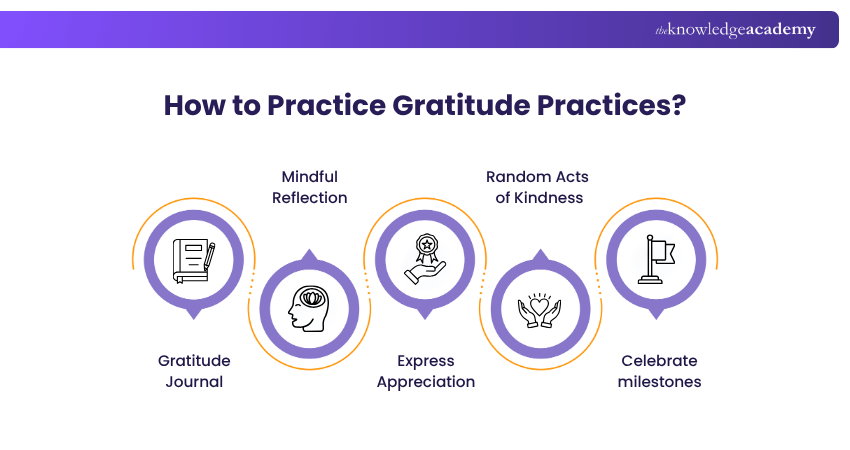
a) Keep a Gratitude Journal: Keep a gratitude journal to jot down daily achievements, good interactions, and things you appreciate.
b) Show Appreciation: Whether through words or written notes, show appreciation to coworkers, managers, and customers for their help and input.
c) Reflect Mindfully: Practice Mindful reflection by regularly pausing to consider the positive elements of your job and the potential it offers.
d) Celebrate Achievements: Acknowledge and celebrate both minor and major milestones and achievements.
e) Perform Kind Acts: Support a culture of gratitude and generosity in the workplace by performing random acts of kindness.
By integrating gratitude activities into your professional life, you can enhance your mood, enhance your connections with others, and feel more fulfilled in your work.
Mindful Breathing
Mindful breathing, an essential practice in Mindfulness, can easily be incorporated into your daily work routine. Focusing on your breath creates a feeling of peace, reduces stress, and enhances Mindfulness of the present.
Techniques for Practicing
a) Start Your Day with Intention: Set aside a few minutes at the start of your workday for focused breathing to cultivate a positive and balanced mindset.
b) Periodic Check-ins: Regularly pause during the day to focus on your breathing, which will help you stay centred and clear.
c) Stress Relief: When you experience stress or feel overwhelmed, use Mindful breathing to restore calmness and composure.
d) Deep, Diaphragmatic Breaths: Take deep breaths using your diaphragm to calm your body and mind, promoting a sense of peace.
e) Tune Into Your Breath: Observe the feelings connected to your breath—experience the chest expanding and contracting, the refreshing inhales, and the comforting exhales.
Incorporating Mindful breathing into your work schedule is a simple yet powerful method for decreasing stress and improving concentration, enabling you to stay peaceful during a busy day.
Drive Mindfully
Driving mindfully encourages full awareness while behind the wheel, helping you stay calm, focused, and safe. By eliminating distractions and being present, you not only improve concentration but also transform your commute into a peaceful, purposeful experience. Here are some ways to practise mindful driving:
a) Focus on the Present Moment: Keep your attention on the road, your surroundings, and your breathing. Avoid letting your mind wander to work, stress, or personal worries.
b) Reduce Distractions: Turn off unnecessary notifications, lower the volume, and focus solely on driving. A quiet, calm environment improves focus and awareness.
c) Notice Physical Sensations: Pay attention to how your hands feel on the steering wheel and the rhythm of your breathing. This helps you stay grounded and centred.
d) Respond, Don’t React: When faced with traffic or difficult drivers, practise patience. Take deep breaths instead of reacting impulsively to stress or frustration.
e) Enjoy the Journey: Appreciate the scenery, the movement, and the time spent alone with your thoughts. Turning driving into a mindful habit enhances both safety and mental well-being.
What are the Three Pillars of Mindfulness?
The three main pillars of mindfulness are intention, attention, and attitude. Intention represents the purpose behind your mindfulness of practice, guiding your focus and effort. Attention involves consciously observing your thoughts, emotions, and surroundings in the present moment without distraction.
Attitude refers to the mindset you bring to practice, one of openness, curiosity, and kindness. Together, these three pillars form the foundation of mindfulness, helping individuals cultivate awareness, acceptance, and emotional balance in daily life.
What are the ABCs of Mindfulness?
The ABCs of mindfulness stand for Awareness, Being, and Compassion. Awareness means recognising your internal and external experiences as they occur. Being encourages living in the present rather than dwelling on the past or anticipating the future.
Compassion is the ability to treat yourself and others with understanding and kindness, even during moments of difficulty. These principles promote calmness, emotional resilience, and a more thoughtful approach to life’s challenges.
Discover your inner calm with our Guided Meditation PDF. Download now and start your meditation practice today.
Conclusion
We hope you read and understand the top Mindfulness Techniques and How to practice them. From setting intentions to mindful breathing, they empower individuals to thrive in the modern workplace, finding greater productivity, resilience, and contentment. So, let's embrace and apply them in our daily routine. For more insights, refer to this Mindfulness Guide.
Enhance your emotional awareness with our Mindfulness Training – Join now!
Frequently Asked Questions
What are the Three R's of Mindfulness?

The three R’s of Mindfulness include Recognise, Release, and Redirect. Start by assessing your thoughts and emotions, releasing any judgment, and then redirecting your focus to the present moment. This will encourage a more peaceful and concentrated mind.
What are the Four C's of Mindfulness?
The four C’s of Mindfulness include Curiosity, Courage, Compassion, & Connection. Curiosity fosters exploration of experience, while Courage helps you face challenges. On the other hand, Compassion will make you a kind being and Connection will help you build relationships.
What are the Other Resources and Offers Provided by The Knowledge Academy?
The Knowledge Academy takes global learning to new heights, offering over 3,000+ online courses across 490+ locations in 190+ countries. This expansive reach ensures accessibility and convenience for learners worldwide.
Alongside our diverse Online Course Catalogue, encompassing 17 major categories, we go the extra mile by providing a plethora of free educational Online Resources like Blogs, eBooks, Interview Questions and Videos. Tailoring learning experiences further, professionals can unlock greater value through a wide range of special discounts, seasonal deals, and Exclusive Offers.
What is The Knowledge Pass, and How Does it Work?
The Knowledge Academy’s Knowledge Pass, a prepaid voucher, adds another layer of flexibility, allowing course bookings over a 12-month period. Join us on a journey where education knows no bounds.
What are the Related Courses and Blogs Provided by The Knowledge Academy?
The Knowledge Academy offers various Mental Health Courses, including the Mindfulness Training, Mental Health And Wellbeing Training, and Handle Stress And Develop Your Resilience. These courses cater to different skill levels, providing comprehensive insights into Emotional Wellbeing.
Our Health & Safety Blogs cover a range of topics related to Mindfulness, offering valuable resources, best practices, and industry insights. Whether you are a beginner or looking to advance your Health & Safety skills, The Knowledge Academy's diverse courses and informative blogs have got you covered.

Michael Jones


Health and Safety Consultant and Compliance Trainer
Michael Jones is a seasoned health and safety expert with more than 15 years of experience in workplace safety, risk management, and compliance training. He has worked across construction, manufacturing, and corporate sectors, helping organisations meet legal requirements and create safer working environments. Michael’s training and writing are known for being practical, clear, and aligned with UK regulations.
View Detail

Upcoming Health & Safety Resources Batches & Dates
Date
 Mental Health and Wellbeing Training
Mental Health and Wellbeing Training
Fri 26th Jun 2026
Mental Health and Wellbeing Training
Fri 21st Aug 2026
Mental Health and Wellbeing Training
Fri 6th Nov 2026

 If you wish to make any changes to your course, please


