


 Top Rated Course

We may not have the course you’re looking for. If you enquire or give us a call on +08000201623 and speak to our training experts, we may still be able to help with your training requirements.
Kanban Flow: Structuring and Flow Metrics
The Knowledge Academy 16 July 2026Kanban Flow is the smooth movement of tasks through workflow stages, using WIP limits to reduce bottlenecks and deliver value steadily. It helps teams spot delays early, balance workloads and improve efficiency across processes. By focusing on flow, teams deliver work faster, more predictably, and with better quality outcomes.

Training Outcomes Within Your Budget!
We ensure quality, budget-alignment, and timely delivery by our expert instructors.
Table of Contents

Are you finding it hard to keep projects organised and ensure tasks move smoothly across your team? Then look no further than the Kanban Flow. It offers a practical solution through visual Process Management. By clearly showing tasks, responsibilities, and progress on a board, it helps teams spot bottlenecks early, improve efficiency and keep work moving steadily from start to finish.
In this blog, we explain what Kanban Flow really is, and highlight its key metrics. You will also learn how to read a cumulative flow diagram, structure boards effectively, use Kanban for Project Management, and compare it with Scrum. So read on and boost your workflow the Kanban way!
Table of Contents
1) What is Kanban Flow?
2) A Simple Kanban Flow
3) Kanban Flow Metrics: Tracking the Advancement
4) How to Read a Cumulative Flow Diagram?
5) Structuring Kanban Board Flow Effectively
6) How to Use Kanban for Project Management?
7) Kanban Flow vs Scrum: Which Framework Fits Your Team Best?
8) What are the Four Principles of Kanban?
9) Conclusion
What is Kanban Flow?
Kanban Flow is a Visual Process Management system designed to optimise team workflows. Rooted in lean manufacturing principles, Lean Kanban emphasises task visualisation, work-in-progress limits, and overall efficiency enhancement.
Imagine a board with columns and cards, where each card signifies a task and each column represents a stage in the workflow. This setup allows teams to track tasks, identify responsible individuals, and pinpoint bottlenecks in the workflow easily. With Kanban Estimation, teams can better assess task complexity and allocate resources efficiently. By providing a clear visual representation, Kanban Flow helps teams manage and streamline their work effectively.

A Simple Kanban Flow
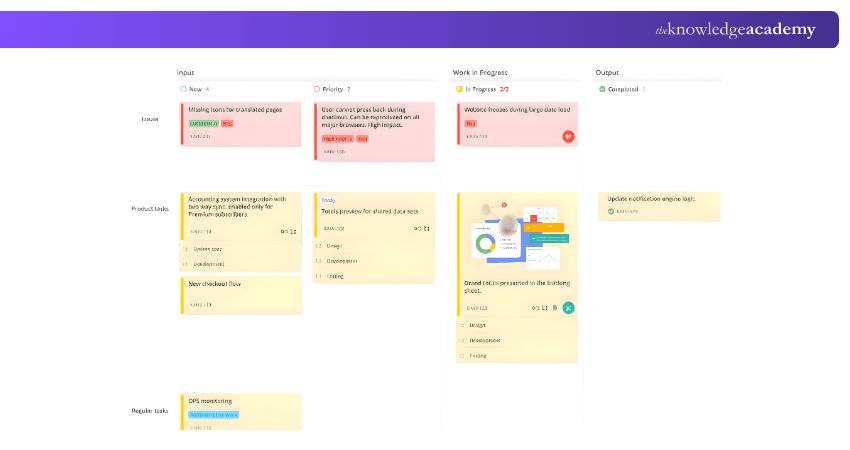
The easiest way to understand and measure a Kanban Flow chart is by using a simple three-column Kanban board. This basic structure clearly shows how work moves from start to completion and makes progress easy to track.
1) Backlog: Contains all new ideas and tasks waiting to be picked up
2) Work in Progress: Shows tasks that are currently being worked on
3) Done: Includes all tasks that have been completed
Kanban Flow Metrics: Tracking the Advancement
So, you know what Kanban Flow is. But how do you optimise it? This is where metrics come in. To enhance your Kanban Flow, you need to track specific figures that provide insights into the efficiency of your workflow.
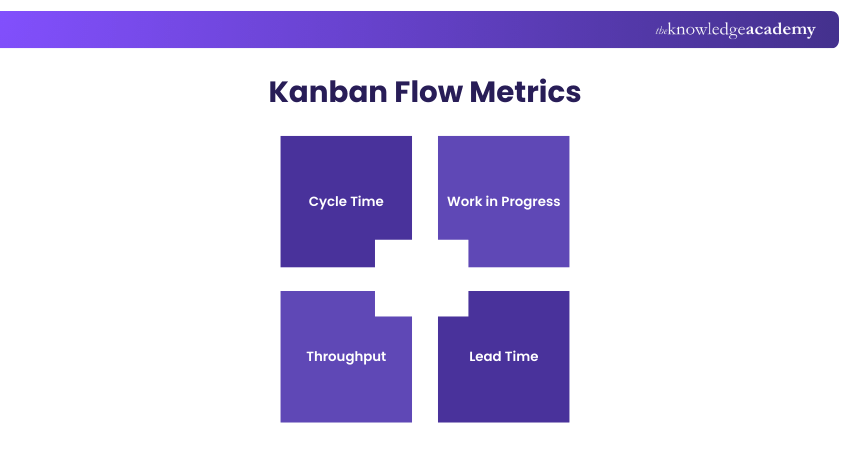
Think of these metrics as the vital signs of your Kanban system, helping you monitor its health, makes sure steady progress, and identify issues early on. These are the few key Kanban Flow Metrics to get you started:
1) Cycle Time
Cycle time is the total time taken for a task to move from the start of the workflow (when work actually begins) to the end (when the task is completely finished). It measures the speed of your workflow. By tracking cycle times, you can identify trends and variations in task duration. This data helps you make accurate resource estimates and find opportunities to speed up the workflow over time.
Understanding cycle time helps predict future task durations based on past performance, aiding Project Managers and team leaders in planning. For instance, if a task type consistently takes longer, it may need more resources or a process change. By referencing a Kanban Cheat Sheet, teams can quickly identify areas to improve cycle times. Additionally, by reducing cycle times, teams can deliver work faster, increasing overall efficiency and Customer Satisfaction.
2) Work in Progress
Work in Progress (WIP) indicates the number of tasks currently in the “In Progress” stage. Limiting WIP is a core principle of Kanban because it prevents overloading and keeps teams engaged in completing tasks. Monitoring WIP helps you maintain a healthy task balance and identify bottlenecks in the workflow. When too many tasks are in progress simultaneously, it can impact Kanban Metrics by increasing cycle time and reducing efficiency, often leading to errors.
Setting WIP limits helps maintain optimal workflow by encouraging task completion before starting new ones, fostering a focused and productive work environment. Regularly reviewing WIP levels helps teams identify workflow stages where tasks often bottleneck. This helps them to address these issues promptly.
3) Throughput
Throughput is the number of tasks your team completes over a set period. It provides a bird’s -eye view of productivity and insight into the overall workflow's performance. It also helps you spot patterns, such as specific days of the week when throughput is particularly high or low. With this data, you can handle resources more effectively.
High throughput indicates that the team is completing tasks efficiently, while low throughput may suggest bottlenecks or inefficiencies in the process. By analysing throughput data, teams can make informed decisions about Resource Allocation, workload distribution, and process improvements.
4) Lead Time
Lead time measures the total time from when a task is added to the board (even if work hasn’t started yet) to when it’s marked as “done.” It indicates the overall time a customer or team member can expect a task to take. This helps with scheduling and Resource Management, enabling you to make smarter estimates, which, in turn, boosts customer confidence.
Lead time is a critical metric for understanding the end-to-end efficiency of your process. Long lead times can indicate delays or inefficiencies in the workflow, while shorter lead times suggest a more streamlined process. By regularly reviewing lead time data, teams can identify areas where delays frequently occur and take corrective action.
Learn the fundamentals of Kanban and its core principles for effective workflow. Join our Certified Kanban Foundation Training now!
How to Read a Cumulative Flow Diagram?
A Cumulative Flow Diagram (CFD) shows how work moves through a Kanban system over time. It tracks the number of work items in each stage daily. Time is represented by the horizontal axis while the vertical one displays the total number of cards in the workflow.
A typical Kanban process flow shown in a CFD includes the following stages:
1) Defined: Work begins by identifying and clearly defining tasks. At this stage, requirements and scope are captured so the work is well understood.
2) Accepted: Once tasks are reviewed and approved, they move into this stage, showing they are ready to be started by the team.
3) In Progress: This stage includes all tasks that are actively being worked on, such as development, analysis, or execution.
4) Completed: Tasks move here once all required work is finished and the defined criteria are met.
5) Deployed: If applicable, completed tasks are then released or deployed to a live environment, marking final delivery.
Structuring Kanban Board Flow Effectively
You now know how to measure Kanban Board Flow using a cumulative flow diagram. When flow becomes ineffective, the next step is to adjust how the board is used. The approach may vary by project type, as explained in the sections below.
1) Using Kanban to Structure Marketing Content
For marketing teams, the To-Do column can be used to capture upcoming content ideas. Splitting this column into new ideas and approved ideas helps bring more clarity and ensures the team knows what is ready to move forward.

The In Progress column can then be divided into stages such as Research, Writing, Review, Editing, Design, and Final Checks. Adding separate columns for active campaigns and completed content makes it easier to track progress and manage content delivery effectively.
2) Using Kanban to Structure Software Development
In software development, Kanban boards help teams visualise and manage product features and tasks clearly. Each feature is represented as a card that moves through stages such as Backlog, To-Do, In Progress, and Done.
Breaking work into smaller steps and limiting work in progress helps teams stay focused. This approach makes it easier to spot bottlenecks early and improve productivity through regular monitoring and small adjustments.
Learn the fundamentals of Kanban to optimise workflow and Project Management. Join our Certified Kanban Practitioner Training now!
How to Use Kanban for Project Management?
Kanban is a powerful methodology for Project Management that helps teams visualise workflows, track progress, and improve efficiency. Let’s dive into the steps for using Kanban effectively:
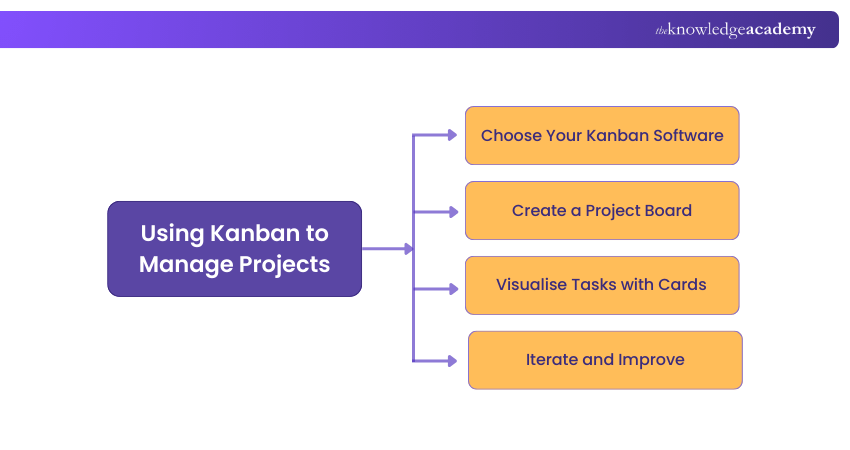
1) Choose Your Kanban Software
First, you must select the right software. No, that does not mean the most expensive, the most attractive, or the most feature-rich. You want software that is adaptable, visually appealing, and simple to use so you can get started right away and start doing tasks.
2) Create a Project Board
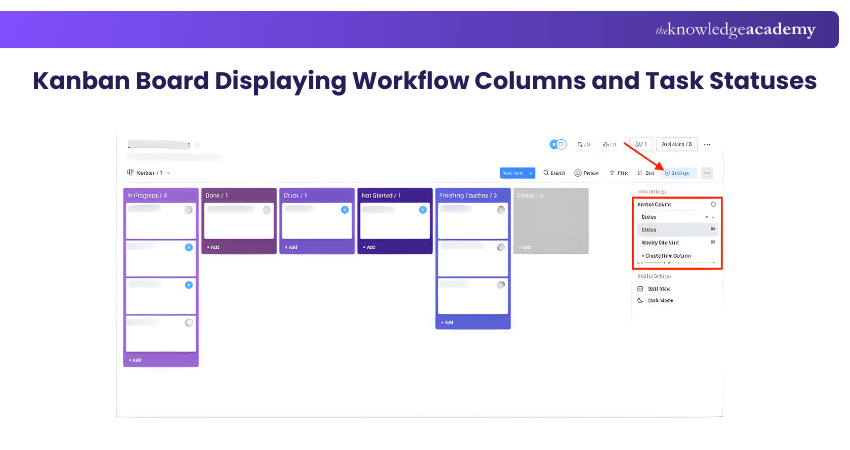
To set up a Kanban Board for your project, first add a project board to your workspace. This board can be used to list and organise all of your tasks. You can include columns for deadlines, status updates, team members, goals, and any other information you need. Once you've entered all of your tasks, use the Kanban interface to get things started.
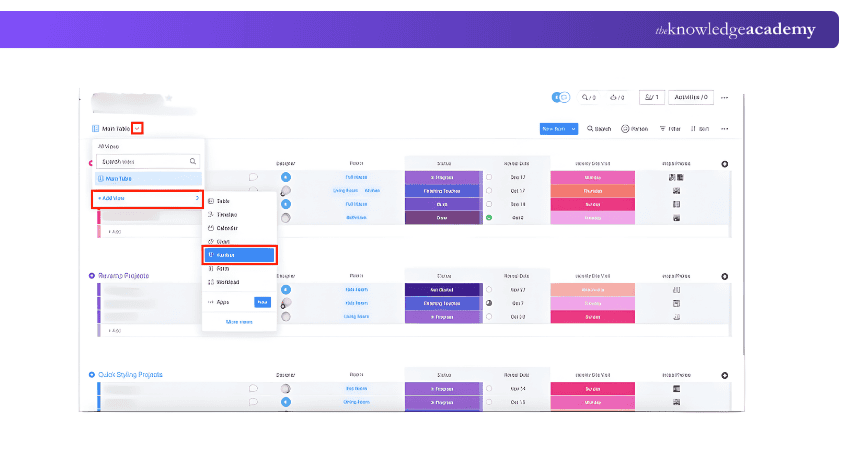
This immediately transforms your project board into a Kanban layout, with activities and processes organised into lists and columns.
3) Visualise Tasks with Cards
a) Add task cards to your Kanban Board. Each card represents a specific task.
b) Include detailed descriptions, checklists, attachments (images or files), and assign team members to each card.
c) The board’s visual layout allows you to see tasks move through different stages, providing transparency and accountability.
4) Iterate and Improve
a) Continuously monitor your Kanban Board. As tasks progress, move their corresponding cards across columns.
b) Limit Work in Progress (WIP) to maintain focus and prevent overload.
c) Use Key Metrics (such as lead time and cycle time) to analyse performance and identify areas for improvement.
Kanban Flow vs Scrum: Which Framework Fits Your Team Best?
Choosing between Kanban Flow and Scrum depends on how your team works and how predictable the work is. Both follow Agile principles but manage work differently:
1) Kanban Flow: Best suited for teams with continuous and unpredictable work. It enables a steady flow without fixed timelines, making it ideal for support, operations, and service-based teams.
2) Scrum: Works best for teams with planned and predictable work. It uses fixed-length sprints and a Scrum board to provide structure, clear goals, and regular delivery cycles, especially for product and software development teams.
What are the Four Principles of Kanban?
The four core principles of Kanban guide teams in improving how work flows through a process. They focus on making change simple, practical, and sustainable:
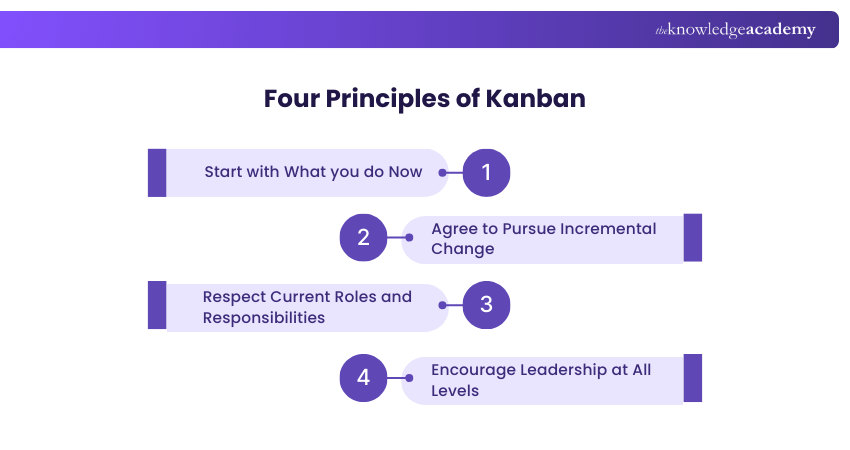
1) Start with What you do Now: Kanban does not require changing existing roles or processes. Teams begin by visualising current work as it is.
2) Agree to Pursue Incremental Change: Improvements are made gradually over time rather than through major disruptions.
3) Respect Current Roles and Responsibilities: Existing roles, responsibilities, and job titles remain unchanged.
4) Encourage Leadership at All Levels: Everyone in the team is inspired to take responsibility for improving the workflow.
Conclusion
Kanban Flow helps teams see work clearly, reduce delays, and deliver tasks smoothly. Whether you choose Kanban or Scrum depends on your team’s needs, work type, and goals. By understanding flow, limiting work in progress, and improving continuously, teams can boost efficiency, collaboration, and customer satisfaction over time.
Turn every bottleneck into breakthroughs with our comprehensive range of Kanban Courses - Register now!
Frequently Asked Questions
Can Kanban Flow be Used in Different Industries and Sectors?

Yes, Kanban Flow can be used across various industries and sectors, including manufacturing, Software Development, marketing, healthcare, and education. It helps to optimise workflows and improve efficiency.
Are There any Specific Training or Certifications Available for Mastering Kanban Flow Methodologies?
Yes, there are specific training and certifications for mastering Kanban Flow methodologies. These include Kanban certifications, Lean Kanban courses, and various online training programmes.

The Knowledge Academy


Global Training Provider
The Knowledge Academy is a world-leading provider of professional training courses, offering globally recognised qualifications across a wide range of subjects. With expert trainers, up-to-date course material, and flexible learning options, we aim to empower professionals and organisations to achieve their goals through continuous learning.


 If you wish to make any changes to your course, please


