


 Top Rated Course

We may not have the course you’re looking for. If you enquire or give us a call on +33 805638382 and speak to our training experts, we may still be able to help with your training requirements.
What Is BCDR? Meaning, Strategy, and Business Basics
William Brown 16 July 2026Business Continuity Disaster Recovery (BCDR) is a process that helps organisations stay operational during unplanned disruptions. It includes planning, response, and recovery strategies to reduce downtime, protect data, and keep essential services running during events like cyberattacks, natural disasters, and system failures.

Training Outcomes Within Your Budget!
We ensure quality, budget-alignment, and timely delivery by our expert instructors.
Table of Contents
Imagine your business coming to a halt because of a power outage, cyberattack, or sudden flood. No emails, no data, no service and no clue what to do next. That’s the kind of chaos Business Continuity Disaster Recovery (BCDR) is built to prevent. It’s your action plan when things go wrong, helping you respond fast and keep moving forward.
In this blog, we’ll explore BCDR, how it works, what it includes, and how to build a strong plan. We’ll also cover its benefits, best practices, and real-life examples to help you stay prepared for any disruption.
Table of Contents
1) What is Business Continuity Disaster Recovery (BCDR)?
2) Why is BCDR Important?
3) How Does BCDR Work?
4) What Components are Included in a BCDR Plan?
5) How to Create a Business Continuity Plan?
6) How to Build a Business Continuity Disaster Recovery (BCDR) Plan?
7) Benefits of BCDR
8) Best Practices for Business Continuity Disaster Recovery
9) Examples of BCDR
10) Conclusion
What is Business Continuity Disaster Recovery (BCDR)?
Business Continuity Disaster Recovery is a strategic framework that helps businesses prepare for, respond to, and get back from disruptive events. It combines Business Continuity Planning (BCP), which focuses on keeping essential functions running, and Disaster Recovery (DR), which is about restoring IT systems and data after an incident.
Together, BCDR ensures your business can bounce back quickly, maintain services, protect assets, and meet regulatory requirements.

Why is BCDR Important?
Every business, regardless of size or industry, faces risks from cyber threats to natural disasters. Without a BCDR plan, companies may suffer major disruptions, financial losses, and damage to their reputation.
Key reasons why BCDR is critical:
1) Operational Resilience: Ensures continuity of services and operations
2) Data Protection: Safeguards critical data and reduces the risk of permanent loss
3) Customer Trust: Builds credibility by showing preparedness
4) Regulatory Compliance: Meets legal standards for data protection and continuity
How Does BCDR Work?
BCDR works through proactive planning and technical safeguards that help detect, respond to, and recover from disruptions. It involves defining recovery goals and maintaining redundant systems.
Recovery Point Objective (RPO)
RPO refers to the maximum fair amount of data loss measured in time. For instance, if the RPO is four hours, backups should occur at least every four hours to prevent losing more than that time’s worth of data.
Recovery Time Objective (RTO)
RTO is the target duration within which systems and processes must be restored after a disruption. An RTO of two hours means the company must recover operations within that time to avoid serious impact.
Learn about Privileged Access Management (PAM) and its related risks. Join our Identity and Access Management Architect Training now!
What Components are Included in a BCDR Plan?
A comprehensive BCDR plan includes:
1) Business Impact Analysis (BIA): Identifies critical operations and the effect of their disruption.
2) Risk Assessment: Highlights vulnerabilities and potential threats.
3) Recovery Strategies: Specifies how to maintain or resume business functions.
4) Emergency Response Procedures: Guides immediate actions after an incident.
5) Backup and Restoration Plans: Covers data protection and system recovery.
6) Communication Plans: Ensures stakeholders are informed during disruptions.
7) Roles and Responsibilities: Assigns clear ownership for actions during a crisis.
8) Testing and Maintenance: Ensures the plan works through simulations and regular updates.

How to Create a Business Continuity Plan?
Crafting a Business Continuity Plan (BCP) involves a structured approach. Here's how to do it:
1) Perform a Business Impact Analysis
Start by finding out what risks your business could face. A Business Impact Analysis (BIA) helps you understand how different problems might affect your daily work. It should list all possible threats both inside and outside the company and how serious and likely they are. This helps you focus on the most important risks first.
2) Develop Response Strategies
After identifying the risks, create clear action plans for each one. Every type of threat needs its own response. These plans should explain how to detect the problem early and what steps to take to manage it quickly and safely.
3) Define Key Roles and Responsibilities
Decide who is responsible for what during an emergency. Everyone should know their tasks and have the tools they need. Also, plan how the team will communicate, especially if the internet or phone lines are down. Have backup communication methods ready.
4) Test and Regularly Update the Plan
Your plan should be tested regularly to make sure it works. Train your team through practice sessions for different emergency situations, like cyberattacks or natural disasters. This helps everyone stay prepared and respond with confidence if a real problem happens.
How to Build a BCDR Plan?
Creating a BCDR plan means integrating both Business Continuity and IT disaster recovery processes:
1) Assess Risks and Prioritise: Evaluate internal and external threats such as cyber incidents, floods, pandemics, or hardware failure.
2) Set RPO and RTO Goals: Define acceptable recovery time and data loss thresholds for each business function.
3) Establish Redundancy: Use cloud backups, alternate communication tools, and secondary data centres to maintain operations.
4) Document Processes: Write clear procedures for handling each type of incident, including evacuation, communication, IT failover, and customer service.
5) Train Teams: Conduct awareness sessions to ensure every department is ready to act fast and efficiently.
6) Regularly Review: Upgrade the plan based on new risks, changes in technology, and results from recovery drills.
Benefits of BCDR
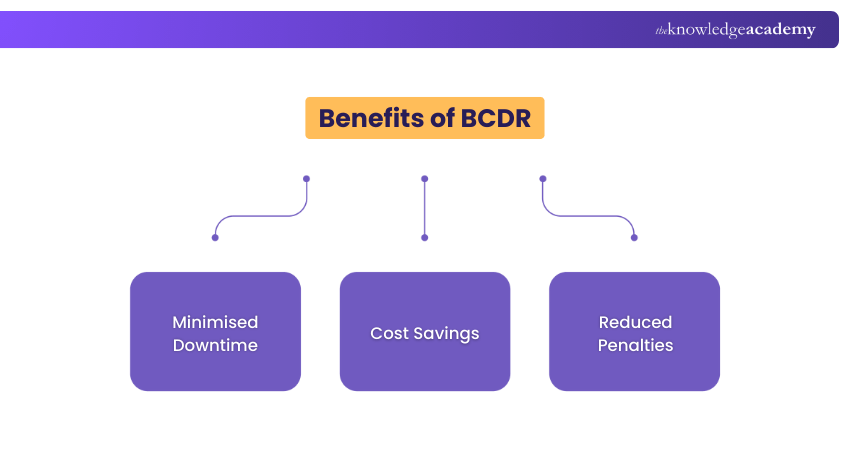
Implementing a BCDR strategy offers measurable advantages:
Minimised Downtime
When something unexpected stops a business, it can lead to huge losses, sometimes even millions. Cyberattacks also attract media attention and can make customers and investors lose trust. A good BCDR plan helps the business get back on track quickly and keep things running smoothly.
Cost Savings
A strong BCDR plan helps keep the business running during unexpected events and supports faster recovery afterwards. This can lower the overall cost of disruptions. It also helps when applying for cyber insurance, as many insurers prefer businesses that already have a solid recovery plan in place.
Reduced Penalties
When customer data is leaked, companies can be fined heavily. Businesses in sectors like healthcare or finance face even bigger penalties. These fines often depend on how long the breach lasts. With a BCDR plan in place, businesses can respond faster and keep penalties lower.
Understand the role of Infrastructure Architecture in modern IT environments. Join our Information Architecture Training now!
Best Practices for Business Continuity Disaster Recovery
To ensure your BCDR plan is robust and reliable, follow these best practices:
1) Find Risks and Understand Their Impact:
Before making a BCDR plan, it’s important to find out what problems could affect your business. Look at what systems and processes are most important. Then, think about what could happen if they stop working and how much loss it could cause.
2) Create and Maintain a BCDR Plan:
Your BCDR plan should clearly explain what to do after a disaster. It should include steps to keep the business running, how to talk to others during an emergency, and what each team member is responsible for.
3) Test and Update the Plan:
The plan should be tested often to make sure it works well. As the business or technology changes, update the plan so it stays useful. Testing helps your team stay ready and shows what needs to be improved.
4) Train Employees:
Everyone in the team should know what to do in a crisis. Regular training helps people stay calm and take the right actions. This makes recovery faster and smoother.
5) Back-up Data:
Make sure your data is backed up often. Keep copies both on-site and off-site, like in the cloud. This helps protect your data if there is a disaster at one location.
6) Use Backup Systems:
Having backup systems for power, internet, and storage helps keep the business going if the main systems fail. These backup options stop small problems from becoming big ones.
Examples of BCDR
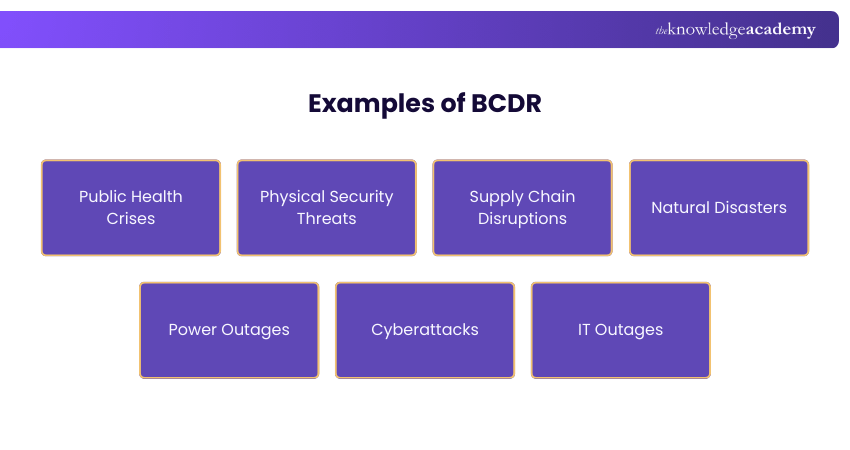
Here are real-world scenarios where BCDR is vital:
1) Public Health Crises
Health problems like COVID-19 showed that businesses must be ready for emergencies. Many had to switch to remote work and follow health rules. Plans should include steps to deal with future health risks, too.
2) Physical Security Threats
Problems like workplace violence or protests can put people and places at risk. A plan should include steps to keep employees safe and protect the office, just like it protects online systems.
3) Supply Chain Disruptions
Sometimes, goods and supplies are delayed due to transport issues, health problems, or global events. Businesses should plan for backup suppliers, so they don’t have to stop work if one source is not available.
4) Natural Disasters
Floods, earthquakes, wildfires, and storms can damage offices and stop work. Businesses should check if their location often faces such problems. If yes, they should plan ahead to stay safe and keep work going.
5) Power Outages
Power can go out because of bad weather, broken machines, or too much demand. To stay ready, companies can use backup power like generators at the office or power banks for people working from home.
6) Cyberattacks
Hackers can lock or steal important files, stopping the business from working. A recovery plan helps the company act fast, fix the problem, and get back to work without losing too much time.
7) IT Outages
Computers and software can fail because of mistakes or damage. This can lead to lost data or stopped services. A good plan helps fix things quickly so the business can keep running.
Conclusion
BCDR is not just a precaution; it’s a lifeline. With a structured Business Continuity and Disaster Recovery strategy, your organisation becomes more resilient, responsive, and reliable in times of uncertainty. By planning, testing often, and adapting to change, you not only protect assets but also secure trust and continuity.
Gain an understanding of integration testing and deployment strategies. Join our Integration Architect Training now!
Frequently Asked Questions
What is the Difference Between RPO and RTO?

RPO is the highest amount of data loss a business can tolerate, measured in time. RTO is the maximum acceptable downtime before business functions must resume. Both are critical in shaping recovery strategies in a Business Continuity Disaster Recovery plan.
What is BCDR in Azure?
BCDR in Microsoft Azure includes built-in tools like Azure Site Recovery (ASR) and Azure Backup. These help businesses replicate workloads, back up data, and recover services seamlessly during outages or disasters, ensuring minimal disruption and fast recovery in cloud environments.

William Brown


Senior Business Analyst and Strategic Advisor
William Brown is a senior business analyst with over 15 years of experience driving process improvement and strategic transformation in complex business environments. He specialises in analysing operations, gathering requirements and delivering insights that support effective decision making. William’s practical approach helps bridge the gap between business goals and technical solutions.
View Detail

 If you wish to make any changes to your course, please


