


 Top Rated Course

We may not have the course you’re looking for. If you enquire or give us a call on +33 805638382 and speak to our training experts, we may still be able to help with your training requirements.
11 Team Effectiveness Model for Success: An Overview
Charlotte Wilson 04 February 2026Team Effectiveness Model helps assess teamwork, focusing on communication, collaboration, and leadership to improve performance and satisfaction. These models provide a clear framework to make teams stronger and stay organised. By choosing the right model, teams can achieve success faster and sustain growth through continuous improvement.

Training Outcomes Within Your Budget!
We ensure quality, budget-alignment, and timely delivery by our expert instructors.
Table of Contents

Have you ever wondered what truly makes a team successful? It’s not just about working together but about working the right way every day to achieve lasting results. Teamwork is at the heart of this success, and that’s where a Team Effectiveness Model comes in.
It helps teams improve communication, trust, and productivity. Whether you are leading a team or part of one, the right model can make a huge difference. In this blog, we will discuss the best models that help you achieve your goals and how to lead the teams towards success. Let’s get started and find the perfect model for your team!
Table of Contents
1) What is a Team Effectiveness Model?
2) Why is Team Effectiveness Important?
3) 11 Best Team Effectiveness Models
4) Key Strategies for Building a High-performance Team
5) How to Select the Right Team Effectiveness Model?
6) What are the Benefits of Team Effectiveness Models?
7) What is the Biggest Barrier to Team Effectiveness?
8) Conclusion
What is a Team Effectiveness Model?
A Team Effectiveness Model is a way to understand what makes a team work well together. It explains the key factors that help a team perform better, cultivate problem-solving skills, and reach their goals. These models give teams a clear structure to improve teamwork, communication, and productivity.
A good team is not just a group of people working together. It is a team where everyone knows their role, trusts each other and works towards a common goal. For example, if a company wants to improve its marketing team, a model like GRPI (Goals, Roles, Processes, and Interpersonal Relationships) can help them understand their team’s strengths and weaknesses.
Why is Team Effectiveness Important?
Here are the reasons why Team Effectiveness matters:
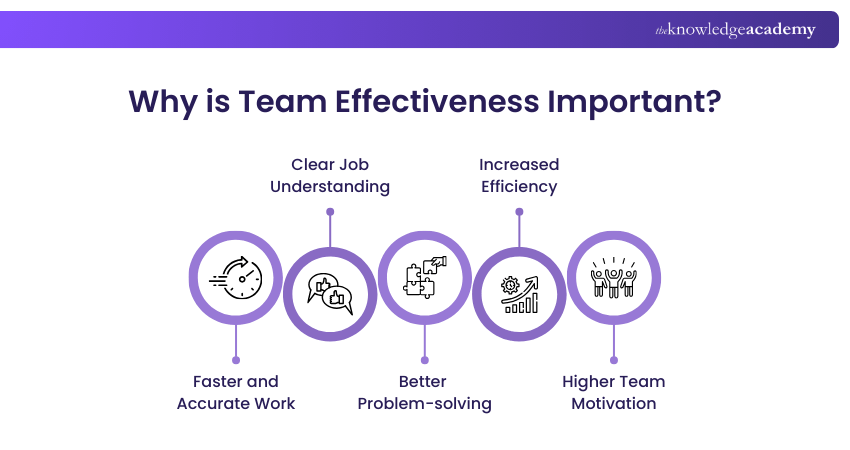
a) A well-working team completes tasks quickly and correctly
b) Clear roles help everyone understand their job and avoid confusion
c) Strong teams share ideas and find solutions easily
d) An organised team finishes work faster and more efficiently
e) When teams work well, people feel happy and stay motivated
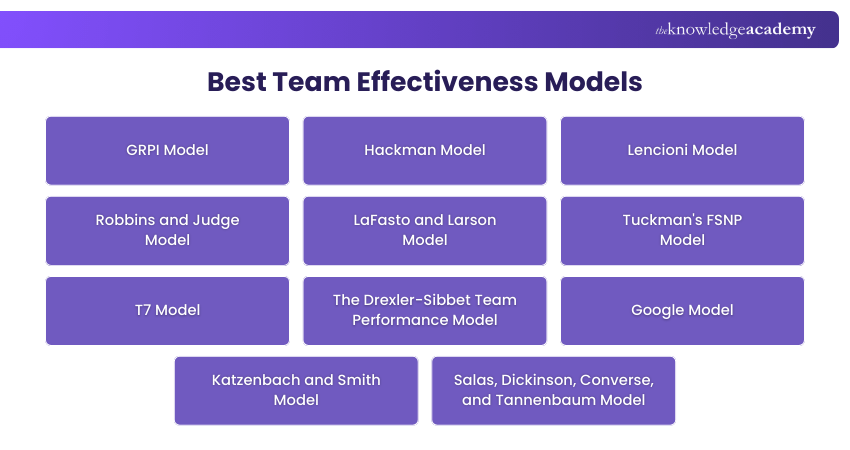
11 Best Team Effectiveness Models
Here are the top Team Effectiveness Models:
1) GRPI Model
This model helps teams work better by focusing on four key areas: Goals, Roles, Processes, and Interpersonal Relationships. It makes sure every team member knows their job and what they need to do. This model also helps teams follow clear steps to complete tasks without confusion. When teams communicate well, they solve problems faster and achieve success.
a) Helps teams set clear goals and stay focused
b) Defines roles so everyone knows their responsibility
c) Improves teamwork by creating good communication and processes
2) Hackman Model
The model highlights five key factors for team effectiveness: clear direction, enabling structure, supportive context, expert coaching, and being a real team. It emphasises strong leadership, clear goals, and a supportive environment to drive continuous growth and collaboration.
a) Ensures the team has the right people for the job
b) Encourages teamwork and continuous learning
c) Provides strong leadership for better results
3) Lencioni Model
This model explains five common problems teams face: lack of trust, fear of conflict, lack of commitment, low accountability, and not focusing on results. It helps teams fix these problems to work better together. Trust and honesty are the foundation of a good team. When a team works without fear, they perform better and achieve goals.
a) Builds trust and open communication
b) Encourages teams to take responsibility
c) Helps teams focus on results and success
Learn how to maintain remote teams with our Managing Remote Teams Training – Join today!
4) Robbins and Judge Model
This model looks at how teams behave and what makes them successful. It highlights that teamwork depends on how people interact and work together. When team members respect each other, they achieve more. Good leadership and a clear purpose help teams stay motivated.
a) Encourages positive teamwork and relationships
b) Focuses on context, composition, work design and process of teams
c) Improves motivation and teamwork skills
5) LaFasto and Larson Model
This model focuses on five things that make a strong team: the right team members, good relationships, problem-solving, good leadership, and a supportive company environment. It shows that a team succeeds when people trust and support each other. When teams have good relationships, they work better together.
a) Helps teams work together with trust and respect
b) Encourages strong leadership for better teamwork
c) Ensures clear goals and direction for success
6) Tuckman's FSNP Model
This is a simpler version of the original Tuckman Model. It describes four stages of team development: Forming, Storming, Norming, and Performing. Teams first come together and then go through challenges before working smoothly. Understanding these stages helps teams grow and succeed. When teams support each other, they become stronger.

a) Helps teams move through challenges smoothly
b) Encourages teamwork and problem-solving.
c) Improves team performance over time
7) T7 Model
This model identifies seven key things that make a team successful: team structure, leadership, results, trust, feedback, teamwork, and team spirit. It focuses on how well teams work together and the support they get. When all seven factors are strong, teams perform better.
a) Builds strong and motivated teams
b) Encourages trust and teamwork
c) Helps teams achieve better results
8) The Drexler-Sibbet Team Performance Model
The Drexler-Sibbet Team Performance model outlines seven stages of team development: orientation, trust building, goal clarification, commitment, implementation, high performance, and renewal. Each stage answers key questions like why, who, what, and how to build alignment, trust, and efficiency.
a) Builds clear structure and shared goals
b) Enhances trust, communication, and alignment
c) Sustains high performance through reflection and renewal
Support your teams effectively with our Introduction to Managing People Training – Join soon!
9) Google Model
Officially known as "Project Aristotle," this model focuses on five things that make teams great: psychological safety, dependability, clear goals, meaningful work, and impact. When team members feel safe to share ideas and trust each other, they work better. Good teams also know their purpose and feel their work matters.
a) Creates a safe space for sharing ideas
b) Encourages trust and teamwork
c) Helps teams stay motivated and focused
10) Katzenbach and Smith Model
This model says that successful teams need a clear purpose, strong skills, and shared goals. It highlights that real teamwork happens when members trust and support each other. When teams have a common goal, they stay committed.
a) Emphasises accountability and mutual responsibility
b) Encourages trust and collaboration
c) Improves teamwork through shared goals
11) Salas, Dickinson, Converse, and Tannenbaum Model
This model explains that teamwork depends on communication, leadership, goals, and mutual respect. It shows that when team members talk openly and respect each other, they work better. Good leadership and clear goals keep teams on track. Its major elements include organisational context, team structure, synergy, resources, and process effectiveness.
a) Improves communication for better teamwork
b) Encourages respect and cooperation
c) Helps teams stay organised and productive
Key Strategies for Building a High-performance Team
Here are the key strategies to build a high-performance team and improve teamwork:
1) Leveraging Complementary Skills
a) Team members should have different skills that work well together
b) A mix of strengths helps the team solve problems better
c) Everyone should know their role and use their skills to support the team
2) Encouraging Open Communication
a) Create a safe space for sharing ideas and feedback
b) Listening to others helps avoid mistakes and misunderstandings
c) Clear communication makes teamwork smoother and more effective
3) Managing Conflict Effectively
a) Problems should be solved calmly and fairly
b) Team members should listen to each other and find a middle ground
c) Handling conflicts well helps the team stay focused and productive
4) Setting Clear and Common Goals
a) Everyone should know what they are working towards
b) Clear goals help teams stay on track and work better together
c) When goals are shared, it makes teamwork stronger and more organised
5) Recognising Achievement
a) Hard work should be noticed and appreciated
b) A simple "thank you" or small reward keeps people motivated
c) Recognising success helps build a positive and happy team
How to Select the Right Team Effectiveness Model?
Here are the key points to choose the right model:
a) Understand your team’s needs and challenges before selecting a model
b) Choose a model that matches your team’s size, goals, and work style
c) Look for a model that helps improve teamwork, communication, and performance
d) Pick a simple model that is easy to follow and apply in daily work
e) Test the model and adjust it if it doesn’t work well for your team
Drive both individual success and organisational transformation with our Personal & Organisational Development Training – Sign up anytime!
What are the Benefits of Team Effectiveness Models?
Let's check how Team Effectiveness Models can benefit your business or organisation:
1) Help managers identify team strengths and address performance challenges
2) Improve communication, collaboration, and conflict resolution
3) Clarify roles, responsibilities, and shared goals
4) Create a positive working environment and strong team culture
5) Foster trust, accountability, and motivation within the team
6) Support skill development and employee career progression
7) Lead to more consistent results and overall team success
What is the Biggest Barrier to Team Effectiveness?
The biggest barriers to Team Effectiveness include poor communication and a lack of trust. When communication is unclear or inconsistent, it leads to misunderstandings, misaligned goals, and weak collaboration. Similarly, when trust is low, team members may hesitate to share ideas, avoid seeking help, or fear making mistakes.
Other common barriers include unclear goals or roles, which create confusion and reduce efficiency, and low accountability, where individuals do not take ownership of their tasks. Additionally, poor team dynamics can foster conflict and disengagement, further weakening your team’s performance.
Conclusion
Building a high-performing team doesn’t happen by chance. It requires structure, clarity, and the right framework. The Team Effectiveness Models explored in this blog offer valuable insights into how teams form, collaborate, and sustain success. By understanding your team’s needs and applying these proven models, you can create a more focused, motivated, and results-driven environment where everyone thrives.
Unlock your leadership potential and drive team success with our Management Courses – Register and lead with impact!
Frequently Asked Questions
What are the Five Factors of Team Effectiveness?

The five factors are clear goals, good communication, strong leadership, trust, and teamwork. These help a team work well and achieve results together.
What are the Seven Cs of Team Effectiveness?
The seven Cs are clarity, communication, commitment, collaboration, competence, creativity, and conflict resolution. These help teams stay organised and solve problems easily.
What are the Other Resources and Offers Provided by The Knowledge Academy?
The Knowledge Academy takes global learning to new heights, offering over 3,000+ online courses across 490+ locations in 190+ countries. This expansive reach ensures accessibility and convenience for learners worldwide.
Alongside our diverse Online Course Catalogue, encompassing 19 major categories, we go the extra mile by providing a plethora of free educational Online Resources like Blogs, eBooks, Interview Questions and Videos. Tailoring learning experiences further, professionals can unlock greater value through a wide range of special discounts, seasonal deals, and Exclusive Offers.
What is The Knowledge Pass, and How Does it Work?
The Knowledge Academy’s Knowledge Pass, a prepaid voucher, adds another layer of flexibility, allowing course bookings over a 12-month period. Join us on a journey where education knows no bounds.
What are Related Courses and Blogs Provided by The Knowledge Academy?
The Knowledge Academy offers various Management Courses, including the High Performing Teams Training, Agile Leadership Training and Leadership Skills Training. These courses cater to different skill levels, providing comprehensive insights into Analytical Skills.
Our Business Skills Blogs cover a range of topics related to Team Effectiveness Model, offering valuable resources, best practices, and industry insights. Whether you are a beginner or looking to advance your Team Management skills, The Knowledge Academy's diverse courses and informative blogs have got you covered.

Charlotte Wilson


Soft Skills and Business Training Manager
Charlotte Wilson is an expert in soft skills development, with over 14 years of experience helping individuals and teams improve communication, productivity and emotional intelligence in the workplace. Her training content is focused on enhancing interpersonal effectiveness and fostering positive, collaborative environments across all levels of an organisation.
View Detail
Upcoming Business Skills Resources Batches & Dates
Date
 High Performing Teams Training
High Performing Teams Training
Fri 17th Jul 2026
High Performing Teams Training
Fri 9th Oct 2026

 If you wish to make any changes to your course, please


