


 Top Rated Course

We may not have the course you’re looking for. If you enquire or give us a call on +33 805638382 and speak to our training experts, we may still be able to help with your training requirements.
Project Engineer Job Description: Complete Guide
Grace Mitchell 06 December 2025A Project Engineer Job Description outlines the responsibilities of managing technical aspects of engineering projects from concept to completion. It includes coordinating teams, ensuring compliance with specifications, and overseeing timelines and budgets. Explore key skills, qualifications, and role expectations across industries.

Training Outcomes Within Your Budget!
We ensure quality, budget-alignment, and timely delivery by our expert instructors.
Table of Contents

Behind every successful project is someone who blends sharp technical insight with strong leadership; that’s the Project Engineer. They’re the masterminds turning complex plans into seamless execution, making sure every piece fits perfectly. In this blog, we dive into the Project Engineer Job Description, covering what they do, the skills they need, and the path to grow in this dynamic and rewarding role.
Table of Contents
1) Who is a Project Engineer?
2) Responsibilities of a Project Engineer
3) Project Engineer Job Description Example
4) Types of Project Engineer
5) Essential Skills Required to Become a Project Engineer
6) Average Salary of a Project Engineer
7) How to Become a Project Engineer?
8) Project Engineer Skills and Qualifications
9) Project Engineer Experience Requirements
10) Conclusion
Who is a Project Engineer?
A Project Engineer, also known as a Project Manager, has specific technical experience that can help an organisation complete a project. Most are trained in engineering, IT, construction, and manufacturing. Their main involvement is guiding the entire engineering or technical features of the project, from assignment to the final stages of the project’s life cycle.
For instance, if a project requires significant construction or engineering knowledge or expertise, these Engineers will visit the site for project mentoring. This allows them to brief their team accordingly and identify any associated risks with the project. Becoming a Project Engineer is highly beneficial, as demand is high in engineering fields, where they are recruited based on their technical and Project Management Skills.
Responsibilities of a Project Engineer
Let us now look in detail at some of the most critical Project Engineer Responsibilities:
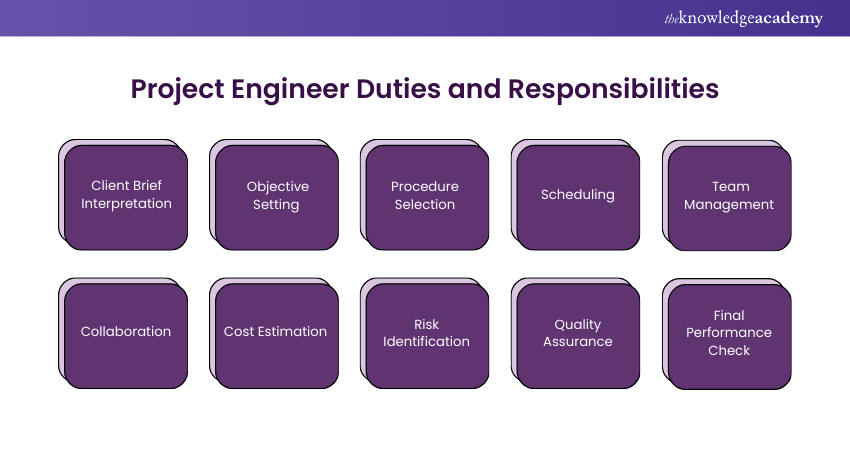
a) Client Brief Interpretation:They carefully interpret the briefs given by clients before they can establish a project plan.
b) Objective Setting:They are responsible for setting a project's objectives so that their team can follow the instructions seamlessly.
c) Procedure Selection:Project Engineers must decide on different procedures and models for the project before they start working.
d) Scheduling:They are responsible for outlining the project schedule so they can deliver the services to the clients without delay, saving time and resources.
e)Team Management:Since their projects will require optimum technical expertise, they are responsible for maintaining a team of Engineers and looking after their requirements.
f) Collaboration:They are required to cooperate seamlessly with other departments, stakeholders, and other senior members of the organisation.
g)Cost Estimation:Project Engineers prepare cost estimations, so their team does not exceed the budget.
h)Risk Identification:Identifying risks and problems helps them tackle issues early in the projects.
i) Quality Assurance:They are responsible for maintaining the project's quality standards and checking that the safety standards comply with the company’s guidelines.
j) Final Performance Check:Before the project is finished, Project Engineers give a final check to measure its performance.
Are you in a non-managerial position dreaming of being a Project Manager? Our Project Management for Non-Project Managers Course will guide you - Sign up now
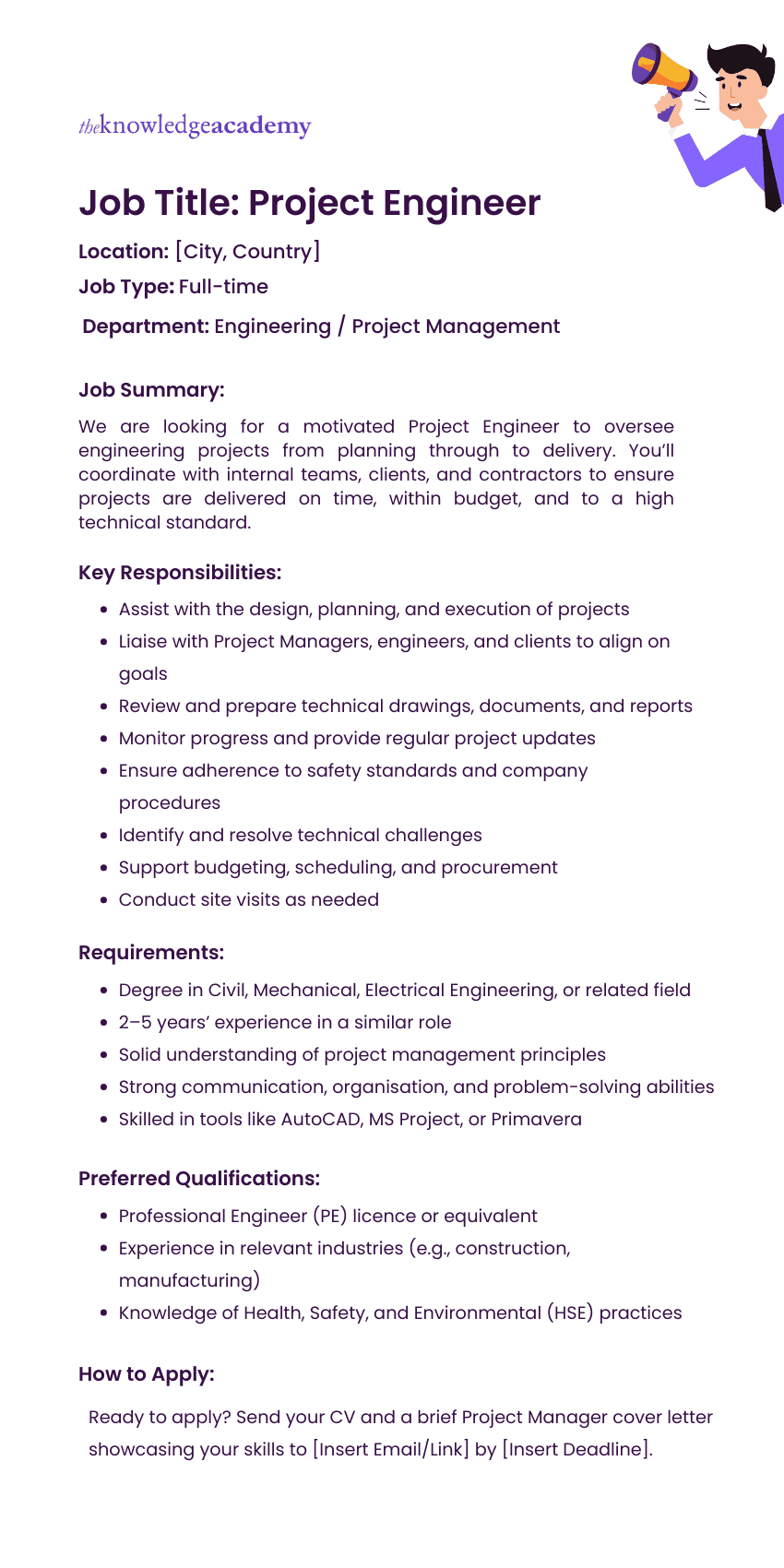
Project Engineer Job Description Example
Here is an example of Project Engineer Job Description:
Learn Project Management techniques with ourIntroduction To Project Management Course - Register now!
Types of Project Engineer
Project Engineers work in different industries. They manage and improve projects from start to finish. Here are some common types and what they do.
What They do:
a) Create and review project plans.
b) Inspect construction sites and track progress.
c) Work with Contractors, Architects, and government agencies.
d) Ensure all safety rules and building codes are followed.
e) Solve technical problems that come up during construction.
2) Manufacturing Project Engineer
These Engineers focus on improving how things are made. They help businesses increase efficiency, reduce costs, and improve product quality.
What They do:
a) Design better manufacturing processes.
b) Keep production on schedule.
c) Work with teams to fix technical issues.
d) heck product quality and suggest improvements.
e) Manage budgets and allocate resources.
3) Scientific Project Engineer
Scientific Project Engineers support Research and Development in fields like pharmaceuticals, biotech, and environmental science.
What They do:
a) Design lab equipment and research setups.
b) Manage project timelines and research activities.
c) Analyse data and document findings.
d) Work closely with scientists and researchers.
e) Make sure safety and legal rules are followed.
4) Architectural Project Engineer
Architectural Project Engineers ensure building designs are practical and meet safety standards. They work closely with architects and builders.
What They do:
a) Review and approve building plans.
b) Work with architects, builders, and clients.
c) Conduct site evaluations and feasibility studies.
d) Ensure buildings meet safety and structural codes.
e) Manage project budgets and schedules.
5) Electrical Project Engineer
Electrical Project Engineers handle projects related to electrical systems in industries like construction, manufacturing, and energy.
What They do:
a) Design electrical systems and technical plans.
b) Oversee installation and maintenance of electrical equipment.
c) Conduct safety checks and ensure regulations are met.
d) Fix electrical issues as they arise.
e) Keep projects on time and within budget.
6) Mechanical Project Engineer
Mechanical Project Engineers design, build, and maintain mechanical systems for industries like automotive, aerospace, and manufacturing.
What They do:
a) Develop and test mechanical components.
b) Oversee manufacturing and assembly.
c) Conduct performance tests and quality checks.
d) Work with teams to solve design and production issues.
e) Ensure safety and industry standards are met.
Learn how to make a big impact in handling projects with our Running Small Projects Course - Sign up now!
Essential Skills Required to Become a Project Engineer
Now, let’s look at the key skills you need to become a good Project Engineer:
a) Engineering Knowledge: Employers want Engineers who understand the basics of civil, mechanical, electrical, or software engineering.
b) Project Management Tools: Knowing tools like MS Project, Primavera, or Agile software is helpful. These tools help plan, manage, and track projects smoothly.
c) CAD Skills: Knowing how to use Computer-Aided Design (CAD) software is important for reading and checking project drawings and details.
d) Communication: You must talk and write clearly, as you’ll often work with clients, team members, and suppliers.
e) Understanding Rules and Standards: You should be familiar with laws, safety rules, and industry guidelines that apply to your projects.
Average Salary of a Project Engineer
The salary of a Project Engineer can vary depending on the company, industry, region or experience. Let’s break down the average salary for three major regions:
Transform yourself into the go-to pro in Project Management - Register now for with our Project Management Training!
How to Become a Project Engineer?
Becoming a Project Engineer takes education, experience, and the right skills. Here’s a simple step-by-step guide to get started.
1) Get an Engineering Degree
a) Earn a Bachelor’s Degree in Engineering to begin your career path.
b) Choose a civil, mechanical, electrical or industrial engineering specialisation.
c) Pick a field based on your interests and career goals. This will ensure long-term success and motivation.
2) Gain Hands-on Experience
a) After graduation, start with an entry-level Engineering job.
b) Roles like Junior Engineer or Technical Assistant are good starting points.
c) Gain hands-on experience to understand how real-world Engineering projects work.
d) Use this time to build practical skills and apply what you learned in your studies.
3) Develop Key Skills
While working, focus on improving these skills:
a) Build a strong understanding of engineering principles.
b) Learn how to manage budgets, timelines, and resources effectively.
c) Practise how to explain technical information clearly and simply.
d) Improve your ability to find practical solutions to engineering challenges.
4) Get Certified
Consider the following certifications to make you more competitive in the job market:
a) The PMP Certification helps develop Project Management skills.
b) Project Planning and Control™ (PPC) helps gain expertise in the techniques and tools required for effective Project Management.
c) Agile certification helps candidates master Project Management and Product Development.
5) Apply for Project Engineer Roles
a) Once you’re ready, start applying for jobs in your field.
b) Tailor your CV so that relevant skills and project experience are highlighted.
c) Include certifications, technical tools, and engineering software you’re familiar with.
d) Apply through job portals, company websites, and networking platforms like LinkedIn.
6) Keep Learning
a) Staying updated is key in the fast-changing world of Engineering.
b) Attend online and in-person workshops and seminars.
c) Take additional certifications in Project Management or your engineering specialisation.
d) Subscribe to industry magazines and blogs or follow expert Engineers for the latest trends.
7) Grow Into Senior Roles
a) With experience, new career opportunities will open up.
b) Aim for positions like Senior Project Engineer, Project Manager or Technical Lead.
c) Take on challenging projects that show your leadership and problem-solving abilities.
d) Build mentoring and management skills to lead teams effectively.
Project Engineer Skills and Qualifications
Project Engineers must be able to read and interpret engineering drawings, translate product drawings into actionable process information, and develop design ideas and plans.
Project Engineer Experience Requirements
Most Project Engineer job applicants need around four years of experience in Project Engineering, planning or a similar area. They should also be comfortable managing different staff types, from temporary workers to senior client executives. Experience in making project plans and Bills of Materials is a bonus.
Conclusion
Project Engineers don’t just manage tasks; they bring structure to complexity and turn plans into progress. Exploring the Project Engineer Job Description reveals a role where technical skill meets real-world impact. It’s a career built on problem-solving, precision, and the drive to make every project a success story.
Learn how to utilise sustainable practices in your projects with our Project Management Green Belt Course - join now!
Frequently Asked Questions
What types of jobs are Available for Project Engineers?

Project Engineers can work in Construction, Manufacturing, Aerospace, Energy, and more. They can become Site Engineers, Design Engineers, or Project Managers. With experience, they can move into Senior Project Engineer, Engineering Manager, or Operations Manager roles.
What is Another Name for a Project Engineer?
A Project Engineer may also be called a Project Coordinator, Site Engineer, or Engineering Project Manager, depending on the industry. In some fields, they might be known as Technical Project Managers or Construction Engineers. Their title may vary, but their role in managing projects stays the same!
What are the Other Resources and Offers Provided by The Knowledge Academy?
The Knowledge Academy takes global learning to new heights, offering over 3,000 online courses across 490+ locations in 190+ countries. This expansive reach ensures accessibility and convenience for learners worldwide.
Alongside our diverse Online Course Catalogue, encompassing 19 major categories, we go the extra mile by providing a plethora of free educational Online Resources like Blogs, eBooks, Interview Questions and Videos. Tailoring learning experiences further, professionals can unlock greater value through a wide range of special discounts, seasonal deals, and Exclusive Offers.
What is The Knowledge Pass, and How Does it Work?
The Knowledge Academy’s Knowledge Pass, a prepaid voucher, adds another layer of flexibility, allowing course bookings over a 12-month period. Join us on a journey where education knows no bounds.
What are Related Courses and Blogs Provided by the Knowledge Academy?
The Knowledge Academy offers various Project Management Courses, including the Project Management Certification Course, Project Management Office Fundamentals Certification, and Project Management Black Belt. These courses cater to different skill levels, providing comprehensive insights into Top 13 Project Management Trends.
Our Project Management Blogs covers a range of topics related to Project Management, offering valuable resources, best practices, and industry insights. Whether you are a beginner or looking to advance your Project Management skills, The Knowledge Academy's diverse courses and informative blogs have you covered.

Grace Mitchell


Senior Project Management Consultant and Author
Grace Mitchell is a highly experienced project management professional with over 15 years of expertise in leading large-scale projects across industries, including construction, IT, and finance. With qualifications in PRINCE2®, PMP®, AgilePM®, and MSP®, Grace specialises in delivering complex programmes with precision and clarity. Her writing is grounded in real-world application and focuses on helping learners build confidence in project delivery and stakeholder management.
View Detail
Upcoming Project Management Resources Batches & Dates
Date
 Introduction to Project Management Course
Introduction to Project Management Course
Fri 17th Jul 2026
Introduction to Project Management Course
Fri 14th Aug 2026
Introduction to Project Management Course
Fri 11th Sep 2026
Introduction to Project Management Course
Fri 16th Oct 2026
Introduction to Project Management Course
Fri 13th Nov 2026
Introduction to Project Management Course
Fri 18th Dec 2026

 If you wish to make any changes to your course, please


