


 Top Rated Course

We may not have the course you’re looking for. If you enquire or give us a call on +33 805638382 and speak to our training experts, we may still be able to help with your training requirements.
Top 15 Cyber Security Skills: Technical and Soft Skills Explained
John Davies 21 April 2026Cyber Security Skills include network security, risk management, incident response, analytical thinking and programming expertise to defend against threats. Proficient Cyber Security experts help prevent breaches, respond to incidents and maintain trust in digital systems. These skills can open high-demand career paths across industries.
Home
 Resources
IT Security & Data Protection
Top 15 Cyber Security Skills: Technical and Soft Skills Explained
Resources
IT Security & Data Protection
Top 15 Cyber Security Skills: Technical and Soft Skills Explained
Resources
IT Security & Data Protection
Top 15 Cyber Security Skills: Technical and Soft Skills Explained

Training Outcomes Within Your Budget!
We ensure quality, budget-alignment, and timely delivery by our expert instructors.
Table of Contents
As cyber threats evolve faster than ever, Cyber Security Skills have gone from being just an IT concern to a critical business priority. Organisations need professionals equipped with both strong technical expertise and essential soft skills. From mastering network security and Risk Management to communicating threats effectively, Cyber Security roles demand a diverse skill set.
In this blog, we will explore the top 15 Cyber Security Skills that shape today’s most effective professionals, helping you stay ahead, secure and unstoppable in the digital battlefield. So read on and understand every nook and cranny of the security landscape.
Table of Contents
1) Top Technical Skills for Cyber Security
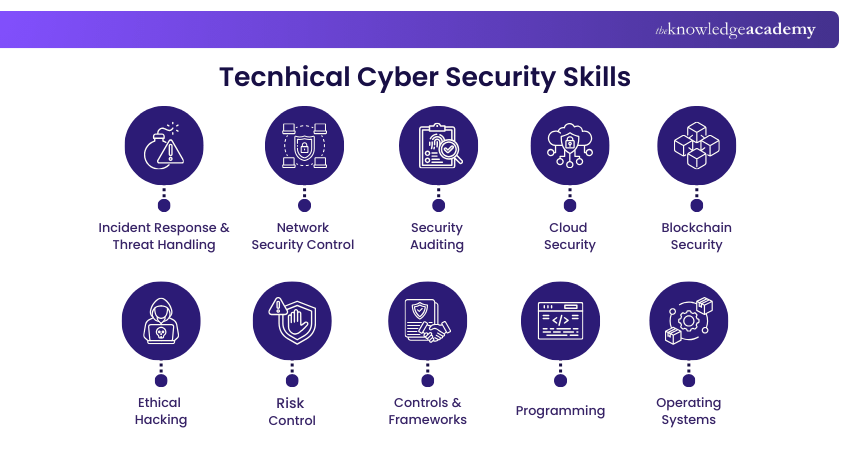
a) Incident Response and Threat Handling
b) Network Security Control
c) Security Auditing
d) Cloud Security
e) Blockchain Security
f) Ethical Hacking
g) Risk Control
h) Controls and Frameworks
i) Programming
j) Operating Systems
2) Soft Skills for Cyber Security
3) How to Develop Your Cyber Security Skills?
4) Conclusion
Top Technical Skills for Cyber Security
The need for Cyber Security is at an all-time high as organisations increasingly go digital and use cloud storage. With cybercrime globally projected to cost approximately £12 trillion by 2029, it's no wonder Cyber Security holds such a high priority. A Cyber Security professional needs to have a broad range of technical skills to fit the job roles in Cyber Security. Let's explore these skills in detail:
1) Incident Response and Threat Handling
Incident Response and Threat Handling is the ability to quickly detect and respond to Cyber Security incidents to minimise damage and protect organisational systems. Cyber Security professionals must understand their organisation’s incident response plan and use techniques such as digital forensics and malware analysis. Effective threat handling also involves identifying suspicious activities, containing the threat, removing malicious elements, and restoring affected systems.

2) Network security control
Many Cyber Security attacks occur across networks of interconnected systems. While these technologies allow efficient communication, they can also introduce security vulnerabilities. To maintain strong security, professionals must understand both wired and wireless networks and apply appropriate measures to secure them. This includes implementing controls such as firewalls, intrusion detection systems, and secure network configurations.
3) Security Auditing
For people working in Cyber Security, auditing skills are extremely important. An in-depth knowledge of hardware configurations and user data is necessary for auditing skills. Organisations can find gaps in their security infrastructure through Cyber Security Audits. Throughout this test, security experts can evaluate if the security protocols comply with predefined requirements. Auditing also guarantees that the businesses adhere to industry norms and legal regulations.
4) Cloud Security
Cloud security skills involve protecting data and infrastructure that are hosted in Cloud environments. As many organisations continue to move their operations to the cloud, Cyber Security Analysts must understand how cloud platforms work and how to secure them from potential threats. This includes managing access controls, monitoring cloud activity and implementing measures to fend off data breaches and unauthorised access.
5) Blockchain Security
Blockchain technology is increasingly gaining adoption due to its decentralised structure and strong security features. As its use expands across industries like finance and supply chain, Cyber Security professionals must address Blockchain's potential security risks. Developing expertise in this area prepares professionals to handle future security challenges in evolving digital ecosystems.
6) Ethical Hacking
Because most Cyber Security experts need to learn how to ethically hack, they must know how networks and infrastructure can be penetrated in the first place to safeguard an organisation's network and infrastructure. In short, you need to possess hacker-level skills, which is a key part of technical skills in Cyber Security. It allows you to comprehend how a system works and develop efficient defences against these cyber-attacks.
7) Risk Control
Analysing the threats that a specific industry and business faces are part of Cyber Security Risk Management. Cyber Security Analysts must assess what could go wrong within systems, determine the likelihood and consequences of different threats, and prioritise actions that protect the most critical assets. This helps minimise vulnerabilities and focus their efforts on the areas where they can make the greatest impact on organisational security.
8) Controls and Frameworks
A Cyber Security framework refers to a structured set of guidelines, best practices, tools and security policies to safeguard organisational data and business operations. On the other hand, security controls are specific measures implemented to protect systems from vulnerabilities and cyberattacks. The framework adopted often depends on the organisation’s industry, regulatory requirements and operational needs.
9) Programming
Knowing Programming Languages like Java, Python and JavaScript is important for Cyber Security professionals. This helps them build secure applications, automate security tasks and identify system vulnerabilities. Familiarity with scripting languages like PowerShell and Bash is also beneficial for activities such as penetration testing and incident response.
10) Operating Systems
Security threats can affect all operating systems, including those used on computers and mobile devices. To succeed as a Cyber Security Analyst, it is important to develop a strong understanding of operating systems such as macOS, Windows, and Linux. Also, understanding the risks and vulnerabilities associated with mobile operating systems like iOS and Android can help professionals better respond to security threats.
Design, defend and dominate. Become the Cyber Security mastermind you’re meant to be in our Microsoft Cyber Security Architect SC100 Course - Sign up now!
Soft Skills for Cyber Security
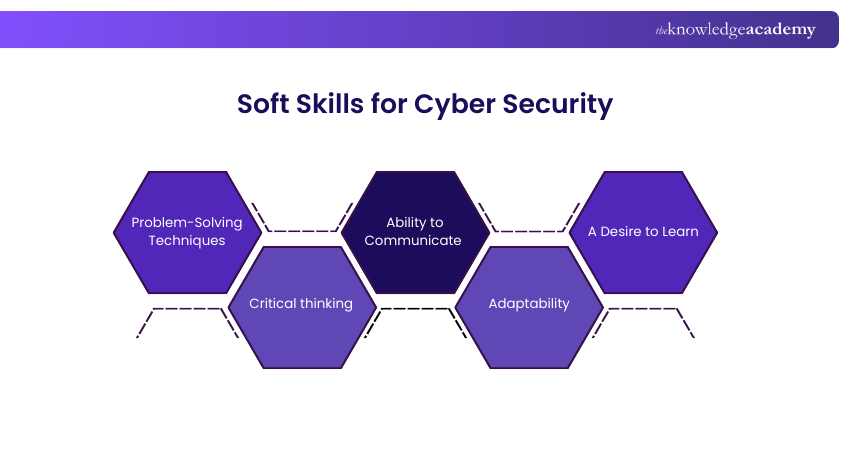
In Cyber Security, soft skills are equally vital as technical expertise. They help professionals analyse threats, communicate risks, adapt to evolving challenges and continuously learn to battle increasingly sophisticated cyberattacks. Let’s explore these skills in detail:
1) Problem-solving Techniques
Problem-solving is a critical skill for Cyber Security professionals because they must identify and resolve complex security issues in digital systems. These experts frequently investigate vulnerabilities, detect cyber threats and develop practical solutions to mitigate risks. Strong problem-solving abilities help them promptly respond to incidents and design strategies to prevent future attacks.
2) Critical Thinking
Critical thinking allows Cyber Security specialists to analyse security incidents and anticipate how attackers might exploit vulnerabilities. This skill involves examining complex data, identifying patterns in cyber threats and making decisions to protect organisational systems. By thinking analytically, they can develop effective defence mechanisms against evolving cyber risks.
3) Ability to Communicate
Proper communication is key in Cyber Security because professionals often work with teams across numerous departments. They must clearly explain the technical risks, security policies and recommended solutions to both technical and non-technical stakeholders. Good communication skills ensure that the security strategies are understood and implemented effectively.
4) Adaptability
The Cyber Security landscape evolves rapidly as new technologies and cyber threats arise. Professionals must be capable of learning new tools, strategies and security practices to stay ahead of attackers. Being flexible to change allows Cyber Security experts to adjust their approaches to effective protection for digital systems.
5) A Desire to Learn
Cyber Security professionals must maintain a strong desire to learn because the field constantly evolves with new technologies and defence mechanisms. Continuous learning helps professionals stay up to date on the current security tools and best practices. This mindset enables them to deepen their expertise in protecting organisations against emerging cyber risks.
Turn Cyber safety from a skill to a daily habit. Sign up for our Cyber Security Awareness Training and fend off hackers with ease!
How to Develop Your Cyber Security Skills?
Here are some effective ways to develop your Cybersecurity skills so that you stay future-ready:
1) Take Classes
Signing up in Cyber Security courses helps provide a structured approach to learning, whether you are studying basic concepts or advanced topics. Courses focused on areas such as network security or incident response also allow learners to practise important workplace skills like technical writing and problem-solving.
2) Earn a Certification
Pursuing Cyber Security certifications can help expand your knowledge and validate your expertise. These programmes often cover areas such as network security, Ethical Hacking, Risk Management and regulatory compliance. It can enhance your CV and spotlight your commitment to professional growth.
3) Stay Updated with the Latest Trends
Cyber Security professionals must stay informed about the latest threats, technologies and security practices. Keeping up with the current Cyber Security trends helps build confidence and strengthen your expertise as a Security Analyst. Engaging with industry resources, communities, and professional discussions can also provide valuable insights.
Conclusion
Cyber Security success depends on more than technical knowledge; it requires a balanced combo of technical expertise and strong soft skills. By developing these essential Cyber Security Skills, professionals can better detect threats, manage risks and protect critical systems. As these threats continue to evolve, continuously boosting these abilities will help you stay competitive and adaptable.
Master the future of digital defence. Our Certified Artificial Intelligence (AI) For Cyber Security Professionals Course builds AI‑powered skills for next‑gen cyber pros - Sign up now!
Frequently Asked Questions
What are the Most Common Cyber Security Roles?

Common Cyber Security roles include:
a) Governance, Risk and Compliance (GRC) Specialist
b) Cyber Security Analyst
c) Penetration Tester
d) Security Operations Centre (SOC) Analyst
e) Cloud Security Engineer
f) Information Security Manager
What are Some Advanced Qualifications for a Cyber Security Career?
Popular advanced certifications in Cyber Security include:
a) Certified Information Systems Security Professional (CISSP)
b) Certified Ethical Hacker (CEH)
c) Certified Information Security Manager (CISM)
d) CompTIA Advanced Security Practitioner (CASP+)
What are the Other Resources and Offers Provided by The Knowledge Academy?
The Knowledge Academy takes global learning to new heights, offering over 3,000+ online courses across 490+ locations in 190+ countries. This expansive reach ensures accessibility and convenience for learners worldwide.
Alongside our diverse Online Course Catalogue, encompassing 17 major categories, we go the extra mile by providing a plethora of free educational Online Resources like Blogs, eBooks, Interview Questions and Videos. Tailoring learning experiences further, professionals can unlock greater value through a wide range of special discounts, seasonal deals, and Exclusive Offers.
What is The Knowledge Pass, and How Does it Work?
The Knowledge Academy’s Knowledge Pass, a prepaid voucher, adds another layer of flexibility, allowing course bookings over a 12-month period. Join us on a journey where education knows no bounds.
What are the Related Courses and Blogs Provided by The Knowledge Academy?
The Knowledge Academy offers various Cyber Security Training, including the Certified Cyber Security Professional (CCS-PRO) Course, Cyber Security Awareness Training and the Cyber Security Risk Management Course. These courses cater to different skill levels, providing comprehensive insights into Incident Response.
Our IT Security & Data Protection Blogs cover a range of topics related to Cyber Security, offering valuable resources, best practices, and industry insights. Whether you are a beginner or looking to advance your Cyber security skills, The Knowledge Academy's diverse courses and informative blogs have got you covered.

John Davies


Cyber Security Governance & Assurance Specialist
John Davies is a cybersecurity expert specialising in governance, risk management, and compliance. With over 15 years in the field, he has led enterprise-wide security programmes across finance, healthcare and public sector organisations. His content provides practical guidance on building secure environments, managing risk and aligning with regulatory frameworks.

Upcoming IT Security & Data Protection Resources Batches & Dates
Date
 Certified Cyber Security Professional (CCS-PRO)
Certified Cyber Security Professional (CCS-PRO)
Fri 24th Jul 2026
Certified Cyber Security Professional (CCS-PRO)
Fri 9th Oct 2026

 If you wish to make any changes to your course, please


