


 Top Rated Course

We may not have the course you’re looking for. If you enquire or give us a call on +33 805638382 and speak to our training experts, we may still be able to help with your training requirements.
Cloud Deployment Models: Definition, Types, and How to Choose
Richard Harris 27 March 2026Cloud Deployment Models define how various Cloud Services are made available to users, such as within public, private, hybrid, or community Cloud environments. Each model offers a different approach to managing infrastructure, security and scalability, catering to various organisational needs and preferences.

Training Outcomes Within Your Budget!
We ensure quality, budget-alignment, and timely delivery by our expert instructors.
Table of Contents

Cloud is nothing short of the backbone of modern innovation. From startups to global enterprises, businesses are racing to harness its power. And behind every Cloud strategy sits a deployment model that shapes performance, security, cost and control. But what truly defines Cloud Deployment Models?
This blog explores the essentials of Cloud Deployment Models, unpacking the definitions and exploring their diverse types; so that you can choose the right model for your journey to the Cloud. So read on and meet modern digital demands with ease!
Table of Contents
1) What is a Cloud Deployment Model?
2) Types of Cloud Deployment Models
3) Models of Cloud Computing
4) Which Cloud Deployment Model do You Choose?
5) Cloud Deployment Models for Startups vs Enterprises
6) Conclusion
What is a Cloud Deployment Model?
A Cloud Deployment Model defines where the Cloud infrastructure is hosted and who owns, manages and controls it. It also outlines the structure, purpose and operating approach of the Cloud environment being used. For organisations exploring Cloud services, understanding the available deployment models is a crucial first step.
Having clear awareness of these models supports informed decision-making when selecting the most suitable option. Each deployment model offers distinct advantages and limitations in areas such as governance, scalability, security, flexibility, cost efficiency, and management control.
Types of Cloud Deployment Models
There are four key categories of Cloud Deployment Models, namely public, private, hybrid and multicloud model. Let’s explore them in detail:

1) Public Cloud Model
In this setup, organisations access shared computing resources provided by third-party Cloud providers like Amazon Web Services (AWS), Microsoft Azure and Google Cloud Platform (GCP). Although these providers deliver similar core services, their performance capabilities, pricing structures, and service strengths vary.
Here are the benefits of Public Cloud:
1) High scalability to support changing workload demands
2) Flexible resource usage with rapid provisioning
3) Cost efficiency through pay-as-you-go pricing
4) Reduced infrastructure maintenance responsibility
But there are some challenges to consider as well:
1) Shared responsibility for security and compliance
2) Limited control over the underlying infrastructure
3) Risk of vendor lock-in with long-term reliance on one provider
2) Private Cloud Model
A Private Cloud dedicates the infrastructure to a single organisation. It can be hosted internally or managed by an external data centre provider, offering greater ownership and control.
Here are the key benefits of Private Cloud
1) Greater control over data, security and infrastructure
2) High customisation to support legacy systems
3) Strong alignment with regulatory and compliance needs
4) Suitable for complex migration and transformation initiatives
These are challenges associated with Private Cloud:
1) Higher upfront and operational costs
2) Responsibility for hardware, facilities, and staffing
3) Requirement for specialised technical expertise
3) Hybrid Cloud Model
Hybrid Cloud combines Public Cloud services with the Private Cloud infrastructure. This approach helps organisations distribute workloads across environments while retaining flexibility.
Here are the key benefits of Hybrid Cloud
1) Flexible workload placement across environments
2) Cost optimisation while retaining control over sensitive data
3) Improved scalability without full reliance on Public Cloud
These are the drawbacks to consider:
1) Increased complexity in management and integration
2) Greater security and governance challenges
3) Need for careful planning and consistent oversight
4) Multicloud Model
Multicloud involves using multiple Public Cloud providers rather than combining public and private infrastructure. This approach supports workload diversity, geographic coverage, and improved resilience.
These are the benefits of the multicloud model
1) Improved resilience and reduced risk of outages
2) Lower dependency on a single vendor
3) Greater flexibility to match workloads with suitable services
These are the challenges to be considered:
1) Complex operational and Security Management
2) Difficulty optimising the total cost of ownership
3) Increased governance and monitoring requirements
Bridge the gap between AI and Cloud with our Certified Artificial Intelligence (AI) For Cloud Professionals Training - Sign up now!
Models of Cloud Computing
Cloud Computing delivers a range of services depending on organisational needs and specific use cases. These services are grouped into the following three core models:
1) Infrastructure as a Service (IaaS)
Infrastructure as a Service (IaaS) provides on-demand access to fundamental computing resources hosted externally to support business operations. These resources include networking components, storage systems, databases, and web servers.
Here are the advantages of IaaS:
1) It reduces capital expenditure by removing the need for physical infrastructure
2) It offers strong security controls managed by the service provider
3) It allows remote access to infrastructure resources
4) It delivers high flexibility to scale resources as required
Here are the main drawbacks to watch out for:
1) Responsibility for securing data and applications remains with the user
2) There’s limited accessibility in certain geographic regions
2) Platform as a Service (PaaS)
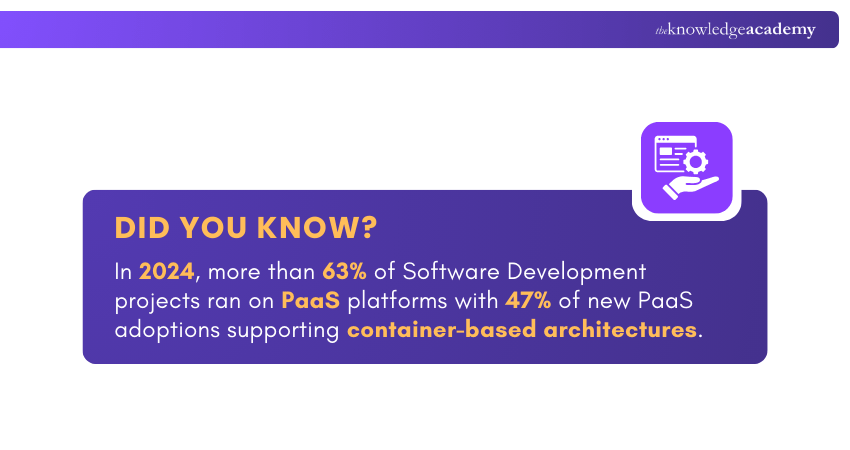
PaaS offers a cloud-based environment that allows Developers to build and deploy applications over the internet. It removes the complexity of managing underlying infrastructure and enables organisations to retain control over their applications.
The key benefits of PaaS are:
1) Easy access through a web browser
2) Simplifies application development and deployment
3) Supports efficient management of the application lifecycle
Here are the disadvantages of PaaS:
1) Limited control over the underlying infrastructure
2) Restricted customisation options
3) High dependency on the service provider
3) Software as a Service (SaaS)
SaaS delivers ready-to-use applications over the internet, often referred to as web-based or hosted software. SaaS represents a significant share of Cloud adoption due to its ease of use across industries.
Here are the main advantages of SaaS:
1) Access to applications and data from anywhere online
2) No installation or maintenance required
3) Immediate availability of features and updates
These are the Disadvantages to consider:
1) Limited customisation within the platform
2) Reduced control over user data
3) Requires a stable internet connection for reliable performance
Sign up for our Cloud Computing Course and open the gateway to innovation – Join today!
Which Cloud Deployment Model Do You Choose?
Selecting the right Cloud Deployment Model involves evaluating multiple business and technical considerations. Here's a structured approach that'll help you make an informed decision:
1) Identify Business Requirements: Define your organisation’s core needs, including data security, regulatory obligations, performance expectations and financial constraints.
2) Review Available Deployment Models: Analyse the strengths and limitations of each Cloud deployment option to understand how they fit in with your objectives.
3) Analyse Workload Requirements: Examine workload characteristics such as data sensitivity, scalability demands, elasticity and compliance considerations.
4) Assess Cost Impact: Compare costs across models, covering initial setup, ongoing maintenance, and long-term operational expenses.
5) Evaluate Integration Capabilities: Determine how well each model integrates with existing systems, applications, and infrastructure to ensure seamless interoperability.
6) Review Security and Compliance Controls: Examine the security features, data protection measures and compliance support offered by each deployment model.
7) Consider Scalability and Adaptability: Assess how effectively each model supports workload spikes, future expansion, and evolving business needs.
8) Assess Provider Reliability: Evaluate Cloud service providers based on performance reliability, support quality, and service-level commitments.
9) Factor in Organisational Readiness: Consider internal expertise, technical maturity, and the organisation’s ability to manage change and upskill teams.
Cloud Deployment Models for Startups vs Enterprises
Cloud deployment models vary based on the size, scale, and needs of an organisation. Startups often choose public cloud models because they offer flexibility, lower upfront costs, and the ability to scale quickly without heavy infrastructure investment.
Enterprises, on the other hand, usually prefer private or hybrid cloud models to maintain greater control, security, and compliance. These models support complex operations, sensitive data handling, and integration with existing on-premise systems while still allowing scalability.
Here are the key differences between Cloud Deployment Models for startups and enterprises:

Conclusion
Cloud Deployment Models shape how an organisation innovate and scale their digital future. By understanding the public, private, hybrid, and multicloud approaches, your business can align technology with strategy, risk and growth goals. The right model is not about trend-following but about making informed choices that support long-term success in an evolving Cloud-first world.
Turn your ideas into scalable solutions with our Google Cloud Developer Certification - Sign up now!
Frequently Asked Questions
What are the Different Cloud Deployment Strategies?

Common Cloud deployment strategies include:
1) Blue-green deployment
2) Canary deployment
3) Rolling deployment
4) Recreate deployment
Each approach balances risk, availability and release speed. This helps organisations choose how to introduce updates with minimal disruption.
What is the AWS Equivalent of Cloud Build?
The AWS equivalent of Cloud Build is AWS CodeBuild, which automates code compilation, testing and artifact creation. It integrates with other AWS DevOps services to support continuous integration and delivery workflows.
What are the Other Resources and Offers Provided by The Knowledge Academy?
The Knowledge Academy takes global learning to new heights, offering over 3,000+ online courses across 490+ locations in 190+ countries. This expansive reach ensures accessibility and convenience for learners worldwide.
Alongside our diverse Online Course Catalogue, encompassing 19 major categories, we go the extra mile by providing a plethora of free educational Online Resources like Blogs, eBooks, Interview Questions and Videos. Tailoring learning experiences further, professionals can unlock greater value through a wide range of special discounts, seasonal deals, and Exclusive Offers.
What is The Knowledge Pass, and How Does it Work?
The Knowledge Academy’s Knowledge Pass, a prepaid voucher, adds another layer of flexibility, allowing course bookings over a 12-month period. Join us on a journey where education knows no bounds.
What are the Related Courses and Blogs Provided by The Knowledge Academy?
The Knowledge Academy offers various Cloud Computing Courses, including the Certified Artificial Intelligence (AI) For Cloud Professionals Training, Cloud Computing Training and Microservices Architecture Training. These courses cater to different skill levels, providing comprehensive insights into Cloud Orchestration.
Our Cloud Computing Blogs cover a range of topics related to Cloud Deployment Models, offering valuable resources, best practices, and industry insights. Whether you are a beginner or looking to advance your Cloud Computing skills, The Knowledge Academy's diverse courses and informative blogs have got you covered.

Richard Harris


Senior Full Stack Developer and Technology Educator
Richard Harris is a highly experienced full-stack developer with deep expertise in both frontend and backend technologies. Over his 12-year career, he has built scalable web applications for startups, enterprises and government organisations. Richard’s writing combines technical depth with clear explanations, ideal for developers looking to grow in modern frameworks and tools.

Upcoming Cloud Computing Resources Batches & Dates
Date
 Cloud Computing Training
Cloud Computing Training
Thu 13th Aug 2026
Cloud Computing Training
Thu 3rd Dec 2026

 If you wish to make any changes to your course, please


