


 Top Rated Course

We may not have the course you’re looking for. If you enquire or give us a call on 0800 446148 and speak to our training experts, we may still be able to help with your training requirements.
Company Secretary Job Description: What It Is & How to Become
Charlotte Wilson 20 March 2026A Company Secretary ensures a company's compliance with legal and regulatory requirements, manages corporate governance, and advises the board. They manage corporate governance, maintain statutory records, handle board meetings, and file annual returns. They are known to act as a key link between directors, shareholders, and regulators.

Training Outcomes Within Your Budget!
We ensure quality, budget-alignment, and timely delivery by our expert instructors.
Table of Contents
Picture a dynamic boardroom where pivotal decisions are being made, and the individual ensuring everything is in order is the Company Secretary. Have you ever considered what it takes to thrive in this crucial role? The Company Secretary Job Description goes beyond a mere list of duties; it offers insight into the core of corporate governance.
In this blog, we explore the Company Secretary Job Description, determining the key roles and responsibilities that ensure a company remains compliant and efficient. By the end of this blog, you'll understand the diverse nature of this profession and its importance to any business's success. Let’s explore the essential contributions of a Company Secretary.
Tabe of Contents
1) What is a Company Secretary?
2) Responsibilities of a Company Secretary
3) Essential Skills for Company Secretaries
4) Company Secretary Job Description Example
5) How to Become a Company Secretary?
6) Is it Hard to Become a Company Secretary?
7) What are the Risks of Being a Company Secretary?
8) Conclusion
What is a Company Secretary?
A Company Secretary plays a vital role in the way a company is run and managed. They act as a key liaison between the board of directors, company management, shareholders, and regulators. Their primary responsibility is to ensure the company complies with all legal, ethical, and regulatory requirements, while also supporting the business in achieving its strategic objectives.
Key Takeaways:
1) A Company Secretary ensures a company is run legally and ethically
2) Acts as a link between the board, management, shareholders, and regulators
3) Advises on company law, finance, strategy, and governance
4) Plays a key role in helping the company meet its goals
5) Required across private, public, and not-for-profit sectors
6) Can work independently or run a company secretarial services business
Typical Duties
The exact duties of a Company Secretary can vary depending on the type and size of the organisation, but common responsibilities include:
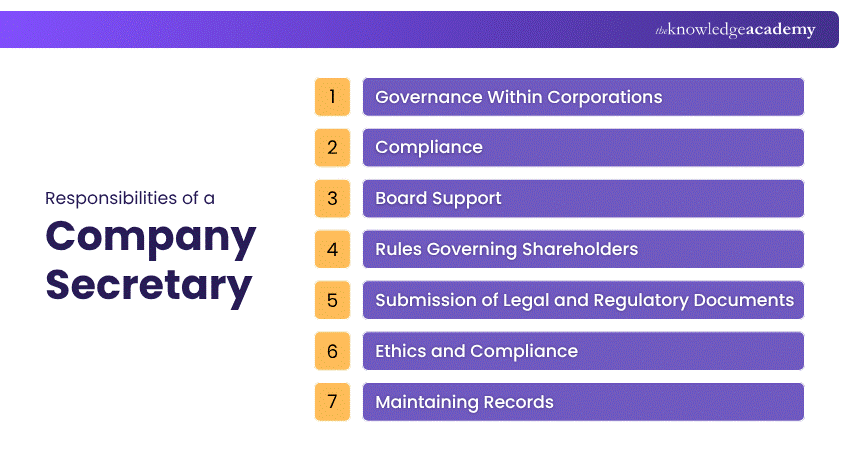
1) Corporate Governance: Making sure the company follows legal rules and good practices. Advising the board on their responsibilities and helping to set up governance policies.
2) Compliance: Ensuring the company follows laws, regulations, and internal policies. Staying updated on legal changes and informing the board about anything that may affect the business.
3) Board Support: Helping to organise board meetings, preparing agendas, taking notes, and making sure the board’s decisions are shared and acted on across the company.
4) Shareholder Communication: Managing meetings with shareholders and helping them exercise their rights. Also handles things like share transfers, dividend payments, and other shareholder matters.
5) Legal Filing: Making sure all required reports and documents like annual returns and financial statements are submitted on time.
6) Ethics and Conduct: Promoting honest and responsible behavior across the company by following ethical codes and anti-corruption rules.
7) Record Keeping: Keeping important company records up to date, including lists of shareholders and directors.

Responsibilities of a Company Secretary
The Company Secretary serves as the linchpin of Corporate Governance, ensuring that the company complies to legal and regulatory requirements. Now, let's explore the key responsibilities of a Company Secretary:
1) Governance Within Corporations
The role of Company Secretaries in fostering governance within businesses is multifaceted. They actively make a contribution to developing and enforcing company governance regulations, ensuring that the organisation operates with transparency and duty.
Company Secretaries are pivotal in setting up board meetings, preparing assembly agendas, and facilitating effective communnication among board individuals. By fostering a lifestyle of ethical decision-making and accountable company behaviour, they make a contribution to the long-time period sustainability and fulfillment of the business enterprise.
2) Compliance
Company Secretaries are responsible for ensuring the employer's compliance with a myriad of laws and regulations. They stay vigilant about adjustments in criminal necessities, investigate their impact at the agency, and increase techniques to satisfy compliance responsibilities.
From labour legal guidelines to environmental rules, Company Secretaries play a critical function in navigating the complex panorama of legal necessities. Their expertise helps the corporation keep away from legal pitfalls and build a recognition for integrity and adherence to the regulation.
3) Board Support
The aid provided with the aid of Company Secretaries to the board of directors is critical. They act as a bridge among the board and the relaxation of the company, facilitating seamless communication. Company Secretaries help in organising board meetings and making sure that the board features efficaciously.
By imparting valuable insights and context to the board, they contribute to informed selection-making and the general effectiveness of the board.
Develop the crucial skills to make a difference in any office environment – sign up for our PA and Secretarial Course now!
4) Rules Governing Shareholders
Company Secretaries navigate the tricky guidelines governing shareholders, safeguarding their rights and ensuring compliance with relevant regulations. They facilitate communication among the business enterprise and its shareholders, addressing concerns and promoting transparency.
Company Secretaries are key in organising shareholder conferences, managing proxy voting techniques, and ensuring the employer's interactions with shareholders align with legal necessities.
5) Submission of Legal and Regulatory Documents
Company Secretaries are responsible for preparing and submitting a diverse array of legal and regulatory documents. From annual reports to financial statements and statutory filings, they ensure that the company fulfils its legal obligations. This meticulous attention to documentation is crucial for maintaining the company's standing with regulatory authorities and fostering stakeholder trust.
6) Ethics and Compliance
Upholding ethical standards is foundational to the Company Secretary Skills. They actively make a contribution to developing and enforcing a sturdy code of ethics within the enterprise. This involves instilling moral principles in decision-making approaches, undertaking ethics education for employees, and overseeing the implementation of moral practices throughout departments.
By selling a moral company lifestyle, Company Secretaries enhance the organisation's recognition and build consider with stakeholders.
7) Maintaining Records
Company Secretaries act as custodians of corporate statistics, meticulously retaining accurate and up to date documentation. This consists of keeping the registers of shareholders, minutes of meetings, and different critical statistics that form the historical and legal framework of the organisation.
Their interest to detail guarantees that the employers' records are organised, available, and compliant with legal requirements. This complete report-keeping is worthwhile for audits, legal proceedings, and internal governance.
Eager to crack your interviews for a secretary role, refer to our blog on Secretary Interview Questions!
Essential Skills for Company Secretaries
A Company Secretary’s role demands a unique blend of legal knowledge, organisational skills, and interpersonal abilities. Now, let's explore their essential skills:
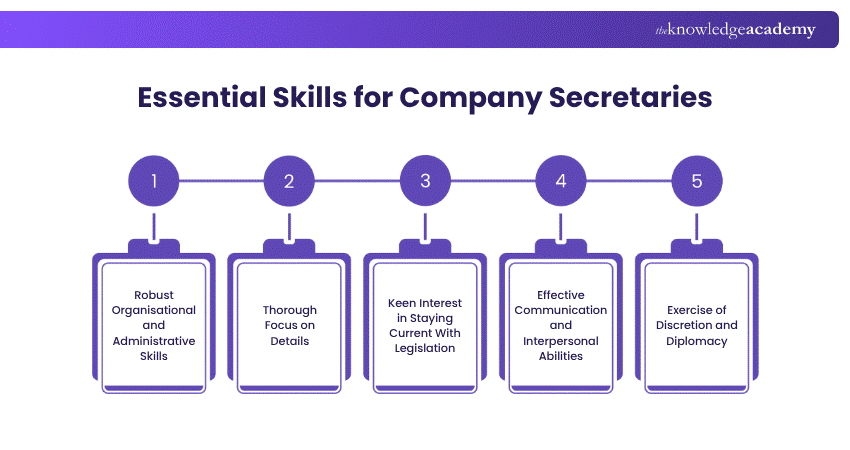
1) Robust Organisational and Administrative Skills
At the coronary heart of a Company Secretary's skills lies a strong foundation in organisational and administrative capabilities. The elaborate nature of company governance needs meticulous planning, efficient coordination, and ideal execution of administrative duties.
Whether orchestrating board conferences, dealing with documentation, or coordinating with numerous stakeholders, a Company Secretary's organisational prowess paperwork the bedrock in their effectiveness. This talent guarantees that the executive machinery of the agency operates seamlessly, contributing to the general performance of corporate approaches.
2) Thorough Focus on Details
Company Secretaries are guardians of accuracy and precision, ensuring that every detail, from meeting minutes to regulatory filings, is meticulously scrutinised.
The ability to discern nuances in legal documents, financial statements, and compliance requirements is paramount. This attention to detail mitigates the risk of errors and instils confidence among stakeholders, contributing to the organisation's reputation for precision and reliability.
3) Keep Interest in Staying Current With Legislation
The regulatory landscape is dynamic, with laws and compliance requirements constantly evolving. A Company Secretary's commitment to staying abreast of legislative changes is non-negotiable. This requires a keen interest in the intricacies of corporate law but also a proactive approach to continuous learning.
Company Secretaries must be vigilant, tracking amendments, new regulations, and legal precedents that could impact the organisation. This commitment to staying current protects against legal pitfalls and positions the Company Secretary as a trusted advisor on legal matters.
4) Effective Communication and Interpersonal Abilities
While proficiency in legal and administrative subjects is integral, effective conversation is the linchpin of a Company Secretary's success. Navigating the dynamics among the board, executives, and different stakeholders demands adept communication competencies.
Company Secretaries ought to deliver complicated legal records comprehensibly, fostering a shared information amongst diverse audiences. Moreover, their function as intermediaries necessitates the potential to articulate insights, hints, and compliance necessities with readability and persuasiveness
5) Exercise of Discretion and Diplomacy
In corporate governance, where confidential information is often in play, discretion is a hallmark of professionalism. Company Secretaries are entrusted with sensitive information, strategic discussions, and confidential board matters.
Negotiating this landscape requires sound judgment and the ability to maintain confidentiality and exhibit diplomacy. Balancing the interests of multiple stakeholders while upholding ethical standards demands a nuanced approach to decision-making and conflict resolution.
Enhance your administrative expertise by joining our Administrative Assistant Training – book your spot now!
Company Secretary Job Description Example
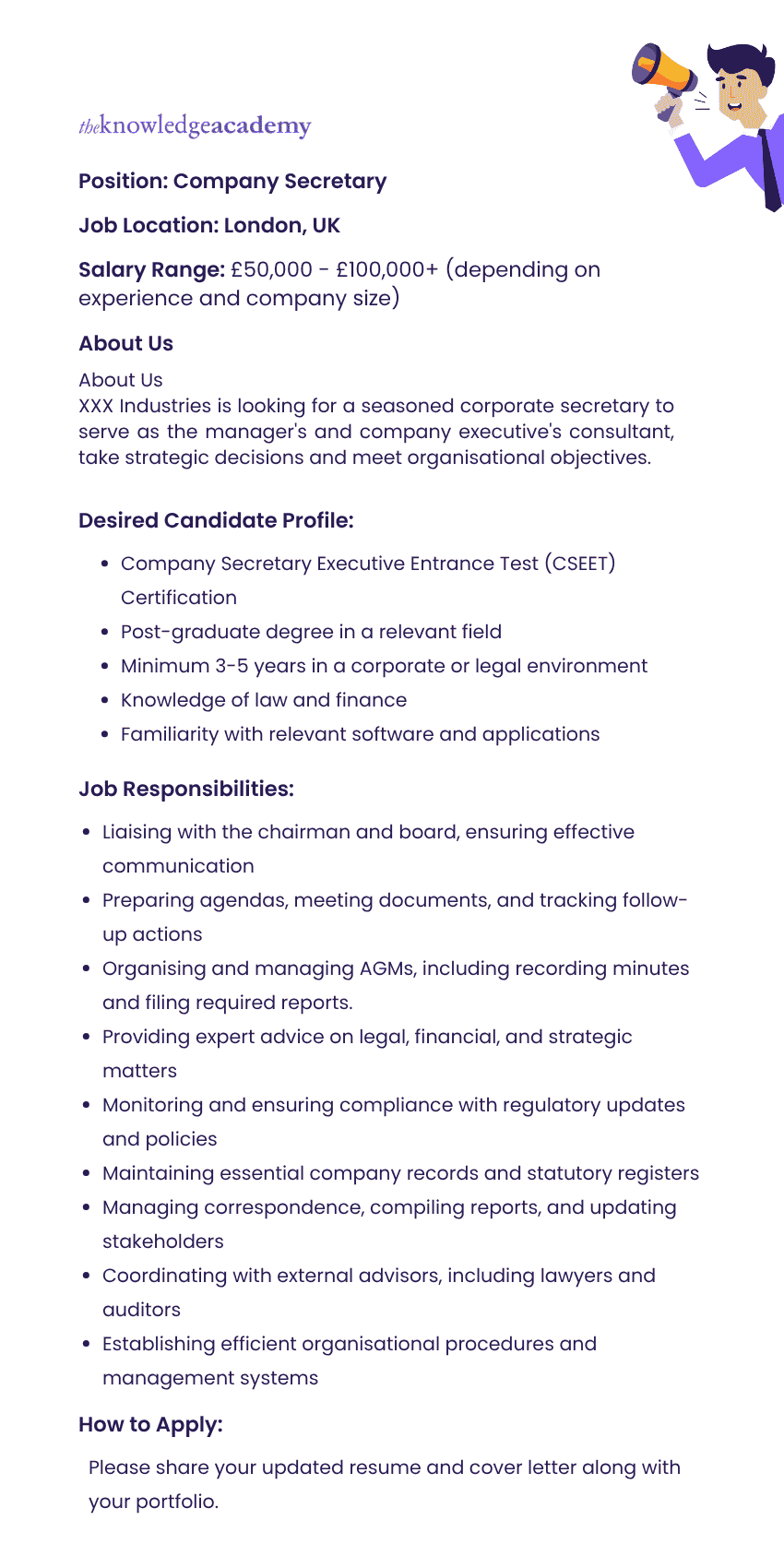
A Company Secretary is crucial in ensuring an organisation complies with legal and regulatory requirements while supporting the board of directors in governance matters. Here’s an example of a Company Secretary Job Description:
How to Become a Company Secretary?
Becoming a Company Secretary is a great fit for someone interested in company law, business rules, and how organisations are run. You'll need to be detail-oriented, trustworthy, and confident when working with senior managers. Here's how to get started:
1) Education: Most people start with a degree in business, law, or commerce. Choose a course that covers topics like company law, governance, finance, accounting, and management.
2) Experience: Gaining real-world experience is important. Try internships, part-time jobs, or junior roles in companies or legal firms to understand how corporate environments work.
3) Professional Qualifications: To become a fully qualified Company Secretary, you'll need a recognised professional qualification. In many countries, this can be done through institutes like the Chartered Governance Institute.
4) Keep Learning: Laws and business practices change often. Attend workshops, seminars, and training to stay up to date and improve your knowledge.
5) Build Soft Skills: Good communication, people skills, and analytical thinking are just as important as technical knowledge. Practice these skills through real experience and training to grow in your role.
Ready to ace your next interview? Study the top Secretary Interview Questions and Answers and be well-prepared for any challenges that come your way during the process!
Is it Hard to Become a Company Secretary?
Yes, becoming a Company Secretary is challenging due to the need for extensive knowledge of corporate law, governance, and relevant qualifications.
What are the Risks of Being a Company Secretary?
The main risks include personal liability for non-compliance, potential fines, and reputational damage. The role demands handling complex regulations and making high-stakes decisions.
Looking to land your dream role? Review Company Secretary Interview Questions and prepare to impress!
Conclusion
The Company Secretary job description goes far beyond administrative duties; it's a role of strategic importance, legal oversight, and ethical leadership. Acting as the bridge between compliance and corporate success, Company Secretaries play a vital part in shaping how organisations are run. If you’re detail-oriented, business-savvy, and thrive under responsibility, this could be the ideal career path to explore for long-term growth and meaningful impact.
Don’t let poor communication hold you back – register for our Effective Communication Skills Training!
Frequently Asked Questions
What is the Difference Between a Secretary and a Company Secretary?

A Secretary handles routine administrative tasks like scheduling and correspondence, whereas a Company Secretary is a senior officer responsible for corporate governance, compliance with legal regulations, and advising the board of directors.
What Power Does a Company Secretary Have?
A Company Secretary has authority to ensure legal compliance, maintain company records, and manage board procedures. They influence corporate decisions by advising on governance, law, and regulatory matters.
What are the Other Resources and Offers Provided by The Knowledge Academy?
The Knowledge Academy takes global learning to new heights, offering over 3,000 online courses across 490+ locations in 190+ countries. This expansive reach ensures accessibility and convenience for learners worldwide.
Alongside our diverse Online Course Catalogue, encompassing 19 major categories, we go the extra mile by providing a plethora of free educational Online Resources like Blogs, eBooks, Interview Questions and Videos. Tailoring learning experiences further, professionals can unlock greater value through a wide range of special discounts, seasonal deals, and Exclusive Offers.
What is The Knowledge Pass, and How Does it Work?
The Knowledge Academy’s Knowledge Pass, a prepaid voucher, adds another layer of flexibility, allowing course bookings over a 12-month period. Join us on a journey where education knows no bounds.
What are the Related Courses and Blogs Provided by The Knowledge Academy?
The Knowledge Academy offers various PA and Secretarial Courses, including the Company Secretary Training, Administrative Assistant Training, and Secretarial Course. These courses cater to different skill levels, providing comprehensive insights into Personal Assistant Job Description.
Our Business Skills Blogs cover a range of topics related to Company Secretary, offering valuable resources, best practices, and industry insights. Whether you are a beginner or looking to advance your Business skills, The Knowledge Academy's diverse courses and informative blogs have got you covered.

Charlotte Wilson


Soft Skills and Business Training Manager
Charlotte Wilson is an expert in soft skills development, with over 14 years of experience helping individuals and teams improve communication, productivity and emotional intelligence in the workplace. Her training content is focused on enhancing interpersonal effectiveness and fostering positive, collaborative environments across all levels of an organisation.
View Detail
Upcoming Business Skills Resources Batches & Dates
Date
 Company Secretary Training Course
Company Secretary Training Course
Fri 19th Jun 2026
Company Secretary Training Course
Fri 28th Aug 2026
Company Secretary Training Course
Fri 11th Dec 2026

 If you wish to make any changes to your course, please


