


 Top Rated Course

We may not have the course you’re looking for. If you enquire or give us a call on 0800 446148 and speak to our training experts, we may still be able to help with your training requirements.
Assertiveness: A Complete Guide
Charlotte Wilson 19 November 2025Assertiveness is the skill of expressing needs and opinions confidently while respecting others, helping build confidence, self-esteem, and boundaries. It improves communication and reduces misunderstandings in daily life. Practising this skill helps you handle conflicts calmly and build stronger, healthier relationships.

Training Outcomes Within Your Budget!
We ensure quality, budget-alignment, and timely delivery by our expert instructors.
Table of Contents

Do you ever agree to something just to avoid upsetting others, even when you don’t want to? Or stay quiet in a meeting when you have something important to say? If yes, you’re not alone. Many people struggle to express themselves confidently without sounding rude, and that’s where Assertiveness makes all the difference.
In this blog, you’ll learn what Assertiveness is, why it matters, and how to develop it through topics like its meaning, key differences, importance, and ways to build this skill.
Table of Contents
1) What is Assertiveness?
2) Passive, Aggressive and Assertive: What’s the Difference?
3) The Importance of Assertiveness
4) How to Become Assertive?
5) How can you Build Assertiveness Skills?
6) Is Assertiveness a Social Skill?
7) Conclusion
What is Assertiveness?
Assertiveness mean sharing your thoughts, needs, and feelings clearly and honestly while respecting others. Some people think being Assertive means being aggressive or trying to win every argument, but it’s not. It is a balanced way to communicate, not too quiet and not too forceful. Assertive people speak with confidence and kindness, without hurting others.
When you practise Assertiveness, you can communicate better, avoid misunderstandings, and handle problems calmly. It helps you build self-confidence, set healthy boundaries, and create stronger relationships at work and in everyday life.
Passive, Aggressive and Assertive: What’s the Difference?
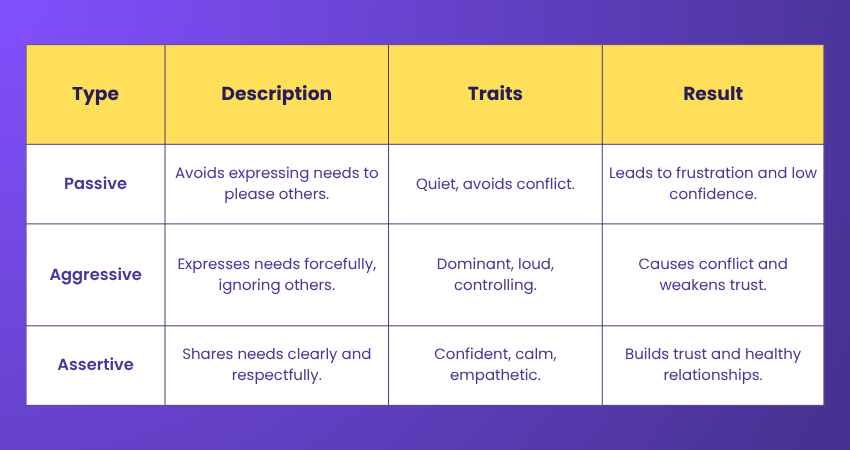
When it comes to behaviour, the idea of Assertiveness Behaviour is often presented as a middle ground between being Passive and being Aggressive. A more accurate way to conceptualise the three would be to view them as points on a triangle. Each point represents a distinct mode of behaviour, with Assertiveness occupying a unique position that balances and blends elements of both Passivity and Aggression.
Assertiveness
Being Assertive involves being considerate of your own and others' rights, wishes, wants, needs, and desires. It entails fostering an open and honest exchange of views, wishes, and feelings between individuals so that both parties can act in a manner that is beneficial to all.
Assertive individuals are adept at listening to the opinions of others and responding appropriately, regardless of whether they agree with those opinions or not. They are also capable of delegating tasks to others while taking full responsibility for their actions.
Passivity
Passive or non-assertive responses often lead to compliance with the wishes of others, which can undermine individual rights and self-confidence. Many individuals adopt a Passive approach because they have a strong desire to be liked by others.
Such individuals do not see themselves as equals because they prioritise the rights, wishes, and feelings of others over their own. Being Passive leads to a lack of communication of thoughts or feelings, resulting in individuals doing things they do not want to do in the hopes of pleasing others. This also means allowing others to take responsibility, lead, and make decisions for them.
Being Aggression
Aggressive behaviour can undermine the rights and self-esteem of others. Aggressive individuals fail to acknowledge the views and feelings of other individuals and rarely shows appreciation or praise for their efforts. Instead, it tends to put others down, leading them to respond in a non-assertive way.
Aggressive responses can encourage others to act either passively or aggressively. There are many forms of aggressive behaviour, such as rushing others unnecessarily, telling rather than asking, ignoring someone, or disregarding their feelings.
Gain confidence in presenting ideas clearly and persuasively. Join our Public Speaking Course now!
The Importance of Assertiveness
a) Builds Good Relationships: Helps you talk honestly and respectfully, creating trust and understanding.
b) Increases Confidence: Lets you say what you need and manage your feelings better.
c) Improves Communication: Makes it easier to share ideas without fear or anger.
d) Solves Problems Better: Helps you stay calm and find fair solutions during conflicts.
e) Supports Teamwork: Encourages working together, sharing ideas, and making fair choices.
f) Strengthens Leadership: Helps you guide others with kindness and confidence.
g) Brings Positive Results: Creates a friendly environment where people work well and feel valued.
How to Become Assertive?
Assertiveness is a valuable skill, but it doesn’t come naturally to everyone. The first step is identifying barriers like fear of rejection or low self-esteem. Setting healthy boundaries and learning to say “no” are also key parts of Assertiveness. You can further develop it by following these simple steps.

Identify Personal Barriers
The journey to developing more Effective Communication, encompassing both Assertive and Turbulent tendencies, begins with introspection and recognition of personal barriers that hinder open communication. These barriers could stem from past experiences, cultural upbringing, or low self-esteem. By identifying these obstacles, individuals can gain insight into their communication patterns and work towards overcoming them.
Set and Maintain Healthy Boundaries
Assertive individuals have clear boundaries and are not afraid to communicate them. Establishing boundaries involves understanding one's limits and being comfortable expressing what is acceptable and what is not in various situations.
Learn to Say "No"
Saying "no" is an essential part of being Assertive. It is crucial to recognise that saying "no" is not inherently negative or selfish; rather, it is an act of self-preservation and self-respect. Learning to decline requests or invitations respectfully empowers individuals to prioritise their well-being without feeling guilty.
Utilise "I" Statements
Effective Communication involves expressing thoughts and emotions clearly and without blaming others. Using "I" statements allows individuals to take ownership of their feelings and experiences without accusing or attacking others. For example, saying "I feel overwhelmed when..." instead of "You always..." fosters more constructive conversations and reduces defensiveness.
Practice Active Listening
Assertiveness also involves being an attentive and empathetic listener. Active listening means fully engaging with the speaker, seeking to understand their perspective without interrupting or jumping to conclusions. It shows respect for the speaker's opinions and helps build stronger connections in personal and professional relationships.
Develop the communication skills essential for career progression and credibility. Join our Business Communication Course now!
How can you Build Assertiveness Skills?
Building Assertiveness Skills starts with knowing yourself. Try to understand what you think, feel, and how you act in different situations. When you understand this, you can express yourself clearly and calmly.
Use simple “I” statements like “I feel” or “I think” to share your thoughts honestly without blaming others. Also, listen carefully when others speak. Being Assertive means talking and listening with respect, which helps build trust and better communication.
Is Assertiveness a Social Skill?
Yes, Assertiveness is a social skill because it helps you express what you think and need in a clear and respectful way. It is an important skill that helps you talk to others, solve problems peacefully, and build good and healthy relationships.
Conclusion
Being confident and respectful in how you communicate helps you build stronger relationships and avoid misunderstandings. It also supports personal growth and better teamwork. By practising Assertiveness, you can express yourself clearly, handle conflicts calmly, and create a more positive and understanding environment in everyday life.
Gain the confidence to present ideas persuasively in any workplace scenario. Join our Communication Skills Course now!
Frequently Asked Questions
What are the 3 C's of Assertiveness?

The 3 C’s of Assertiveness are Confidence, Clarity, and Control.
a) Confidence: Believe in yourself and express your thoughts with self-assurance
b) Clarity: Speak clearly and honestly so others understand you
c) Control: Stay calm and respectful, even during difficult situations
What are the Golden Rules of Assertiveness?
The golden rules of Assertiveness help you communicate confidently and respectfully:
a) Stay calm, keep a positive attitude
b) Use body language, maintain eye contact and a steady tone
c) Be honest and kind, speak clearly without being rude
d) Listen well, respect others’ views
e) Practise often, keep improving your Assertiveness
What are the Other Resources and Offers Provided by The Knowledge Academy?
The Knowledge Academy takes global learning to new heights, offering over 3,000 online courses across 490+ locations in 190+ countries. This expansive reach ensures accessibility and convenience for learners worldwide.
Alongside our diverse Online Course Catalogue, encompassing 19 major categories, we go the extra mile by providing a plethora of free educational Online Resources like Blogs, eBooks, Interview Questions and Videos. Tailoring learning experiences further, professionals can unlock greater value through a wide range of special discounts, seasonal deals, and Exclusive Offers.
What is The Knowledge Pass, and How Does it Work?
The Knowledge Academy’s Knowledge Pass, a prepaid voucher, adds another layer of flexibility, allowing course bookings over a 12-month period. Join us on a journey where education knows no bounds.
What are the Related Courses and Blogs Provided by The Knowledge Academy?
The Knowledge Academy offers various Communication Skills Course, including the Assertiveness Skills Training, Effective Communication Skills Training, and the Public Speaking Course. These courses cater to different skill levels, providing comprehensive insights into Types of Listening.
Our Business Skills Blogs cover a range of topics related to Assertiveness, offering valuable resources, best practices, and industry insights. Whether you are a beginner or looking to advance your Communication skills, The Knowledge Academy's diverse courses and informative blogs have got you covered.

Charlotte Wilson


Soft Skills and Business Training Manager
Charlotte Wilson is an expert in soft skills development, with over 14 years of experience helping individuals and teams improve communication, productivity and emotional intelligence in the workplace. Her training content is focused on enhancing interpersonal effectiveness and fostering positive, collaborative environments across all levels of an organisation.
View Detail
Upcoming Business Skills Resources Batches & Dates
Date
 Public Speaking Course
Public Speaking Course
Fri 17th Jul 2026
Public Speaking Course
Fri 16th Oct 2026

 If you wish to make any changes to your course, please


