


 Top Rated Course

We may not have the course you’re looking for. If you enquire or give us a call on 0800 446148 and speak to our training experts, we may still be able to help with your training requirements.
What is Ad Revenue? Everything You Need to Know
The Knowledge Academy 04 February 2026Ad Revenue is earned by showing ads on websites, apps, or Social Media, letting creators and businesses monetise their content and audience effectively. This revenue is generated by various ad formats like banner ads, video ads and pop-ups. Some platforms use a hybrid model, combining Ad Revenue with other sources like subscriptions.

Training Outcomes Within Your Budget!
We ensure quality, budget-alignment, and timely delivery by our expert instructors.
Table of Contents

Ad Revenue is the invisible engine that powers the internet’s creative ecosystem. It's how websites, YouTubers and apps seem to make money while offering free content. Essentially, Ad Revenue is a digital goldmine where clicks, views and impressions turn into cash. From Social Media influencers to major news outlets, Ad Revenue fuels growth, innovation and opportunity across industries.
So, understanding What is Ad Revenue and how it works can help you see the business side of content creation and digital success. In this blog, you’ll discover how to calculate Ad Revenue, explore its advantages and disadvantages, and learn proven strategies to boost your earnings. Let’s get started!
Table of Contents
1) What is Ad Revenue?
2) Sources of Ad Revenue
3) How to Calculate Ad Revenue?
4) Advantages of Earning Ad Revenue
5) Disadvantages of Ad Revenue
6) Tips for Boosting Ad Revenue
7) Who Pays for Ad Revenue?
8) How Many Subscribers do You Need for Ad Revenue?
9) Conclusion
What is Ad Revenue?
Ad Revenue is the profit you earn by displaying a brand's advertisement on your digital or print media, such as your personal websites or magazines, on behalf of advertisers. To understand it better, let's take an example. Suppose you own a website. The Samsung company comes to you to display an ad for their newly launched smartphone on your website. You implement it.
So, whenever a user visits your website and clicks on that ad, the Samsung brand will pay you the commission. However, it's important to note that Ad Revenue is entirely different from Affiliate Marketing, where you earn commission only through user purchases instead of purely clicking.

Sources of Ad Revenue
Now that you know What is Ad Revenue, let’s explore its sources. Ad Revenue comes from various sources, including display ads. Check the sections below to understand these in detail:
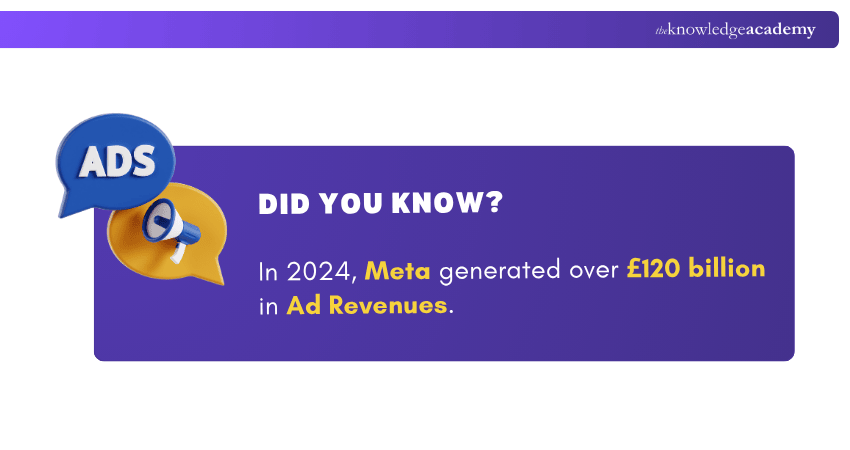
1) Display Ads: These are banner ads displayed on websites, blogs, and apps where website owners earn money through views or clicks. The payment models in such types are typically Pay-per-Click (PPC) or pay-per-impression, with platforms like Google AdSense facilitating these transactions.
2) Video Advertising: Ads are shown before, during, or after videos on platforms like YouTube, providing a major revenue stream for content creators. Payments are based on Cost-per-View (CPV), and in-stream ads can be highly lucrative, especially with a large audience.
3) Social Media Advertising: Targeted ad campaigns on platforms like Facebook, Instagram and X (Twitter) allow influencers to earn by sharing sponsored posts. This form of advertising is effective because it targets a specific audience, and Advertisers are willing to pay a premium for this reach.
4) Print Advertising: Despite the shift to digital, ads in newspapers and magazines still generate significant income for traditional media. Companies pay to advertise their products in print.
5) Broadcast Advertising: Radio and television ads are a major revenue source for media companies. These ads can be expensive but are able to reach a wider audience.
6) In-App Ads: Ads in mobile apps, especially video games, allow free apps to offer ads to access features or progress. The payment models in such scenarios are usually pay-per-view or Pay-per-Click (PPC).
How to Calculate Ad Revenue?
Calculating Ad Revenue is a straightforward process that incorporates simple multiplication. To do so, you first need to find out how many times the user clicked or watched the advertisement in your ad. This is commonly referred to as the 'number of conversions. Then, you need to check how much money you generate through that single click to assess your Revenue Generation. This is called 'conversion value.
Now, multiply the number of conversions by the conversion value to get to your Ad Revenue venue. In mathematical terms, it’s
Ad Revenue = The number of conversions from ads X conversion value
From likes to leads, turn your ads into ROI powerhouses - Sign up for our Facebook Ads Course now!
Advantages of Earning Ad Revenue
Ad Revenue offers users numerous benefits. We list some of its biggest advantages below:
1) Easy-to-Use Process
Ad Revenue is relatively user-friendly to implement. You only need to sign up and put the ads on any website you own. Moreover, you can place the ads directly anywhere instead of a specially designed space.
2) Simple Path to Growth
Ad Revenue is an easy way to grow your website and gain profit quickly. As long as you get more visitors, your Ad Revenue will naturally increase. You only need to produce quality and engaging content for users to visit your website.
3) Suitable for Smaller Websites
Ad Revenue works efficiently on smaller websites. Even if you are a hobbyist or working on community-based websites, you can still earn a good income.
4) Flexible Payments & Earnings
Ad Revenue helps you to offer different payment options. For example, you can provide a free version of your website where users can browse all your content but need to watch ads while browsing. In contrast, premium versions of your website will work where users pay a monthly fee to access all your content without ads. In both ways, you can generate sufficient revenue.
Disadvantages of Ad Revenue
While Ad Revenue can be advantageous, it has a few limitations, such as inconsistent earnings and specific contract terms. Let's understand these limitations in the sections below:
1) Inconsistent Earnings
The Ad Revenues can fluctuate based on user clicks. You earn higher profits in one month, while you generate lower incomes in another. Therefore, you cannot plan your future investments as a result of this inconsistency.
2) Specific Contract Terms
Many Advertisers have specific terms & conditions you need to follow when placing ads. You set your own conversation value if you have an independent website. While if you are using something like Google AdSense, they generally have the particular charges you need to follow.
3) Impact on Your Reputation
Sometimes, ads can hurt your website's reputation. This happens when the ads don't fit your site's theme well. For example, a site dedicated to physical fitness might upset users if it shows too many restaurants and food items.
4) Limited Control
You may not have control over which advertisements appear on your page, depending on your ad service. It's important to speak with various advertising networks and establish explicit guidelines regarding the kinds of ads you wish to display on your website.
Learn how to turn your website traffic into real income with our comprehensive Google AdSense Course - Sign up now!
Tips for Boosting Ad Revenue
There are many ways in which you can improve your Ad Revenue. Below, we have shared a few specific Ad Revenue boosting tips.
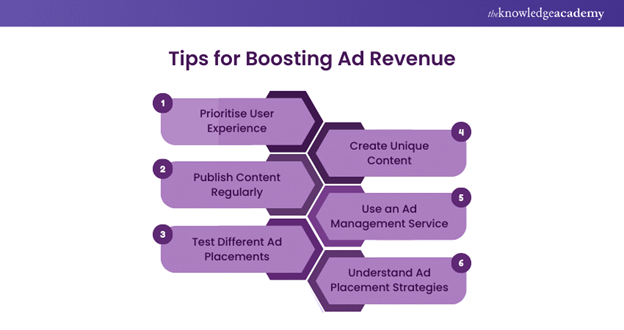
1) Prioritise User Experience
Focus more on the user experience. If you earn Ad Revenue from content, you must ensure it is high quality. If you earn income from a website, you should ensure it loads appropriately and offers quality information.
2) Publish Content Regularly
If you are utilising Social Media or video-sharing platforms, you should post content regularly on them. Try to make a content calendar and stick to it. This way, you can develop trust with your users, and they are more likely to click on your ads multiple times, helping in revenue generation.
3) Test Different Ad Placements
Try experimenting with different ad placements, such as banners, sticky ads, and video ads, to figure out which works best for your audience. Some users may prefer video ads, while others may be inclined toward banner ads.
4) Create Unique Content
Unique content is more likely to rank higher on the Search Engine Ranking Page (SERP) and provides unique value and impression on your page. Consider content that aims to solve users' problems, such as their careers or choosing between several smartphones.
5) Use an Ad Management Service
You can even opt for the ad management services. They reduce the hassles of monitoring ads on your website and are professionally trained to help you earn substantial revenues from your ads.
6) Understand Ad Placement Strategies
You don't want to overwhelm your users with just watching ads instead of enjoying your content. You must find the right balance between earning more Ad Revenue and providing value to your users. This way, you can generate long-term sustainability for your website.
Make your ads unskippable. Learn the secrets of display dominance in our Display Advertising Course - Sign up now!
Who Pays for Ad Revenue?
Advertisers fund Ad Revenue by paying networks to display their ads on blogs. Ad networks like AdSense and Raptive connect advertisers with bloggers, taking a cut of the fees. Bloggers earn passive income based on traffic and ad impressions, while advertisers gain exposure to targeted audiences
How Many Subscribers do You Need for Ad Revenue?
You need at least 1,000 subscribers and 4,000 valid watch-hours in the past 12 months, or 10 million Shorts views in 90 days. This will help you qualify for the YouTube Partner Program (YPP) and start earning Ad Revenue. Having the required subscriber count doesn’t guarantee substantial income.
Earnings depend on views, engagement rate, niche, ad types and viewer geography. Some monetisation features like fan funding or memberships may be available earlier (e.g., at around 500 subscribers), but they don’t replace full ad-revenue eligibility.
Conclusion
Ad Revenue keeps the digital world thriving as it turns every bit of creativity into a lucrative opportunity. It connects brands with audiences and empowers creators to monetise their passion. Understanding What is Ad Revenue and how it works can help you navigate the online economy, create smarter strategies and make your content work profitably in today’s evolving digital landscape.
Become a Google Ads pro and own the search results. Sign up for our Google Ads Certification now!
Frequently Asked Questions
What is Good Ad Revenue?

Good Ad Revenue is a measure of how effectively your site or media generates income from ads. It typically means earning enough to cover your expenses and achieve profit with figures that are in line with your site's engagement and traffic.
Who Collects Ad Revenue?
Ad Revenue is accumulated by website owners, publishers, and Content Creators who display ads on their digital or print platforms. Ad networks like Google AdSense and Social Media platforms also facilitate this collection, managing interactions between publishers and Advertisers.
What are the Other Resources and Offers Provided by The Knowledge Academy?
The Knowledge Academy takes global learning to new heights, offering over 3,000+ online courses across 490+ locations in 190+ countries. This expansive reach ensures accessibility and convenience for learners worldwide.
Alongside our diverse Online Course Catalogue, encompassing 19 major categories, we go the extra mile by providing a plethora of free educational Online Resources like Blogs, eBooks, Interview Questions and Videos. Tailoring learning experiences further, professionals can unlock greater value through a wide range of special discounts, seasonal deals, and Exclusive Offers.
What is The Knowledge Pass, and How Does it Work?
The Knowledge Academy’s Knowledge Pass, a prepaid voucher, adds another layer of flexibility, allowing course bookings over a 12-month period. Join us on a journey where education knows no bounds.
What are the Related Courses and Blogs Provided by The Knowledge Academy?
The Knowledge Academy offers various Digital Marketing Courses, including the Google Ads Certification, Facebook Ads Course and Google AdSense Training. These courses cater to different skill levels, providing comprehensive insights into SERP Volatility.
Our Digital Marketing Blogs cover a range of topics related to Ad Revenue, offering valuable resources, best practices, and industry insights. Whether you are a beginner or looking to advance your Digital Marketing skills, The Knowledge Academy's diverse courses and informative blogs have got you covered.

The Knowledge Academy


Global Training Provider
The Knowledge Academy is a world-leading provider of professional training courses, offering globally recognised qualifications across a wide range of subjects. With expert trainers, up-to-date course material, and flexible learning options, we aim to empower professionals and organisations to achieve their goals through continuous learning.

Upcoming Business Skills Resources Batches & Dates
Date
 Revenue Management Training
Revenue Management Training
Fri 14th Aug 2026
Revenue Management Training
Fri 9th Oct 2026

 If you wish to make any changes to your course, please


