


 Top Rated Course

We may not have the course you’re looking for. If you enquire or give us a call on +358 942454206 and speak to our training experts, we may still be able to help with your training requirements.
Top 30 CISA Interview Questions and Answers for Career Growth
John Davies 22 April 2026The right CISA Interview Questions help prepare for the IT Auditor role, by covering topics like intelligence analysis, security and problem-solving skills. Holding a CISA certification indicates a professional's ability to identify vulnerabilities, ensure compliance and mitigate risks within an organisation's IT infrastructure.
Home
 Resources
IT Security & Data Protection
Top 30 CISA Interview Questions and Answers for Career Growth
Resources
IT Security & Data Protection
Top 30 CISA Interview Questions and Answers for Career Growth
Resources
IT Security & Data Protection
Top 30 CISA Interview Questions and Answers for Career Growth
Training Outcomes Within Your Budget!
We ensure quality, budget-alignment, and timely delivery by our expert instructors.
Table of Contents
A Certified Information Systems Auditor (CISA) rightfully holds one of the brightest spotlights in the digital world. It’s a global benchmark for professionals who safeguard Information Systems, ensure compliance and manage risks with precision. It's one of the most sought-after IT auditing credentials, which is why we bring you 30 of the most asked CISA Interview Questions and Answers to help you secure this prestigious role.
In this blog, we’ve curated the 30 best CISA Interview Questions with sample answers to help you stand out from the other aspirants. From Risk Management to compliance, these insights will sharpen your expertise and give you the edge you need to ace that interview. So read on!
Table of Contents
1) CISA Interview Questions and Answers
a) What is an RFC?
b) What is the point of a CISA audit trail?
c) Define BCP
d) What is Vouching ? Explain in detail about CISA Vouching?
e) Describe the Change Movement
f) What are some ways companies can lose data?
g) What is Intangible assets in CISA?
h) What is the principle of least privilege in auditing?
i) Describe honeypot
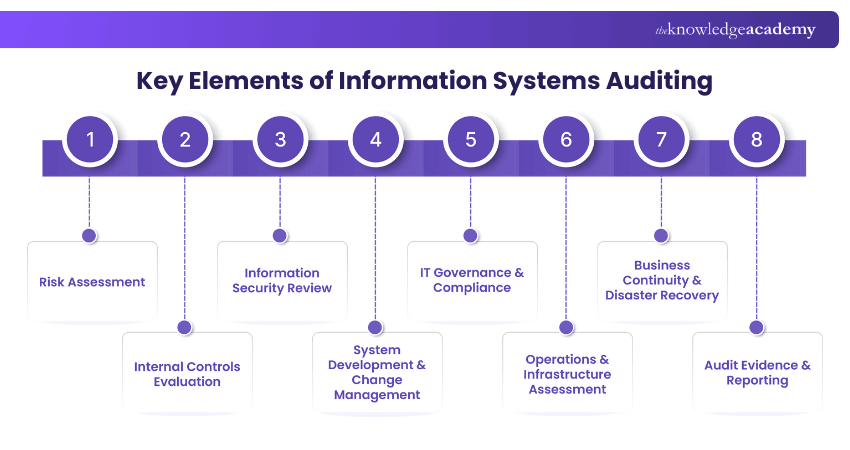
j) What components do you focus on in an audit, and why?
2) Conclusion
CISA Interview Questions and Answers
Prepare confidently with these CISA interview questions and answers. They are designed to simplify complex concepts and better your understanding of auditing, Risk Management, and Information Security. Let's dive in:
What is an RFC?

“RFC stands for Request for Change. It is a formal proposal used to evaluate, document, and approve changes within an IT environment. An RFC explains why the change is needed, the potential impact, and ensures the request goes through proper review before implementation. This structured approach helps maintain stability and prevents unnecessary disruption.”

What is the point of a CISA audit trail?
“A CISA audit trail creates a record of system activities, which helps the Auditors trace actions back to specific users or events. It supports accountability, highlights anomalies and makes it easier to investigate incidents. It’s basically a reliable way to understand what happened, when and who was involved.”
Define BCP
“BCP stands for Business Continuity Plan. It is a structured strategy that outlines how an organisation will maintain critical operations during disruptions. A BCP includes recovery procedures, communication steps, and resource planning to ensure the business remains functional during major incidents such as outages, disasters, or cyberattacks.”
What is Vouching? Explain CISA Vouching in detail?
“Vouching is an auditing technique where you can trace numbers in financial or system records back to their original source documents. In the context of CISA, vouching confirms the accuracy and authenticity of transactions by checking logs, receipts, authorisation records, or system entries. It ensures that data isn’t fabricated, altered or recorded incorrectly.”
Describe the Change Movement
“Change Movement refers to the structured process of planning, approving, implementing, and reviewing changes within an IT environment. It ensures that updates are controlled, documented, and thoroughly tested before deployment. This reduces risk, prevents unexpected disruptions, and ensures modifications do not negatively impact system stability or security.”
Become a seasoned Cyber Security strategist with our detailed ISSMP Training – Sign up now and be the Architect of organisational resilience!
What are some ways companies can lose data?
Companies can lose data through various ways including:
1) Accidental deletion
2) Hardware failure
3) Ransomware attacks
4) Insider threats
5) Poor backups
6) Natural disasters
7) System corruption.
8) Misconfigured Cloud storage
Most losses come down to weak processes, lack of protection or human error, which makes strong controls essential.
What is intangible assets in CISA?
“Intangible assets refer to non-physical resources like software, trademarks, licenses, intellectual property and proprietary data. In CISA, Auditors evaluate how these assets are controlled and protected. Since they are often critical to a business’s success, safeguarding them becomes a major audit priority.”
What is the principle of least privilege in auditing?
“The principle of least privilege means giving users only the access they absolutely need and nothing more. It reduces risks by limiting what someone can do if their credentials are misused. The Auditors check if permissions are appropriate, regularly reviewed and in line with job responsibilities.”
Describe honeypot
“A honeypot is a decoy system designed to attract attackers. It pretends to be a valuable target, thus allowing security teams to monitor malicious behaviour. It helps identify new threats and understand the attackers' techniques without exposing real systems to unnecessary risk.”
What components do you focus on in an audit, and why?
The components I focus on are:
1) Access controls
2) System configurations
3) Data protection
4) Change Management
5) Operational processes
These areas reveal whether the systems are secure and compliant. They also show how well the organisation protects its assets and whether the risks are being properly identified.
What will you do if you discover a flaw in the system while working as an Auditor?
““If I identify a flaw, I would document the issue, collect evidence and report it to the appropriate stakeholder. I would not attempt to fix it myself. Instead, I would ensure the risk is escalated and addressed through the organisation’s remediation and Change Management processes.”
Become the go-to master at navigating IT risks with our Certified in Risk and Information Systems Control (CRISC) Course – Sign up now!
Identify the dynamic analysis tool that is utilised to test software components
“A common Dynamic Analysis tool is a fuzzer, which tests software by feeding unexpected data inputs. Other examples include Valgrind, Burp Suite and AppScan. These tools help identify the runtime vulnerabilities, memory leaks and security flaws that might not appear during static analysis.”
What core competencies should an IT Auditor possess?
An IT Auditor needs:
1) Strong analytical skills
2) Risk assessment abilities
3) Knowledge of security frameworks
4) Technical understanding of systems
5) Communication skills
6) Attention to detail
They have to interpret data and communicate findings clearly to both technical and non-technical stakeholders.
Describe the risk that could arise as a result of insufficient software base lining
“Without proper software baselining, there's the risk of unauthorised changes, inconsistent configurations, version confusion and troubleshooting difficulties. It becomes hard to verify integrity or validate updates. This increases vulnerabilities and compliance gaps, ultimately making incidents harder to trace and resolve.”
Explain how you would utilise CISA principles during a data leak or Cyberattack
“I’d begin by analysing logs and audit trails, identifying affected assets and assessing control failures. Using CISA principles, I’d document the event, evaluate root causes, verify containment measures and make sure the recovery steps follow best practices. I’d also recommend stronger controls to prevent recurrence.”
What is the standard protocol of the Internet?
“The Internet primarily uses the TCP/IP protocol suite. TCP/IP governs how data is packaged, transmitted, routed and delivered across networks. It makes sure that the devices communicate reliably, regardless of their operating systems or hardware differences.”
What happens if a modification harms a system or doesn’t proceed as expected?
“If a change causes any issues, it’s rolled back according to the organisation’s Change Management plan. The incident is documented, analysed and reviewed. Teams can investigate why the change failed, assess the impact and make sure the fixes are properly tested before trying again.”
What exactly is sociability testing?
“Sociability testing checks how well a system interacts with other systems, users and external components. It ensures smooth communication and functional integration across environments. It helps identify those issues that only appear when systems work together rather than in isolation.”
What are some pitfalls of virtualised systems?
Virtualised systems can suffer from:
1) Resource contention
2) Performance bottlenecks
3) VM sprawl
4) Misconfiguration
5) Security vulnerabilities
6) dependency issues
If they are poorly managed, they can also complicate audits and incident response. Strong controls and monitoring are essential to avoid these risks.
Explain the function of Network Encryption
“Network Encryption protects data as it moves across networks by converting it into unreadable code. Only the authorised users with the correct keys can decrypt it. It prevents eavesdropping and data theft, especially during remote access or internet communication.”
What exactly is a BIA?
“A Business Impact Analysis (BIA) identifies critical business functions and assesses how disruptions would affect operations. It estimates the financial, operational as well as reputational impacts. It helps organisations prioritise their recovery efforts and allocate resources for continuity planning.”
Our Chief Information Security Officer Training turns visionaries into digital defenders. Sign up and lead the charge!
What are the drawbacks of a faulty control application and policy definitions?
Faulty controls or unclear policies cause the following setbacks:
1) Inconsistent practices
2) Increased risk exposure
3) Compliance failures
4) Operational confusion
They make audits harder and let vulnerabilities go unnoticed. Ultimately, they weaken the organisation’s overall security posture.
What are the controls that should be enforce when granting access to third-party associations?
The following should be enforced:
1) Strict access controls
2) Least-privilege principles
3) Contractual security requirements
4) Periodic access reviews
Multi-factor authentication, network segmentation and activity logging ensure third-party access remains traceable.
What does an IT Audit seek to achieve?
“An IT audit evaluates whether systems are secure, reliable, compliant and properly controlled. It identifies risks and suggests improvements. The goal is to strengthen security, protect assets and ensure that IT operations support the organisation’s key business objectives”
What is the role of hashing in Information Security?
“Hashing creates a fixed-value output from data and helps to verify integrity. If the data changes even a little, the hash changes completely. It’s used to protect passwords, verify files and detect instances of tampering. Hashing keeps information trustworthy without revealing the original content.”
What is the disadvantage of using long asymmetric encryption keys?
“While longer asymmetric keys provide good security, they also require significantly more processing power. This slows down encryption, decryption and authentication processes. For systems dealing with high traffic or limited resources, the performance can degrade noticeably.”
What is the point of a CISA audit trail?
To gauge the effectiveness of internal controls, Auditors perform the following:
1) Review documentation
2) Test processes
3) Examine system configurations
4) Interview personnel
5) Analyse logs
6) Look for gaps between policy and practice
What is the most essential justification for routinely reviewing an audit plan?
“Regular reviews keep the audit plan on track with changing risks, technologies and business priorities. It ensures that the Auditors focus on the most relevant areas and adapt to new threats or regulatory updates.”
What security measures have you taken to guard systems against uninvited traffic?
I’d implement the following:
1) Firewalls
2) Intrusion detection systems
3) Access controls
4) Network segmentation
5) Encryption
Regular patching and vulnerability scans also help keep unwanted traffic out. On top of these, monitoring the logs ensures that suspicious activity is caught quickly.
Would you attempt to fix an application's issue on your own?
“As an Auditor, I wouldn’t fix any issue myself. Instead, I’d report the findings clearly to the responsible team. I would document the risk and recommend remediation steps. Fixing it personally could compromise the evidence or violate separation-of-duties principles.”

John Davies


Cyber Security Governance & Assurance Specialist
John Davies is a cybersecurity expert specialising in governance, risk management, and compliance. With over 15 years in the field, he has led enterprise-wide security programmes across finance, healthcare and public sector organisations. His content provides practical guidance on building secure environments, managing risk and aligning with regulatory frameworks.


 If you wish to make any changes to your course, please


