


 Top Rated Course

We may not have the course you’re looking for. If you enquire or give us a call on +358 942454206 and speak to our training experts, we may still be able to help with your training requirements.
What is an Explainer Video: A Complete Guide
James Smith 24 February 2026An Explainer Video is a short video that clearly explains a product, service, or idea using simple visuals to engage viewers and drive action. It helps businesses explain complex ideas quickly, capture attention, and improve understanding by using visuals, voiceover, and storytelling to make information easier to remember and appealing.

Training Outcomes Within Your Budget!
We ensure quality, budget-alignment, and timely delivery by our expert instructors.
Table of Contents
Explaining a product, service, or idea is a challenge when your audience has limited time and attention. This is why understanding What is an Explainer Video is essential for helping people understand what you offer and why it matters. They make communication more humane, relatable, and easier to follow.
In today’s dynamic and fast-paced digital world, users prefer content that is clear, engaging, and quick. Understanding What is an Explainer Video can help businesses connect with their audience and simplify complex topics. In this blog, you will learn about Explainer Videos, their types, their benefits, how to make one, and more. Keep reading to learn more!
Table of Contents
1) What is an Explainer Video? (Definition & Examples)
2) Types of Explainer Videos
3) How can you Make an Explanatory Video?
4) Benefits of an Explainer Video
5) What Kind of Explainer Videos are Best?
6) Elements of a Successful Explainer Video
7) Why do Explainer Videos Work?
8) What is the Purpose of an Explainer Video?
9) Do Explainer Videos Work?
10) Conclusion
What is an Explainer Video? (Definition & Examples)
An explainer video is a short, engaging video designed to explain complex ideas, products, or services in a simple and visually appealing way. It presents information clearly so viewers can understand the message quickly and easily. These videos are commonly used by businesses to introduce new concepts or demonstrate how a product or service works.
Explainer Videos often combine animation, a clear narrative, and sometimes a voiceover to keep viewers interested while delivering the key message. They are highly effective in marketing because they make information easy to understand. This helps brands connect with audiences, improve engagement, and encourage action. For example, a video showing a company’s service works, such as how an online banking or food delivery service operates.

Types of Explainer Videos
Explainer Videos are a powerful medium for conveying information clearly and effectively. Here’s an overview of the various types of Explainer Videos you can use.
a) AI Explainer Videos: These utilise AI to quickly generate videos from scripts with minimal input. They are cost-effective and scalable, ideal for teaching concepts or marketing.
b) Character-animated Videos: Using animated characters to tell stories or explain services, these videos offer a relatable and engaging visual experience.
c) Live-action Explainers: Incorporating real footage, these videos add a personal touch, creating a stronger connection with the audience.
d) Whiteboard Animations: These videos simulate a classroom-style teaching method by presenting drawings on a whiteboard, making the content clear and direct.
e) Screencasts: Screen recordings that guide viewers through software or digital services, providing a straightforward demonstration of the product in use.
f) Motion Graphics: Combining graphic design with animation, these videos illustrate complex ideas in an easily digestible format.
g) 3D Animation: Offering an immersive and detailed perspective, these videos bring products or concepts to life with depth and movement.
h) Stop Motion: Creating a unique, handmade feel, these videos piece together still images to create motion.
i) Kinetic Typography: Animating text to emphasise messages or ideas, making the content stand out.
j) Infographics: Blending data visualisation with short narratives, these videos present statistics or information in an engaging way.
k) Mixed Media: Merging various styles and techniques, these videos create a distinctive and creative explainer video.
How Can You Make an Explanatory video?
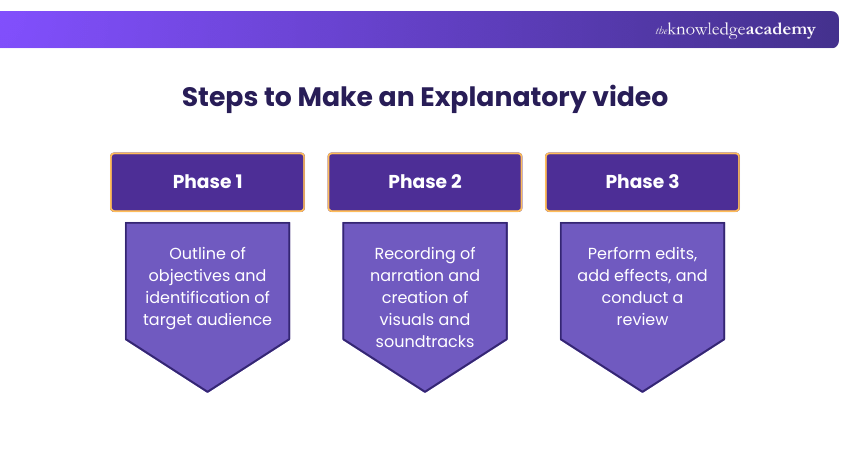
Creating explanatory videos involves a systematic process that spans three key phases: pre-production, production, and post-production. Have a look in detail:
1) Pre-Production
a) Define Objectives and Audience: Start by clearly outlining the objectives of the explanatory video. Identify the target audience and customise the content to meet their needs and expectations.
b) Scriptwriting: Develop a well-structured script that conveys information logically and concisely. Outline the key points to be covered and ensure a smooth flow of narration. The script is the foundation of the entire video.
c) Storyboarding: Create a visual representation of the script through storyboarding. This step helps in planning the visual elements, transitions, and overall composition of the video. It serves as a blueprint for the production phase.
d) Select Visual Elements: Choose appropriate visuals such as animations, graphics, or live-action footage that align with the script and storyboard. Consider the visual style that best explains the intended message and resonates with the audience.
2) Production
a) Recording Narration: If a voiceover is part of the video, record a clear and professional narration. Ensure that the tone, pace, and pronunciation align with the script and the overall vibe of the video.
b) Create Visuals: Generate or compile the visuals based on the storyboard. Whether using animation software, graphic design tools, or capturing live-action footage, maintain consistency with the storyboard and script.
c) Incorporate Soundtrack: Integrate background music or sound effects to enhance the video's emotional impact. The audio elements should complement the narration and visuals without overpowering them.
3) Post-production
a) Editing: Combine narration, visuals, and sound elements using video editing software. Remove unnecessary content, refine transitions, and ensure a smooth flow. Pay close attention to pacing to maintain viewer engagement.
b) Add Effects and Enhancements: Incorporate any necessary effects, animations, or additional enhancements to polish the video. Ensure that these elements contribute to clarity and do not distract from the main message.
c) Review and Test: Conduct thorough reviews to identify errors or areas for improvement. Test the video across different devices and platforms to ensure a consistent and high-quality viewing experience.
Start your marketing journey with clear fundamentals with the Introduction to Marketing Training – Join now!
Benefits of an Explainer Video
Let’s look at some of the key benefits of Explainer Videos below:
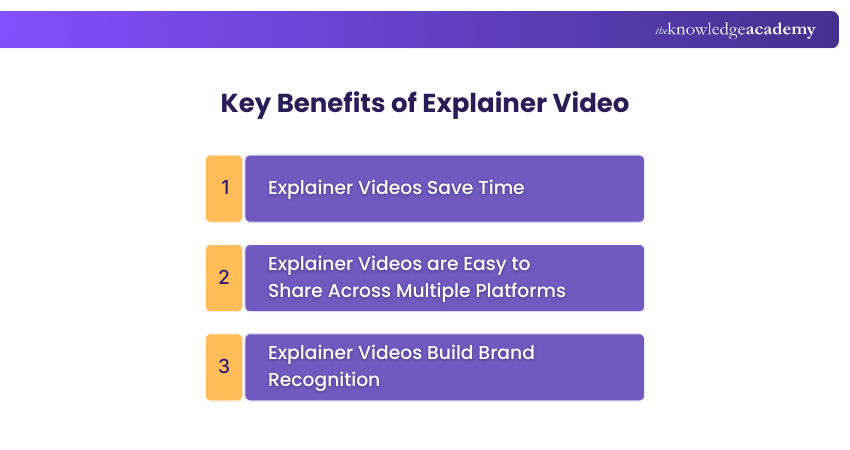
1) Explainer Videos Save Time
Explainer Videos emphasises the core message of your business i a concise and easy-to-understand format. This saves time for customers who can quickly decide whether your offering fits their needs, budget, or expectations without reading long pages of text.
The Explainer Video acts as a ready introduction. Many potential customers may have already watched it before contacting you, allowing conversations to focus on specific needs, questions, and solutions.
2) Explainer Videos are Easy to Share Across Multiple Platforms
Explainer Videos are flexible and can be shared across many platforms. They can be placed on your website, shared on social media channels, such as X or LinkedIn, or included in email campaigns and presentations.
This wide reach increases visibility and improves the chances of your message being seen in a populated digital space. Explainer Videos are also effective for referrals, as people are more likely to share video content compared to text-based content.
3) Explainer Videos Build Brand Recognition
Explainer Videos improve brand recognition by showcasing your brand’s personality, tone, and visual identity. Elements, such as colours, messaging style, or animation, make the video more memorable and appealing.
As people tend to trust and buy from brands they recognise, Explainer Videos play an important role in building familiarity. Clearly reflecting who you are as a business helps attract the right audience, build trust, and support long-term brand growth.
What Kind of Explainer Videos are the Best?
The following points explain the kind of Explainer Videos that are the best:
a) Clear and Concise Scripting: The best explainer videos feature a meticulously crafted script that communicates complex ideas in a straightforward and concise manner. Every word serves a purpose, ensuring the audience easily grasps the intended message.
b) Engaging Visuals: Utilising high-quality animations, graphics, and illustrations, the best explainer videos captivate the audience visually. The visuals not only complement the script but also enhance understanding, making the content memorable.
c) Targeted Audience Appeal: Tailoring the content to a specific target audience is crucial for the best explainer videos. Understanding the viewers' needs, preferences, and pain points helps in creating content that resonates and addresses their concerns.
d) Professional Voiceover or Narration: A well-articulated and professional voiceover adds a layer of credibility and clarity to the explainer video. Voice Over vs Voice Acting is key here, as the tone and pacing should align with the content, aiding in effective communication.
e) Optimal Length: The best explainer videos strike a balance between providing comprehensive information and respecting the viewer's time. They maintain an optimal length, preventing viewer fatigue and ensuring sustained engagement.
f) Seamless Pacing: A well-paced explainer video keeps the audience's attention by avoiding abrupt transitions or information overload. The pacing is carefully orchestrated to guide the viewer through the narrative smoothly.
g) Call-to-action (CTA): A compelling and well-placed call-to-action motivates viewers to take the desired next steps. Whether it's subscribing, visiting a website, or making a purchase, a clear CTA enhances the video's effectiveness beyond information dissemination.
h) Mobile-friendly Design: Recognising the prevalence of mobile viewership, the best explainer videos are optimised for various devices, ensuring a seamless and enjoyable experience across platforms.
Learn how to create content that attracts audiences, builds trust, and drives engagement with the Content Marketing Course now!
Elements of a Successful Explainer Video
Key elements of a successful explainer video include:
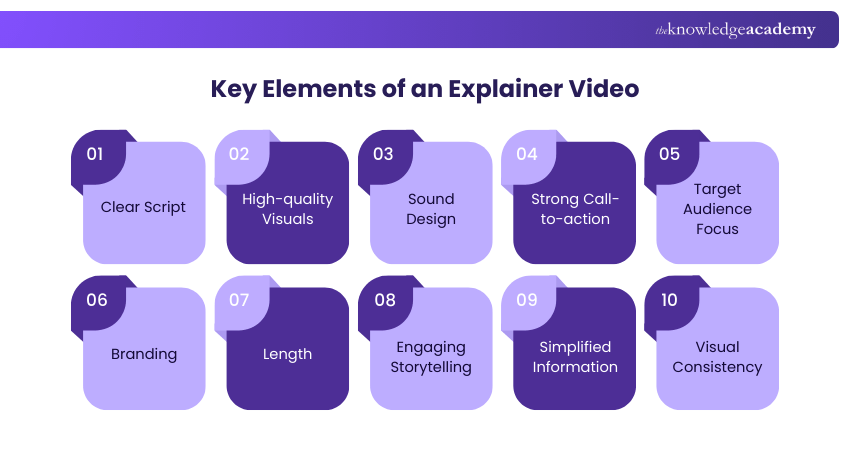
a) Clear Script: A concise and engaging script that conveys the core message effectively
b) High-quality Visuals: Professional animations or footage that captivate the audience
c) Sound Design: Crisp audio, appropriate background music, and sound effects
d) Strong Call-to-action: A compelling call-to-action guiding viewers on what to do next
e) Target Audience Focus: Tailored content that resonates with the intended audience
f) Branding: Consistent use of brand colours, logos, and style to reinforce brand identity
g) Length: Keeping the video short, ideally between 60 and 90 seconds, to maintain viewer interest
h) Engaging Storytelling: A narrative that is relatable and easy to follow
i) Simplified Information: Breaking down complex information into easily digestible parts
j) Visual Consistency: Maintaining a cohesive visual style throughout the video
Why do Explainer Videos Work?
Explainer videos generally work well while conveying information and concepts for the following reasons:
a) Video is More Easily Understood: Explainer videos leverage visual and auditory elements, making complex information more digestible and memorable. The combination of visuals, narration, and sometimes text ensures that viewers can grasp concepts quickly and retain the information more effectively than through text alone.
b) You can Save Resources by Using Explainer Videos: Creating explainer videos can be cost-effective compared to other forms of content production. One of the key benefits of explainer videos is their ability to save both time and resources. With advancements in technology and a variety of animation tools available, businesses can convey their messages creatively without the need for elaborate sets, actors, or extensive post-production efforts.
c) The Encounter is Effective: Explainer videos evoke emotions and engage viewers on a personal level. Whether through relatable characters, compelling narratives, or visually stimulating graphics, the emotional impact of an explainer video contributes to a more profound and lasting impression on the audience.
d) A Good Return on Investment (ROI) Comes via Video: Investing in explainer videos often yields a substantial return on investment (ROI). These videos can be shared across multiple platforms, reaching a broader audience and increasing brand visibility. The engaging nature of videos encourages social sharing, amplifying their reach and impact, ultimately translating into a positive ROI for businesses.
Discover how to use video content to capture attention, tell stories, and grow your brand with the Video Marketing Course today!
What is the Purpose of an Explainer Video?
The primary purpose of an Explainer Video is to clearly and quickly communicate what a business offers and why it matters. It is a short-form video commonly used in marketing and sales to highlight a company’s product, service, or idea.
Explainer Videos are designed to grab attention, explain value, and guide viewers towards action. Breaking down key information into an easy-to-understand format helps potential customers understand how something works without feeling overwhelmed.
Do Explainer Videos Work?
Yes, Explainer Videos work effectively. They grab attention, simplify complex ideas, and help the audience quickly understand a product or service. Presenting information in a clear and visual way keeps viewers engaged for longer than text alone.
Also, it improves key performance metrics. When users understand what is being offered, they are more likely to act, leading to higher conversion rates.
Conclusion
Explainer Videos are an engaging and meaningful way to communicate ideas clearly to connect with audiences in a short timeframe. Turning complex information into simple, engaging visuals helps businesses build trust, improve understanding, and encourage actions. If you understand What is an Explainer Video, you can see witness the important role it plays in modern marketing and effective communication.
Build in-demand marketing skills and learn to drive real business growth with Marketing Courses now!
Frequently Asked Questions
How Long Should an Explainer Video Last?

An explainer video should ideally last between 60 to 90 seconds. This duration is optimal for maintaining viewer engagement while effectively conveying the core message. Keeping the video concise ensures that the audience receives the information without losing interest.
What is the Timeline for Explainer Videos?
The timeline for creating an explainer video typically ranges from 4 to 6 weeks. This period includes phases like concept development, scriptwriting, storyboarding, animation, voice-over recording, and final editing. The precise timeline can change based on the video's complexity and the production team's workflow.
What are the Other Resources and Offers Provided by The Knowledge Academy?
The Knowledge Academy takes global learning to new heights, offering over 3,000 online courses across 490+ locations in 190+ countries. This expansive reach ensures accessibility and convenience for learners worldwide.
Alongside our diverse Online Course Catalogue, encompassing 17 major categories, we go the extra mile by providing a plethora of free educational Online Resources like Blogs, eBooks, Interview Questions and Videos. Tailoring learning experiences further, professionals can unlock greater value through a wide range of special discounts, seasonal deals, and Exclusive Offers.
What is The Knowledge Pass, and How Does it Work?
The Knowledge Academy’s Knowledge Pass, a prepaid voucher, adds another layer of flexibility, allowing course bookings over a 12-month period. Join us on a journey where education knows no bounds.
What are the Related Courses and Blogs Provided by The Knowledge Academy?
The Knowledge Academy offers various Marketing Courses, including Explainer Videos Training, Introduction to Marketing Training, Business and Video Marketing Course. These courses cater to different skill levels, providing comprehensive insights into B2B Conversion Rate Optimisation.
Our Digital Marketing Blogs cover a range of topics related to Marketing, offering valuable resources, best practices, and industry insights. Whether you are a beginner or looking to advance your skills as a Digital Marketer, The Knowledge Academy's diverse courses and informative blogs have you covered.

James Smith


Digital Marketing Manager and Trainer
James Smith is a digital marketing professional with over a decade of experience in SEO, content strategy, paid media and analytics. He has supported both SMEs and global brands in transforming their digital presence. James’s writing and training are rooted in results-driven tactics and the latest marketing trends.
View Detail
Upcoming Digital Marketing Resources Batches & Dates
Date
 Introduction to Marketing Training
Introduction to Marketing Training
Fri 10th Jul 2026
Introduction to Marketing Training
Fri 11th Sep 2026

 If you wish to make any changes to your course, please


