


 Top Rated Course

We may not have the course you’re looking for. If you enquire or give us a call on +358 942454206 and speak to our training experts, we may still be able to help with your training requirements.
What is Scandinavian Interior Design and its Key Elements?
Richard Harris 02 March 2026Scandinavian Design is a minimalist style from Nordic countries, defined by clean lines, natural light and simple materials to create bright, functional spaces. It embraces a "less is more" philosophy, emphasising comfort without clutter. Muted colours, wooden textures, and cosy textiles add warmth to its sleek, airy interiors.

Training Outcomes Within Your Budget!
We ensure quality, budget-alignment, and timely delivery by our expert instructors.
Table of Contents
Scandinavian Interior Design is deeply rooted in the serene landscapes and cultures of the Nordic region. It has captivated the world with its unique blend of minimalism, functionality, and warmth. Hailing from Denmark, Norway, Sweden, and Finland, this design philosophy celebrates simplicity, natural elements, and a focus on crafting inviting and cosy living spaces.
With such a dynamic history, today, it stands as one of the favourites among people. In this blog, you are going to learn all there is to know What is Scandinavian Interior Design, its key elements, and the benefits. Delve in to learn more!
Table of Contents
1) What is Scandinavian Design?
2) The History of Scandinavian Design
3) Key Elements of Scandinavian Interior Design
4) Benefits of Scandinavian Interior Design
5) What is the Difference Between Scandinavian and Nordic Design?
6) What are Scandinavian Colors?
7) Conclusion
What is Scandinavian Design?
Scandinavian design is a timeless and practical style of Interior Design that originated in the Nordic countries, Denmark, Sweden, Norway, Finland, and Iceland in the early 20th century and gained global popularity by the 1950s. At its heart, this design philosophy balances minimalism with warmth, offering an aesthetic that feels clean, calm, and deeply comforting.
Rather than focusing solely on visual appeal, Scandinavian design prioritises functionality and well-being. Spaces are thoughtfully arranged to be efficient and uncluttered, while still maintaining a sense of cosiness and tranquillity. This is achieved through the use of natural light, which is maximised with large windows and pale colour schemes, and natural materials like light-toned woods, wool, linen, and leather that introduce warmth and texture.

The History of Scandinavian Design
Scandinavian design emerged in the early 20th century as a response to the changing social and cultural landscape of Northern Europe. Rooted in the values of simplicity, functionality, and accessibility, the movement grew out of a desire to create well-designed, affordable products that could improve everyday life.
Scandinavian design began gaining momentum in the 1930s, thanks to visionary figures like Josef Frank, Alvar Aalto, and Arne Jacobsen. Its international rise accelerated in the 1950s, particularly with the launch of the “Design in Scandinavia” exhibition at The Brooklyn Museum in 1954.
This showcase travelled across the United States and Canada until 1957, featuring iconic works such as Aalto’s three-legged stools, Carl Hansen’s Wishbone Chair, and lighting by Louis Poulsen. Around the same time, the Lunning Prize, established by Danish entrepreneur Frederik Lunning played a key role in promoting top Scandinavian designers between 1951 and 1970.
Key Elements of Scandinavian Interior Design
Scandinavian Interior Design portrays a lifestyle rooted in simplicity, warmth, and functionality. Let’s explore the key elements that define this much-loved interior style and why it continues to inspire homes around the world. 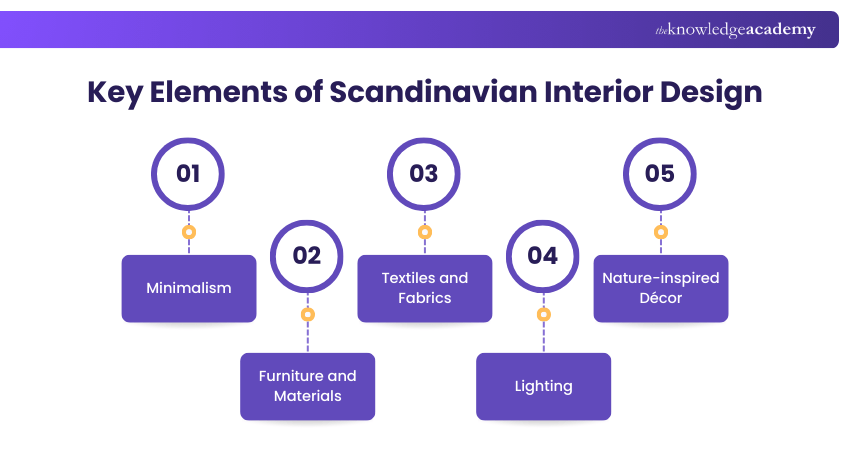
1) Minimalism
Scandinavian design is rooted in minimalism, favouring simplicity, clean lines, and clutter-free spaces. Every element is intentional; there are no excessive decorations or over-the-top furnishings. The idea is to create a calm, functional environment where less truly is more. Neutral colour palettes, hidden storage, and multi-purpose furniture enhances this sense of order and ease.
2) Furniture and Materials
Furniture in Scandinavian interiors is typically sleek, lightweight, and designed with functionality in mind. Think of tapered wooden legs, natural materials like oak or ash, and understated silhouettes. Materials that lean toward organic like wood, leather, metal, and stone are commonly used to bring a warm, tactile feel while still maintaining visual simplicity.
3)Textiles and Fabrics
Textiles play a major role in adding comfort to Scandinavian spaces. Wool throws, linen curtains, cotton cushions, and sheepskin rugs are layered to soften minimal interiors. These textures not only enhance visual warmth but also bring in that essential sense of "hygge", a Danish concept meaning cosiness and contentment.
4) Lighting
Natural light is a prized element in Scandinavian design. Large windows are often left uncovered or dressed with light, sheer fabrics. Artificial lighting is layered through pendant lamps, wall lights, and floor lamps to create ambience during long winters. Light fixtures are often minimal yet artistic, designed to blend function with form.
5) Nature-inspired Décor
Bringing the outdoors in is key to Scandinavian aesthetics. Homes are often decorated with indoor plants, botanical prints, and natural textures like jute, wood, and stone. Decor pieces are subtle, ceramic vases, wooden bowls, or nature-inspired artwork. This helps to maintain a fresh, earthy vibe within a clean and airy environment.
Benefits of Scandinavian Interior Design
The Scandinavian Interior Design philosophy offers a multitude of advantages that resonate with modern living, they include the following:
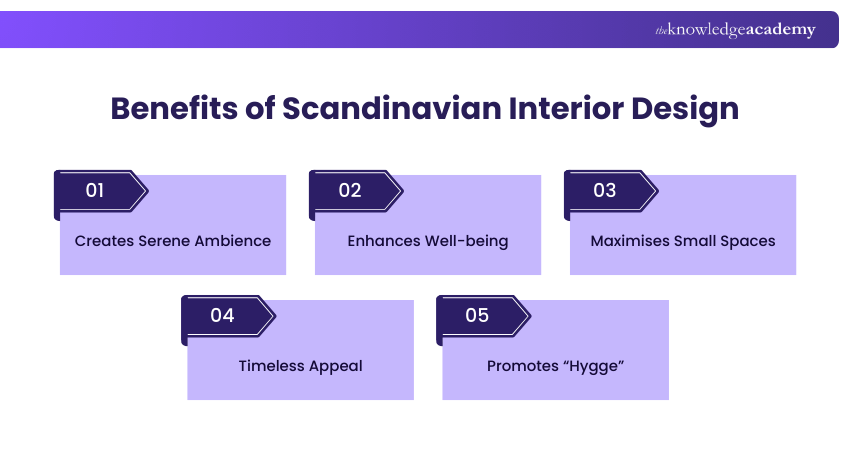
1) Creates Serene Ambience: The emphasis on minimalism, light colour palettes, and uncluttered spaces fosters an atmosphere of tranquillity, promoting relaxation and peace of mind.
2) Enhances Well-being: The cosy textures, natural materials, and connection to nature contribute to an environment that supports emotional well-being and physical comfort.
3) Maximises Small Spaces: Scandinavian design excels in making the most of limited square footage. Clean lines and multi-functional furniture optimise space, creating an illusion of spaciousness.
4) Timeless Appeal: The classic yet contemporary aesthetics of Scandinavian design ensure its relevance across changing trends. This makes it a sustainable choice that withstands the test of time.
5) Promotes “Hygge”: The concept of "hygge," which encapsulates cosiness and contentment, enhances the sense of comfort and belonging – enriching the overall living experience.
Want to make a statement with your decor? Learn the essentials of Maximalist Interior Design now!
What is the Difference Between Scandinavian and Nordic Design?
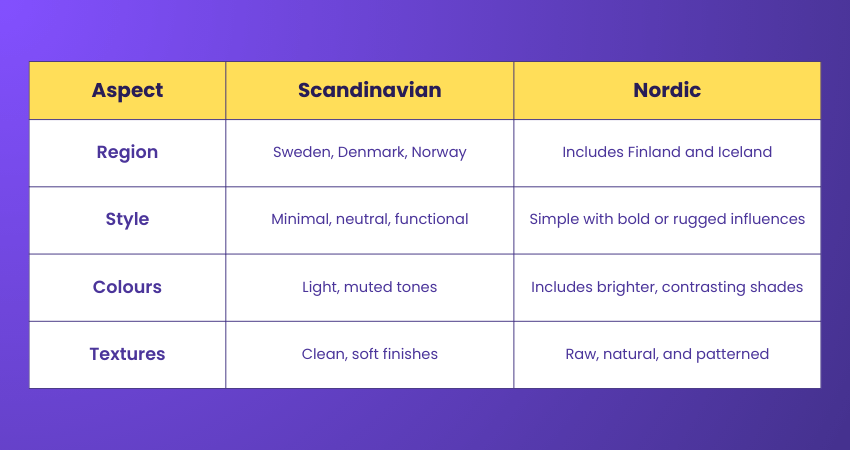
Scandinavian and Nordic designs are similar but not identical. Scandinavian design comes from Sweden, Denmark, and Norway. It mainly focuses on minimalism, neutral colours, and functional elegance. Nordic design is a wider term that also includes Finland and Iceland.
While it shares core values like simplicity and natural elements, it reflects more varied influences. Finnish design often features bold prints and colours, while Icelandic interiors showcase raw textures inspired by their dramatic, volcanic landscapes.
What are Scandinavian Colors?
Scandinavian colours are typically soft, muted, and inspired by nature. Common tones include white, grey, beige, and taupe, which brighten spaces and create a calm atmosphere. Accent colours like sage green, dusty blue, and charcoal are used sparingly to add depth without overpowering the minimalist aesthetic.
Conclusion
To sum it up, the philosophy behind What is Scandinavian Interior Design emerges as a one-of-a-kind design. This design philosophy harmonises function, aesthetics, and well-being. With its reverence for nature, minimalism, and the art of cosiness, this design offers a serene sanctuary where modern life and nature seamlessly coexist
Want to empower your civil design projects? Sign up for our Civil 3D Training.
Frequently Asked Questions
What are the Aspects you Need to Consider for Scandinavian Interior Design?

Key aspects include simplicity, functionality, and natural elements. Focus on clean lines, neutral colours, quality materials, and cosy textiles. Lighting, space efficiency, and a connection to nature are also central to creating a warm and balanced Scandinavian interior.
What Does "Scandinavian" Mean in Design?
Scandinavian in design refers to a minimalist style that originated in Sweden, Denmark, and Norway. It’s known for its clean lines, neutral palettes, natural textures, and functional beauty. The goal is to create simple, cosy, and light-filled spaces that feel both stylish and practical.
What are the Other Resources and Offers Provided by The Knowledge Academy?
The Knowledge Academy takes global learning to new heights, offering over 3,000 online courses across 490+ locations in 190+ countries. This expansive reach ensures accessibility and convenience for learners worldwide.
Alongside our diverse Online Course Catalogue, encompassing 17 major categories, we go the extra mile by providing a plethora of free educational Online Resources like Blogs, eBooks, Interview Questions and Videos. Tailoring learning experiences further, professionals can unlock greater value through a wide range of special discounts, seasonal deals, and Exclusive Offers.
What is The Knowledge Pass, and How Does it Work?
The Knowledge Academy’s Knowledge Pass, a prepaid voucher, adds another layer of flexibility, allowing course bookings over a 12-month period. Join us on a journey where education knows no bounds.
What are the Related Courses and Blogs Provided by The Knowledge Academy?
The Knowledge Academy offers various AutoCAD Courses, including the Interior Design Course, Revit Structure Course and the AutoCAD Electrical Training. These courses cater to different skill levels, providing comprehensive insights into Interior Designer Salary.
Our Office Applications blogs cover a range of topics related to Scandinavian Interior Design, offering valuable resources, best practices, and industry insights. Whether you are a beginner or looking to advance your Designing skills, The Knowledge Academy's diverse courses and informative blogs have got you covered.

Richard Harris


Senior Full Stack Developer and Technology Educator
Richard Harris is a highly experienced full-stack developer with deep expertise in both frontend and backend technologies. Over his 12-year career, he has built scalable web applications for startups, enterprises and government organisations. Richard’s writing combines technical depth with clear explanations, ideal for developers looking to grow in modern frameworks and tools.

Upcoming Business Skills Resources Batches & Dates
Date
 Interior Design Course
Interior Design Course
Fri 15th May 2026
Interior Design Course
Fri 3rd Jul 2026
Interior Design Course
Fri 2nd Oct 2026

 If you wish to make any changes to your course, please


