


 Top Rated Course

We may not have the course you’re looking for. If you enquire or give us a call on +358 942454206 and speak to our training experts, we may still be able to help with your training requirements.
What is Remote Work? Everything You Need to Know
Amelia Williams 04 February 2026Remote Work is a flexible arrangement where employees perform their duties from home or another location outside the employer’s office. Supported by digital tools, it offers flexibility, reduces commuting time, and promotes work-life balance while enabling productivity and collaboration with colleagues across various locations.

Training Outcomes Within Your Budget!
We ensure quality, budget-alignment, and timely delivery by our expert instructors.
Table of Contents
Working from a cozy cafe, your living room or even a beachside retreat without missing a single deadline is one of the biggest developments in modern jobs. It's all thanks to the power of Remote Work. It’s more than a perk; it’s a revolution redefining how we connect, collaborate and create.
From flexibility to global opportunities, Remote Work opens doors to a world where productivity meets freedom. This blog takes a deeper dive into What is Remote Work, its functions, benefits, challenges and more. So read on and explore why it’s shaping the future of work!
Table of Contents
1) Remote Work Meaning
2) Types of Remote Work
3) Advantages of Remote Work
4) Disadvantages of Remote Work
5) Challenges of Remote Work
6) Remote Work vs WFH
7) What Types of Jobs can be Done Remotely?
8) Conclusion
Remote Work Meaning
Remote Work refers to a specific working arrangement where employees perform their roles outside a traditional office, often from home or another chosen location. While many set up a home workspace, Remote Working is not limited to one place.
It also supports lifestyles that involve work while travelling and may operate from hotels, cafes, beach locations, or airport lounges. In the past, this approach was limited by technology, but modern collaboration tools like Slack and Zoom now make Remote Work and real-time collaboration far more accessible.

Types of Remote Work
Remote Work rose to prominence after the COVID-19 pandemic and has since become a common choice for employees worldwide. Depending on company policies and personal preference, you can select from various remote jobs, each offering flexibility to suit your work style. Here are some types of Remote Work arrangements:
1) Fully Remote Work Environment
A full-time Remote Working setup allows you to work from anywhere without location constraints. Whether at home, in a cafe, a co-working space, or travelling, all you need is a stable internet connection and focus to stay productive.
2) Hybrid Work Environment
A hybrid Remote Working model combines working from home with occasional office visits, offering flexibility and reduced travel costs while maintaining team interaction and collaboration. It supports work-life balance, Mental Health and efficient use of office resources.
3) Flexible Work Environment
A flexible work environment blends remote and in-office work based on personal and organisational needs. It enables autonomy, adaptability, and better work-life balance, often boosting productivity while allowing time for personal and family commitments.
Master the art of being successful with your own working techniques by joining Successful People Management and Team Leadership Training- Sign up now!
Advantages of Remote Work
One of the key steps in understanding What is Remote Work is learning about its many benefits. Key advantages of Remote Work include:
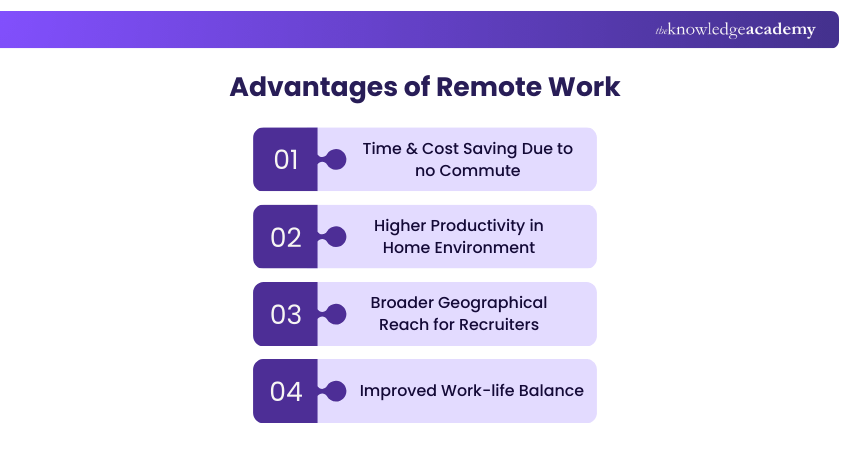
1) No Commuting: Removing daily travel saves time, lowers transport costs, and reduces stress.
2) Higher Productivity: Many remote employees deliver stronger output. A lot of Managers feel their teams are more productive working from home than in an office environment.
3) Broader Recruitment Reach: Remote hiring removes geographical limits, allowing organisations to access a wider, more diverse talent pool.
4) Improved Work-life Balance: Flexible schedules and location independence enable better personal Time Management and overall Wellbeing at Work.
Disadvantages of Remote Work
Despite its benefits, Remote Working also presents challenges that can vary by role and organisation:
1) Weaker Team Connection: Remote Work can feel isolating. The absence of informal office interactions and social moments may affect morale, making intentional virtual engagement essential.
2) Reduced Productivity: While many thrive remotely, others struggle with less structure, increased meeting coordination, limited one-to-one interaction, and fewer networking opportunities, which can impact focus and output.
3) Increased Micromanagement: In some cases, Remote Working can lead to closer supervision, reducing the sense of autonomy and flexibility.
4) Technology Dependence: Remote Work relies heavily on stable internet and reliable equipment. Technical issues can disrupt productivity and work quality.
Challenges of Remote Work
Here are some common challenges faced in Remote Work arrangements:
1) Reduced visibility to Senior Management in mixed work environments
2) Feelings of isolation, especially for those living alone
3) Difficulty separating work and personal life
4) Communication gaps among remote teams
5) Risk of disengagement without strong internal motivation
6) Need for modern tools to maintain culture and collaboration
Remote Work Best Practices for
As far as Remote Working is concerned, its success depends on putting the right foundations in place to keep operations effective across distributed teams. Here are some best practices to consider:
1) Choose the Right Tools: Remote teams rely heavily on digital platforms, as in-person collaboration is limited. Core tools usually include instant messaging, video conferencing, and collaborative Work Management Software, with additional solutions selected based on team needs.
2) Set Clear Expectations: Ensure everyone understands how Remote Work operates. Clarify working hours, flexibility, performance measurement and communication standards, then formalise these through clear policies.
3) Sustain Team Culture: Maintaining connection can be challenging without shared physical spaces. Leaders should create opportunities for informal interaction through virtual events, social channels, and team-building activities.
4) Build and Protect Trust: Trust is essential in remote environments. Rather than relying on monitoring tools, focus on clear goals, regular check-ins and open communication.
5) Gather Feedback Regularly: Remote Work is still evolving for many teams. Ongoing feedback helps identify what is working and what needs improvement for long-term success.
Build effective workforce plans that align people, skills and business demand with Workforce Resource Planning Training. Register now!
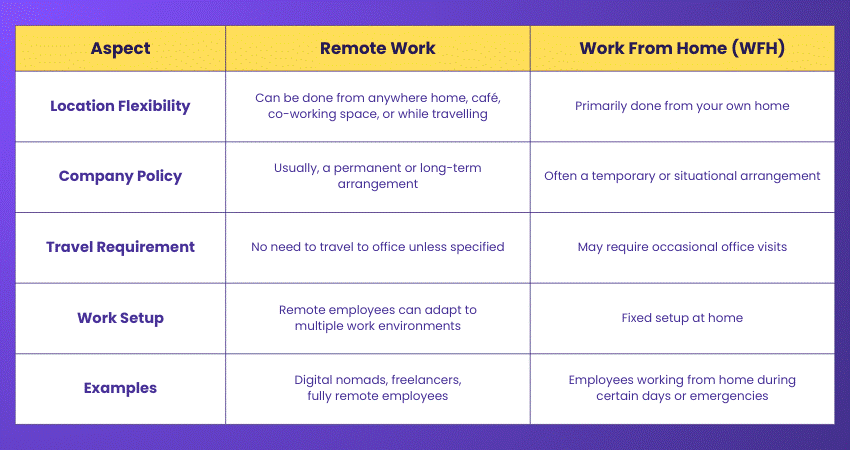
Remote Work vs WFH
Remote Work and Work From Home (WFH) are often used interchangeably, but they are not the same. The key difference lies in location flexibility and company policies. Here’s a quick comparison:
What Types of Jobs can be Done Remotely?
Remote Working is possible across many industries, particularly for roles where most tasks are completed online or using digital tools. Positions that rely heavily on physical presence, such as retail, healthcare, or construction roles, are less suited to remote arrangements. Here are some popular job roles that expands the scope of What is Remote Work:
1) Software Developer
2) Web Designer
3) Data Analyst
4) Digital Marketer
5) Content Writer or Copywriter
6) Graphic Designer
7) Consultant
8) Customer Support Specialist
9) HR Recruiter
10) Online Teacher or Tutor
11) SEO Specialist
12) Virtual Assistant
Conclusion
So What is Remote Work if not a flexible opportunity shaped by your ability to balance, plan smart strategies and execute consistently? If you excel in these areas, Remote Work can truly be a blessing and turn daily tasks into a fun, fulfilling routine. With the right tools, discipline and mindset, you can stay productive while enjoying the freedom to work from anywhere.
Learn proven strategies to build engaged, high-performing teams through Talent Management Training – Sign up now!
Frequently Asked Questions
What are the Ethical Issues of Remote Working?

Some of the ethical issues related to Remote Working are:
1) Stressful work environment
2) Work-product misuse
3) Bad mental health
4) Communication gap between the employees
5) Less work productivity
6) Poor time management
What Skills are Needed for Remote Jobs?
Remote jobs require a mix of personal and technical skills. Key skills include self-management and Time Management to stay organised and meet deadlines independently. Digital literacy is essential for using remote tools, while strong communication keep teams aligned. Additionally, Cyber Security Awareness helps protect data.
What are the Other Resources and Offers Provided by The Knowledge Academy?
The Knowledge Academy takes global learning to new heights, offering over 3,000+ online courses across 490+ locations in 190+ countries. This expansive reach ensures accessibility and convenience for learners worldwide.
Alongside our diverse Online Course Catalogue, encompassing 19 major categories, we go the extra mile by providing a plethora of free educational Online Resources like Blogs, eBooks, Interview Questions and Videos. Tailoring learning experiences further, professionals can unlock greater value through a wide range of special discounts, seasonal deals, and Exclusive Offers.
What is The Knowledge Pass, and How Does it Work?
The Knowledge Academy’s Knowledge Pass, a prepaid voucher, adds another layer of flexibility, allowing course bookings over a 12-month period. Join us on a journey where education knows no bounds.
What are the Related Courses and Blogs Provided by The Knowledge Academy?
The Knowledge Academy offers various People Management Courses, including the Successful People Management and Team Leadership Course, Workforce Resource Planning Training and the Performance Appraisal Training. These courses cater to different skill levels, providing comprehensive insights into Talent Management.
Our Human Resources Blogs cover a range of topics related to Remote Work, offering valuable resources, best practices, and industry insights. Whether you are a beginner or looking to advance your Remote Work skills, The Knowledge Academy's diverse courses and informative blogs have got you covered.

Amelia Williams


Senior Human Resources Consultant and Learning Specialist
Amelia Williams is a highly respected HR professional with over 12 years of experience in human capital management, talent development and workplace policy. She has worked across sectors including education, healthcare and corporate services, focusing on aligning people strategies with organisational goals. Amelia’s writing blends current HR trends with practical solutions for modern workplace challenges.

Upcoming HR Resources – Learn about Human Resources Batches & Dates
Date
 Workforce Planning Training
Workforce Planning Training
Fri 14th Aug 2026
Workforce Planning Training
Fri 13th Nov 2026

 If you wish to make any changes to your course, please


