


 Top Rated Course

We may not have the course you’re looking for. If you enquire or give us a call on +358 942454206 and speak to our training experts, we may still be able to help with your training requirements.
How to Improve Communication Skills: A Guide for Success
Charlotte Wilson 16 July 2026Improve Communication Skills by practising active listening, speaking clearly, reading body language, and seeking feedback to strengthen understanding. Strong communication builds confidence and helps people express ideas clearly. It also supports teamwork and reduces misunderstandings in both personal and professional settings every day.

Training Outcomes Within Your Budget!
We ensure quality, budget-alignment, and timely delivery by our expert instructors.
Table of Contents
Have you ever counted the things that Artificial Intelligence (AI) could do? If you haven’t, then count what it is not capable of. Improving your communication skills will be one on the list. Good communication is one of the most important skills you can have. Whether you're at work, in school, or spending time with family and friends, the way you speak and listen really matters.
Let's explore How to Improve Communication Skills in this blog with some extra tips to help you become a better communicator. These tips can help if you want to excel at work, boost confidence, or connect better.
Table of Contents
1) What is Effective Communication?
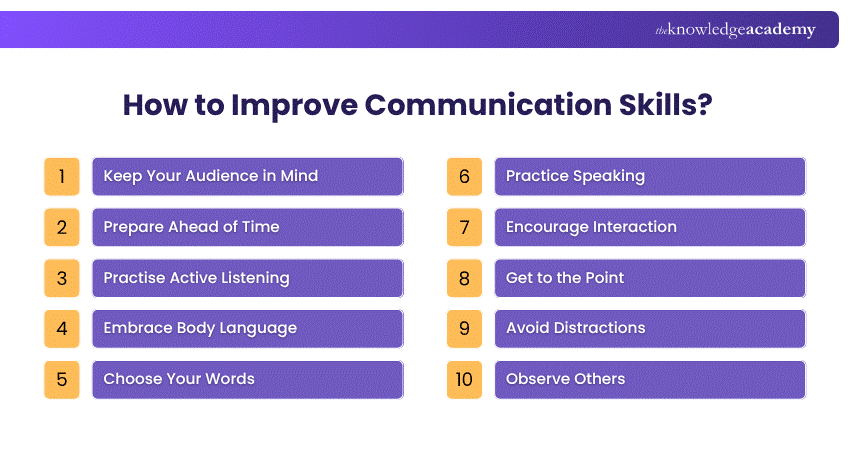
2) 20 Ways to Improve Your Communication Skills
3) Five Extra Tips to Sharpen Your Communication Skills
4) What are the 5 C's of Communication?
5) Tools and Strategies to Strengthen Communication
6) Conclusion
What is Effective Communication?
Effective communication means sharing ideas, thoughts, or feelings in a clear and easy way. It is not just about saying something but making sure the other person understands you and eventually you understand them. Good communication involves:
1) Speaking clearly and simply
2) Listening carefully
3) Using the right tone and body language
4) Asking questions and giving feedback
When communication is effective, there’s less confusion, fewer arguments, and stronger relationships. It helps teams work better, friends stay close, and ideas spread more easily.

20 Ways to Improve Your Communication Skills
Mastering communication requires a combination of practice, awareness, and adaptability. Let’s check some of the most crucial ways that aids with the journey of How to Improve Communication Skills:
1) Keep Your Audience in Mind
Think about who you are talking to before you speak. Are they your boss, a child, a friend, or a customer? What they need to hear and how you say it can change depending on who they are. Your speech is always dependent on the audience. When you think about the listener, your message becomes more useful and easier to understand. Here are some tips for you:
1) Use simple words with children
2) Be more formal with your boss
3) Focus on what matters to the person you are speaking with
2) Prepare Ahead of Time
If you are speaking in a meeting, giving a talk, or having an important conversation, learning How to Improve Communication Skills in the workplace will help you to plan first. Think about what you want to say and how you want to say it. Being prepared makes you feel more confident and helps your message come across better. Here is a sample of how you can prepare:
1) Write down the main points
2) Practise out loud
3) Think about questions someone might ask
3) Practise Active Listening
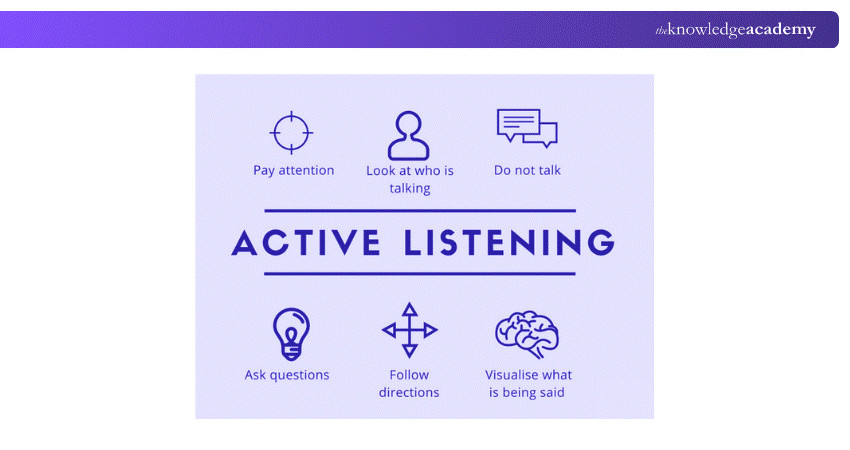
A great communicator needs to be a great listener, too. Good communication means listening as well as talking. Active listening means really paying attention to the other person and not just waiting for your turn to speak. When people feel listened to, they trust you, more and the conversation gets better. Here are some tips to become an active listener:
1) Look at the person while they are talking
2) Nod or say things like “I see” or “Right”
3) Don’t interrupt
4) Embrace Body Language
It is often stated that your posture and body language speak before your words. Your body can say a lot even when you are not speaking. The way you stand, move your hands, and look at people can support or change your message. Avoid crossing your arms, looking away too much, or fidgeting since they can send the wrong message. Here are some tips:
1) Smile when it is appropriate
2) Use hand movements to explain things
3) Make eye contact to show interest
Understand cultural gestures and improve global communication with our Nonverbal Communication Training – Register soon!
5) Choose Your Words
Pick words that are easy to understand for the listeners or the opposite person and fit the situation. Avoid using words that could be confusing or sound too strong. Not everyone would know the meaning or the word itself. The right words can help people trust and understand you. Here are some suggestions you can try:
1) Use everyday language
2) Stay away from slang or technical terms (unless needed)
3) Use positive words whenever possible
6) Practice Speaking
Like any other skill, the more you practise speaking, the better you will get. Talk more in group discussions or practise your thoughts out loud. The more you do it, the more natural it will feel and become. Though the process is small in the beginning, it could give you massive results. Here are some practices you can follow:
1) Practise speeches in front of a mirror
2) Record your voice and listen back
3) Ask for feedback from a friend or someone like a mentor
7) Encourage Interaction
When you practice speaking, it involves interacting with yourself and others. Don’t just talk. Rather, make the conversation two-way. Invite others to share their thoughts, too. In this way, you can improve your communication as well as team collaboration skills. Try like these samples to have interactions:
1) Ask open questions like “What do you think?”
2) Pause to give others time to reply
3) Thank people for their input
8) Get to the Point
As you explore the ways of how to improve your communication skills, you need to ensure that you are stating what you thought to say. Avoid rambling or talking too much about things that do not matter. People appreciate it when you are direct and up to the point. This saves time and shows respect for others’ attention.
1) Say your main point first
2) Leave out or reject any unnecessary details
3) Use short, clear sentences
9) Avoid Distractions
While having a communication, distractions are everywhere. Give people your full attention when you are talking or listening. Put away your phone or do not look outside. Try to focus on the person in front of you. This shows that you care and that helps to build stronger connections. Here are tips to stay focused:
1) Look at the person speaking
2) Don’t check your phone or look at the person wandering
3) Avoid interrupting
10) Observe Others
Pay attention to people who are great at communication. Watch how they speak, listen, and react. You can learn a lot just by watching others. You can try to analyse how they are making conversations, how they are framing engaging content and their gestures too. Here are some things to observe:
1) Their body language
2) How they stay calm under pressure
3) The words they use to explain things
11) Record Yourself Communicating
Hearing yourself speak can help you improve. You need to record a practice talk and listen to how you sound. This is a great way to find areas to work on. It will be effective in rectifying filler words, unclear phrasing, or awkward pauses. You can also compare recordings over time to see how much you have improved. You can check the following like:
1) If you talk too fast
2) If you use too many filler words like “um” or “like”
3) Whether your tone matches your message
12) Simplify and Stay on Message
Try not to go off-topic. Focus on your main point and avoid adding too much extra information. People stay engaged when you do not overload them with information. They will be able to understand and remember simple and focused messages better. Before speaking or writing, ask yourself: “What’s the one thing I want them to remember?”
1) Using short, clear sentences
2) Repeating your key message
3) Avoiding long stories unless they add value
13) Take Time to Respond
It is absolutely okay to pause and think before you answer, especially if it is an important question. A short pause can make your message clearer and more respectful. It also shows you are listening and taking the conversation seriously. With this, you avoid saying something you didn’t mean to. Here are the things that you achieve with this:
1) You give a more thoughtful reply
2) You avoid saying the wrong thing
3) You stay calm and focused
14) Make Sure You Understand
Listening is just as important as speaking. Do not assume, rather check and confirm if you really understand what the other person means. This avoids confusion and shows that you’re paying attention. Understanding the content at first hand makes your response more thoughtful and helpful. Here is how you can check that:
1) Ask follow-up questions
2) Repeat key points in your own words
3) Say “Let me make sure I got that right”
15) Be Social and Engaging
Improving communication isn’t just about speaking clearly. It is also about actively engaging with others. The more you interact, the more confident and skilled you become. The more you talk with others, the better you will get at it. Take every chance to speak and join conversations. This is because every chat is a chance to practise and improve.
1) Join team chats or group activities
2) Show interest in others’ ideas and stories
3) Whether at work, events, or online communities, get involved
Learn effective communication strategies for diverse business contexts by joining our Business Communication Course today!
16) Ask Questions and Summarise the Other Person's Main Points
Good communication is about asking meaningful questions and getting what the other person is saying. This assists in building a two-way conversation and makes the two people interpret the message clearly. Concluding the key points is also a sure way of knowing that you have paid full attention, and the discussion has been accurately understood. Here are some tips:
1) Ask follow-up questions to clarify important points
2) Repeat or summarise what the other person said
3) Confirm understanding before responding
17) Be Receptive to Feedback
Feedback is a significant component of enhancing communication. Having an open mind to suggestions by your colleagues or listeners will enable you to identify areas where you could have done better in your message or approach. Positively accepting feedback also demonstrates your readiness to develop and communicate better. Here are some tips:
1) Pay attention to people who are giving feedback
2) Ask questions to understand their suggestions
3) Use the feedback to improve future conversations
18) Be Ready for Different Answers
Good communication needs an open mind. Individuals might possess various ideas, opinions, or views when conducting a discussion. Being prepared for different responses allows conversations to remain respectful and productive while helping everyone understand each other better. Here are some tips:
1) Respect different viewpoints during discussions
2) Respect different viewpoints during discussions
3) Respect different viewpoints during discussions
19) Put Away Distractions
Distracters like phones, emails, or background noises may disrupt communication and lower the level of understanding. Listening to the speaker carefully will make you an active listener and will also make your response more considerate. It is also respectful and provokes more meaningful conversations. Here are some tips:
1) Keep your phone away during conversations
2) Keep your phone away during conversations
3) Listen carefully before responding
20) Tailor Your Message to Your Audience
The way you communicate should vary with the person you are talking to. Varying the tone, words, and examples will help prevent misunderstanding your message by the audience. Individualisation of communication makes concepts more understandable and better interactive in the process of talking or presenting. Here are some tips:
1) Take into account the level of knowledge of the audience
2) Use simple language when needed
3) Change your voice and examples according to the listener
Five Extra Tips to Sharpen Your Communication Skills
If you want to strengthen your communication skills, here are some final tips that can help in any scenario:
1) Be Approachable: When colleagues feel comfortable approaching you, communication flows more easily. Make sure your tone and body language are welcoming to encourage open conversations and build trust.
2) Be Patient: Not everyone communicates in the same way. Take the time to understand your colleagues’ communication styles and be patient when listening to them. Being an empathetic listener helps foster positive relationships and improve communication at work.
3) Be Self-aware: Recognise that developing good communication skills takes time. Being mindful of your tone, voice, and non-verbal cues can significantly enhance how others perceive your message.
4) Check for Understanding: Asking for feedback is a great way to confirm that your message has been understood. Don’t hesitate to invite questions or clarifications to ensure everyone is aligned. Effective communicators always check in with their audience to ensure clarity.
5) Switch Out the Messenger: Encourage your team members to take the lead in discussions and meetings. This helps them develop their communication skills and fosters a culture of effective workplace communication. Leaders who encourage others to communicate contribute to a strong communication culture within their team.
What are the 5 C's of Communication?
The 5 C’s of Communication are key principles that help ensure your message is clear, effective, and well-received. Here’s what they stand for:
1) Clarity: Make sure your message is easy to understand. For that, you can try using simple words and avoid jargon. Be direct and to the point.
2) Conciseness: Keep it short and focused. You need to avoid unnecessary words or details that might confuse the listener or reader.
3) Correctness: Use correct grammar, facts, and tone. Here, you can make sure that your message is accurate and appropriate for the audience.
4) Courtesy: Be respectful and polite, even when you disagree. You need to consider the feelings and perspectives of your audience.
5) Confidence: Deliver your message with assurance. Speak or write with a tone that shows you believe in what you are saying.
Tools and Strategies to Strengthen Communication
Improving communication requires both practical strategies and the right tools that help people share ideas clearly and collaborate effectively. Being clear, listening and careful preparation can make misunderstandings smaller and enhance teamwork. Effective communication also includes tone, body language, and the manner of conveying a message.
Organisations and individuals can strengthen communication by using simple techniques and digital collaboration tools. The use of messaging tools, video conferencing, and collaborative workspaces allow the team to remain connected, particularly in case of working remotely.
Selecting an appropriate communication medium and presenting ideas clearly can assist teams to be more productive and foster healthy working relationships. Some common strategies include:
1) Be clear and get to the point
2) Prepare your ideas before meetings or presentations
3) Practise active listening during conversations
4) Pay attention to body language and tone
5) Choose the right communication tools for collaboration
Using these strategies and tools consistently helps individuals build stronger connections, share information effectively, and improve overall workplace communication.
Conclusion
Improving your communication is not about being perfect alone. Rather, it is all about trying, learning, and growing. Simple changes like listening more, speaking clearly, and thinking about others would really help. With regular practice and a positive attitude, you can learn How to Improve Communication Skills as well as how you connect with people and build better relationships at work, at home, and in everyday life.
Would you like to understand non-verbal cues and listen attentively? Sign up for our Active Listening Training immediately!
Frequently Asked Questions
How Do I Evaluate My Communication Skills?

Communication skills vary by context, purpose, and audience. To assess them, focus on your clarity, relevance, empathy, adaptability, and collaboration in communication.
How Can I Improve My Non-verbal Communication Skills?
To improve communication, pay close attention, maintain comfortable eye contact, keep an open body position, sit at the same level, avoid fidgeting, and be an effective listener. These behaviours will help convey your support and understanding in a clear manner.

Charlotte Wilson


Soft Skills and Business Training Manager
Charlotte Wilson is an expert in soft skills development, with over 14 years of experience helping individuals and teams improve communication, productivity and emotional intelligence in the workplace. Her training content is focused on enhancing interpersonal effectiveness and fostering positive, collaborative environments across all levels of an organisation.
View Detail

 If you wish to make any changes to your course, please


