




We may not have the course you’re looking for. If you enquire or give us a call on +44 1344 203 999 and speak to our training experts, we may still be able to help with your training requirements.
Top 20 PMI-ACP® Exam Questions and Answers
ByThe Knowledge AcademyLast updated on: 24 November 2026
Get familiar with the PMI-ACP® practice questions covering agile mindset, leadership, product and delivery. Review detailed answers, understand key concepts and strengthen your approach to exam preparation.
What You'll Learn
1. The PMI-ACP® exam evaluates how Agile practitioners apply principles and practices to different project situations.2. Mindset-based questions test adaptability, transparency, collaboration and continuous improvement.3. Leadership questions examine team empowerment, self-management and the responsibilities of Agile roles.4. Product and delivery questions assess prioritisation, quality, workflow management, estimation and forecasting.5. Reviewing answer explanations and practising scenario-based questions can help identify knowledge gaps and improve exam readiness.
Agile principles? Understood.
Agile practices? Familiar.
But can you choose the right approach when a project scenario puts your knowledge to the test?
That's what makes preparing for the PMI-ACP® exam challenging. Beyond understanding Agile methodologies, you need to interpret situations, evaluate options and make informed decisions. This blog deals with the essential PMI-ACP® exam questions and answers to test your knowledge, identify areas for improvement and sharpen your exam preparation. So, read on to sharpen your answering skills and prepare more effectively!
Top PMI-ACP® Exam Questions and Answers
Practising PMI-ACP® exam questions is an effective way to assess your understanding of Agile principles, practices and methodologies. It helps you become familiar with different question types, strengthen your analytical skills and identify areas that need further revision.
The following PMI-ACP® exam questions and answers cover key Agile concepts and practical scenarios to support your preparation.
1) Mindset-based PMI-ACP® Questions
The Agile mindset focuses on collaboration, adaptability, continuous improvement and delivering value to customers. Mindset-based questions in the PMI-ACP® exam assess your ability to apply these principles when addressing team challenges, responding to change and making project decisions.
Let's explore some questions that test your ability to apply Agile principles in different scenarios:
1) Modern organisations are adopting Agile approaches because they can respond effectively to change. Why is this important?
a) Teams must accept every change without evaluating its impact.
b) Frequent changes eliminate the need for planning.
c) Responding to changing requirements can help customers gain a competitive advantage.
d) Minimising all changes is essential for project success.
Answer: Option C
Explanation: Agile approaches encourage teams to respond to changing requirements, even during development. This flexibility helps organisations meet evolving customer needs, adapt their products and support customers in maintaining a competitive advantage.

2) Which of the following is NOT one of the four Agile Manifesto values?
a) Working software over comprehensive documentation
b) Customer collaboration over contract negotiation
c) Individuals and interactions over processes and tools
d) Following a plan over responding to change
Answer: Option D
Explanation: The Agile Manifesto values responding to change over following a plan. It encourages adaptability while recognising that planning still has value. The other three options reflect the values stated in the Agile Manifesto.
3) Which of the following is NOT typically associated with Lean practices?
a) Just-in-time production and waste reduction
b) Continuous improvement
c) Push-based production regardless of demand
d) Value stream mapping
Answer: Option C
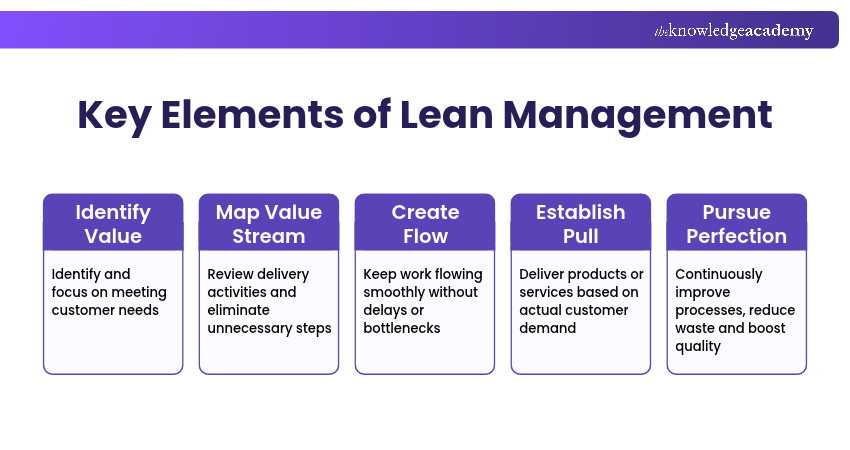
Explanation: Lean focuses on reducing waste, improving processes and delivering value efficiently. Pull-based approaches are commonly used to align production with actual demand, rather than producing work regardless of customer needs.
4) Which Agile principle focuses on satisfying customers through the continuous delivery of valuable products?
a) Customer satisfaction through early and continuous delivery of valuable products
b) Following a fixed project plan without changes
c) Prioritising documentation over customer feedback
d) Completing all development work before seeking feedback
Answer: Option A
Explanation: Agile principles emphasise delivering value early and continuously to improve customer satisfaction. Regular delivery helps teams gather feedback, identify changing needs and improve the product throughout development.
5) What are burndown charts, burnup charts and other visual displays used to communicate Agile project information commonly known as?
a) Organisational process assets
b) Agile contracts
c) Information radiators
d) Enterprise environmental factors
Answer: Option C
Explanation: Information radiators make important project information visible to team members and stakeholders. Visual tools such as charts, boards and dashboards provide accessible updates on project progress, risks and delivery performance, helping teams maintain transparency and make informed decisions.
6) During a retrospective, team members hesitate to discuss mistakes because they fear criticism. What should the Agile Leader encourage?
a) Avoiding discussions about unsuccessful work
b) A blame-free environment that supports open communication and learning
c) Reporting individual mistakes directly to senior management
d) Removing retrospective meetings from the process
Answer: Option B
Explanation: Psychological safety allows team members to openly discuss concerns, acknowledge mistakes and share ideas without fear of humiliation or unfair consequences. This creates an environment where teams can learn from setbacks, provide constructive feedback and continuously improve their ways of working.
Learn to develop and optimise project timelines with the PMI Scheduling Professional PMI-SP® Training – Sign up now!
2) Leadership-based PMI-ACP® Questions
The leadership domain evaluates how Agile professionals support teams through coaching, facilitation and collaboration. It focuses on encouraging self-management, resolving conflicts and creating an environment where teams can perform effectively.
7) What responsibility best reflects the Scrum Master's role as a servant leader?
a) Assigning tasks to individual developers
b) Coaching the Scrum Team in Scrum principles and supporting the removal of impediments
c) Making all technical decisions for the team
d) Managing the project through direct supervision
Answer: Option B
Explanation: A Scrum Master helps the team understand and apply Scrum effectively. This includes coaching team members, facilitating collaboration and supporting the removal of impediments. The role focuses on enabling the team's effectiveness and self-management rather than directing individual activities.
8) Under what condition does a Product Owner participate in the daily scrum as a developer?
a) Whenever they want to monitor the team's progress
b) When they need to assign tasks to individual developers
c) When they are actively working on Sprint Backlog items
d) When they need to approve the developers' daily plans
Answer: Option C
Explanation: The daily scrum is a 15-minute event for developers to inspect progress towards the Sprint Goal and adapt their plan. If the Product Owner is actively working on Sprint Backlog items, they participate as a developer. The event is not intended for assigning tasks or supervising individual activities.
9) A Scrum Team has 16 members, and communication has become difficult. What should the Scrum Master recommend?
a) Increase the daily scrum to one hour.
b) Consider reorganising into smaller, cohesive Scrum Teams working towards the same Product Goal.
c) Allow the Scrum Master to assign all tasks directly.
d) Remove some developers from all Scrum events.
Answer: Option B
Explanation: Scrum Teams are typically small, usually comprising 10 or fewer people. Larger teams may experience communication and coordination difficulties. Reorganising into multiple cohesive teams working on the same product can improve collaboration. These teams should share the same Product Goal, Product Backlog and Product Owner.
10) During the daily scrum, the Product Owner begins assigning tasks to developers. How should the Scrum Master respond?
a) Explain that developers are responsible for managing their own work.
b) Take responsibility for assigning tasks instead.
c) Extend the meeting to accommodate task assignments.
d) Ask senior management to assign the tasks.
Answer: Option A
Explanation: Scrum Teams are self-managing, meaning they decide internally who does what, when and how. The Scrum Master should help the Product Owner understand this principle and ensure the daily scrum supports the developers' planning.
11) During sprint planning, a Product Owner wants developers to commit to more user stories, but the team believes the requirements are unclear. What should the Scrum Master do?
a) Encourage the Product Owner and developers to clarify the stories and discuss what can realistically be delivered.
b) Require developers to accept additional stories immediately.
c) Ask the Product Owner to increase the Sprint duration.
d) Remove the unclear stories without consulting the team.
Answer: Option A
Explanation: Effective sprint planning requires collaboration between the Product Owner and developers. Clarifying Product Backlog items and their requirements helps the team understand the work and make realistic forecasts. Developers remain responsible for selecting how much work they believe they can complete during the Sprint.
Pro Tip
After practising each question, review why the other options are less suitable. Understanding the reasoning behind answers helps you respond more confidently to unfamiliar examination scenarios.
3) Product-based PMI-ACP® Questions
The product domain focuses on delivering customer value, managing requirements and prioritising product work. It evaluates how Agile professionals use stakeholder feedback and business priorities to support product development.
12) At what stage should a Scrum Team consider the Definition of Done when planning work?
a) Only after the product has been released
b) During planning and throughout development to understand the quality standards required
c) Only when testers begin testing
d) After the Sprint Review has been completed
Answer: Option B
Explanation: The Definition of Done specifies the quality measures that a product Increment must satisfy to be considered complete. Considering these requirements during Sprint Planning and development helps developers plan their work and ensure that completed Increments meet the required standards.
13) A team estimates user stories by comparing their relative effort and complexity instead of assigning exact time estimates. Which technique is being used?
a) Top-down estimating
b) Wireframing
c) Relative sizing
d) Critical path analysis
Answer: Option C
Explanation: Relative sizing estimates work by comparing user stories or backlog items with one another rather than assigning precise time estimates. This approach helps teams assess effort and complexity while developing a shared understanding of the work involved.
14) A customer requests a new feature that could deliver significant business value. What should the Product Owner do first?
a) Immediately add the feature to the current Sprint.
b) Reject the request because development has started.
c) Evaluate the feature's value, impact and alignment with the Product Goal.
d) Ask developers to work overtime to complete it.
Answer: Option C
Explanation: Product Owners prioritise work based on value, stakeholder needs and product objectives. Evaluating a new request helps determine whether it should be added to the Product Backlog and how it compares with existing priorities.
15) A team receives negative feedback after demonstrating a product Increment. What is the MOST appropriate response?
a) Ignore the feedback because the work is already complete.
b) Evaluate the feedback and adapt the Product Backlog where appropriate.
c) Cancel all remaining product development activities.
d) Continue with the original requirements without discussion.
Answer: Option B
Explanation: Agile product development relies on regular feedback to improve outcomes. Reviewing customer concerns and adapting the Product Backlog helps teams respond to changing needs while maintaining alignment with the Product Goal.
Apply Scrum best practices to optimise product development with Scrum Product Owner Certification Training – Register soon!
4) Delivery-based PMI-ACP® Questions
The delivery domain focuses on optimising workflow, maintaining quality, managing delivery risks and ensuring that teams can deliver value effectively. It covers practices such as Kanban, Test-Driven Development (TDD), estimation and forecasting.
16) What is the core focus of Kanban practices?
a) Visualise workflow, manage work in progress and improve flow.
b) Assign fixed tasks to each team member.
c) Complete all work before seeking customer feedback.
d) Eliminate the need to monitor workflow performance.
Answer: Option A
Explanation: Kanban focuses on improving the flow of work through visualisation, active workflow management and continuous improvement. Controlling Work in Progress (WIP) helps teams identify bottlenecks, manage capacity and deliver value more predictably.
17) During Test-Driven Development (TDD), a developer writes a failing test, writes code to pass it and then improves the code without changing its behaviour. What is this cycle called?
a) Plan–Build–Deliver
b) Red–Green–Refactor
c) Design–Test–Release
d) Develop–Review–Deploy
Answer: Option B
Explanation: Test-Driven Development follows the Red–Green–Refactor cycle. Developers first write a failing test (Red), implement code to pass it (Green), and then refactor the code while ensuring the tests continue to pass.
18) A team has the following user stories with estimated story points:
Story 1: 4 points
Story 2: 2 points
Story 3: 2 points
Story 4: 1 point
Story 5: 5 points
Story 6: 4 points
If the team is planning around a capacity of seven story points, which combination matches that estimate?
a) Stories 1, 3 and 5
b) Stories 2, 3 and 4
c) Stories 1, 2 and 4
d) Stories 3, 4 and 5
Answer: Option C
Explanation: Stories 1, 2 and 4 total seven story points (4 + 2 + 1). This matches the planning estimate. However, teams should also consider dependencies, priorities and capacity rather than selecting work solely based on numerical totals.
Trainer's Insight
Velocity and story points are useful for forecasting, but they should not become fixed performance targets. When interpreting Agile metrics, consider the team's capacity, historical performance and delivery context.
19) A Scrum Team consistently completes less work than it forecasts during Sprint Planning. What should it do?
a) Increase its velocity target immediately.
b) Inspect its forecasting approach, capacity and impediments.
c) Stop using Sprint Planning.
d) Ask the Product Owner to assign more tasks.
Answer: Option B
Explanation: Consistently missing forecasts may indicate overcommitment, insufficient capacity, unexpected complexity or unresolved impediments. Reviewing these factors helps the team make more realistic forecasts and improve delivery.
20) A team has 300 story points remaining in its Product Backlog and an average velocity of 20 points per two-week Sprint. Approximately how many Sprints would be required to complete the work if velocity and scope remain unchanged?
a) 10 Sprints
b) 15 Sprints
c) 20 Sprints
d) 25 Sprints
Answer: Option B
Explanation: The estimated number of Sprints is calculated by dividing the remaining work by the average velocity.
Number of Sprints = 300 ÷ 20 = 15 Sprints.
This provides an approximate forecast. Actual completion may vary depending on changing requirements, team capacity and delivery performance.
Tips to Answer PMI-ACP® Exam Questions Effectively
Answering PMI-ACP exam questions requires more than remembering Agile concepts. Professionals need to understand the scenario, identify the underlying challenge and choose the response that best reflects Agile principles. The following tips can help improve your preparation:
a) Read Each Question Carefully: Pay attention to words such as FIRST, BEST, MOST and NEXT. These terms help identify the specific response required by the scenario.
b) Understand the Agile Principle: Determine whether the question focuses on collaboration, adaptability, customer value or delivery. Understanding the principle makes it easier to assess the available options.
c) Eliminate Incorrect Options: Remove answers that contradict Agile values or do not address the main challenge. Compare the remaining responses before making your choice.
d) Apply Scenario-based Thinking: Consider the team's situation, customer needs and desired outcome. Choose the response that best supports collaboration, continuous improvement and value delivery.
e) Practise Across All Four Domains: Avoid concentrating only on familiar topics. Regular practice across mindset, leadership, product and delivery helps strengthen overall examination readiness.
Great projects begin with great preparation. The PMI Project Management Ready Course equips you with essential skills to contribute to projects in any industry – Sign up now!

The Knowledge Academy develops accessible learning content across Project Management, IT, Cybersecurity, Data Science, Business Analysis, HR, Accounting and Finance, Leadership and Health and Safety. Its resources combine subject research with clear explanations to help professionals build practical knowledge across a wide range of disciplines.
View Detail

 If you wish to make any changes to your course, please


