


 Top Rated Course

We may not have the course you’re looking for. If you enquire or give us a call on +34 932716793 and speak to our training experts, we may still be able to help with your training requirements.
What is Real Estate? Meaning, Types, Investment and Careers
The Knowledge Academy 14 July 2026Real Estate refers to assets that are permanently connected to land and legally owned. It serves residential, commercial or industrial purposes. Understanding Real Estate, its categories, investment opportunities, challenges and top-paying careers can help you build wealth and succeed in the property market.

Training Outcomes Within Your Budget!
We ensure quality, budget-alignment, and timely delivery by our expert instructors.
Table of Contents

Beyond the glory of bricks, lands or towering skyscrapers, Real Estate is the foundation of where we live, work, think and grow. From cosy homes to bustling commercial hubs, Real Estate can shape our lifestyles, and subsequently, it impacts economies worldwide. But if you are wondering What is Real Estate exactly and what makes it the heartbeat of towns and cities, you've come to the right place.
This blog explores What is Real Estate, its diverse types, investment opportunities and more, giving you deep insight into why it’s one of the most powerful wealth-building industries. So read on and turn your passion for shaping properties and communities into a full-time career!
Table of Contents
1) What is Real Estate?
2) Categories of Real Estate
3) Investing in Real Estate
4) Challenges in Real Estate
5) The Future of Real Estate
6) What Type of Real Estate Makes the Most Money?
7) What is the Richest Job in Real Estate?
8) Conclusion
What is Real Estate?
Real Estate refers to land and anything permanently attached to it, including natural features, buildings and other man-made improvements. It is classified as real property and is different from personal property, which includes movable items such as vehicles, jewellery, furniture, boats, and agricultural equipment.
The permanence of Real Estate means it carries enduring value, forming the foundation for ownership rights and transactions. Unlike personal property, which is mobile and separable, Real Estate represents immovable assets tied directly to the land and its associated developments.

Categories of Real Estate
Real Estate, as a diverse and expansive field, is segmented into distinct categories, each catering to specific needs, functions, and aspirations. These categories not only delineate the purposes of different properties but also offer a nuanced view of the varied roles Real Estate plays in our lives:
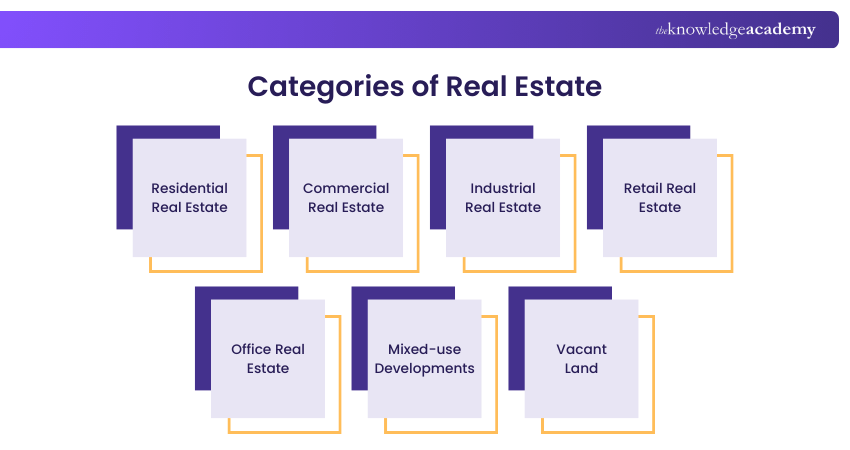
a) Residential Real Estate: The most familiar type of Real Estate, residential properties include homes, apartments, condominiums, and townhouses. It caters to the fundamental human need for shelter and reflecting the diverse ways people choose to live. This could include anything from cosy suburban homes to bustling urban apartments.
b) Commercial Real Estate: Commercial Real Estate is designed for business purposes. It encompasses office buildings, retail spaces, hotels, and industrial complexes. The dynamics of commercial Real Estate involve considerations beyond personal dwelling. It focuses on functionality, accessibility and proximity to target markets.
c) Industrial Real Estate: Warehouses, manufacturing plants, distribution centres, and industrial parks fall under the umbrella of Industrial Real Estate. These properties serve as hubs for production, storage and distribution. They play a crucial role in the supply chain and economic infrastructure. Similarly, Investing in Digital Real Estate has emerged as a modern form of investment. It offersopportunities in online properties like Websites, domains, and virtual spaces.
d) Retail Real Estate: Properties designated for retail activities, such as shopping malls, storefronts and standalone shops, comprise retail Real Estate. This category caters to businesses engaged in selling goods and services directly to consumers, often emphasising visibility and foot traffic.
e) Office Real Estate: Office spaces are tailored for professional and administrative activities. Ranging from corporate towers to co-working spaces, office Real Estate addresses the spatial requirements of businesses and organisations, fostering a conducive environment for work.
f) Mixed-use Developments: Reflecting the trend toward integrated living and working spaces, mixed-use developments combine residential, commercial, and often recreational elements within a single project. This approach seeks to create vibrant, self-sustained communities.
g) Vacant Land: Unimproved or undeveloped land represents a unique category in Real Estate. While it may lack structures, vacant land holds potential for future development, making it a key consideration for Investors and Developers.;
Investing in Real Estate
Beyond the realms of homeownership, Real Estate stands as a compelling arena for Investment, offering avenues for wealth creation, portfolio diversification, and long-term financial security. Navigating the terrain of Real Estate investment requires a blend of market acumen, Risk Assessment, and an understanding of the diverse strategies available to Investors. Here are some points to consider when investing:
a) Rental Properties: Investing in rental properties involves purchasing residential or commercial units with the intent to generate income through tenant rent. This strategy helps investors benefit from both property appreciation and a steady flow of rental income.
b) House Flipping: For those with a penchant for renovation and keen eye for market trends, house flipping entails buying properties, renovating or upgrading them, and selling for a profit. This short-term strategy demands a careful balance of investment in improvements and an understanding of local market demands.
c) Real Estate Investment Trusts (REITs): These are investment vehicles that alllow investing in Real Estate without directly owning physical properties. These trusts pool capital from numerous Investors to purchase, manage, and often sell income-generating properties. REITs provide a liquid and diversified approach to Real Estate investment.
d) Real Estate Crowdfunding: With the advent of technology, Real Estate crowdfunding platforms have emerged to connect Investors with Real Estate projects. This approach allows you to invest small amounts in a diverse range of properties, thus reducing the hindrance to entry into the Real Estate market.
e) Real Estate Partnerships: Collaborative ventures through partnerships or joint ventures enable Investors to pool resources and share responsibilities. This strategy is particularly beneficial for those looking to tackle larger projects that may require diverse skill sets and financial contributions.
f) Commercial Real Estate: Investing in commercial properties, such as office buildings, retail spaces, or industrial complexes, presents opportunities for substantial returns. Commercial Real Estate is often driven by factors like location, economic trends, and the overall health of the business sector.
g) Long-term Buy and Hold: This traditional strategy involves acquiring properties with the goal of holding onto them for an extended period. This allows for potential appreciation over time. Buy-and-hold Investors often benefit from rental income while banking on the long-term growth of the Real Estate market.
Learn how you can master the game of Real Estate by joining our Real Estate financial Modelling Training now.
Challenges in Real Estate
While Real Estate presents lucrative opportunities, it is not devoid of challenges that demand astute navigation and strategic decision-making. Understanding and mitigating these challenges is paramount for individuals looking to Become a Real Estate Agent.
a) Economic Volatility: Real Estate is inherently tied to economic cycles. Economic downturns can result in diminished property values, increased vacancy rates, and financial strain on property owners. Navigating these cycles requires a comprehensive grasp on market trends and the core ability to adapt to changing economic conditions.
b) Interest Rate Fluctuations: Interest rates play a pivotal role in Real Estate financing. Fluctuations in interest rates can influence mortgage affordability and the attractiveness of Real Estate as an investment. Investors and homeowners alike must stay attuned to interest rate trends to make informed decisions.
c) Market Oversaturation: Oversaturation of the Real Estate market, particularly in certain geographic areas or property types, can lead to increased competition and decreased property values. Investors must conduct thorough market analyses to identify areas with sustainable demand and growth potential.
d) Regulatory Changes: Real Estate is subject to various regulations and zoning laws that can change over time. Alterations in regulations, often guided by the Real Estate Regulatory Authority, can impact property values, development opportunities, and the overall feasibility of Real Estate projects. Staying informed about local and national regulatory changes is crucial for industry professionals.
e) Financing Challenges: Access to financing is a common hurdle in Real Estate transactions. Stringent lending criteria, especially during economic downturns, can limit the ability of buyers and Investors to secure loans. Creative financing solutions and a solid credit profile become essential in overcoming these challenges.
f) Property Management Issues: For landlords and property managers, challenges may arise in the form of tenant turnover, property maintenance, and legal issues. All of these are crucialconsiderations when Starting a Property Management Company. Proper Property Management is vital for ensuring the ongoing profitability and value of Real Estate investments.
g) Market Speculation: Real Estate markets are susceptible to speculation, where prices may be driven by Investor sentiment rather than intrinsic value. Speculative bubbles can lead to unsustainable price increases, followed by sharp corrections that can have severe repercussions for Investors.
h) Environmental and Natural Risks: Real Estate is not immune to environmental and natural risks such as floods, earthquakes, or climate-related events. Assessing the vulnerability of a property to such risks and implementing appropriate Risk Mitigation measures is essential.

The Future of Real Estate
The following points illustrate the future of Real Estate:
a) Demographic Shifts: The global population is ageing in many places especially in developed economies. Smaller households are increasing, and changing generational preferences, such as Gen Z and millennials, are influencing demand for housing, workspaces and community infrastructure.
b) Evolving Urbanisation: Urban areas continue to expand. Cities are becoming denser and more focused on mixed-use spaces. The idea of “15-minute cities” where essential services are within a short walk or bike ride is gaining traction. The uses of Real Estate are blending in response to lifestyle, mobility and environmental concerns.
c) Hybrid & Flexible Work Environments: Post-pandemic work patterns have changed permanently. Many firms are adopting hybrid work models, meaning that Real Estate demand is shifting. This is not just for offices, but flexible, amenity-rich, wellness-oriented spaces.;
d) Well-being, Sustainability & Environmental, Social, Governance (ESG) Concerns: Spaces are now expected to deliver more than just square footage. Features like natural light, air quality, wellness spaces, energy efficiency and environmentally sound design are becoming mandatory.
e) Smart Infrastructure: Technology plays a big role in how Real Estate is used, such as in the case of smart buildings, IoT, and digital services for tenants. It also plays a role in where investment goes, including data centres, tech hubs and infrastructure needed to support remote or hybrid work. The demand for tech cities and digitally enabled amenities is growing.
f) Differentiation and Premium Assets: There’s a rising demand for ultra-prime Real Estate, especially in desirable locations. Buildings with high-quality amenities, environmental credentials and premium design are getting the spotlight. Also, heritage or character properties, refurbished sustainably, are increasingly valued.
g) Flexibility and Adaptability Become Fundamental: The ability to flex spaces, adapt to changing tenant needs, shift use cases, and respond to regulatory, demographic, or climate changes will be key. The “one-size-fits-all” Real Estate model is giving way to more agile and responsive property types.

What Type of Real Estate Makes the Most Money?
Commercial Real Estate is widely regarded as one of the most lucrative sectors in the property market. It's involves leasing and selling assets such as office buildings, retail outlets and industrial facilities. Its profitability is rooted in several factors, including:
a) Higher Rental Yields: Commercial properties generally achieve stronger rental returns than residential ones.
b) Extended Lease Terms: Contracts often run for many years, providing reliable income streams for Investors and Agents.
Attractive Commissions: Larger deal sizes result in significantly higher commission earnings for professionals in the field.
What is the Richest Job in Real Estate?
Real Estate Investment Consultant is considered the richest job in Real Estate. Here's why it pays so well:
a) Investment consultants advise clients like Developers, Investors and individuals on buying, selling or developing both residential and commercial properties.
b) They analyse market trends, perform site visits, evaluate risk, assess returns, and give strategic guidance. So, their role involves high expertise and responsibility.
c) Since the decisions they guide often involve large sums of money, their compensation is also high.
Explore our top-notch Investment and Trading Training to boost your financial skills today – Sign up now!
Conclusion
Real Estate involves more than the act of buying and selling propert. It can be a dynamic world of opportunity for building wealth and shaping communities. From residential homes to commercial empires, it offers various paths for rewarding careers. So whether you're a beginner or an experienced Investor, understanding What is Real Estate, its types, trends, and potential can unlock doors to professional success.
Frequently Asked Questions
What are the Three Most Important Things in Real Estate?

The three factors in Real Estate are location, price and demand. Location determines accessibility and value, price impacts profitability, and demand drives market activity. Balancing these ensures successful investments and transactions.
What are the Five Golden Rules of Real Estate?
Here following are the five golden rules of Real Estate:
a) Location is Key: Always prioritise location
b) Understand the Market: Know trends and demand
c) Buy Low, Sell High: Maximise profit margins
d) Maintain Properties: Ensure long-term value
e) Diversify Investments: Spread risk across asset types

The Knowledge Academy


Global Training Provider
The Knowledge Academy is a world-leading provider of professional training courses, offering globally recognised qualifications across a wide range of subjects. With expert trainers, up-to-date course material, and flexible learning options, we aim to empower professionals and organisations to achieve their goals through continuous learning.


 If you wish to make any changes to your course, please


