


 Top Rated Course

We may not have the course you’re looking for. If you enquire or give us a call on +34 932716793 and speak to our training experts, we may still be able to help with your training requirements.
13 Types of Customer Service in the Digital Era
The Knowledge Academy 13 March 2026Types of Customer Service include phone, email, live chat, and AI support to help customers before, during, and after purchase, boosting satisfaction and trust. They ensure quick responses, personalised support, and seamless communication across channels. Strong service builds loyalty and enhances overall customer experience.

Training Outcomes Within Your Budget!
We ensure quality, budget-alignment, and timely delivery by our expert instructors.
Table of Contents
Have you ever experienced Customer Service that completely changed your opinion about a brand? From live chat to in-person support, different Types of Customer Service can shape how customers feel about a business. In today’s competitive market, delivering the right service at the right time is what truly sets brands apart.
In this blog, we will explore the various Types of Customer Service, why they matter, and how to choose the best approach for your business. You will discover practical strategies to improve interactions and turn everyday support into lasting customer loyalty. Let’s get started.
Table of Contents
1) What is Customer Service?
2) What are the Types of Customer Service?
3) Choosing the Right Type of Customer Service for Your Business
4) Challenges in Managing Multiple Customer Service Channels
5) Conclusion
What is Customer Service?
Customer Service is the support a business provides to customers before, during, and after they purchase and use its products or services. Its purpose is to ensure customers have a smooth, easy, and enjoyable experience with the brand at every stage of their journey and interaction with the company.
Today, Customer Service goes beyond resolving problems. The different Types of Customer Service deliver proactive and immediate support across channels like phone, email, chat, and messaging, often powered by service software. As a result, it has become a strategic function that directly contributes to revenue growth and business success.

13 Types of Customer Service
Before integrating or enhancing Customer Service in your business, it's essential to understand the various Types of Customer Service available. They are as follows:
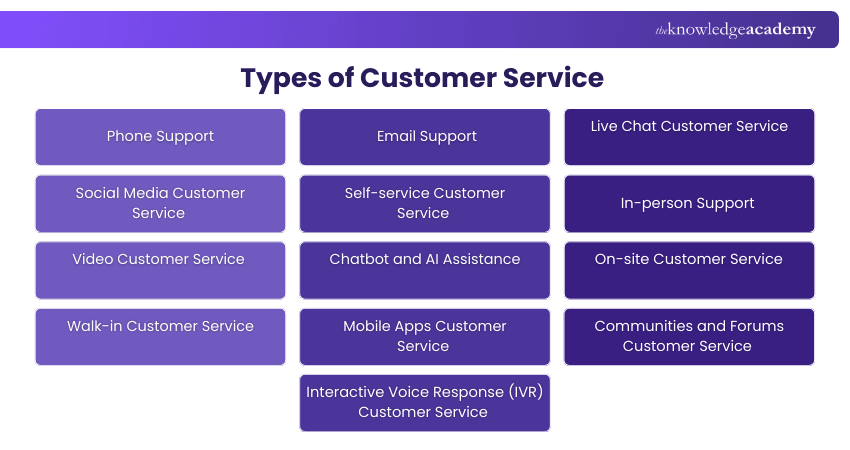
1) Phone Support
Telephone customer support provides assistance over the phone, allowing customers to explain concerns directly to a representative. It is useful for complex issues, as customers can describe problems clearly and receive immediate clarification. Agents maintain professional etiquette, listen carefully, and communicate effectively to resolve concerns.
During calls, representatives use problem-solving and conflict resolution skills to address issues effectively. Many businesses also use call routing systems to connect customers to the right department. Telephone support offers real-time responses and a personalised experience, helping build trust and customer satisfaction.
2) Email Support
Email support is a common Customer Service method where businesses respond to customer questions, complaints, or feedback through email. Customers usually contact the company via a website email address or online form and receive either a personalised or automated reply. This text-based format allows them to review the information at any time.
For businesses, email support makes it easier to organise, prioritise, and track queries using email management tools. Customers benefit by having written records of important information and avoiding long wait times often experienced with phone or in-person support.
3) Live Chat Customer Service
Live chat support is an online Customer Service method that lets customers communicate directly with company representatives through a website chat window. It enables real-time messaging until a suitable solution is reached, ensuring quick and efficient issue resolution.
Many customers prefer live chat because it offers faster replies compared to phone or email support. It also allows customers to multitask while waiting and enables agents to provide real-time assistance during shopping, improving satisfaction, engagement, and increasing sales opportunities.
4) Social Media Customer Service
Social Media Customer Service involves assisting customers through platforms like social networks, where they share queries, complaints, or feedback via comments or direct messages. Businesses respond publicly or privately to resolve issues, provide guidance, and maintain transparent communication.
It often includes managing public complaints or negative reviews to protect the overall brand reputation. By addressing concerns openly and professionally, businesses build long-term trust, strengthen customer loyalty, and positively influence other customers who observe these interactions online.
5) Self-service Customer Service
Support teams possess valuable insights into customer issues and effective solutions. However, agents often spend considerable time searching for information. A shared Knowledge Base leverages this collective wisdom, empowering your Customer Service team with the necessary information to enhance customer support. It also aids your business in identifying and addressing knowledge gaps.
Moreover, customers favour self-service options due to their minimal interaction hurdles. Implementing self-service features such as a help centre, online community, or Customer Service portal reduces friction, enhances efficiency, and expedites issue resolution. Providing self-service is a fundamental aspect of exceptional Customer Service, and a superior self-service experience can elevate Customer Satisfaction, lower support expenses, and boost agent engagement.
Gain a detailed knowledge of Customer Service with our Personal Development Courses - Sign up now!
6) In-person Support
In-person support remains highly important even in a digital-first world, as many customers prefer to see, touch, and experience products before buying. It allows direct interaction with knowledgeable staff, helping customers ask questions, compare options, and make confident purchase decisions.
To further enhance the experience, businesses should connect online, mobile, and in-store services seamlessly. Options like ordering online and collecting in-store combine convenience with a personalised human touch, improving overall customer experience and strengthening long-term brand loyalty.
7) Video Customer Service
In this Type of customer support, customers are engaged through live video sessions. These sessions guide users step by step on how to utilise a product or service. Customer Service became particularly useful during the onset of the pandemic. As safety measures mandated people to stay at home, companies adapted by offering live or pre-recorded video sessions to assist customers with their products.
Chances are that customers have benefited from these live or recorded video tutorials at some point. Crafted for versatility, these videos can be repurposed across various platforms. Not only do they offer users a concise understanding of the product or service, but they also serve as a valuable avenue for delivering personalised service. Companies can even incorporate a brief "thank you" message at the conclusion, adding a personal touch upon the purchase of a product or service.
8) Chatbot and AI Assistance
As technology has advanced, businesses and companies have begun to integrate chatbots and AI assistants on their websites, a feature especially prevalent on e-commerce sites. Furthermore, chatbots and AI assistants have found their way into our smartphones.
Across various industries, AI and chatbots assist users by providing quick and easy solutions. They either directly address inquiries or redirect customers to the appropriate customer support personnel.
Chatbots were developed with the intent of resolving customer issues within a span of 10 to 15 messages. These bots offer automated responses to predetermined questions. Additionally, they can translate inquiries and respond in the same language. Thus, for individuals who might hesitate to voice their concerns due to language barriers, chatbots and AI make the process far more accessible and hassle-free!
9) On-site Customer Service
On-site support is a specialised type of Customer Service where assistance is provided at a business location or directly at a customer’s home. It is especially useful for technical repairs, installations, or complex troubleshooting that require hands-on expertise and professional equipment.
By offering direct face-to-face assistance, businesses can better understand customer concerns and deliver tailored, practical solutions more effectively. This personalised interaction builds stronger trust, strengthens long-term customer relationships, and improves overall customer retention rates over time.
10) Walk-in Customer Service
In shopping malls, retail stores, museums, amusement parks, and many other places, you might have noticed a “Help Me” section. This represents what is known as “Walk-in Customer Service, one of the most time-honoured forms of customer assistance that thrived long before the digital age. Despite the proliferation of online services, Walk-in Customer Service retains its value and relevance, and many businesses continue to prioritise it.
Even with detailed instructions available online, there's an undeniable appeal to the human touch in resolving queries. It adds a personal dimension to the shopping experience. Furthermore, this mode of Customer Service is especially beneficial for older individuals. Often, they may not be as tech-savvy and tend to prefer human interaction over automated responses or bots.
11) Mobile Apps Customer Service
As businesses establish their online presence, many are also launching mobile apps to cater to the growing mobile audience. Enhancing user experience and fostering customer loyalty should be a top priority for business owners. A custom mobile app is a powerful tool for achieving this goal.
Having a dedicated mobile app not only expands product or service offerings but also provides unparalleled convenience to customers. They no longer need to navigate browsers or log into websites; with a mobile app, accessing their profiles is just a tap away. This underscores the importance of integrating this Type of Customer Service. It helps ensure that users can easily resolve their queries without navigating complex procedures.
12) Communities and Forums Customer Service
We all love reading reviews about products and services. This gives us a clear perspective on the products or services that we are interested in. If you have a business or are planning to open one, it will be a good idea to create a community space where people can come and discuss the products or services that they have used previously. This type of community or Forum Customer Service allows you to get your hands free from the workload of Customer Service.
Here, the customers help each other out. People can discuss problems, ask for solutions, and even share a small guide to using the product or service. This will create a small camaraderie between your customers and will give them a sense of belonging to a small community. You can launch new features and seek suggestions from this dedicated group of people, and you will see that you get a better response than conducting a survey online.
13) Interactive Voice Response (IVR) Customer Service
One of the best uses of technology can be seen in the invention of Interactive Voice Response (IVR) Customer Service. IVR is an automated Customer Service that is operated via a phone system. This type of Customer Service answers customer queries correctly and redirects them to the concerned department in a company. If you want to implement this Type of Customer Service for your business, it is going to reduce a lot of workloads for your employees working in Customer Support.
IVR is available 24/7 to your customers. It will reduce the wait time that customers must face when they call a company to clarify their doubts. IVR services are generally conversational, which makes communication easy for your customers. Generally, IVR service contains menus that make navigation easy for your customers. If you are implementing this Type of Customer Service in your system, you must plan out and make your menus accordingly.
Forge deeper and more meaningful connections by joining our Emotional Intelligence Training today!
Choosing the Right Type of Customer Service for Your Business
Choosing the right Types of Customer Service ensures effective support and a better customer experience. The ideal Type of Customer Service depends on your business model, customer expectations, and available resources. Key factors to consider include:
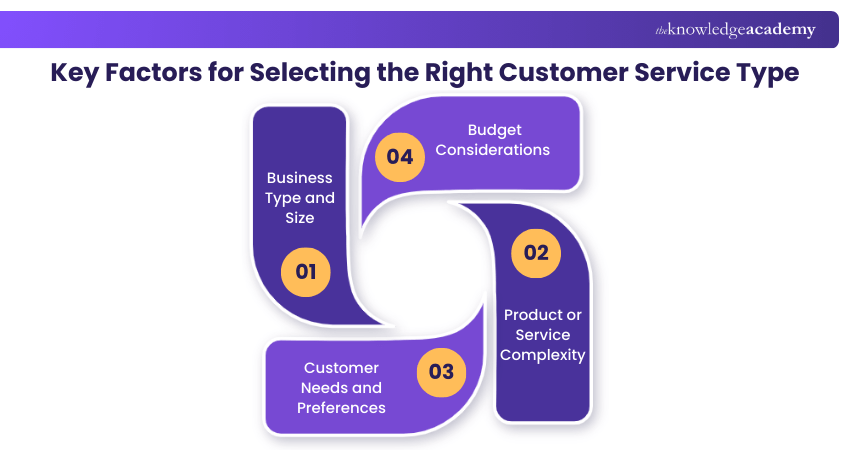
1) Business Type and Size
The type and size of your business directly influence the structure of your Customer Service. Small businesses may rely on a single, multi-skilled team, while larger organisations often require specialised departments to manage higher volumes and diverse customer enquiries efficiently.
2) Product or Service Complexity
The complexity of your product or service determines the level of support required. Simple offerings may only need email or chat assistance, while technical or high-value products often require trained specialists, detailed telephone guidance, or even dedicated on-site support services.
3) Customer Needs and Preferences
Understanding customer expectations is essential when selecting support channels. Some customers prefer quick live chat responses, while others value detailed email communication or direct phone conversations. Offering preferred channels improves accessibility, satisfaction, and overall customer experience.
4) Budget Considerations
Budget plays a crucial role in deciding the type of Customer Service to implement effectively and sustainably. Advanced tools like AI chatbots and CRM systems require significant upfront investment, while email and basic phone support are more cost-effective and practical options for smaller businesses.
Challenges in Managing Multiple Customer Service Channels
Managing multiple Customer Service channels improves reach but increases complexity. Businesses must maintain consistency and ensure smooth tracking across platforms. Key challenges include:
1) Maintaining Consistent Brand Messaging: Each platform has different formats and styles, making it difficult to maintain consistent messaging, tone, and service quality across all channels.
2) Managing Customer Experience Across Platforms: Tracking enquiries across Social Media, marketplaces, email, and live chat can be challenging, causing delayed responses or fragmented support.
3) Coordinating Support Teams Efficiently: Multiple channels require clear processes and well-trained teams to ensure smooth communication and avoid duplicated or missed enquiries.
4) Scaling Operations Effectively: As businesses grow, handling higher volumes across channels becomes complex without integrated tools and automation systems.
5) Ensuring Real-time Visibility and Tracking: Without centralised systems, monitoring conversations, performance, and resolution status across channels becomes difficult, impacting customer satisfaction.
Conclusion
To ensure an optimal customer experience for your business, consider the various Types of Customer Service we've discussed and select the one that best aligns with your business needs. Remember, a user-centric approach not only boosts sales but also fosters a loyal customer base. Good Customer Service is the cornerstone of lasting business relationships.
Gain practical tools for conflict resolution, communication, and decision-making with our Supervisor Training – Join today!
Frequently Asked Questions
What are the Latest Trends in Customer Service?

The latest trends in Customer Service focus on AI-powered chatbots, omnichannel support, and personalised experiences. Businesses are using automation and data insights to deliver faster responses, proactive solutions, and seamless communication across platforms, while expanding self-service options like FAQs and knowledge bases.
What is Meant by a Customer Service Model?
A Customer Service model refers to the structured framework and strategies that an organisation adopts to deliver consistent and high-quality customer support. It encompasses processes, policies, and procedures aimed at meeting customer needs and expectations efficiently.
What are the Other Resources and Offers Provided by The Knowledge Academy?
The Knowledge Academy takes global learning to new heights, offering over 3,000+ online courses across 490+ locations in 190+ countries. This expansive reach ensures accessibility and convenience for learners worldwide.
Alongside our diverse Online Course Catalogue, encompassing 17 major categories, we go the extra mile by providing a plethora of free educational Online Resources like Blogs, eBooks, Interview Questions and Videos. Tailoring learning experiences further, professionals can unlock greater value through a wide range of special discounts, seasonal deals, and Exclusive Offers.
What is The Knowledge Pass, and How Does it Work?
The Knowledge Academy’s Knowledge Pass, a prepaid voucher, adds another layer of flexibility, allowing course bookings over a 12-month period. Join us on a journey where education knows no bounds.
What are the Related Courses and Blogs Provided by The Knowledge Academy?
The Knowledge Academy offers various Personal Development Courses, including the Exceptional Customer Service Training, Effective Planning and Scheduling Course, and Customer Experience Training. These courses cater to different skill levels, providing comprehensive insights into Effective Communication Strategies.
Our Business Skills Blogs cover a range of topics related to Types of Customer Service, offering valuable resources, best practices, and industry insights. Whether you are a beginner or looking to advance your Customer Service skills, The Knowledge Academy's diverse courses and informative blogs have got you covered.

The Knowledge Academy


Global Training Provider
The Knowledge Academy is a world-leading provider of professional training courses, offering globally recognised qualifications across a wide range of subjects. With expert trainers, up-to-date course material, and flexible learning options, we aim to empower professionals and organisations to achieve their goals through continuous learning.

Upcoming Business Skills Resources Batches & Dates
Date
 Exceptional Customer Service Training
Exceptional Customer Service Training
Fri 11th Sep 2026
Exceptional Customer Service Training
Fri 11th Dec 2026

 If you wish to make any changes to your course, please


