


 Top Rated Course

We may not have the course you’re looking for. If you enquire or give us a call on +34 932716793 and speak to our training experts, we may still be able to help with your training requirements.
What is Talent Acquisition? A Complete Guide
The Knowledge Academy 02 January 2026Talent Acquisition focuses on identifying, attracting and hiring skilled professionals through effective strategies that support long-term organisational growth. It also involves employer branding, workforce planning, candidate experience, and data-driven hiring approaches that help organisations build strong, future-ready teams.

Training Outcomes Within Your Budget!
We ensure quality, budget-alignment, and timely delivery by our expert instructors.
Table of Contents

Have you ever tried hiring someone and realised it’s harder than it looks? Finding the right person for the job isn’t just about ticking boxes. It’s about discovering talent that fits your company’s culture, goals, and long-term vision. That’s where Talent Acquisition steps in. It helps businesses go beyond basic recruitment to hiring candidates who fit company culture and long-term goals. Curious to know how it works and why it matters? Let’s dive into what acquisition really means and how it can transform your hiring strategy.
Table of Contents
1) What is Talent Acquisition (TA)?
2) Why is Talent Acquisition Important?
3) Steps in the Talent Acquisition Process
4) Talent Acquisition Strategies
5) Talent Acquisition Best Practices
6) How to Build Winning Talent Acquisition Strategies
7) Conclusion
What is Talent Acquisition (TA)?
Talent Acquisition is a strategy that seeks to do more than just fill the gap of an open position. It is focused on identifying, engaging and acquiring the right talent when work is available and when it is desirable for the overall business enterprise.
Modern Talent Acquisition practices emphasise aligning hiring with long-term business goals. It necessitates working closely with hiring managers and being aware of the labour market, skills available, available technology, and trends in the evolving workforce. Tactically leveraging a successful Talent Acquisition strategy will support the creation of a talent pipelines and candidate pipelines, minimise the time to hire/talent acquisition, and put companies in a better position to acquire and retain top talent when needed.

Talent Acquisition vs. Recruiting
While Talant Acquisition and Recruitment appear similar, they are different types of activities. Recruitment is more of a reactive activity, which is to fill open roles, and in some cases, allows organisations to sign free agents to accentuate the immediate needs of the business.
Talent Acquisition is more of a forward-thinking process. It's considered a strategic way to build a team that can be prepared for the future, by identifying a leader, specialist or culture-fit candidate, who will develop with the organisation over time. This is where advanced Talent Acquisition stands apart from traditional recruitment methods.
Why is Talent Acquisition Important?
Talent acquisition plays a critical role in helping organisations grow sustainably by ensuring the right people are hired at the right time. It supports both immediate hiring needs and long-term workforce planning, directly impacting performance, culture, and competitiveness.
a) Attracts top talent: Helps organisations hire skilled professionals who align with values and long-term vision.
b) Reduces hiring costs: Streamlines recruitment, improves hire quality, and lowers employee turnover.
c) Improves employee retention: Focuses on cultural fit, increasing engagement, morale, and long-term loyalty.
d) Builds high-performing teams: Encourages diverse skills, perspectives, and collaboration.
e) Promotes diversity and inclusion: Supports fair hiring practices that drive innovation and creativity.
f) Ensures business continuity: Creates talent pipelines to meet future workforce needs and manage change.
g) Supports succession planning: Identifies and prepares future leaders for critical roles.
h) Boosts business performance: Places the right talent in key roles, strengthening competitive advantage and growth.
Steps in the Talent Acquisition Process
A Talent Acquisition Strategy typically involves six key steps, ranging from initial research to successful onboarding. Taking a structured approach to Talent Acquisition often yields the best results.

1) Sourcing and Generating Leads
The initial step is to source candidates, which can be done through networking, previous candidates, committees, and employer branding.
2) Attracting Potential Candidates
For potential candidates to be excited to review your posting you need to have a strong company profile, and your mission, culture, benefits, and compensation must stand out to potential candidates.
3) Conducting Interviews and Assessments
After you have candidates interested you will start the interview process, which can vary from interview to interview.
4) Performing Reference Checks
The reference checks will help you hire smartly, as they will provide you with a history of the candidate's previous roles, and also provide you with possible background checks.
5) Making Final Selections
You should have managers, Human Resources and stakeholder input for the final hire, ensuring that both the candidate and role fit with the company culture.
6) Hiring and Onboarding New Employees
Following the offer, onboarding starts with welcome emails, introductions, guidance on benefits, and resources to assist the new hire.
Enhance your team performance and productivity with our Successful People Management and Team Leadership – Sign up today!
Talent Acquisition Strategies
Recruitment is a constantly evolving field, and top organisations recognise the need to adapt their Talent Acquisition strategies to meet new opportunities and challenges. Successful talent acquisition professionals use data-driven and agile strategies to attract top candidates. These strategies may vary based on business needs, hiring pain points, and available resources.Outsourcing the Recruitment Process is often integrated into these strategies, allowing organisations to forecast future skill requirements, optimise hiring, and build sustainable teams.
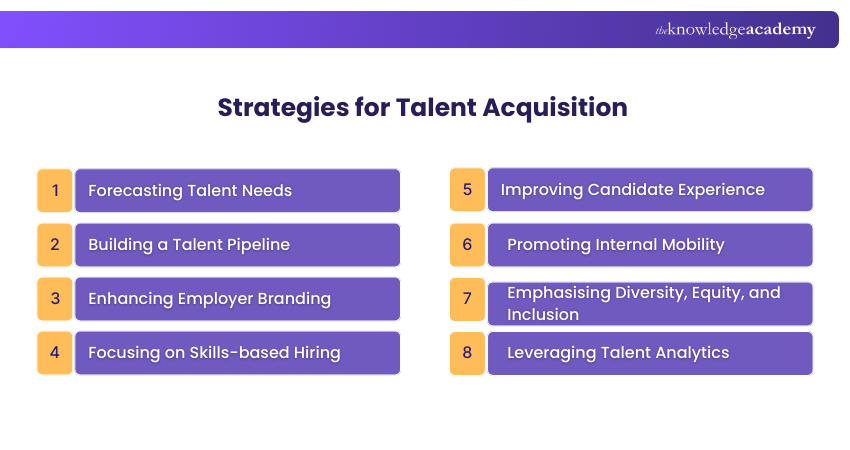
1) Forecasting Talent Needs
Proactive Talent Acquisition teams are planning for future workforce needs through identifying key hard-to-fill roles and identifying pathways. They are also planning for changing conditions and thinking of staffing flexibility by taking into consideration contractors, gig workers, and part-time positions.
2) Building a Talent Pipeline
Modern Talent Acquisition focuses on long-term planning and relationship-building. Teams use tools like spreadsheets or applicant tracking systems to manage candidates and schedule regular outreach. Company-wide involvement, including referral programmes and rewards, helps attract top talent more efficiently.
3) Enhancing Employer Branding
A strong employer brand attracts top candidates by showcasing your culture, website, and social presence. Marketing, HR, and communications teams play a key role in making your brand stand out.
4) Focusing on Skills-based Hiring
Skills-based hiring places focus on skills, rather than education, which contributes to a more robust, inclusive process. The ability to eliminate a degree requirement and focus on competency can give organisations the ability to find truly Qualified Candidates.
5) Improving Candidate Experience
A positive, respectful candidate experience will also keep the candidate engaged when an offer is made. Candidates appreciate transparency in the recruitment process, expectations of timely communication, and feedback in a respectful way throughout their journey.
6) Promoting Internal Mobility
Internal mobility uses the skills already in an organisation to advance talent from within. Identifying top-performing talent is a start; preparing high performers to be leaders is the next step.
7) Emphasising Diversity, Equity, and Inclusion
Having a diverse team really allows for fresh ideas and different perspectives to drive innovation. Talent Acquisition teams support DEI in a recruiting cycle by writing inclusive job advertisements, sourcing talent more broadly, and removing bias in hiring practices.
8) Leveraging Talent Analytics
Modern Talent Acquisition and recruitment software uses data analytics to improve hiring decisions and optimise talent recruitment efforts. Monitoring the sourcing values of a candidate and adjusting the sourcing process provides an organisation with the ability to engage with potential top talent.
Talent Acquisition Best Practices
Strong talent acquisition practices help organisations attract, hire, and retain the right people while supporting long-term business goals. These best practices form the foundation of a effective talent acquisition strategy and ensure consistency, efficiency, and sustainable workforce growth.
Build a Strong Employer Brand
A compelling employer brand showcases your organisation’s values, culture, and work environment. Clear messaging across careers pages, job descriptions, and social media helps candidates understand what makes your workplace unique, improving attraction, engagement, and retention.
Align Your Talent Acquisition Process With Business Goals
Talent acquisition should support where the business is heading, not just current vacancies. Aligning hiring plans with growth strategies, expansion goals, and future skill requirements ensures the organisation is prepared for change and long-term success.
Leverage Technology and Data
Using recruitment technology and data analytics improves decision-making across the hiring process. Data helps identify effective sourcing channels, refine job descriptions, reduce bottlenecks, and enhance candidate experience from application to onboarding.
Offer Flexible Work Options
Flexible working models such as remote, hybrid, or flexible hours make organisations more attractive to modern talent. These options support work-life balance, improve productivity, and widen the talent pool, especially among younger and highly skilled professionals.
Work on Workforce Planning & Forecasting
Effective workforce planning allows organisations to anticipate hiring needs based on turnover, growth, or skill changes. Regular collaboration with hiring managers helps forecast demand accurately and ensures the right talent is available at the right time.
Expand Your Outreach Strategies
Diversifying sourcing methods helps reach candidates with varied skills and backgrounds. Alongside traditional platforms, organisations can use niche job boards, academic partnerships, networking events, and recruitment agencies to strengthen their talent pipeline.
How to Build Winning Talent Acquisition Strategies
An effective strategy includes resource planning to assess skills demands, capacity gaps, and timelines for hiring, enabling proactive recruitment and workforce development.
1) Create an Employee Value Proposition
An EVP describes what candidates can expect from your company in terms of culture, leadership, growth, and rewards. EVPs should be tailored to different roles to attract the right talent.
2) Build a Stronger Employer Brand
Your employer brand should accurately capture your values and EVP. Consistency and attractiveness of the employer brand across platforms is crucial in making your company memorable to candidates and attracting skilled talent.
Learn to inspire, motivate, and lead diverse teams successfully with our in-depth People Management Courses – Register today!
Conclusion
Talent Acquisition is a powerful tool to develop strong, future-ready teams. By focusing on strategies, plans and candidate experience, companies can attract top-notch talent and keep growing into the future. When these aspects are executed well, it can lead to better hires championing your organisation and contributing to long term success. It is never too late to start refining your process and unlock the full potential of your organisation.
Develop advanced skills in sourcing, evaluating, and hiring talent to meet your company’s needs with our Talent Acquisition Training – Join now!
Frequently Asked Questions
What are the Signs you Need to Improve Your Talent Acquisition?

You may need to improve your Talent Acquisition if hiring outcomes are slow, costly, or misaligned with business needs.
a) Roles take too long to fill or remain consistently vacant
b) High employee turnover shortly after hiring
c) Poor candidate experience or low-quality applicants
d) Talent gaps impacting productivity or business growth
What Metrics are Important in Talent Acquisition?
Key metrics include time-to-hire, quality of hire, candidate satisfaction, and cost-per-hire. Tracking these metrics helps optimise recruitment processes, reduce costs, and improve overall hiring efficiency, ensuring the right talent is brought on board swiftly and effectively.
What are the Other Resources and Offers Provided by The Knowledge Academy?
The Knowledge Academy takes global learning to new heights, offering over 3,000 online courses across 490+ locations in 190+ countries. This expansive reach ensures accessibility and convenience for learners worldwide.
Alongside our diverse Online Course Catalogue, encompassing 19 major categories, we go the extra mile by providing a plethora of free educational Online Resources like Blogs, eBooks, Interview Questions and Videos. Tailoring learning experiences further, professionals can unlock greater value through a wide range of special discounts, seasonal deals, and Exclusive Offers.
What is The Knowledge Pass, and How Does it Work?
The Knowledge Academy’s Knowledge Pass, a prepaid voucher, adds another layer of flexibility, allowing course bookings over a 12-month period. Join us on a journey where education knows no bounds.
What are Related Courses and Blogs Provided by The Knowledge Academy?
The Knowledge Academy offers various People Management Courses, including the Talent Acquisition Training, Performance Appraisal Training, and Talent Management Training. These courses cater to different skill levels, providing comprehensive insights into Talent Acquisition Strategy.
Our HR Blogs cover a range of topics related to Talent Acquisition, offering valuable resources, best practices, and industry insights. Whether you are a beginner or looking to advance your HR skills, The Knowledge Academy's diverse courses and informative blogs have got you covered.

The Knowledge Academy


Global Training Provider
The Knowledge Academy is a world-leading provider of professional training courses, offering globally recognised qualifications across a wide range of subjects. With expert trainers, up-to-date course material, and flexible learning options, we aim to empower professionals and organisations to achieve their goals through continuous learning.

Upcoming HR Resources – Learn about Human Resources Batches & Dates
Date
 Talent Acquisition Training
Talent Acquisition Training
Fri 29th May 2026
Talent Acquisition Training
Fri 28th Aug 2026
Talent Acquisition Training
Fri 27th Nov 2026

 If you wish to make any changes to your course, please


