


 Top Rated Course

We may not have the course you’re looking for. If you enquire or give us a call on +34 932716793 and speak to our training experts, we may still be able to help with your training requirements.
Socially Responsible Investment: Meaning, Benefits, and Examples
The Knowledge Academy 12 March 2026Socially Responsible Investment (SRI) focuses on earning returns while supporting ethical, social, and environmental goals through ESG-based investment choices. It helps investors align financial growth with responsible values. This approach supports sustainable businesses and promotes long-term positive impact.

Training Outcomes Within Your Budget!
We ensure quality, budget-alignment, and timely delivery by our expert instructors.
Table of Contents
Ever looked for investment choices that can grow your wealth besides funding reforestation projects that combat climate change? This is the transformative potential of Socially Responsible Investment (SRI). It lets you align your financial goals with your ethical values, ensuring that your money supports businesses and initiatives that foster social and environmental progress.
Be it through backing renewable energy ventures or investing in community development, Socially Responsible Investment offers a way to make your investments impactful. In this complete blog, we will explore its diverse aspects, providing you with the insights and tools to make informed, meaningful investment decisions. Let’s dive in!
Table of Contents
1) What is a Socially Responsible Investment?
2) Principles of Socially Responsible Investing
3) Types of Socially Responsible Investments
4) How Does Socially Responsible Investing Work?
5) Types of Socially Responsible Investment Strategies
6) Advantages and Disadvantages of Socially Responsible Investing
7) Example of Socially Responsible Investment
8) Differences Between SRI and ESG
9) Conclusion
What is a Socially Responsible Investment?
Socially Responsible Investment (SRI), also known as ethical or socially conscious investing, involves choosing investments based on financial returns as well as a company’s environmental, social, and ethical practices. This helps investors to invest in responsible companies as they seek long-term financial returns.
One can invest directly in socially responsible firms or in socially responsible mutual funds and Exchange-Traded Funds (ETFs).

Principles of Socially Responsible Investing
Socially Responsible Investing (SRI) has a number of principles that guide the investors when choosing companies that are in line with ethical, environmental and social values. Key principles include:
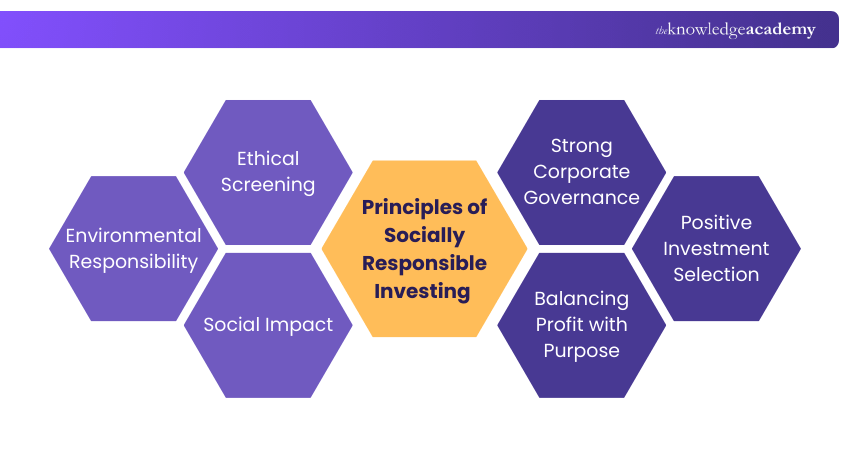
1) Ethical Screening: Investors consider ethical standards and companies and do not invest in businesses associated with detrimental practices like tobacco, weaponry, gambling, or other debatable areas.
2) Environmental Responsibility: Businesses are evaluated in terms of their treatment of environmental concerns like pollution, climate change, and the utilisation of sustainable resources.
3) Social Impact: Investors look at the treatment of employees, customers, and communities by organisations, such as labour practices, diversity, and human rights.
4) Strong Corporate Governance: Evaluation criteria include responsible leadership, management practices, equal executive compensation, and rights of shareholders.
5) Positive Investment Selection: SRI promotes investment in firms that are proactive towards sustainability, ethical practices and social development.
6) Balancing Profit with Purpose: The strategy is to generate financial returns and promote businesses that have positive impacts to society and the environment.
Types of Socially Responsible Investments
Socially Responsible Investments (SRIs) come in various forms, each catering to different investor preferences and values. Such investments focus on generating financial returns while promoting positive social and environmental outcomes. Below are some common types of SRIs:

1) Mutual Funds and Exchange-Traded Funds (ETFs)
Many mutual funds and ETFs follow the Environmental, Social, and Governance (ESG) criteria. Investors interested in these funds can visit the SIF website, which lists over 100 socially responsible mutual funds.
2) Impact Investing
Impact investing aims at producing financial returns and positive social or environmental impact. Investors promote projects or companies in sectors including renewable energy, healthcare, education and community development. In such a way, investors can not only attain financial growth but also make a difference in society.
3) Community Investments
Investors can also directly fund projects that benefit communities. One straightforward method is to contribute to Community Development Financial Institutions (CDFIs).
4) Microfinance
Another approach to making Socially Responsible Investments is by providing microloans or small loans to startups.
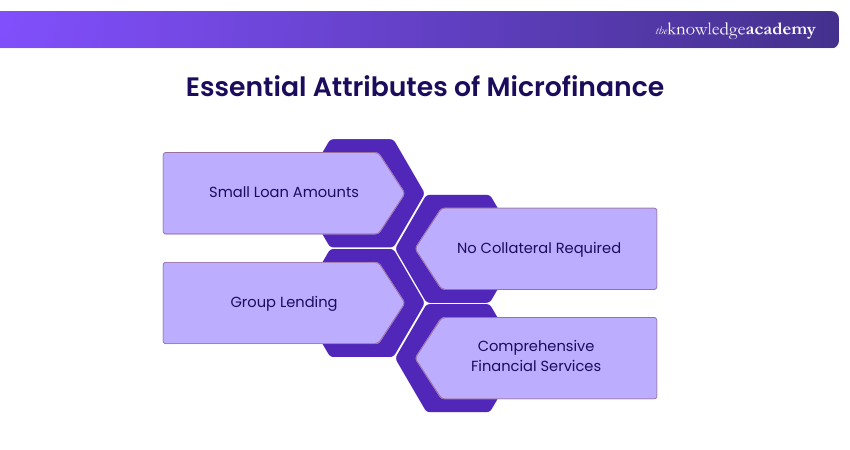
Investors can seek out businesses in developing countries that offer financial assistance, thereby fostering economic growth and community development.
Empower yourself by signing up for our Personal Development Courses – secure your spot now!
How Does Socially Responsible Investing Work?
Socially Responsible Investing operates by investing in a way that makes ethical, social and environmental choices as well as financial performance. Investors consider firms and shun those that engage in detrimental practices like tobacco, gambling, or other controversial sectors.
Following this screening process, the investors incorporate companies who have responsible conducts e.g. environmental sustainability, social equality and ethical governance. The investments are frequently done in portfolios, mutual funds, or Exchange Traded Funds (ETFs) that contain companies that match these requirements.
The objective is to create an investment portfolio which is sustainable to the responsible organisations yet capable of producing financial returns.
Types of Socially Responsible Investment Strategies
The following are some common strategies used in Socially Responsible Investing to select and manage ethical investments:
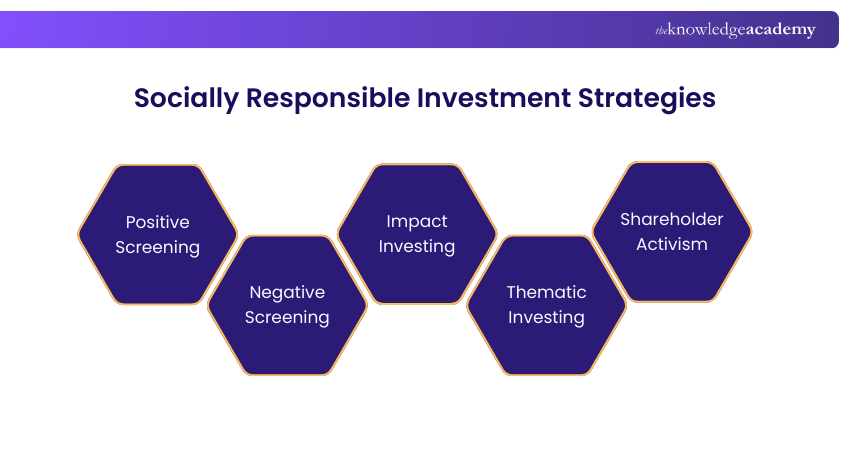
Positive Screening
Positive screening is the process that concentrates on choosing companies with good practices on environmental, social, and governance. As a result, investors take a keen interest in organisations that outperform their peers in aspects such as sustainability, responsible management, and ethically valid business practices.
Negative Screening
Negative screening is the act of excluding the companies or industries that fail to comply with some ethical or social norms. Investors can shun industries like tobacco, weapons, gambling or any company which has a history of poor labour practices or destruction of the environment.
Impact Investing
Impact investing focuses on investments which provide both financial and quantifiable social or environmental gains. This policy focuses on investment in projects or businesses that deal with concerns like clean energy, healthcare, or social development.
Thematic Investing
Thematic investing gives attention to particular sustainability matters or international issues. Investors can invest in areas like renewable energy, sustainable agriculture or water conservation to contribute to long-term social and environmental development.
Shareholder Activism
Shareholder activism is where the shareholders exercise shareholder rights to affect corporate behaviour. Investors can promote responsible practices and sustainable behaviours in organisations by interacting with the management or taking part in decision-making processes of the company.
Advantages and Disadvantages of Socially Responsible Investing
Listed below are the key advantages and disadvantages of Socially Responsible Investing that investors should consider before choosing this approach.
Advantages of Socially Responsible Investing (SRI)
Following are the advantages of Socially Responsible Investing (SRI):
1) Ethical alignment: Investors are able to back businesses that align with their individual values and also avoid businesses that are associated with unethical practices.
2) Potential Long-term Returns: Companies that address social and environmental issues can be successful when the need in sustainable solutions grows.
3) Promotes Good Corporate Change: Investors are able to affect organisations to embrace good practices and enhance transparency.
4) Access To Like-minded Investors: Because of their shared objectives and values, investors tend to find fellow investors in ethical communities.
Disadvantages of Socially Responsible Investing (SRI)
Following are the disadvantages of Socially Responsible Investing (SRI):
1) Lack of investing opportunities: Applying ethical filters can narrow down on available investment opportunities.
2) Potential low returns in certain times: Out of certain lucrative industries can impact on the short-term portfolio results.
3) Increased research and due diligence: Investors should critically examine companies to make sure they are indeed socially responsible.
4) Greenwashing risk: There is a possibility that some organisations may overstate and make claims that they are sustainable in order to get responsible investors.
Unlock your full potential by registering for our expert-led Time Management Training – sign up today and transform your productivity!
Example of Socially Responsible Investment
An instance of Socially Responsible Investment is community investing, which without delay supports companies with a demonstrated tune report of social obligation through community help. Such companies regularly face demanding situations in obtaining funding from conventional assets like banks and monetary establishments. The monetary help they acquire permits them to offer critical offerings to their communities, which includes low-cost housing and loans. The intention is to enhance the first-rate existence in the community by means of lowering reliance on authorities' help, including welfare, thereby positively impacting the local financial system.
Differences Between SRI and ESG
Here are five detailed points highlighting the differences between Socially Responsible Investment and Environmental, Social, and Governance (ESG):
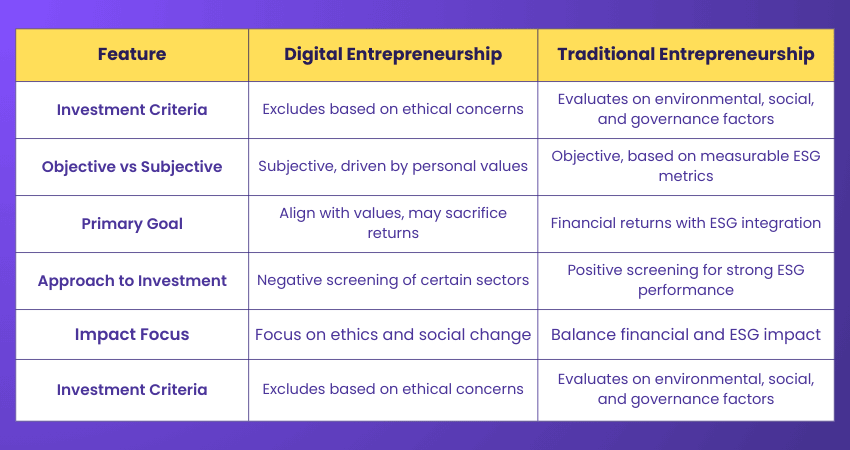
1) Investment Criteria
SRI makes a speciality of excluding investments, that are based totally on precise moral standards. For instance, an investor might keep away from groups involved in tobacco or firearms. Whereas, ESG evaluates organisations based on their environmental, social, and governance practices alongside conventional economic metrics. It focuses on discovering dangers and opportunities associated with those factors.
2) Objective vs Subjective
SRI regularly involves a subjective assessment of an enterprise’s alignment with the investor’s private values and ethical requirements. While, ESG makes use of objective criteria to measure an employer’s performance in environmental, social, and governance areas. This information is used to complement monetary evaluation.
3) Primary Goal
The primary intention of SRI is to spend money on a way that aligns with the investor’s moral beliefs, even if it means doubtlessly sacrificing some economic returns. However, ESG goals to decorate financial performance by means of integrating ESG elements into funding selections, identifying groups that would perform properly over the long time because of their sustainable practices.
4) Approach to Investment
SRI involves actively avoiding investments in companies that do not meet certain ethical standards. It is more about exclusion based on values. Whereas, ESG involves evaluating and selecting companies that perform well on ESG criteria, often leading to a more inclusive approach that considers both financial and non-financial factors.
5) Impact Focus
SRI emphasises the ethical effect of investments, regularly prioritising social and environmental advantages over economic returns. In contrast, ESG specialises in how ESG elements can impact an organisation’s overall economic performance and lengthy-term sustainability, aiming to balance moral considerations with financial returns.
Conclusion
In conclusion, Socially Responsible Investment (SRI) empowers you to make monetary selections that replicate your moral values, thereby fostering an effective impact on society. By integrating SRI into your portfolio, you can aim for financial returns and make a contribution to a sustainable future. Start exploring SRI options and align your investments with your values.
Forge deeper and more meaningful connections by joining our Emotional Intelligence Training today!
Frequently Asked Questions
Can SRI Make a Difference Beyond Financial Returns?

Sustainable and Responsible Investing can make a difference beyond financial returns by positively impacting Environmental, Social, and Governance (ESG) issues.
Are There any Risks Associated With SRI?
SRI aligns investments with ethical values, promoting sustainability and social responsibility. However, risks exist, such as lower diversification, potential underperformance compared to traditional investments, and limited options in certain sectors.
What are the Other Resources and Offers Provided by The Knowledge Academy?
The Knowledge Academy takes global learning to new heights, offering over 3,000+ online courses across 490+ locations in 190+ countries. This expansive reach ensures accessibility and convenience for learners worldwide.
Alongside our diverse Online Course Catalogue, encompassing 17 major categories, we go the extra mile by providing a plethora of free educational Online Resources like Blogs, eBooks, Interview Questions and Videos. Tailoring learning experiences further, professionals can unlock greater value through a wide range of special discounts, seasonal deals, and Exclusive Offers.
What is The Knowledge Pass, and How Does it Work?
The Knowledge Academy’s Knowledge Pass, a prepaid voucher, adds another layer of flexibility, allowing course bookings over a 12-month period. Join us on a journey where education knows no bounds.
What are the Related Courses and Blogs Provided by The Knowledge Academy?
The Knowledge Academy offers various Personal Development Courses, including the Time Management Training, Journalism Course, and Social Responsibility Course. These courses cater to different skill levels, providing comprehensive insights into Budget Deficit.
Our Business Skills Blogs cover a range of topics related to Social Responsibility, offering valuable resources, best practices, and industry insights. Whether you are a beginner or looking to advance your Business skills, The Knowledge Academy's diverse courses and informative blogs have got you covered.

The Knowledge Academy


Global Training Provider
The Knowledge Academy is a world-leading provider of professional training courses, offering globally recognised qualifications across a wide range of subjects. With expert trainers, up-to-date course material, and flexible learning options, we aim to empower professionals and organisations to achieve their goals through continuous learning.

Upcoming Business Skills Resources Batches & Dates
Date
 Social Responsibility Course
Social Responsibility Course
Fri 5th Jun 2026
Social Responsibility Course
Fri 25th Sep 2026
Social Responsibility Course
Fri 18th Dec 2026

 If you wish to make any changes to your course, please


