


 Top Rated Course

We may not have the course you’re looking for. If you enquire or give us a call on +34 932716793 and speak to our training experts, we may still be able to help with your training requirements.
How to Become an Agile Coach: A Step-by-Step Career Guide
The Knowledge Academy 18 April 2026Learning How to Become an Agile Coach means learning Scrum, Kanban, and Lean, gaining experience, building leadership, and earning key certifications. It is a strategic career path suitable for those who want to guide teams and organisations towards agility, continuous improvement, and high-performance delivery.

Training Outcomes Within Your Budget!
We ensure quality, budget-alignment, and timely delivery by our expert instructors.
Table of Contents
Related Courses
- Project management Certification
- AI-Empowered Leading SAFe® Course
- Certified Professional in Agile Project Management (CPAPM)
- Project Management Office Fundamentals Certification Course
- Introduction to Project Management Course
- Agile Project Management Practitioner (AgilePM® v3)
- Agile Project Management Foundation (AgilePM® v3)

Want to lead change, inspire teams, and make work more meaningful? Then it’s time to explore How to Become an Agile Coach. This isn’t just a job, it’s a chance to help people do their best work, break down barriers, and build something better together. If you love people, progress, and purpose, you’re in the right place.
This blog explains what an Agile Coach is, How to Become an Agile Coach, why the role matters, the skills you need, key tips, the value of Agile communities, salary insights, and whether you can start with no experience. Ready to take the next step? Let’s dive in.
Table of Contents
1) What is an Agile Coach?
2) How to Become an Agile Coach?
3) Agile Coach Responsibilities
4) Why Work as an Agile Coach?
5) Essential Skills Required for an Agile Coach
6) Tips to Help You Become an Agile Coach
7) Getting Involved in an Agile Community
8) How Much Do Agile Coaches Get Paid?
9) Can I Become an Agile Coach With No Experience?
10) Conclusion
What is an Agile Coach?
An Agile Coach is a professional who guides individuals, teams, and entire organisations in adopting and improving Agile ways of working. They act as mentors, facilitators, and change agents, helping teams understand Agile principles, apply the right frameworks, and enhance team performance.
Agile Coaches focus on strengthening collaboration, streamlining workflows, and fostering a culture of transparency, adaptability, and improvement. They are integral in shaping organisational processes, aligning leadership, and driving enterprise- wide agility initiatives.
How to Become an Agile Coach?
Becoming an Agile Coach takes time, learning, and practice. If you're wondering How to Become an Agile Coach, here are some steps to help you:
1) Get a Relevant Education
While you don’t need a specific degree to become an Agile Coach, having one can be helpful. A bachelor’s degree in Computer Science, IT, Project Management, or Software Engineering shows you understand the field. It can also make you more attractive to employers. Choose a subject that matches the industry you want to work in.
A solid educational background can also make it easier to learn and apply Agile concepts. It gives you credibility when working with clients or teams from technical or specialised sectors. Ultimately, it helps you stand out as a well-rounded professional prepared to grow into an Agile Coach.
2) Learn Scrum and Gain Certification
A common starting point for Agile Coaches is working in roles like Scrum Master or Product Owner. Scrum is a popular Agile framework that focuses on teamwork, problem-solving, and delivering work in short cycles. Getting certified can lift your credibility and help you gain practical experience.
Certification also shows employers you are committed to professional growth. It can open the door to opportunities that require formal recognition of your skills. Learning Scrum also builds a strong foundation for understanding other Agile methods. Hands-on Scrum experience can greatly improve your ability to coach teams effectively.
3) Build Experience and Learn Other Frameworks
Employers look for Agile Coaches with years of Agile Project Management experience. Start with entry-level Scrum roles and work your way up. Learn other Agile frameworks like Lean, Kanban, Extreme Programming (XP), and the Scaled Agile Framework.
This variety of skills will make you more adaptable and valuable. Real-world practice helps you apply theory effectively in different scenarios. The broader your knowledge, the better you can tailor solutions for diverse teams.
4) Network with Agile Professionals
Networking helps you interact with people who can guide you to your first Agile Coaching role. Attend Agile conferences, workshops, and seminars to meet industry experts. Share your details and talk about your career goals.
You can also learn from Agile authors and bloggers. Building relationships can help to get job referrals and mentorship. Staying active in the community keeps you updated on trends and opportunities.
5) Stay Updated with Agile Developments
The Agile landscape is constantly evolving, with new practices, tools, and frameworks emerging. Staying informed through books, blogs, industry reports, and professional communitie’s helps you gather relevant and fresh knowledge.
Actively engaging in Agile discussions and learning from experienced practitioners ensures your guidance remains practical and effective. This continuous learning approach enables you to adapt quickly during Agile transitions and support teams and organisations more confidently.
Unlock AI skills for smarter Agile teams and transform your Agile delivery with Certified Artificial Intelligence for Agile Projects Training now!
Agile Coach Responsibilities
An Agile Coach plays a core role in helping teams and organisations adopt, adapt, and mature in Agile ways of working. Let’s look at their key responsibilities below:
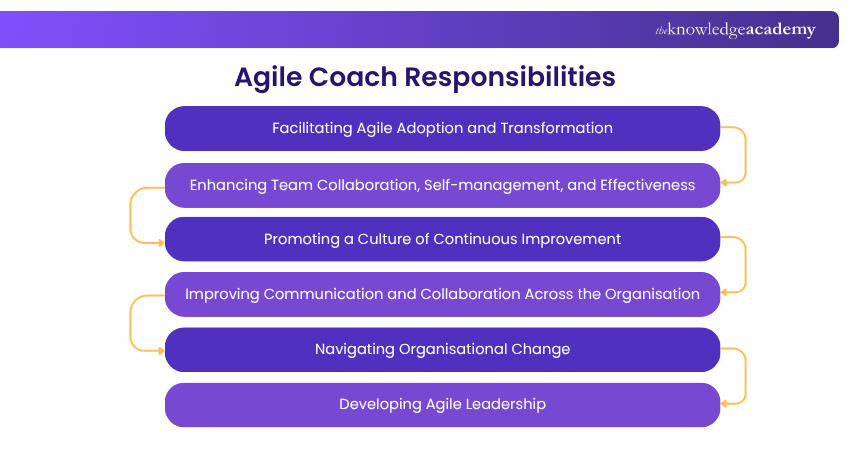
1) Facilitating Agile Adoption and Transformation
An Agile Coach guides organisations in shifting from traditional methods to Agile practices. They help to reinterpret existing processes through an Agile lens. This ensures information efforts remain aligned with business goals and delivers impact.
2) Enhancing Team Collaboration, Self-management, and Effectiveness
An Agile Coach supports teams in adopting Agile practices that strengthen communication and workflow. Through coaching, teams become more self-managing and capable of making quicker, informed decisions. This leads to faster delivery and more innovative outcomes.
3) Promoting a Culture of Continuous Improvement
An Agile Coach encourages teams to reflect on processes, identify gaps, and implement improvements. This drives better product quality and stronger team dynamics. Over time, it builds a culture that embraces learning and adaptation.
4) Improving Communication and Collaboration Across the Organisation
Agile Coach breaks down silos and promotes open, transparent communication across teams. Improving team interaction and alignment fosters stronger collaboration. This supports seamless cross-functional work and shared organisational goals.
5) Navigating Organisational Change
Agile Coaches guide employees and leaders through the mindset shift. They address resistance, build trust, and help stakeholders understand new ways of working. Their empathy and communication skills make transformational change easier to embrace.
6) Developing Agile Leadership
Agile Coach mentors leaders in applying Agile values, such as autonomy, empowerment, and adaptability. This strengthens leadership effectiveness and supports long-term transformation. Strong agile leadership ensures teams have the right environment to thrive.
Why Work as an Agile Coach?
Working as an Agile Coach gives you the chance to make a real difference in how people think, learn, and work together. Much like Agile Coach Natasha Ah-Fat from John Lewis, who thrives on helping others build a growth mindset, this role lets you inspire continuous learning and support teams as they push themselves to grow.
It’s a role that blends leadership, mentorship, and problem-solving while driving real cultural change. Agile Coaches work with diverse teams, explore new technologies like Artificial Intelligence (AI) and Virtual Reality (VR) to improve outcomes, and help organisations embrace agility. For those who value people, growth, and meaningful change, it’s a truly rewarding career.
Gain practical tools to manage time, cost, and risk in Agile projects. Join our Agile Project Management Foundation (AgilePM® V3) Course now!
Essential Skills Required for an Agile Coach
To become an Agile Coach, you need strong knowledge of Agile, experience working in teams, and good people skills. Here are six key skills every Agile Coach should develop.
1) Strong Knowledge of Agile Methods
Agile Coaches need a strong understanding of frameworks like Scrum, Lean, and Kanban to guide teams effectively as they adopt Agile practices. This knowledge enables them to choose the right approach, solve challenges, and support smoother organisational transformation.
2) Specialise with Further Certifications
Pursuing advanced Agile Certifications helps you deepen your skills, strengthen credibility, and specialise in areas like coaching, scaling, or leadership. This enhances your career opportunities and equips you to support teams more effectively.
3) Coaching and Facilitation Skills
Strong coaching and facilitation skills are vital for leading meetings, guiding discussions, and improving team collaboration. These skills help create a safe, open environment where team members feel encouraged to experiment, improve, and learn from their experiences.
4) Excellent Communication
Agile Coaches need to communicate Agile principles clearly to everyone, from team members to senior leaders. Strong communication builds trust, improves understanding, and strengthens teamwork across the organisation.
5) Emotional Intelligence
Great coaches care about people. They listen, show empathy, and build strong relationships. Emotional intelligence helps Agile Coaches connect with others and support them during change.
6) Growth Mindset
A great Agile Coach continuously learns and supports others in their growth. They enjoy helping people develop skills, overcome challenges, and reach their potential with confidence and clarity.
Apply Lean-Agile to deliver value efficiently with our SAFe® Agile Product Management Training – Join now!
Tips to Help You Become an Agile Coach
Let’s look at some practical and effective tips on How to Become an Agile Coach below.
1) Learn Agile Fundamentals: Understand the Agile Manifesto, Scrum, Kanban, and Lean extensively.
2) Gain Practical Experience: Work as a Scrum Master, Product Owner, or in Agile-based teams.
3) Get Certified: Earn key certifications, such as Certified Scrum Master (CSM), Professional Scrum Master (PSM), or Scaled Agile Framework (SAFe), to validate your knowledge.
4) Find a Mentor: Learn from experienced Agile coaches for practical guidance.
5) Keep Learning Continuously: Attend meetups, read, experiment, reflect, and grow your coaching mindset.
6) Understand the Coach’s Role: Know how coaching differs from managing or leading teams.
Getting Involved in an Agile Community
Getting involved in an Agile community helps you learn, grow, and connect with like-minded people. By joining meetups, online groups, or local networks, you can share ideas, explore challenges, and discover new practices. It also gives you access to diverse perspectives, mentors, and real-world experiences while keeping you updated with trends and motivated on your Agile journey.
Empower your Agile release train with Certified SAFe® for Teams Course – Join now!
How Much Do Agile Coaches Get Paid?
In the UK, Agile Coaches earn between £52,000 and £98,000 a year. Your salary will depend on your skills, experience, and where you work. If you are new, you may earn less. If you have more experience or work for a big company, you may earn more. As you learn and grow, your pay can go up.
Can I Become an Agile Coach With No Experience?
Becoming an Agile Coach with no experience is challenging, as the role demands strong knowledge of Agile practices, leadership skills, and the ability to guide teams through change. However, it is not impossible. You can begin by building a solid foundation through training and certifications in Agile and Scrum.
Start small, get involved in Agile projects in any role, even as a team member or facilitator, to gain practical exposure. Over time, these experiences will help you develop the skills, confidence, and credibility needed to step into an Agile Coaching career.
Conclusion
Learning How to Become an Agile Coach is a journey that blends knowledge, experience, and a strong coaching mindset. Understanding Agile principles, gaining hands-on experience, developing empathy, and continuously learning will help you grow into an Agile Coach. With consistent effort and curiosity, you can establish a rewarding career and become the type of coach organisations seek.
Learn Agile, lead better, and upgrade your skills with Agile Training now!
Frequently Asked Questions
What Does an Agile Coach do all Day?

An Agile Coach helps teams use Agile methods to work better. Their day includes leading stand-ups, retrospectives, training sessions, guiding teams with tools like Scrum, solving problems, working with leaders, and improving teamwork. Their main goal is to help teams grow, work smoothly, and deliver good results.
Is Agile Coach Certification Worth it?
Yes, Agile Coach Certification is worth it. It makes you look more trusted and skilled. It can help you get better jobs and more chances to grow. You also learn useful skills to guide teams and help companies use Agile in the right way.
What are the Other Resources and Offers Provided by The Knowledge Academy?
The Knowledge Academy takes global learning to new heights, offering over 3,000+ online courses across 490+ locations in 190+ countries. This expansive reach ensures accessibility and convenience for learners worldwide.
Alongside our diverse Online Course Catalogue, encompassing 17 major categories, we go the extra mile by providing a plethora of free educational Online Resources like Blogs, eBooks, Interview Questions and Videos. Tailoring learning experiences further, professionals can unlock greater value through a wide range of special discounts, seasonal deals, and Exclusive Offers.
What is The Knowledge Pass, and How Does it Work?
The Knowledge Academy’s Knowledge Pass, a prepaid voucher, adds another layer of flexibility, allowing course bookings over a 12-month period. Join us on a journey where education knows no bounds.
What are the Related Courses and Blogs Provided by The Knowledge Academy?
The Knowledge Academy offers various Agile Training, including the AgilePM® Foundation & Practitioner (AgilePM® v3) Training, Agile Change Agent Training, and the Agile for Teams Training. These courses cater to different skill levels, providing comprehensive insights into Agile Epic.
Our Project Management Blogs cover a range of topics related to Agile Coach, offering valuable resources, best practices, and industry insights. Whether you are a beginner or looking to advance your Project Management skills, The Knowledge Academy's diverse courses and informative blogs have got you covered.

The Knowledge Academy


Global Training Provider
The Knowledge Academy is a world-leading provider of professional training courses, offering globally recognised qualifications across a wide range of subjects. With expert trainers, up-to-date course material, and flexible learning options, we aim to empower professionals and organisations to achieve their goals through continuous learning.

Upcoming Project Management Resources Batches & Dates
Date
 AgilePM® Foundation & Practitioner (AgilePM® v3)
AgilePM® Foundation & Practitioner (AgilePM® v3)
Mon 29th Jun 2026
AgilePM® Foundation & Practitioner (AgilePM® v3)
Mon 6th Jul 2026
AgilePM® Foundation & Practitioner (AgilePM® v3)
Mon 13th Jul 2026
AgilePM® Foundation & Practitioner (AgilePM® v3)
Mon 20th Jul 2026
AgilePM® Foundation & Practitioner (AgilePM® v3)
Mon 27th Jul 2026
AgilePM® Foundation & Practitioner (AgilePM® v3)
Mon 3rd Aug 2026
AgilePM® Foundation & Practitioner (AgilePM® v3)
Mon 10th Aug 2026
AgilePM® Foundation & Practitioner (AgilePM® v3)
Mon 17th Aug 2026
AgilePM® Foundation & Practitioner (AgilePM® v3)
Sat 22nd Aug 2026, Sun 23rd Aug 2026
AgilePM® Foundation & Practitioner (AgilePM® v3)
Mon 24th Aug 2026
AgilePM® Foundation & Practitioner (AgilePM® v3)
Tue 1st Sep 2026
AgilePM® Foundation & Practitioner (AgilePM® v3)
Mon 7th Sep 2026
AgilePM® Foundation & Practitioner (AgilePM® v3)
Mon 14th Sep 2026
AgilePM® Foundation & Practitioner (AgilePM® v3)
Mon 21st Sep 2026
AgilePM® Foundation & Practitioner (AgilePM® v3)
Mon 28th Sep 2026
AgilePM® Foundation & Practitioner (AgilePM® v3)
Mon 5th Oct 2026
AgilePM® Foundation & Practitioner (AgilePM® v3)
Sat 10th Oct 2026, Sun 11th Oct 2026
AgilePM® Foundation & Practitioner (AgilePM® v3)
Mon 12th Oct 2026
AgilePM® Foundation & Practitioner (AgilePM® v3)
Mon 19th Oct 2026
AgilePM® Foundation & Practitioner (AgilePM® v3)
Mon 26th Oct 2026
AgilePM® Foundation & Practitioner (AgilePM® v3)
Mon 2nd Nov 2026
AgilePM® Foundation & Practitioner (AgilePM® v3)
Mon 9th Nov 2026
AgilePM® Foundation & Practitioner (AgilePM® v3)
Mon 16th Nov 2026
AgilePM® Foundation & Practitioner (AgilePM® v3)
Mon 23rd Nov 2026
AgilePM® Foundation & Practitioner (AgilePM® v3)
Mon 30th Nov 2026
AgilePM® Foundation & Practitioner (AgilePM® v3)
Mon 7th Dec 2026
AgilePM® Foundation & Practitioner (AgilePM® v3)
Sat 12th Dec 2026, Sun 13th Dec 2026
AgilePM® Foundation & Practitioner (AgilePM® v3)
Mon 14th Dec 2026
AgilePM® Foundation & Practitioner (AgilePM® v3)
Mon 21st Dec 2026

 If you wish to make any changes to your course, please


