


 Top Rated Course

We may not have the course you’re looking for. If you enquire or give us a call on +34 932716793 and speak to our training experts, we may still be able to help with your training requirements.
How to Build Confidence in Public Speaking?
Charlotte Wilson 26 March 2026To Build Confidence in Public Speaking, practise often, prepare well, use calm body language, and focus on clear, simple communication with your audience. It involves managing anxiety, practising delivery in front of family and friends and seeking their feedback. It's important to understand that some anxiety is normal.

Training Outcomes Within Your Budget!
We ensure quality, budget-alignment, and timely delivery by our expert instructors.
Table of Contents
Picture yourself standing before an audience, heart racing, palms sweat; yet your voice is calm, clear and commanding. That’s the power of confidence in Public Speaking, and it’s not reserved for the lucky few. After all, confidence is built, it's not something you are born with.
In this blog, we’ll uncover practical strategies on How to Gain Confidence in Public Speaking. These tips will help you silence self-doubt, boost your presence and turn stage fright into stage power. So read on, speak like a pro and leave your audience inspired!
Table of Contents
1) How to Develop Confidence in Public Speaking?
a) Prepare Thoroughly
b) Ensure Positive Mental Affirmations
c) Manage Your Nerves
d) Seek Feedback
e) Master Non-verbal Communication
f) Connect With Your Audience
g) Using Humour
h) Have a Trial Run With Family and Friends
i) Develop a Confident Body Language
j) Be Prepared for Mistakes
2) Importance of Confidence in Public Speaking
3) What Causes a Lack of Confidence in Public Speaking?
4) Conclusion
How to Develop Confidence in Public Speaking?
Here are some of the tips to help you improve your Confidence in Public Speaking:

1) Prepare Thoroughly
Effective Public Speaking requires meticulous preparation and organisation. Familiarise yourself with the venue by visiting the room beforehand and getting comfortable in the space. Following the 3 P's Of Public Speaking (Preparation, Practice, and Performance), ensures confidence and effectiveness in delivering your message.
Prepare materials by printing necessary documents at least a day before to avoid technical glitches, and make sure you have physical copies. It may be helpful to create concise cue cards to keep yourself on track and to prompt your key points. Rehearse your presentation multiple times to build familiarity and ensure a polished delivery, just as practicing Assertiveness Interview Questions can help you communicate confidently in professional settings.
2) Ensure Positive Mental Affirmations
To start building Confidence in Public Speaking, you’ll need to learn to build a positive outlook. Picture yourself on that stage, delivering your speech with confidence and perfection. Tell yourself how amazing your speech is going to be. This will help you keep a positive mindset rather than a worrying one.

3) Manage Your Nerves
The night before or the moment before you go on to address your audience, you may feel a lump in your throat or an uneasy in your stomach. Don’t worry you aren't sick your just nervous. It is important to manage this well, as it may sabotage your delivery.
Practice deep breathing exercises as they can calm both your heart rate and mind. Remember the affirmations you give yourself, give yourself a pep talk if you need to. It may sound silly, but it truly works wonders.
4) Seek Feedback
Once you are done with each speech, collect feedback, as it will tell you which areas you need to grow in. Often, not knowing How to Improve Public Speaking results in anxiety regarding your future endeavours. But knowing the areas to be worked on and actively working on them gives you a sense of comfort.
Seek feedback from peers and seniors in the field to gain a better understanding of your performance and progress. If you have acquired a mentor, then actively seek out their feedback on your work.
Your words can open doors. Learn how to make every conversation count with our Communication Skills Courses - Sign up now!
5) Master Non-verbal Communication
The easiest way to tell if a person is confident or not is to observe their non-verbal cues. Fidgety fingers or looking at the floor will not do any good. You need to work on your body language, till it screams confidence. You can do so with a few small non-verbal cues you can practice.
Standing tall with your arms free and expressive is usually a great way to show off your new confidence. Do not shy away from making eye contact and making powerful gestures. A confident stance projects authority and urges the audience to pay attention to what you have to say.
6) Connect With Your Audience
Connecting with your audience is very important as its your means of building a rapport with them. Your audience will fill a great portion of the room. Having a rapport with your audience will allow you to feel comfortable in the space you share with them. The comfort you share with your audience reflects the confidence you bring to the room.
You could do so by including elements in your speech that requires a little back and forth. Use questions that start like “Can anyone here tell me what they know about....” This prompts the audience member to participate at their own ease.
7) Using Humour
Experienced and confident public speakers often use humour in their presentations. Incorporating a bit of humour can make your audience laugh, creating a more relaxed atmosphere that helps you feel more at ease. However, it's important to be careful when using humour, as jokes can sometimes be misunderstood or even offend your audience.
Only use jokes if you're confident in your ability to deliver them and if they are appropriate for the situation. A safe way to use humour is by making light-hearted jokes about yourself, which tends to be more relatable and helps build trust with your audience.
Develop the right communication skills to build unbreakable relationships with our Interpersonal Skills Training – Join today!
8) Have a Trial Run With Family and Friends
A well-known audience might be a great way to try your material out without the worry of being judged. This provides a supportive environment in which constructive feedback can be received and gradually build confidence. Presenting to familiar faces allows you to simulate the speaking experience without the pressure of a formal setting.
Encourage your friends and family to provide honest feedback, highlighting strengths and weaknesses. Constructive criticism from those close to you can be instrumental in refining your delivery and boosting your confidence.
9) Develop a Confident Body Language
Your body language plays a major role in how confidently you come across. Stand upright, make deliberate movements and use natural gestures to highlight the key points. Remember never to cross your arms, as it can seem defensive, and maintain steady eye contact.
Also, be mindful of your audience’s energy. If they are lively and enthusiastic, match that energy; if they are calm and reserved, adjust your tone accordingly. A warm, genuine smile helps build rapport, creates a positive atmosphere and makes you appear approachable.
10) Be Prepared for Mistakes
Mistakes can be a natural component of Public Speaking, and how you react matters more than the slip itself. Instead of appearing embarrassed, laugh it off and keep going. Preparing a few light one-liners can help you recover smoothly and feel more confident.
This approach reduces pressure and keeps the audience comfortable. Most listeners are supportive, and a calm, relaxed reaction makes you appear genuine, relatable and in control.
11) Manage Your Voice
Your voice is the strongest tool you have in Public Speaking. Use variations in tone, pitch and speed to keep your audience engaged. Speak clearly, avoid mumbling and use purposeful pauses to allow key points to sink in. Practice vocal control by reading aloud or using tongue twisters to improve clarity.
Record yourself to understand your natural speaking style and work on projecting your voice with confidence. A well-managed voice helps you sound persuasive, engaging and professional. This is one of the most essential steps in learning How to Gain Confidence in Public Speaking.
12) Live in the Moment
In a world full of distractions, it’s easy for your mind to wander when you’re preparing to speak in front of others. Fear of what might go wrong, or past mistakes can affect your focus and confidence. Staying mindful helps you remain present, reduce anxiety and deliver your message without stumbling.
Techniques like deep breathing, positive affirmations, and paying attention to your audience’s reactions help you stay in the present. It prevents your thoughts from drifting into stress or uncertainty.
13) Celebrate Your Progress
Every improvement you make in your Public Speaking journey deserves recognition. Take time to acknowledge your wins; whether it’s delivering a presentation confidently, receiving encouraging feedback or simply feeling more relaxed than before. Celebrating these moments boosts your self-belief and motivates you to keep growing.
Share your progress with someone you trust, such as a friend, mentor or family member. Their encouragement can boost your confidence even further. As you grow, consider sharing your experiences with others who face similar challenges. Your journey might be the inspiration they need.
Importance of Confidence in Public Speaking
Confidence is at the heart of Public Speaking, allowing you to deliver your message in an impactful manner and connect with your audience. Understanding Confidence vs Arrogancee is essential, as genuine confidence helps engage listeners, while arrogance can create a disconnect. Here are the benefits of Public Speaking:
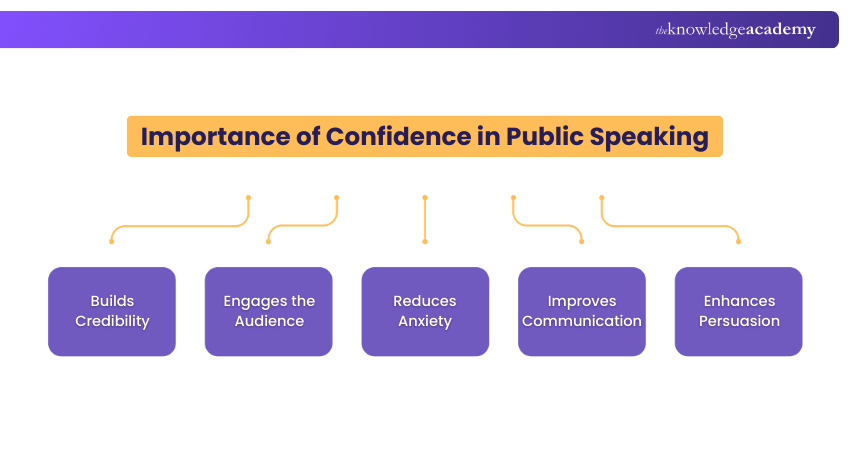
a) Builds Credibility: Confidence makes you appear knowledgeable and trustworthy, which helps establish your credibility with the audience.
b) Engages the Audience: A confident speaker can capture and maintain the audience's attention, making the presentation more engaging and impactful.
c) Reduces Anxiety: Confidence helps reduce nervousness and anxiety, allowing you to focus on your message rather than your fears.
d) Improves Communication: When you are confident, you communicate more clearly and effectively, making it easier for the audience to understand your message.
e) Enhances Persuasion: A confident delivery makes your arguments more convincing, helping you to persuade your audience and achieve your goals
What Causes a Lack of Confidence in Public Speaking?
Now that you are aware of How to Gain Confidence in Public Speaking, let’s explore the numerous causes of a lack of Confidence in Public Speaking:
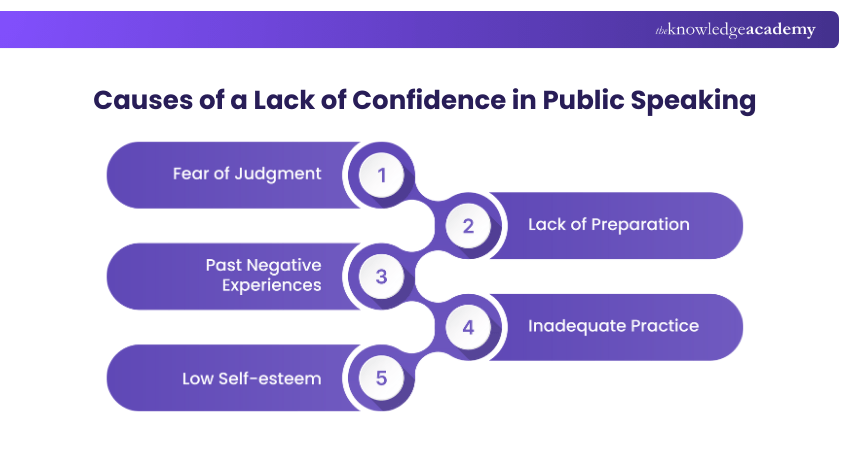
a) Fear of Judgment: Thinking about what others will think of you can make you feel insecure and anxious. This fear often leads to hesitation and self-doubt while speaking.
b) Lack of Preparation: Feeling unprepared can make you unsure about your content and delivery. This lack of readiness increases anxiety and reduces your confidence.
c) Past Negative Experiences: A previously failed presentation can create lasting self-doubt and anxiety. These memories can resurface, making you fear repeating the same mistakes.
d) Inadequate Practice: Not practising enough can leave you feeling nervous and unprepared. Practice builds familiarity and confidence, so without it, you may struggle to speak clearly.
e) Low Self-esteem: Doubting your abilities can result in a lack of confidence when speaking in front of others. This low self-worth can make it hard to believe in yourself and your message.
Conclusion
Understanding How to Gain Confidence in Public Speaking is a journey shaped by practice, mindset and self-awareness. As you apply these techniques, each experience becomes a chance to grow more expressive. With patience and persistence, you’ll find your presence more natural and your message more impactful. So, embrace the progress, trust your abilities and step forward with confidence every time you speak.
Learn to articulate ideas with our Effective Communication Skills Course – Join today!
Frequently Asked Questions
How Does Developing Public Speaking Skills Contribute to Personal Growth?

Developing Public Speaking skills contribute to personal growth by enhancing communication, boosting self-confidence, and refining critical thinking. It promotes articulation and persuasiveness, which are essential for success in various aspects of life.
Are there Common Mistakes to Avoid that may Hinder my Confidence in Public Speaking?
The biggest mistake one can make in Public Speaking is not preparing enough! Reading from the notes or slides while presenting may make you seem underprepared, so you should avoid that too. Other mistakes include speaking too quickly, not engaging the audience, and using language that goes above the audience's head.
What are the Other Resources and Offers Provided by The Knowledge Academy?
The Knowledge Academy takes global learning to new heights, offering over 3,000+ online courses across 490+ locations in 190+ countries. This expansive reach ensures accessibility and convenience for learners worldwide.
Alongside our diverse Online Course Catalogue, encompassing 19 major categories, we go the extra mile by providing a plethora of free educational Online Resources like Blogs, eBooks, Interview Questions and Videos. Tailoring learning experiences further, professionals can unlock greater value through a wide range of special discounts, seasonal deals, and Exclusive Offers.
What is The Knowledge Pass, and How Does it Work?
The Knowledge Academy’s Knowledge Pass, a prepaid voucher, adds another layer of flexibility, allowing course bookings over a 12-month period. Join us on a journey where education knows no bounds.
What are the Related Communication Skills Courses and Blogs Provided by The Knowledge Academy?
The Knowledge Academy offers various Communication Skills Courses including Assertiveness Skills Training, Public Speaking Course etc. These courses cater to different skill levels by providing comprehensive insights into Types of Communication Skills.
Our Business Skills Blogs cover a range of topics related to Communication Skills offering valuable resources, best practices, and industry insights. Whether you are a beginner or looking to advance your Communication skills, The Knowledge Academy's diverse courses and informative blogs have you covered.

Charlotte Wilson


Soft Skills and Business Training Manager
Charlotte Wilson is an expert in soft skills development, with over 14 years of experience helping individuals and teams improve communication, productivity and emotional intelligence in the workplace. Her training content is focused on enhancing interpersonal effectiveness and fostering positive, collaborative environments across all levels of an organisation.
View Detail
Upcoming Business Skills Resources Batches & Dates
Date
 Public Speaking Course
Public Speaking Course
Fri 31st Jul 2026
Public Speaking Course
Fri 2nd Oct 2026
Public Speaking Course
Fri 27th Nov 2026

 If you wish to make any changes to your course, please


