Who Should Attend this Resilience Training Course?
This Resilience Training is suitable for individuals looking to strengthen their ability to manage stress, setbacks, and change. It supports delegates working in demanding environments or seeking to develop stronger coping and adaptability skills. The following individuals can benefit from this course:
- Managers and Supervisors
- Directors and CEOs
- Presidents and VPs
- Healthcare Professionals
- Social Workers
- First Responders and Emergency Personnel
- Lawyers and Journalists
- Professionals navigating high-pressure work environments
Prerequisites for the Resilience Training Course
There are no formal prerequisites for this Resilience Training. However, an interest in strengthening resilience, stress management, and adaptability will help delegates engage effectively with the course content.
Introduction to Resilience Training Course
Resilience Training covers resilience at individual, team, and organisational levels, common limitations, the Resilience Grid, confidence, social support, adaptability, purposefulness, stress, and Crisis Management strategies. It also explores preparation, crisis response, recovery, review, and learning.
Delegates develop skills in recognising stress, selecting suitable coping strategies, strengthening confidence and adaptability, and building social support. These capabilities can also support Emotional Intelligence when responding to pressure, change, and challenging interactions.
This 1-Day course by The Knowledge Academy enables delegates to apply resilience strategies across personal and professional situations. They will be better equipped to respond to setbacks, manage stress, adapt to change, and approach challenging situations with greater preparedness.
Resilience Training Course Objectives
- To understand resilience at individual, team, and organisational levels
- To recognise common limitations associated with resilience
- To understand how the Resilience Grid can support resilience development
- To strengthen confidence, social support, adaptability, and purposefulness
- To identify causes, signs, and effects of stress
- To apply strategies for preparation, coping, recovery, review, and learning
Learning Outcomes of this Resilience Training Course
Upon completing this training, delegates will understand how resilience can support responses to stress, setbacks, and changing situations. They will be better equipped to use coping strategies, strengthen adaptability and confidence, and prepare for recovery and learning following challenging experiences.
Benefits of Resilience Training
This training helps delegates develop practical capabilities for responding to pressure, change, and setbacks more effectively. Key benefits include:
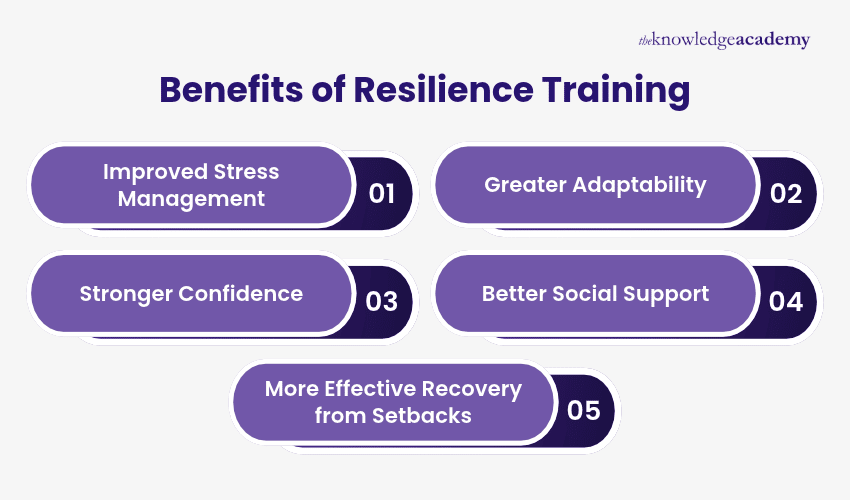
- Improved Stress Management: Delegates strengthen their ability to recognise stress and use suitable coping strategies when facing demanding situations.
- Greater Adaptability: Training supports delegates in adjusting more effectively to change, uncertainty, and unexpected challenges in personal and professional settings.
- Stronger Confidence: Building resilience can help delegates approach setbacks with greater confidence and maintain a more constructive response when difficulties arise.
- Better Social Support: Resilience development encourages stronger support networks and more effective collaboration, helping delegates respond to challenges with greater shared support.
- More Effective Recovery from Setbacks: Delegates can strengthen their ability to prepare for difficult situations, cope when challenges occur, and reflect on experiences to support future resilience.





 If you miss out, enquire to get
yourself
on the waiting list for the next day!


 If you wish to make any changes to your course, please


