


 Top Rated Course

We may not have the course you’re looking for. If you enquire or give us a call on +45 89870423 and speak to our training experts, we may still be able to help with your training requirements.
What Is Motion Graphics? A Complete Guide
Richard Harris 27 April 2026Motion graphics use animation to bring text, shapes, and designs to life, creating dynamic visuals for videos, ads, and interactive content.They are widely used in videos, advertisements, presentations, and interactive content to capture attention, explain ideas, and enhance storytelling, making communication more dynamic and visually appealing across digital platforms.

Training Outcomes Within Your Budget!
We ensure quality, budget-alignment, and timely delivery by our expert instructors.
Table of Contents

Motion Graphics can be most aptly described as “graphics in motion”. This creative discipline entails the generation of graphics and orchestrating their movement through time and space with the purpose of achieving a specific objective or narrating a story. The elements of Motion Graphics are arranged in a sequence of frames to produce the illusion of movement. Motion Graphics is a form of animation that creates the illusion of motion or rotation, often combined with audio, to communicate information or tell a story.
In contrast to other animation forms, animated Motion Graphics predominantly employ graphics and typography. Read more to learn about What is Motion Graphics!
Table of Contents
1) What are Motion Graphics?
2) Key Characteristics of Motion Graphics
3) What are motion graphics used for?
4) Applications Motion Graphics by Various Industries
5) Advantages of utilising Motion Graphics
6) What is the difference between Motion Graphics and Animation
7) Conclusion
What are Motion Graphics?
Understanding ‘What is Motion Graphics’ is essential to seeing how it transforms static visuals into dynamic experiences. As a form of animated graphic design, motion graphics combine text, images, and animation to communicate information clearly and engagingly, often enhancing the overall style of a video. The defining factor is movement, since still visuals do not qualify as motion graphics.

History of Motion Graphics
The inception of Motion Graphics can be traced back to the evolution of film credits, which plays a significant role in the history of graphic design. In the early days of cinema, directors crafted title credits to cater to the curiosity of the emerging generation of cinemagoers who sought more information about the actors in the films they watched.
The surge in the trend of Motion Graphics in cinema occurred post World War Two. Visionary graphic designers like Saul Bass and Elaine Bass spearheaded a new era of vibrant, imaginative Motion Graphics, breathing life into films such as The Seven Year Itch (1955) and North by Northwest (1959).
Iconic film title designers from the 1960s and 1970s, including Pablo Ferro, renowned for Dr Strangelove (1964) and The Thomas Crown Affair (1968), further contributed to the development of this visual art.
The advent of digital technology in the late 20th century had a profound impact on Motion Graphics design. The introduction of the Apple Mac in the early 1980s empowered designers to create even more inventive title credits for films and TV shows.
While the technology of the 1980s may seem primitive compared to today, it represented a creative revolution in contrast to the limited options available in the 1960s and 1970s. With the continuous advancement of digital technology, particularly with software such as Adobe Premiere and Adobe After Effects, designers' creative capabilities have expanded. While motion graphics involve creating animations with a design focus, traditional 2D animations focusses more on storytelling and character movements.
As television gained popularity, creators of popular TV shows adopted Motion Graphics principles from cinema. Early TV credits in the 1970s and 1980s were rudimentary, but the gap has considerably narrowed with TV's growth rivalling cinema. High-budget miniseries on HBO or Netflix showcase opening credits comparable to those seen in Hollywood, with 3D Motion Graphics delivering memorable title sequences.
The rise of the Internet, social media, and digital advertising in the 2000s ushered in a new era of Motion Graphic design. Creative agencies began hiring skilled designers to create short, animated (and often annotated) graphics to advertise their clients' products and services. Motion Graphics became a tool to simplify complex processes into easily understandable steps.
Throughout the 2010s, infographics evolved as a medium, aided by initiatives such as The Information is Beautiful Awards. With the increasing prominence of social media, designers started animating flat infographics to narrate more engaging stories, utilising motion to breathe life into data and charts.
Become familiar with creative thinking, problem-solving, and paradigms with our Animation and Design Training today!
Key Characteristics of Motion Graphics
Motion graphics stand out because of the unique ways they combine design, animation, and storytelling. These features make them more engaging than static graphics and highly effective in communicating ideas visually.
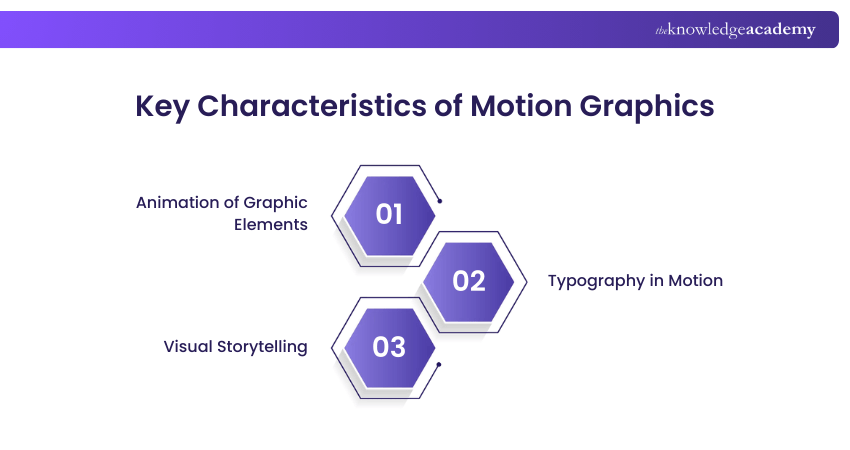
Animation of Graphic Elements
At the core of motion graphics is the movement of shapes, icons, and illustrations. Simple design elements such as lines, charts, or logos are animated to grab attention, explain processes, or highlight important information. This transforms basic visuals into dynamic content that resonates with audiences.
Typography in Motion
Moving text is one of the most recognisable features of motion graphics. By animating words and letters, creators emphasise messages, add rhythm to communication, and maintain viewer interest. Kinetic typography can range from subtle fades and slides to bold, energetic movements that mirror the tone of the content.
Visual Storytelling
Motion graphics use animation to tell stories in a clear and memorable way. By combining design, sound, and movement, they can explain complex ideas quickly, making them ideal for presentations, adverts, and explainer videos. Visual storytelling through motion graphics ensures messages are both easy to understand and more likely to be remembered.
What are motion graphics used for?
Motion graphics were first popularised by film studios in the 1950s, when designers created title sequences that not only introduced cast and crew but also reflected the mood of the film through colour, typography, illustrations, and pacing. Even today, opening credits in films and TV series rely heavily on motion graphic design.
With the rise of digital tools, motion graphics have become accessible to creators across industries. They are now widely used for:
1) Television opening credits: Iconic sequences that set the tone for shows and series.
2) Advertising campaigns: Eye-catching, interactive designs that boost brand appeal.
3) News broadcasting: Helping to explain stories, data, and events like elections visually.
4) Social media content: Popular in memes and short-form videos to entertain and engage.
5) Website design and user experience: adding animation to interfaces for smoother interaction.
6) Retail displays: digital menu boards and billboards brought to life with motion graphics.
Applications of Motion Graphics by Various Industries
Motion graphics are no longer limited to film or advertising. Today, they are applied across industries to simplify complex information, engage audiences, and strengthen brand identity. Their adaptability makes them a valuable communication tool for both digital and physical platforms.
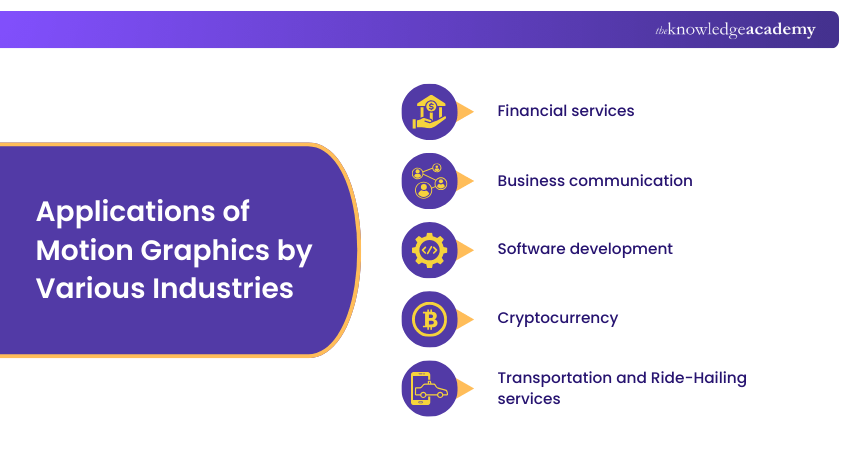
Financial services
In finance, motion graphics simplify complex data such as market trends, investment portfolios, or banking processes. Animated charts, infographics, and explainer videos help institutions present financial information clearly, making it easier for customers to understand and act on.
Business communication
Companies use motion graphics to communicate ideas internally and externally. From presentations and training modules to promotional campaigns, animated visuals make information memorable, reduce misunderstandings, and create stronger audience engagement compared to static content.
Software development
Motion graphics play a key role in product demos and user onboarding. Developers use them to show how software works, highlight features, and guide users through digital interfaces. This visual storytelling helps boost adoption rates and enhance the overall user experience.
Cryptocurrency
The cryptocurrency sector relies heavily on motion graphics to explain complex concepts such as blockchain, digital wallets, and token exchanges. Animated explainer videos and infographics simplify technical jargon, building trust with audiences and attracting new investors to the market.
Transportation and Ride-Hailing services
Ride-hailing and transport platforms use motion graphics to showcase app functionality, safety features, and service benefits. Animated campaigns also improve brand visibility, making services more appealing to tech-savvy commuters and everyday travellers.
Ace Your Next Interview: Explore Key Motion Graphics Interview Questions!
Advantages of Utilising Motion Graphics
The following are the advantages of utilising Motion Graphics:
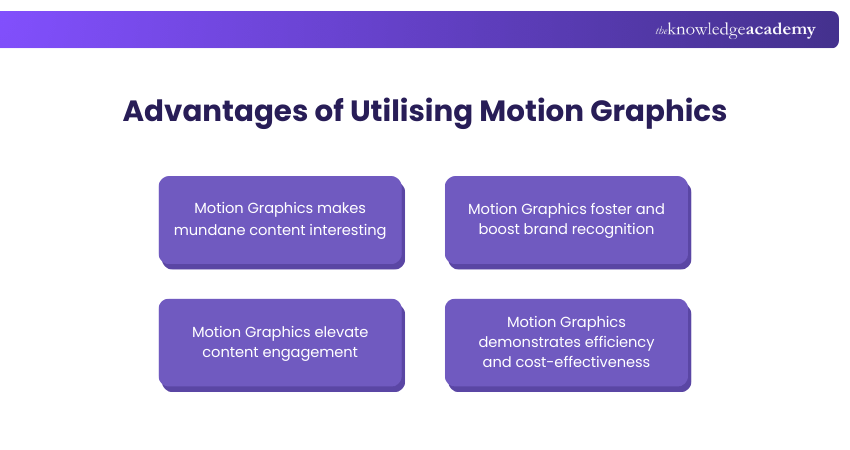
1) Motion Graphics makes mundane content interesting
When there is so much content and options available now, viewers can easily switch to more engaging alternatives if their content is perceived as dull. Therefore, ensuring that your target audience finds your content captivating is imperative. Incorporating Motion Graphics is an excellent method to achieve this.
Consider the scenario where you are tasked with marketing a household appliance or machinery with a unique selling point that demands a technical explanation. The conventional approach might involve having an expert explain. However, such videos are likely to be boring. Motion Graphics, on the other hand, add an element of interest and, importantly, offer a more precise explanation of the concept.
Attain in-depth knowledge of creating designs and graphics using Photoshop tools with Photo Retouching Training!
2) Motion Graphics foster and boost brand recognition
In a saturated market, a robust brand identity can significantly sway market share in your business's favour. When potential customers are familiar with your brand, they are more inclined to progress through the final stages of the sales funnel. While traditional video production can contribute to crafting an identity, the costs of producing live-action content aligned with your brand's voice and ethos can become high.
Motion Graphics, however, allow for the seamless inclusion of various brand elements. Viewers can easily pick up on these identifiers in subsequent productions. Whenever someone encounters your video, they will promptly recognise the brand.
3) Motion Graphics elevate content engagement
Video animations, mainly Motion Graphics, are well-suited for social media. These concise, visually appealing videos get straight to the point, making them highly shareable on social media platforms. The shareability factor is particularly relevant in mobile usage, as most social media interactions occur on mobile devices. Tailoring Motion Graphics to align with mobile platforms can significantly advance your marketing strategy.
Consider the brevity of a well-crafted Motion Graphic video, packing essential information into just a minute and a few seconds. This format facilitates easy comprehension and sharing with family, friends, and colleagues interested in the showcased product or service.
4) Motion Graphics demonstrates efficiency and cost-effectiveness
As mentioned earlier, Motion Graphics simplify complex information, presenting it in a format easily understood by the average consumer. This eliminates the need for hiring individuals to explain concepts that can be effectively illustrated through graphics.
Live-action video production comes with substantial costs, requiring the procurement of locations, studios, entire crews, talent, and equipment like cameras. In contrast, Motion Graphics provide a more budget-friendly alternative while maintaining effectiveness in conveying information.
What is the Difference Between Motion Graphics and Animation?
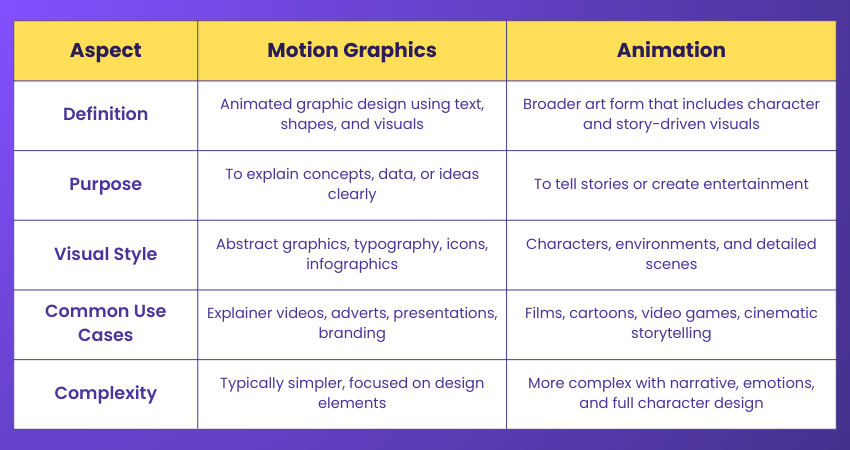
Motion graphics and animation are closely related but not the same. Motion graphics emphasise the movement of design elements to convey messages, while animation often includes character-driven storytelling and richer visual complexity, guided by essential Principles of Animation that shape how actions feel natural and engaging.
Conclusion
Now that you understand the concept of motion graphics and how to employ them, venture out and create one. With video format constituting most of the internet traffic, imaginative individuals are discovering methods to produce video content more quickly and economically. We hope you have understood What is Motion Graphics through this blog.
Understand the significance of a logo and learn to design a customer-oriented logo with our Logo Design Course!
Frequently Asked Questions
What skills are required for motion graphics?

Motion graphics professionals need strong design skills, creativity, and an understanding of colour, typography, and composition. They must also be proficient with software like After Effects or Cinema 4D and possess storytelling ability to communicate ideas effectively through visuals.
How are motion graphics different from graphic design?
Graphic design focuses on creating static visuals such as logos, posters, or layouts, while motion graphics bring these elements to life with movement. Motion graphics combine animation and design to explain concepts, engage audiences, and enhance storytelling in digital formats.
What are the other resources and offers provided by The Knowledge Academy?
The Knowledge Academy takes global learning to new heights, offering over 3,000+ online courses across 490+ locations in 190+ countries. This expansive reach ensures accessibility and convenience for learners worldwide.
Alongside our diverse Online Course Catalogue, encompassing 17 major categories, we go the extra mile by providing a plethora of free educational Online Resources like Blogs, eBooks, Interview Questions and Videos. Tailoring learning experiences further, professionals can unlock greater value through a wide range of special discounts, seasonal deals, and Exclusive Offers.
What are related Motion Graphic Courses and blogs provided by The Knowledge Academy?
The Knowledge Academy offers various Animation and Design Training, including the Animation Course, Video Editing Training, and Logo Design Course. Our courses cater to different skill levels, providing comprehensive insights into the Animation Process.
Our Office Applications Blogs cover a wide range of topics related to Microsoft Office tools, offering valuable resources, best practices, and industry insights. Whether you are a beginner or looking to advance your Animation Process skills, The Knowledge Academy's diverse courses and informative blogs have got you covered.
What is The Knowledge Pass, and How Does it Work?
The Knowledge Academy’s Knowledge Pass, a prepaid voucher, adds another layer of flexibility, allowing course bookings over a 12-month period. Join us on a journey where education knows no bounds.

Richard Harris


Senior Full Stack Developer and Technology Educator
Richard Harris is a highly experienced full-stack developer with deep expertise in both frontend and backend technologies. Over his 12-year career, he has built scalable web applications for startups, enterprises and government organisations. Richard’s writing combines technical depth with clear explanations, ideal for developers looking to grow in modern frameworks and tools.

Upcoming Office Applications Resources Batches & Dates
Date
 Motion Graphics Course
Motion Graphics Course
Fri 17th Jul 2026
Motion Graphics Course
Fri 16th Oct 2026

 If you wish to make any changes to your course, please


